Toggle light / dark theme

Get the latest international news and world events from around the world.

Log in for authorized contributors

Fossil may solve mystery of what one of the weirdest-ever animals ate

One of the weirdest animals that ever lived may have been a scavenger. A re-examination of fossils first described in the 1970s seems to show a swarm of Hallucigenia feeding on the corpse of a comb jelly.

Hallucigenia was a small animal, up to 5 centimetres long. It had a worm-like body with multiple legs, as well as long, sharp spines on its back. Because of its peculiar appearance, palaeontologists at first reconstructed the animal upside-down, supposing the spines to be legs.

It lived in the deep seas during the Cambrian period (about 539 million to 487 million years ago), when many major animal groups emerged. Hallucigenia was first identified in rocks from the Burgess Shale deposits in British Columbia, Canada. It is related to velvet worms, tardigrades and arthropods (the group that includes insects and spiders).

Image: Alamy


Hallucigenia was such an odd animal that palaeontologists reconstructed it upside-down when they first analysed its fossils — and now we may know what it ate.

By Michael Marshall

Tiny titans of recovery: Fossil burrows reveal resilient micro-ecosystem after global mass extinction

An international team of scientists from South Africa, Canada, France and the UK has uncovered fossil evidence of a tiny ecosystem that helped kick-start the recovery of Earth’s oceans after a global mass extinction.

The team, led by Dr. Claire Browning, an Honorary Research Associate at the University of Cape Town (UCT), found fossilized burrows and droppings left by creatures so small they lived between grains of sand, revealing an ancient community that probably played a critical role in reviving marine life after the end-Ordovician ice age and mass extinction event. The discovery is reshaping how scientists understand early marine resilience.

The findings are published in Nature Ecology & Evolution.

Ideal Wealth Grower

The Age of Abundance: AGI Predictions and Investment Strategy for 2026 ## The imminent emergence of Artificial General Intelligence (AGI) will significantly impact investment strategies, and investors should prepare by accumulating valuable assets, diversifying their portfolios, and adopting a strategic investment approach to capitalize on the growth potential of AGI and the resulting Age of Abundance ##

## Questions to inspire discussion.

Investment Strategy.

🎯 Q: How should I build an investment portfolio for the AGI era? A: Focus on companies with best management and growth potential in AGI, robotics, and space industries using dollar-cost averaging strategy to systematically build positions over time rather than lump-sum investing.

💰 Q: What alternative assets should I accumulate for security during AGI transition? A: Accumulate gold, silver, and Bitcoin as modern safe havens to protect wealth during periods of change and uncertainty as traditional financial systems adapt to AGI disruption.

🏢 Q: Why should real estate be overweighted in an AGI-focused portfolio? A: Overweight real estate compared to company ownership and reserves because AGI and robotics industries will require physical space for operations, data centers, and manufacturing facilities.

How Fat Type Shapes Hypertension Risk

Too much fat can raise blood pressure, but the type matters more than the amount.

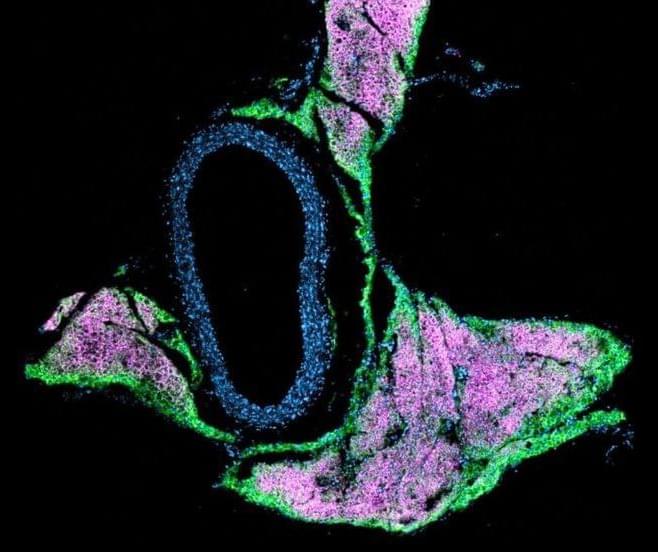
Researchers at Rockefeller University uncovered how thermogenic fat keeps blood vessels flexible by shutting down a vessel-stiffening enzyme.

Read more.

Promoting brown fat activity could counteract hypertension by reshaping the molecular signals that govern vascular stiffness.

Scientists turn cells’ most mysterious structures into spies on genetic activity

The barrel-shaped structures found by the thousands in most animal cells are one of biology’s biggest mysteries. But although researchers haven’t figured out the function of these “vaults,” they now report a new use for the puzzling particles.


Enigmatic ‘vaults’ can be engineered to eavesdrop on RNA, aiding cancer studies and more.

Forget solar panels in summer: Here’s why winter Is the best time to switch your home to solar

Regardless of which U.S. state you live in, we can all agree that electricity in the U.S. is quite expensive. Of course, prices may vary depending on where you live, but in general, investing in clean energy has never been more desirable than it is now. But with so many options to choose from, when are solar panels, for example, your best option? Well, if you live in a region with colder weather, your best option may be to invest in solar energy, as a PV expert believes that solar panels are more efficient in cold weather.

Investing in clean energy: Your options

The majority of Americans most likely got quite the fright when they opened their last utility bill, and things may not look up just yet this month. Beyond the fact that one’s heating and thus electricity bill skyrockets during the winter due to increased usage, other factors also play a significant role in driving up electricity prices.

A breakthrough in DNA sequencing hints at why most smokers don’t get lung cancer

Breakthrough in DNA sequencing offers clues to why most smokers do not develop lung cancer.


“Our data suggest that these individuals may have survived for so long in spite of their heavy smoking because they managed to suppress further mutation accumulation,” says pulmonologist and genetics researcher Simon Spivack, a co-author on the study. “This leveling off of mutations could stem from these people having very proficient systems for repairing DNA damage or detoxifying cigarette smoke.”

Researchers who study the health effects of cigarette smoke have used all kinds of methods — from giving lab animals high doses of chemicals found in tobacco to combing through archives to determine which diseases smokers get more often — to figure out how the habit affects the body. Those studies have made it clear that cigarettes contain hundreds of harmful chemicals, including dozens of carcinogens.

For decades, researchers didn’t have any way to measure the mutations in lung cells that actually cause lung cancer. Five years ago, researchers at Albert Einstein College of Medicine in New York found a way to overcome technical limitations that had made it impossible to sequence the genome. That is, they figured out how to determine the exact order of the A, T, C, and G molecules of the DNA within a single cell without introducing too many errors in the process.

Frontline Osimertinib Combo Prolongs Survival in Advanced EGFR+ NSCLC

Among patients with central nervous system (CNS) metastases at baseline, the 36-month OS rate was 57% (95% CI, 48%-66%) with osimertinib/chemotherapy and 40% (95% CI, 31%-49%) with osimertinib alone. The 36-month OS rates among patients without CNS metastases were 67% (95% CI, 59%-74%) vs 58% (95% CI, 50%-65%) in each respective arm. Additionally, the 36-month rates were 54% (95% CI, 44%-63%) vs 42% (95% CI, 32%-51%) among patients with EGFR L858R mutations and 69% (95% CI, 61%-75%) vs 57% (95% CI, 49%-64%) among those with EGFR exon 19 deletions.

When considering patients who discontinued frontline osimertinib following disease progression, 69% (n = 88/127) of patients in the combination therapy arm and 77% (n = 143/185) in the monotherapy arm received subsequent therapy. The most common types of first subsequent therapy in the combination arm included platinum-based chemotherapy (44%) and non–platinum-based chemotherapy (30%). Among patients who received osimertinib monotherapy, the most common kind of subsequent treatment was platinum-containing chemotherapy (72%).

“The combination therapy used in this trial was associated with a higher incidence of grade 3 or higher adverse events and of [AEs] leading to the discontinuation of treatment than osimertinib monotherapy. Most high-grade toxic effects associated with the combination therapy were related to myelosuppressive effects, which are generally dose-related and reversible, with supportive interventions available to ameliorate such effects,” lead study author Pasi A. Jänne, MD, PhD, senior vice president of Translational Medicine and professor in the Department of Medical Oncology at Lowe Center for Thoracic Oncology of Dana–Farber Cancer Institute, wrote with coauthors in the publication.1 “Results from this trial provide evidence that first-line treatment with osimertinib plus platinum/pemetrexed led to significantly longer [OS] than osimertinib monotherapy among patients with EGFR-mutated advanced NSCLC.”

A Genetic Risk Adoption Design for Psychiatric and Substance Use Disorders

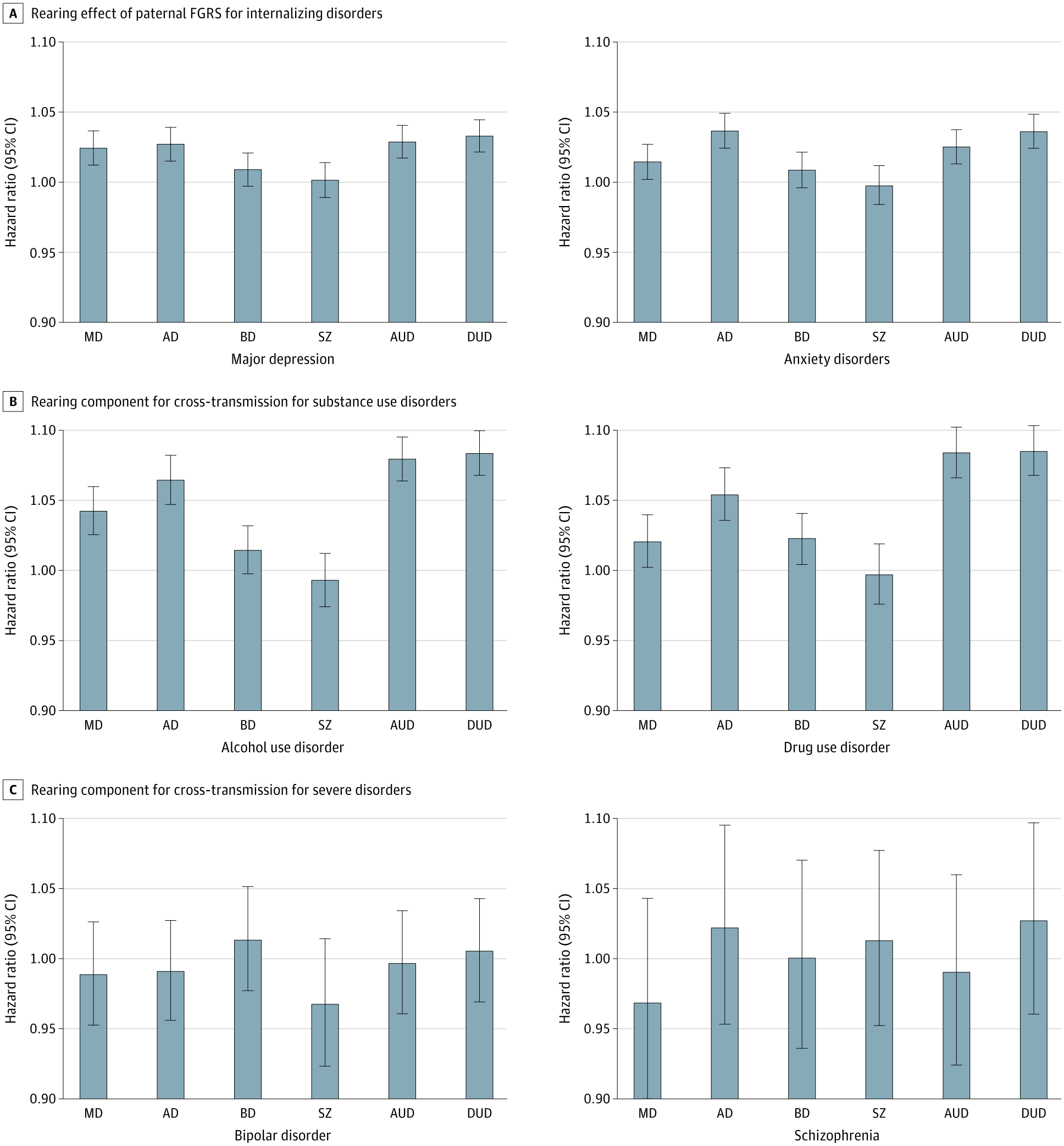
Paternal genetic risk is a robust predictor of offspring psychiatric disorders, with additional “indirect genetic effects” observed for internalizing and substance use conditions in adoptive and stepfather relationships. Rearing effects were most pronounced for substance use disorders.


Question In an adoption study of major psychiatric illness, what results would be obtained if offspring risk were predicted not from the phenotype of the parents but from their genetic risk?

Findings In this cohort study, paternal genetic risk was associated with offspring risk of illness for all disorders in genetically related father-offspring pairs. In an indirect pathway, genetic risk in adoptive and stepfathers predicted risk in their offspring for internalizing and substance use disorders but not for schizophrenia or bipolar disorder.

Meaning Indirect genetic effects from the father may have an impact on offspring risk of internalizing and substance use disorders.

/* */