Get the latest international news and world events from around the world.

Cybersecurity Awareness Month is all year long
As Cybersecurity Awareness Month 2026 finishes, the stakes for digital security have never been higher. This year’s observance marks a critical inflection point, not simply another annual awareness campaign. Organizations must move beyond traditional cybersecurity checklists and periodic training toward a model of continuous, adaptive resilience.
With AI-powered attacks accelerating at machine speed, expanding vulnerabilities across cloud, IoT, and supply chain ecosystems, and the emerging challenge of quantum computing threatening current encryption methods, the threat landscape is evolving faster than ever. While foundational security practices such as multi-factor authentication, phishing awareness, software updates, and data protection remain essential, all must now be integrated into a dynamic security strategy capable of anticipating and responding to rapidly changing risks.
This Cybersecurity Awareness Month, the focus has shifted from awareness alone to building resilience for an increasingly complex and interconnected digital future. It also signifies that the complexities and threats make cybersecurity awareness a year-round endeavor.
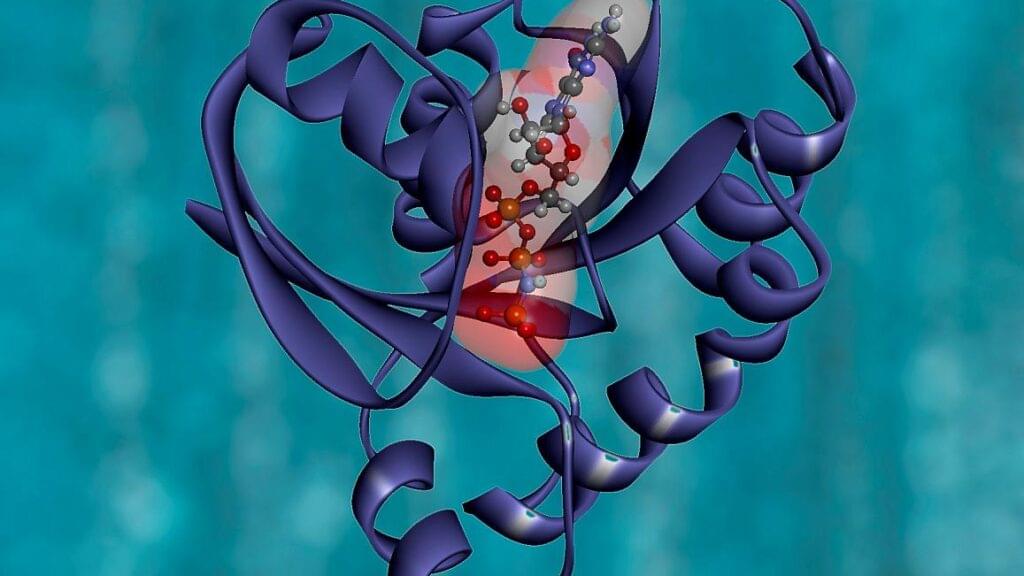
Incyte pancreatic cancer medicine induces lasting tumor responses, company says at ESMO
MADRID — A targeted drug from Incyte, when used in combination with chemotherapy, induced lasting tumor responses in certain patients with pancreatic cancer — results, the biotech said, that support its prior decision to advance the treatment into a late-stage clinical trial.
The approval of Revolution Medicines’ pancreatic cancer drug Rasonque earlier this year showed that a medicine capable of attacking mutations in a group of genes called RAS could prolong survival for patients with the particularly aggressive cancer.
Now, companies like Incyte, Revolution Medicines, Verastem, and China’s Hengrui are developing next-generation drugs that selectively target specific mutations within the RAS family of genes, seeking even better results for patients.
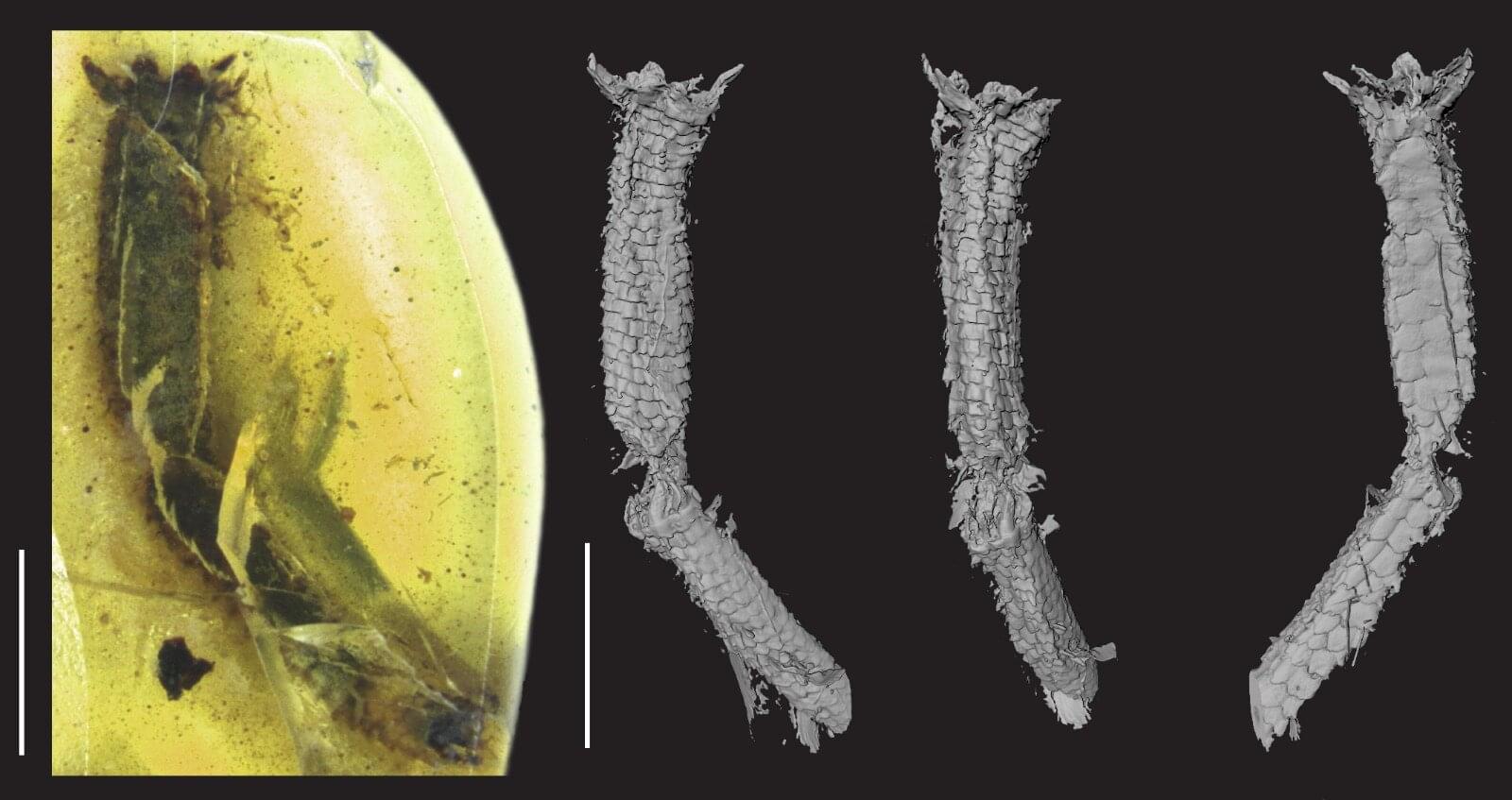
Lizard tail preserved in amber sheds light on a 100-million-year-old defense mechanism
A lizard making a dramatic escape, leaving its tail wriggling behind as it darts to safety, is an image familiar to many. Tail-shedding is one of the most widespread defenses against predators among living lizards, yet tracing the origins of this extraordinary ability has proved to be surprisingly difficult—how can we tell when this escape tactic first arose in lizards?
A new Tel Aviv University study has found answers to this enigma inside a piece of amber just 18 millimeters (0.7 inches) long—the size of a fingertip—discovered in northern Myanmar. Trapped within it is a lizard’s tail that detached from its body approximately 99 million years ago. According to the researchers, it represents the best-preserved direct fossil evidence of a voluntarily dropped lizard tail through a defensive mechanism known as autotomy.
The study was led by Dolev Fabrikant, a Ph.D. candidate at Tel Aviv University’s New Environmental School, and his supervisor, Dr. Leonidas-Romanos Davranoglou of the university’s School of Zoology and Steinhardt Museum of Natural History, in collaboration with researchers from the National and Kapodistrian University of Athens and Israel’s Volcani Institute. The findings are published in Palaeontologia Electronica.
Faster, more accurate airborne radiation detection demonstrated in six-second helicopter flyovers
A new radiation detection method correctly identified single and mixed radioactive sources during six-second helicopter flyovers, according to a University of Michigan Engineering and Paul Scherrer Institute study.
The physics-based Bayesian framework pinpointed radiation sources within two meters (6.6 feet) and estimated their activities within two percentage points of their true values—an unprecedented level of detail compared to previous methods.
In a radiological emergency, such as a reactor meltdown or the detonation of a nuclear weapon, airborne measurements are sometimes the only way to access an area. The crucial, in-flight radiological information could help first responders determine where people should evacuate, shelter or receive other protection like potassium iodide pills to shield the thyroid.

AI-based computer model offers new weapon against hard-to-treat cancers
In a new paper published in Cell Reports Medicine, the UCL team outlines how they, in collaboration with a University of Cambridge team, developed a new type of treatment-predicting computer program that uses an individual’s detailed genetic fingerprint to explore which treatments, if any, may kill their cancer—especially when standard treatments have failed.
Computer models have long been used in cancer medicine, and more recently artificial intelligence has opened up a new avenue in this regard.
But the “black box” nature of “traditional” AI associated with large language models—where how they arrive at their conclusions is unclear—has prompted a degree of skepticism among the medical profession, the researchers said.
Samsung’s Insane Storage Evolution!🤯 #memes #meme #usa
💙🔥 Samsung’s Insane Storage Evolution 🤯📱 | From 128MB to 128GB!Imagine a world where storing a few photos, songs, or files on a tiny memory chip was a bi…

Some house cats carry a gut parasite that can infect humans, study finds
Giardia duodenalis is a microscopic, flagellated parasite that often calls the human and animal gut its home. In most cases, it coexists harmlessly with its host, and most infected pets and people show no signs of illness. However, when it becomes pathogenic, it can cause diarrhea, digestive issues or weightloss.
Cats can carry a pathogenic version of the gut parasite that also infects humans, but how common is it among pet cats, and how often do they harbor such strains?
A recent study investigated these questions by analyzing stool test data from 157,616 pet cats across 49 U.S. states and five Canadian provinces between March 2022 and August 2023.

Two Critical Wasmtime Flaws Could Let Malicious WebAssembly Modules Escape Sandboxes
Wasmtime fixes two critical Cranelift flaws that could let attacker-controlled WebAssembly modules escape sandboxes, including an ARM64-only bug.