Toggle light / dark theme

Get the latest international news and world events from around the world.

Log in for authorized contributors

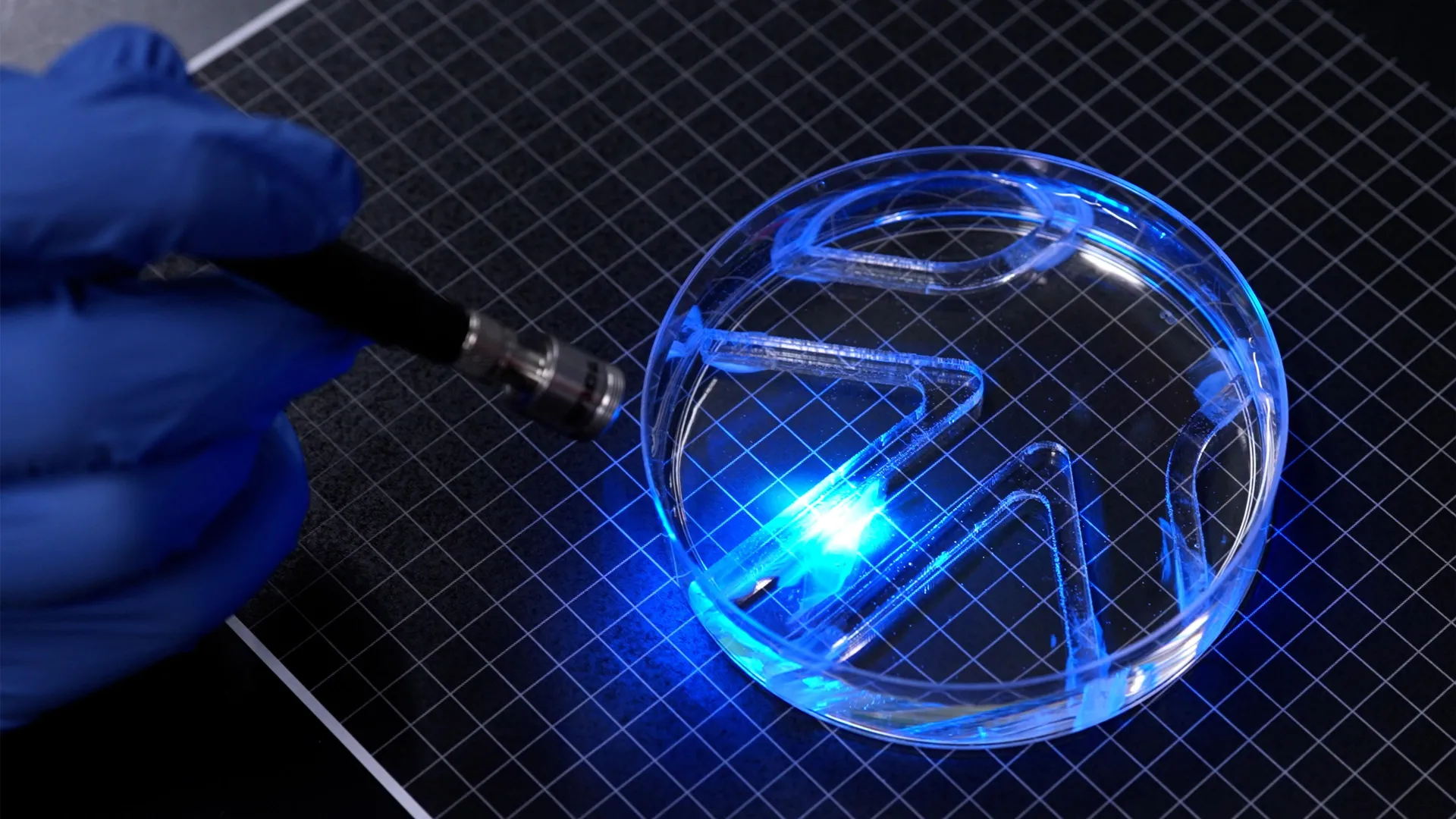
Ultra-thin MoSe₂ grating traps infrared light in a 40-nanometer layer

Controlling light at the micro- and nanoscale opens up opportunities for a better understanding of the world and the development of technology. As modern electronics approaches the limits of its capabilities, photonics comes into play. Instead of manipulating relatively heavy and slow electrons, we can use light and fast photons to encode information. This will make it possible to create devices that are not only faster but also even smaller than those currently in use.

Protein modification in neurodegenerative diseases

The graphical abstract showcases the diversity of posttranslational modifications (PTMs) influencing protein structure and function. It features schematic representations of the following 10 prominent PTMs: phosphorylation (addition of phosphate groups), acetylation (addition of acetyl groups), methylation (addition of methyl groups), SUMOylation (attachment of SUMO proteins), ubiquitylation (attachment of ubiquitin molecules), succinylation (addition of succinyl groups), S-nitrosylation (attachment of NO), ADP-ribosylation (addition of ADP-ribose groups), glycosylation (addition of sugar molecules), and palmitoylation (attachment of palmitate groups).

AI chatbots’ tendency to always agree may reinforce delusions in vulnerable users

The integration of large language model-based AI chatbots into multiple facets of our everyday lives has opened us up to advantages that would have been considered impossible even a decade ago. The same development has, however, opened us up to unforeseen risks, including the impact that engaging with AI chatbots can have on people dealing with mental illness.

AI chatbots are designed to keep conversations going, often by agreeing with users. A article by researchers from King’s College, London, found that this sycophantic tendency may sometimes do more harm than good, reinforcing unusual thoughts rather than challenging them, and potentially contributing to AI-associated delusions, in which users develop or worsen false beliefs about reality.

These interactions can reinforce or even shape delusional beliefs, such as thinking one is uniquely important, being targeted by others, or being in a romantic relationship that does not exist.

Locus coeruleus–amygdala circuit disrupts prefrontal control to impair fear extinction

One of the most-viewed PNAS articles in the last week is “Locus coeruleus–amygdala circuit disrupts prefrontal control to impair fear extinction.” Explore the article here: https://ow.ly/yFH250Ywubb.

For more trending articles, visit https://ow.ly/tZsG50Ywubg.


Stress undermines extinction learning and hinders exposure-based clinical therapies for a variety of neuropsychiatric disorders. In both animals and humans, dysfunction in the ventromedial prefrontal cortex (vmPFC) contributes to stress-impaired extinction, but the neural circuit by which stress modulates vmPFC function is not known. We hypothesize that locus coeruleus (LC) norepinephrine undermines extinction learning by recruiting projections from the basolateral amygdala (BLA) to vmPFC. Using a combination of circuit-specific chemogenetics and calcium imaging, we find that activation of LC noradrenergic neurons mimics a behavioral stressor (footshock), induces freezing behavior, reduces spontaneous neuronal activity in the vmPFC, impairs extinction learning, and alters the population dynamics of vmPFC ensembles.

Liver Stiffness and All-Cause Mortality in Individuals With Diabetes

Liver stiffness identified by elastography was linked to a greater risk of death among adults with diabetes, suggesting elastography may help identify high-risk individuals.


Question Is a higher liver stiffness measurement (LSM), which indicates liver fibrosis, associated with an increase in all-cause mortality in unselected patients with diabetes?

Findings In this cohort study of 4,102 adults, high LSM was an independent risk factor for all-cause mortality in diabetes, even after a relatively short follow-up. Moreover, the coexistence of liver fibrosis and uncontrolled hemoglobin A1c level was associated with a higher risk of all-cause mortality compared with each condition individually.

Meaning Findings of this study suggest that using LSM to screen for liver fibrosis as part of routine diabetes management could aid in early identification of patients with high mortality risk.

Building a better, more precise droplet

A humble droplet can be an immensely useful tool for a number of fields, from medicine to manufacturing. Controlling the size of the droplet, though, is an important—and very tricky—task. With unprecedented precision, a team of researchers determined how droplets break up into smaller ones, at what size, and under what conditions. The results of this study are published in Soft Matter.

“Droplets can be used as microcontainers that encapsulate small amounts of fluid and other components,” said Prof. Corey O’Hern, who led the study. Because of that, he said, they can be used to deliver drugs to the body, or to find the genomic signatures of a single cell.

“Another cool application involves microreactors. You can put different concentrations of chemical species into the droplet, allow them to mix, and determine how they react.”

The discovery of a buried delta on Mars could boost the search for life

There’s more evidence that water once flowed on Mars with the discovery of an ancient river delta deep below the surface. NASA’s Perseverance rover found it more than 35 meters beneath Jezero Crater using ground-penetrating radar. Perseverance was launched in 2020 to search for signs of ancient life on the red planet. Since landing in February 2021, it has been exploring Jezero Crater and collecting rock samples.

The crater, which is approximately 45 kilometers (28 miles) in diameter, lies north of the Martian equator and was formed by an asteroid impact almost 4 billion years ago. NASA chose this spot to explore because numerous geological features suggest that water once flowed here and may have supported ancient life, specifically, a part of the crater called the Margin Unit. This area is packed with carbonates, which on Earth, usually form in stable aqueous environments, such as shallow seas or lakebeds.

The new research is published in the journal Science Advances and is based on data from 78 traverses of the area from September 2023 to February 2024.

/* */