Cuproptosis mechanism in cancer!
As a copper-dependent regulated form of cell death, cuproptosis is critically important for developing targeted cancer therapies and overcoming drug resistance.
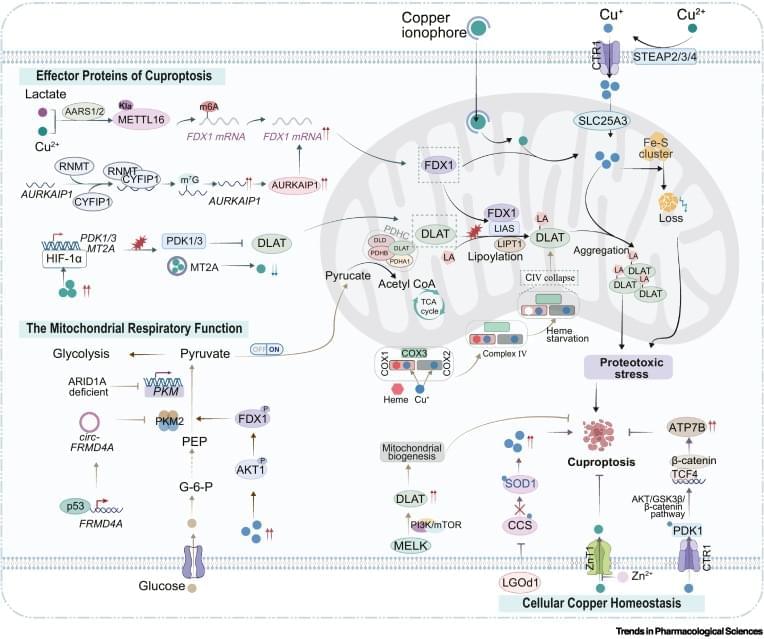
A multidimensional framework deciphers the physiological regulation of copper homeostasis, including hepatocentric organ-level regulation, organelle-specific cellular storage and transport, and iron– copper–zinc ion crosstalk.
Cuproptosis is mainly regulated by core cuproptosis proteins, mitochondrial respiratory function, and cellular copper homeostasis.
By depleting glutathione (GSH), alleviating hypoxia, modulating immunity, and enabling multimodal synergy, innovative copper-based nanomaterials enhance copper ion delivery and cytotoxicity, resulting in potent antitumor effects. sciencenewshighlights ScienceMission https://sciencemission.com/Cuproptosis-in-cancer
Cuproptosis is a mitochondria-and copper-dependent regulated form of cell death that has attracted growing interest as a therapeutic strategy in oncology. Its core mechanism involves the aggregation of lipoylated proteins in the tricarboxylic acid cycle to trigger proteotoxic stress and the destabilization of iron–sulfur cluster proteins, leading to mitochondrial dysfunction. These two effects synergize to initiate this regulated form of cell death. Recent studies have expanded this framework, revealing multilayered regulation through the core proteins of cuproptosis, mitochondrial respiratory function, and cellular copper homeostasis. Translational efforts have led to the development of copper-based therapeutics, including ionophores and nanomaterials. The utilization of smart-responsive nanomaterials also offers improved precision in tumor delivery and resistance circumvention.