Toggle light / dark theme

Get the latest international news and world events from around the world.

Log in for authorized contributors

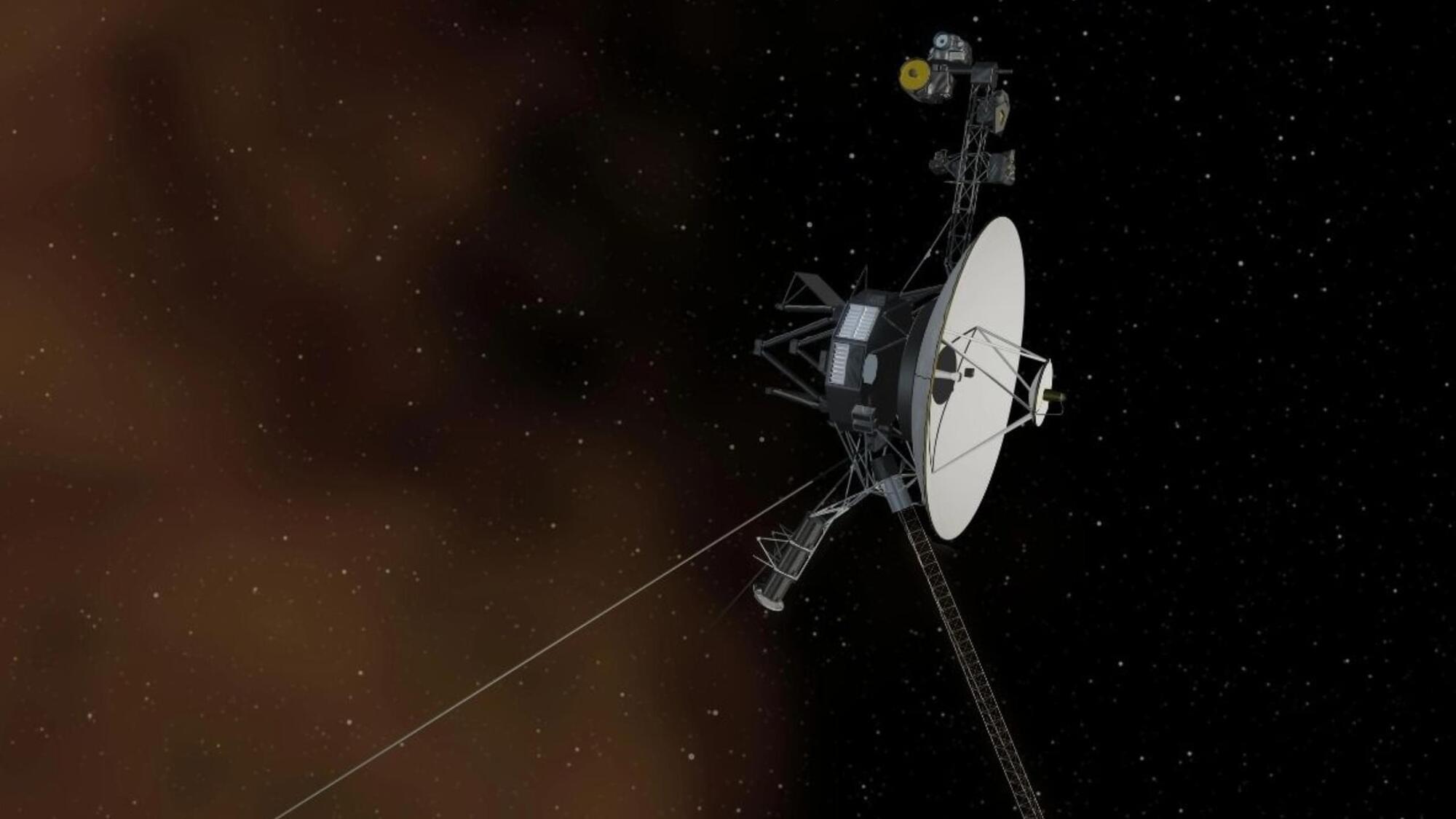
Voyager 1 Has Traveled Through Space at 38,000 Mph Since 1977. This Wednesday, It Will Finally Reach 1 Light-Day From Earth

Voyager 1 has been on an incredible journey that’s defied all expectations. And it’s hours away from reaching another huge milestone.

The small car-sized spacecraft was the first human-made object to enter interstellar space, and for almost 50 years it’s been hurtling away from Earth at 61,100 kilometers (38,000 miles) per hour.

This Wednesday, the spacecraft will officially reach 1 light-day away from Earth.

For The First Time Ever, Astronomers Watched a Giant Planet Disappear. Now They Think They Know Why

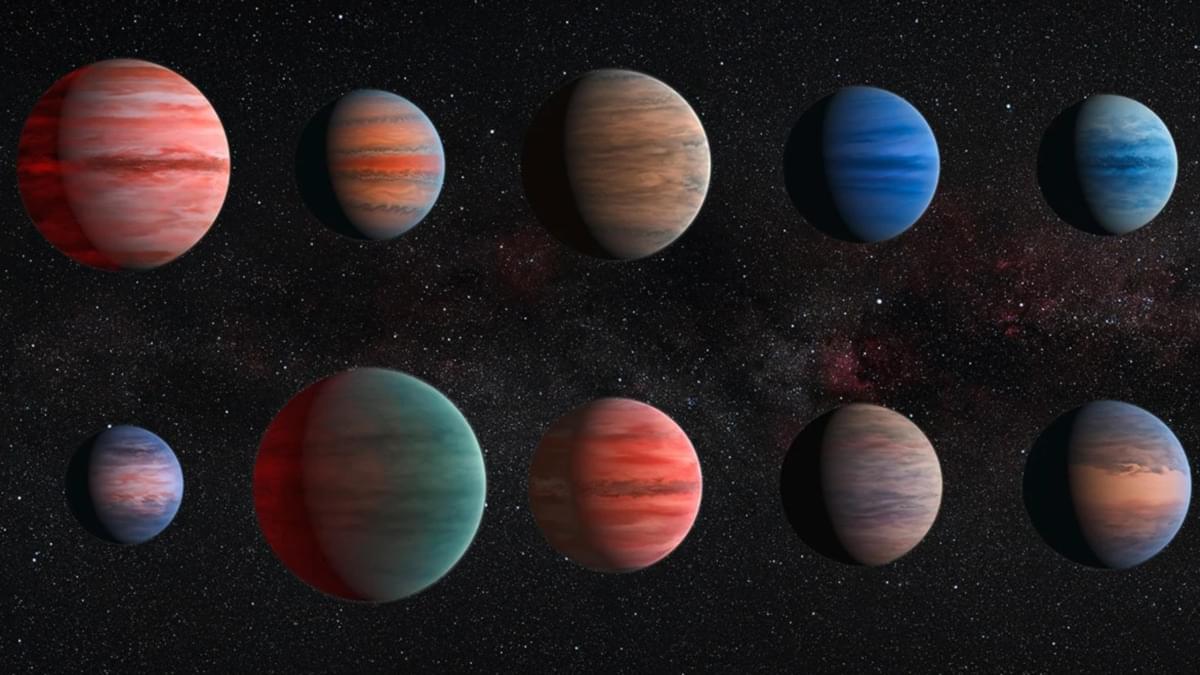
Discovering alien worlds around distant stars is hugely skill-reliant but also part cosmic lottery. One has to look from the right perspective, at a specific star, at the right time to catch a fleeting glimpse of an exoplanet. In a stroke of serendipity, astronomers have now observed an exoplanet do something they’d never seen before – it disappeared. Planets don’t usually disappear, so was this an observational fluke, perhaps suggesting that another telescope needs eyeglasses, as Hubble did in 1993? Was it evidence of a real Death Star erasing an exoplanet from existence? The real reason is just as exciting, and its unprecedented vanishing trick is described in a paper recently published in The Astrophysical Journal Letters. The exoplanet in question, called TOI-2535b, has a hidden companion, and these two planetary siblings are gravitationally nudging each other into a complex orbital shuffle around their stellar parent, named TOI-2535, a 9.7 billion-year-old K dwarf star slightly smaller than the Sun and located roughly 1,100 light-years away. The K dwarf is known to host this “hot Jupiter” TOI-2535b, which may be about the mass of our cold Jupiter but spirals so close to its star that it completes an orbit in just over eight days — 10 times more quickly than our innermost planet, Mercury.
A Robot Just Built a Structure in Space All on Its Own — For The First Time Ever

It’s a first in the space construction industry: a robot has independently built a structure in space without the help of astronauts.

The achievement points towards a new era of building beyond Earth, an era less confined by what we can fit on a rocket.

The robot used was the Autonomous In-Space Tensioned Reflector Assembly (ASTRA), developed by researchers at the California Institute of Technology (Caltech), and funded by the US Defense Advanced Research Projects Agency (DARPA).

New NoisyTCP vulnerability lets attackers crash Linux servers

An 11-year-old Linux kernel vulnerability, dubbed NoisyTCP, affects almost all Linux distributions and lets attackers crash systems running Nginx, Apache, and SSH servers with default configurations.

According to Hyunwoo Kim, the security researcher who discovered it, this pre-authenticated remote corruption flaw (tracked as CVE-2026–99288) stems from a NULL pointer dereference weakness in the Linux kernel’s TCP networking subsystem.

Unauthenticated attackers can trigger it remotely via maliciously crafted TCP packets that exploit the timing between SYN cookie handling and socket hashing to crash the kernel and operating system on targeted servers.