CISA warned that attackers are now exploiting a high-severity Apache ActiveMQ vulnerability, which was patched earlier this month after going undetected for 13 years.

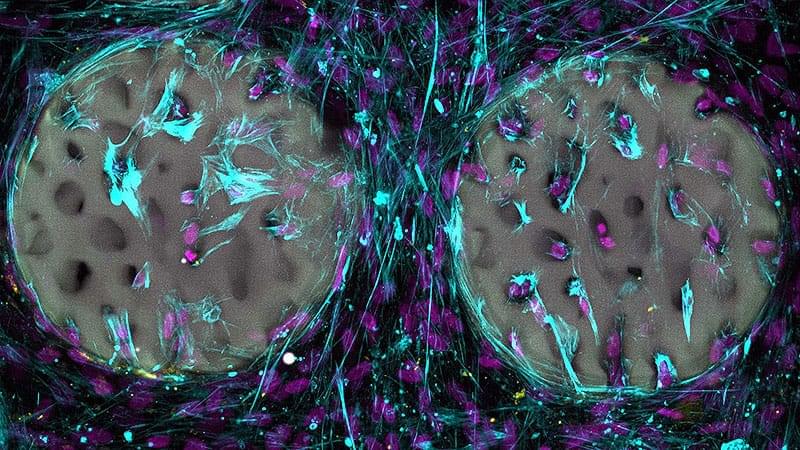
A new hydrogel may offer a way to regenerate bone—without transplants or implants.
Early research shows the material can support bone growth by creating a scaffold that encourages the body’s own repair processes. It’s designed to integrate with tissue and break down as new bone forms.
While still in early stages, the approach could represent a shift toward less invasive, regenerative options for bone repair.
Researchers have developed a soft laser-printed scaffold made almost entirely of water that bone cells readily colonize.
Get a Wonderful Person Tee: https://teespring.com/stores/whatdamath.
More cool designs are on Amazon: https://amzn.to/3QFIrFX
Alternatively, PayPal donations can be sent here: http://paypal.me/whatdamath.
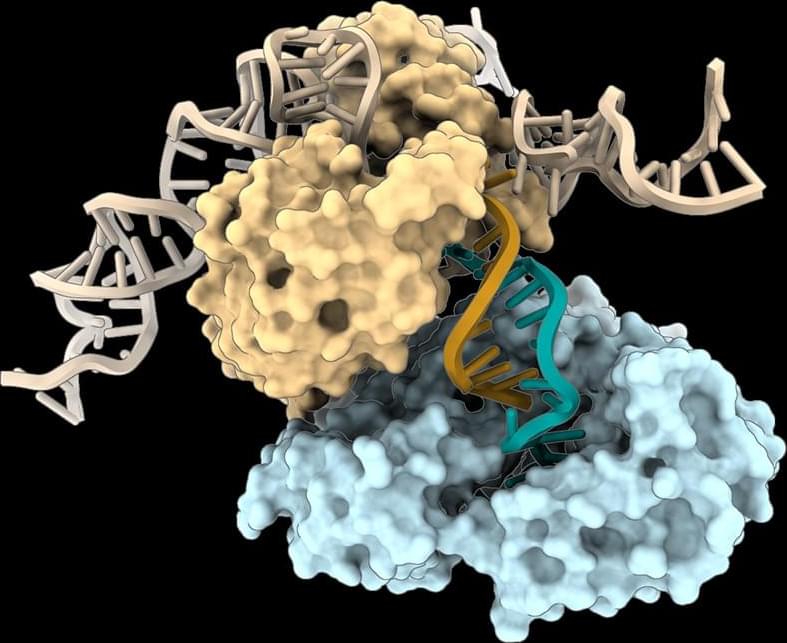
Hello and welcome! My name is Anton and in this video, we will talk about a strange experiment that inserted human language genes into mice…weird things happened.
Links:
https://www.nature.com/articles/s4146… https://www.cell.com/cell-reports/ful… #mice #experiment #language 0:00 Intriguing experiment where mice got a human language gene 0:50 NOVA1 gene in a nutshell 2:50 Human NOVA1 is different 3:45 Previous gene that was believed to be a language gene — Foxp2 5:35 New experiment focusing on a unique human gene 7:05 Weird experimental discoveries 8:40 What this means and what this gene does 9:40 Other things this gene seems to do 10:20 Conclusions Support this channel on Patreon to help me make this a full time job: / whatdamath Bitcoin/Ethereum to spare? Donate them here to help this channel grow! bc1qnkl3nk0zt7w0xzrgur9pnkcduj7a3xxllcn7d4 or ETH: 0x60f088B10b03115405d313f964BeA93eF0Bd3DbF Space Engine is available for free here: http://spaceengine.org Enjoy and please subscribe. Twitter:
/ whatdamath Facebook:
/ whatdamath Twitch:
/ whatdamath The hardware used to record these videos: New Camera: https://amzn.to/34DUUlv CPU: https://amzn.to/2LZFQCJ Video Card: https://amzn.to/2M1W26C Motherboard: https://amzn.to/2JYGiQQ RAM: https://amzn.to/2Mwy2t4 PSU: https://amzn.to/2LZcrIH Case: https://amzn.to/2MwJZz4 Microphone: https://amzn.to/2t5jTv0 Mixer: https://amzn.to/2JOL0oF Recording and Editing: https://amzn.to/2LX6uvU Some of the above are affiliate links, meaning I would get a (very small) percentage of the price paid. Thank you to all Patreon supporters of this channel Special thanks also goes to all the wonderful supporters of the channel through YouTube Memberships Credit: Emw CC BY-SA 3.0 https://en.wikipedia.org/wiki/NOVA1#/.… SWISS-MODEL — https://swissmodel.expasy.org/reposit… CC BY-SA 4.0 Licenses used: https://creativecommons.org/licenses/.… https://creativecommons.org/licenses/.… https://creativecommons.org/licenses/.… https://creativecommons.org/licenses/.… https://creativecommons.org/licenses/.… https://creativecommons.org/licenses/.… https://creativecommons.org/licenses/.… https://creativecommons.org/licenses/.…
https://academic.oup.com/nar/article/.…
https://www.cell.com/cell-reports/ful…
#mice #experiment #language.
0:00 Intriguing experiment where mice got a human language gene.
0:50 NOVA1 gene in a nutshell.
2:50 Human NOVA1 is different.
3:45 Previous gene that was believed to be a language gene — Foxp2
5:35 New experiment focusing on a unique human gene.
7:05 Weird experimental discoveries.
8:40 What this means and what this gene does.
9:40 Other things this gene seems to do.
10:20 Conclusions.
Support this channel on Patreon to help me make this a full time job:
/ whatdamath.
Bitcoin/Ethereum to spare? Donate them here to help this channel grow!
bc1qnkl3nk0zt7w0xzrgur9pnkcduj7a3xxllcn7d4
or ETH: 0x60f088B10b03115405d313f964BeA93eF0Bd3DbF
Space Engine is available for free here: http://spaceengine.org.
A large-scale analysis of Reddit data identifies symptoms—including fatigue and menstrual changes—frequently missed in clinical trials. These real-world patient insights highlight a broader spectrum of physiological responses to semaglutide and tirzepatide. More on the analysis.
Reproductive symptoms, temperature-related complaints, and psychiatric symptoms were among the side effects of GLP-1 drugs reported in an analysis of Reddit posts.
“Clinical trials tell us a lot, but they’re conducted under very controlled conditions with carefully selected participants,” Neil Sehgal, a doctoral student at the University of Pennsylvania School of Engineering and Applied Science, Philadelphia, told Medscape Medical News. “At the same time, millions of patients are using Reddit every day and sharing very detailed accounts of their experiences with these medications.”
To investigate signals that the medical community “might be missing or underappreciating,” Sehgal and colleagues developed an AI-based system to automatically extract and categorize symptoms from Reddit posts at scale.
Scientists who use imaging to understand the brain’s complexity often focus on the strongest signals and ignore the rest. But this strategy, researchers warn, may reveal only the tip of the iceberg. A study published in Nature Human Behavior reveals that connections routinely overlooked as “noise” during neuroimaging data analysis can predict behavior with remarkable accuracy—and implicate entirely different brain networks. The finding could open many new targets for treating psychiatric illness, the researchers say.
“Many studies that rely on techniques like feature selection—which simplifies the brain down to a narrow slice—might only uncover a small part of the true neurobiology that underlies a given behavior,” says lead author Brendan Adkinson, Ph.D., an MD-Ph. D. student at Yale School of Medicine.
“Our study suggests that there may be multiple, non-overlapping networks capable of predicting a given behavior just as well.”
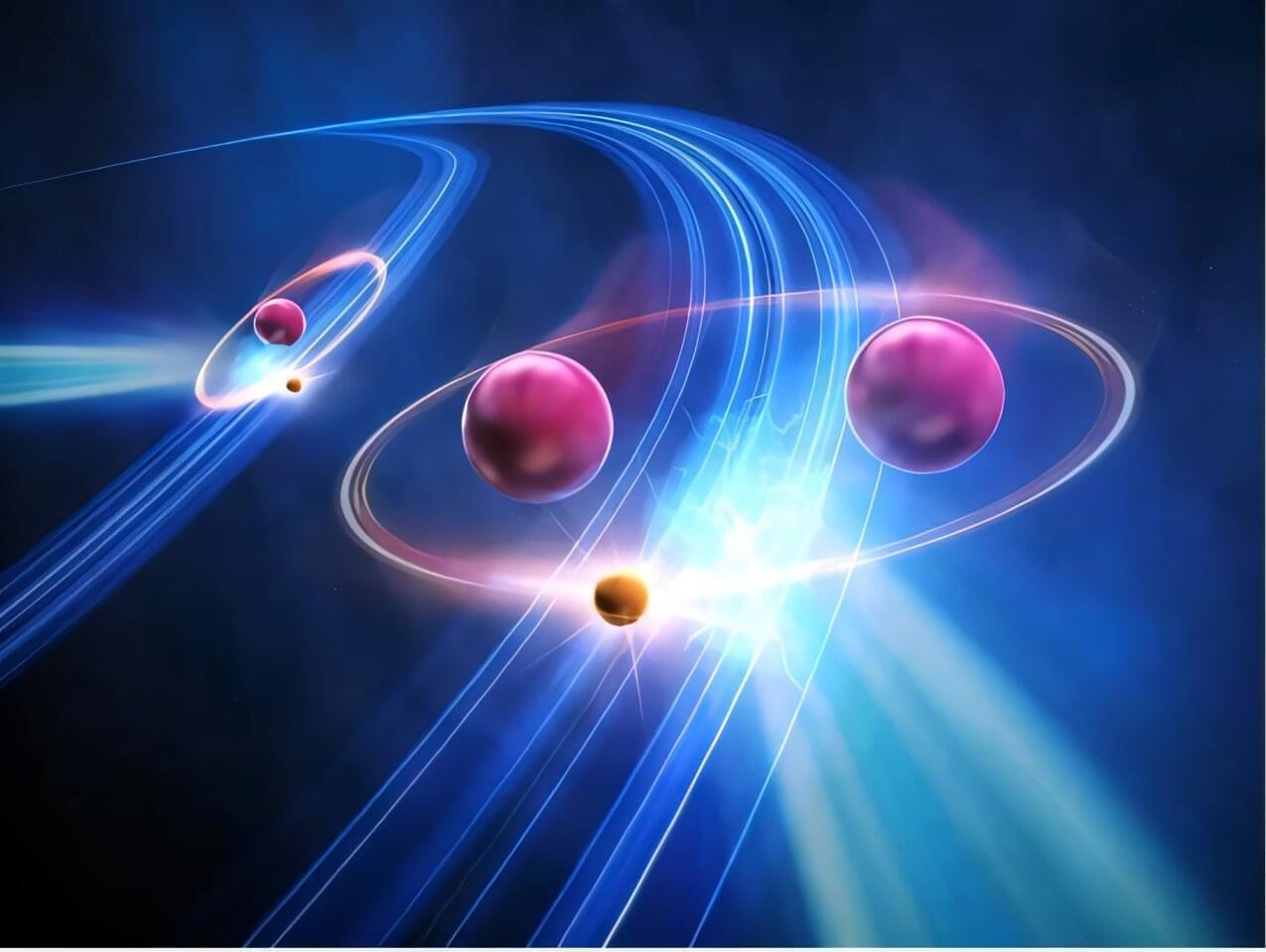
Scientists have directly observed muonic molecules in resonance states for the first time, using a high-resolution X-ray detector, a new Science Advances study reports.
Resonance states are critical in determining the reaction rate of muon catalyzed fusion (µCF), a process that utilizes elementary particles known as muons. Within muonic molecules, the nuclei are confined in extremely close proximity, enabling nuclear fusion to occur even at room temperature without the need for plasma.
Currently, research aimed at the practical application of nuclear fusion is underway worldwide. In principle, fusion offers highly safe energy with no risk of runaway accidents. It utilizes fuel easily extracted from seawater and produces clean energy without carbon dioxide emissions.