Toggle light / dark theme

Get the latest international news and world events from around the world.

Log in for authorized contributors

Real-time view inside microreactor reveals 2D semiconductor growth secrets

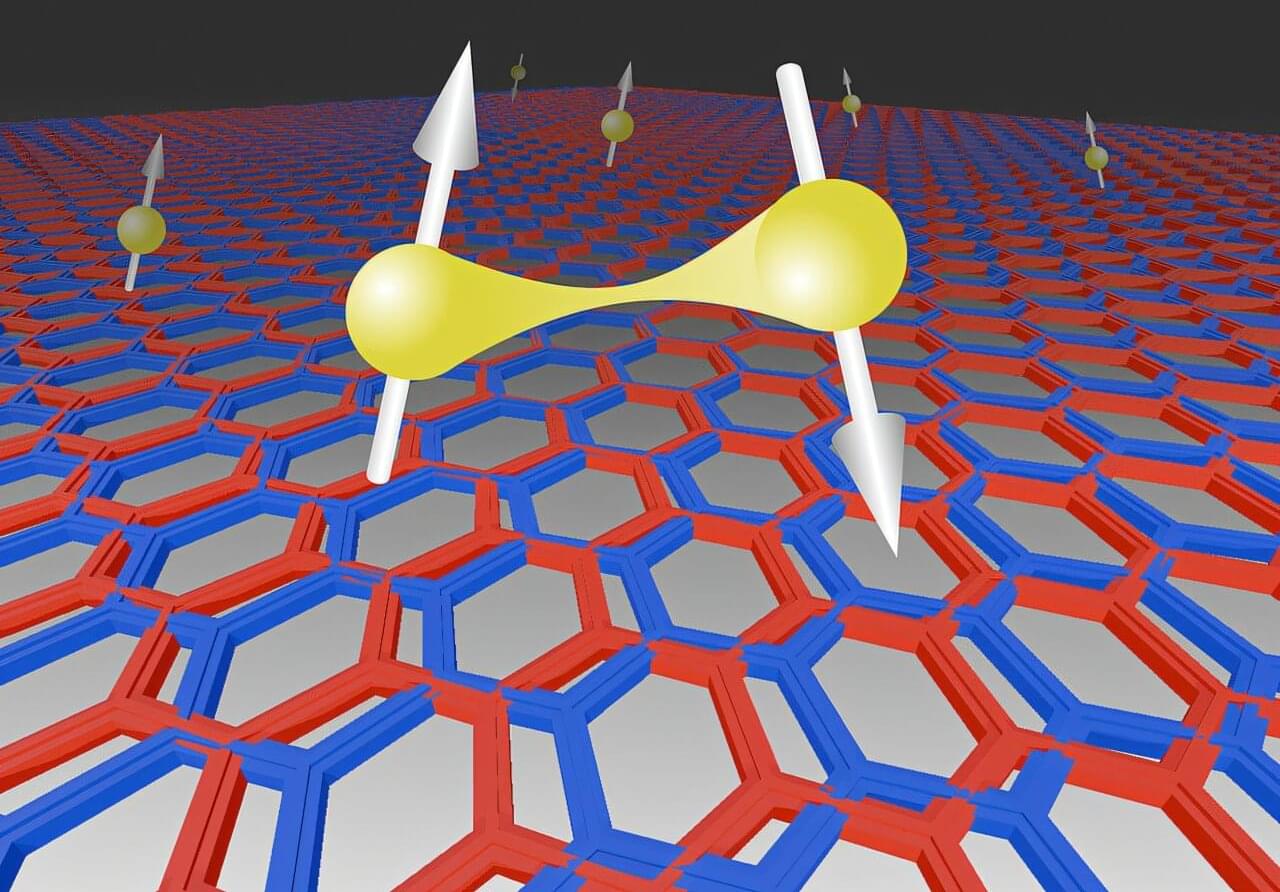
As the miniaturization of silicon-based semiconductor devices approaches fundamental physical limits, the electronics industry faces an urgent need for alternative materials that can deliver higher integration and lower power consumption. Two-dimensional (2D) semiconductors, which are only a single atom thick, have emerged as promising candidates due to their unique electronic and optical properties. However, despite intense research interest, controlling the growth of high-quality 2D semiconductor crystals has remained a major scientific and technological challenge.

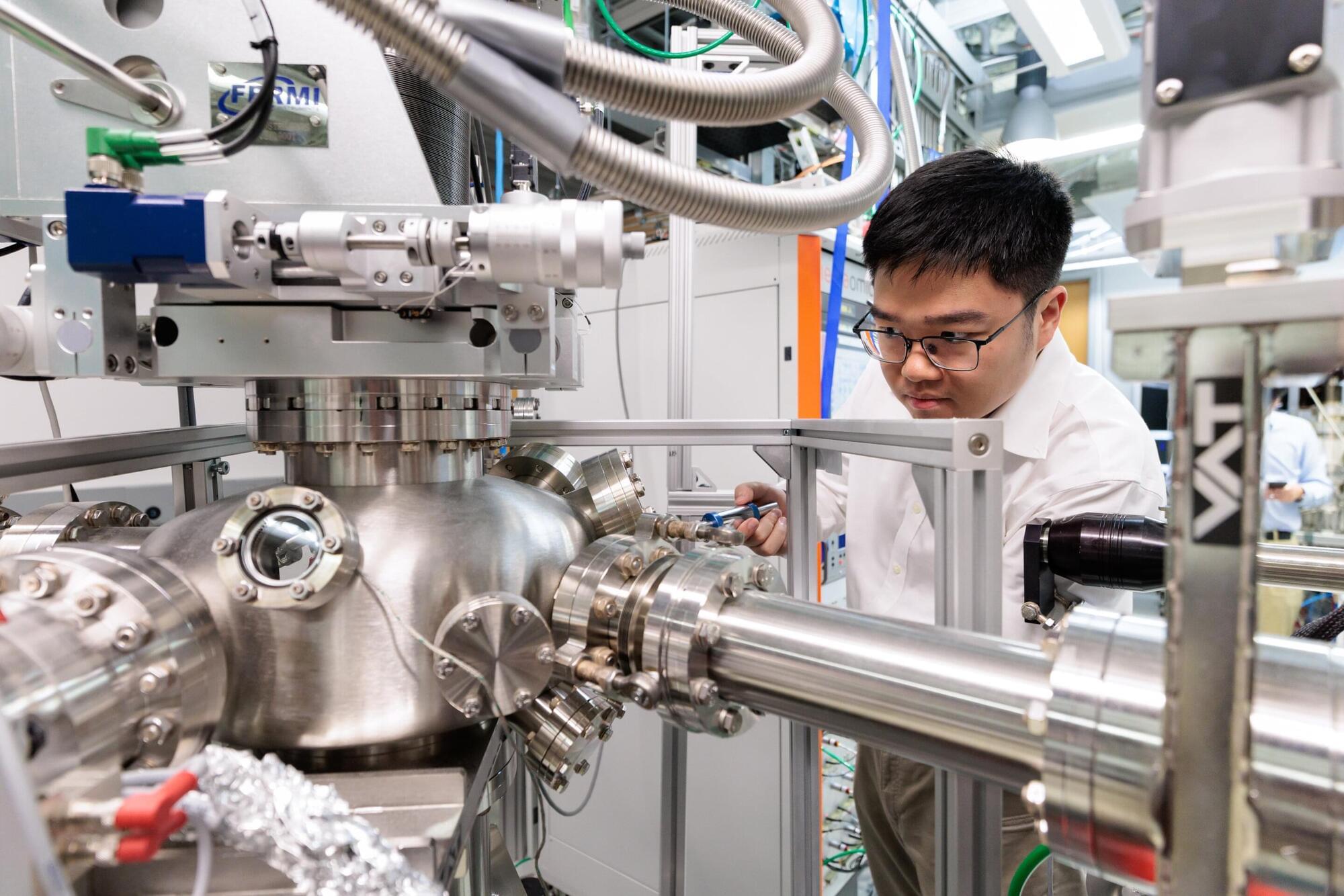
A research team led by Research Associate Professor Hiroo Suzuki from the Department of Electrical and Communication Engineering at Okayama University, Japan, together with Dr. Kaoru Hisama from Shinshu University and Dr. Shun Fujii from Keio University, has now overcome a key barrier by directly observing how these materials grow at the atomic scale. Using an advanced in situ observation system, the researchers captured real-time images of monolayer transition metal dichalcogenides (TMDCs) forming inside a micro-confined reaction space. The study was published on December 12, 2025, in the journal Advanced Science.

The work builds on earlier success by the team in synthesizing large-area monolayer TMDC single crystals using a substrate-stacked microreactor. While that method consistently produced high-quality materials, the mechanisms governing crystal growth inside the confined space were poorly understood.

Machine learning accelerates plasma mirror design for high-power lasers

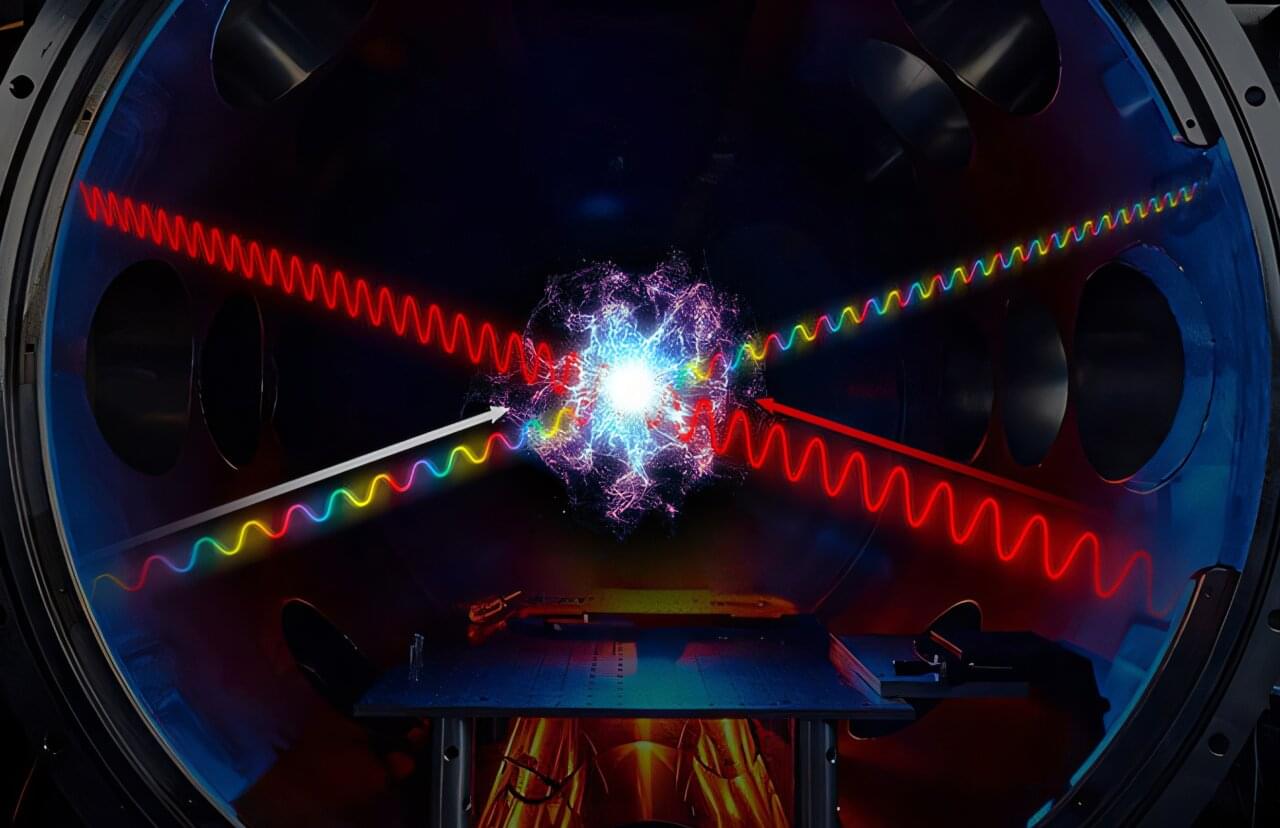
Plasma mirrors capable of withstanding the intensity of powerful lasers are being designed through an emerging machine learning framework. Researchers in Physics and Computer Science at the University of Strathclyde have pooled their knowledge of lasers and artificial intelligence to produce a technology that can dramatically reduce the time it takes to design advanced optical components for lasers—and could pave the way for new discoveries in science.

High-power lasers can be used to develop tools for health care, manufacturing and nuclear fusion. However, these are becoming large and expensive due to the size of their optical components, which is currently necessary to keep the laser beam intensity low enough not to damage them. As the peak power of lasers increases, the diameters of mirrors and other optical components will need to rise from approximately one meter to more than 10 meters. These would weigh several tons, making them difficult and expensive to manufacture.

Two-step approach creates more sustainable protein nanostructures for advanced sensing and therapeutics

Gas vesicles are among the largest known protein nanostructures produced and assembled inside microbial cells. These hollow, air-filled cylindrical nanostructures found in certain aquatic microbes have drawn increasing interest from scientists due to their potential for practical applications, including as part of novel diagnostic and therapeutic tools. However, producing gas vesicles is a difficult task for cells in the lab, hindering the development of applications.

In a study recently published in Nature Communications, a team of researchers led by Rice University bioengineer George Lu reports the development of a new genetic regulatory system to improve cell viability during the production of gas vesicles.

“In the past few years, studies have shown that gas vesicles’ ability to reflect sound makes them useful as unique and versatile acoustic reporter systems for biomedical research and clinical applications,” said Lu, an assistant professor in the Department of Bioengineering at Rice’s George R. Brown School of Engineering and Computing.

Long-period Jupiter-like exoplanet discovered with TESS

Using NASA’s Transiting Exoplanet Survey Satellite (TESS), an international team of astronomers has discovered a new extrasolar planet transiting a distant star. The newfound alien world, designated TOI-6692 b, is the size of Jupiter and has an orbital period of about 130 days. The discovery was presented in a paper published January 22 on the arXiv pre-print server.

TESS is conducting a survey of about 200,000 bright stars near the sun with the aim of searching for transiting exoplanets. To date, more than 7,800 potential planets (known as TESS Objects of Interest) have been cataloged using this satellite, with 733 of those discoveries officially verified.

A more realistic picture of platinum electrodes

Current electrochemical theory does not adequately describe realistic platinum electrodes. Scientists at Leiden University have now, for the first time, mapped the influence of imperfect platinum surfaces. This provides a more accurate picture of these electrodes, with applications in hydrogen production and sensors.

Platinum electrodes play a crucial role in electrochemical applications. They are used in sensors, catalysis and fuel cells, for example in the production of green hydrogen. These developments call for a better and more realistic understanding of the underlying fundamental electrochemistry. Current theory falls short.

The surface of a platinum electrode appears smooth. But if you zoom in to the atomic level, you see an irregular landscape with so-called defects. These turn out to influence the electrochemical reactions that take place there. Ph.D. candidates Nicci Lauren Fröhlich and Jinwen Liu investigated this influence under the supervision of Professor Marc Koper and Assistant Professor Katharina Doblhoff-Dier at the Leiden Institute of Chemistry. Their results are published in Nature Chemistry.

New AI system fixes 3D printing defects in real time

Additive manufacturing has revolutionized manufacturing by enabling customized, cost-effective products with minimal waste. However, with the majority of 3D printers operating on open-loop systems, they are notoriously prone to failure. Minor changes, like adjustments to nozzle size or print speed, can lead to print errors that mechanically weaken the part under production.

Traditionally, manufacturers fix these issues on a case-by-case basis, ultimately “babysitting” the printer to manually adjust parameters and test samples in an effort to figure out what went wrong.

Brain microenvironment redefines metastatic tumor subtypes, facilitating precision oncology treatment

An interdisciplinary multi-center research team led by the LKS Faculty of Medicine (HKUMed) and Faculty of Dentistry at the University of Hong Kong has constructed the world’s largest multi-omics atlas of brain metastases. This comprehensive analysis included 1,032 brain metastasis samples from diverse primary tumors, together with 82 matched primary tumors and 20 glioblastomas (a highly malignant type of brain tumor) as controls.

The findings provide a novel framework for classifying brain metastases and establish a foundation for the development of personalized treatment strategies, advancing the field of precision oncology. This research was published in the journal Nature Communications.

Lab-grown algae remove microplastics from water

A University of Missouri researcher is pioneering an innovative solution to remove tiny bits of plastic pollution from our water. Mizzou’s Susie Dai recently applied a revolutionary strain of algae toward capturing and removing harmful microplastics from polluted water. Driven by a mission to improve the world for both wildlife and humans, Dai also aims to repurpose the collected microplastics into safe, bioplastic products such as composite plastic films.

“Microplastics are pollutants found almost everywhere in the environment, such as in ponds, lakes, rivers, wastewater and the fish that we consume,” Dai, a professor in the College of Engineering and principal investigator at the Bond Life Sciences Center, said. “Currently, most wastewater treatment plants can only remove large particles of plastic, but microplastics are so small that they slip through and end up in drinking water, polluting the environment and harming ecosystems.”

The findings are published in the journal Nature Communications.

Earth’s largest volcanic event reshaped an oceanic plate, seismic wave analysis reveals

A research group has revealed through seismic wave analysis that the oceanic plate beneath the Ontong Java Plateau—the world’s largest oceanic plateau—was extensively altered by massive volcanic activity during its formation. The study is published in Geophysical Research Letters.

The oceanic plate beneath the Ontong Java Plateau (OJP) has a composite structure consisting of layered structures overlaid by dike swarms. Low seismic velocity anomalies within the plate suggest chemical modification by magma derived from a thermochemical plume. These findings demonstrate that oceanic plates can undergo significant physicochemical modification due to large-scale volcanic activity, contributing to a comprehensive understanding of plate formation processes.

The research was led by Lecturer Azusa Shito of Okayama University of Science, together with Associate Professor Akira Ishikawa of the Institute of Science Tokyo and Professor Masako Yoshikawa of Hiroshima University.

AI streamlines deluge of data from particle collisions

Scientists at the U.S. Department of Energy’s (DOE) Brookhaven National Laboratory have developed a novel artificial intelligence (AI)-based method to dramatically tame the flood of data generated by particle detectors at modern accelerators. The new custom-built algorithm uses a neural network to intelligently compress collision data, adapting automatically to the density or “sparsity” of the signals it receives.

As described in a paper just published in the journal Patterns, the scientists used simulated data from sPHENIX, a particle detector at Brookhaven Lab’s Relativistic Heavy Ion Collider (RHIC), to demonstrate the algorithm’s potential to handle trillions of bits of detector data per second while preserving the fine details physicists need to explore the building blocks of matter.

The algorithm will help physicists gear up for a new era of streaming data acquisition, where every collision is recorded without pre-selecting which ones might be of interest. This will vastly expand the potential for more accurate measurements and unanticipated discoveries.

/* */