Toggle light / dark theme

Get the latest international news and world events from around the world.

Log in for authorized contributors

NVIDIA Offers “Vera” CPU as a Standalone Competitor to Intel’s Xeon and AMD’s EPYC Processors

NVIDIA’s integration of AI systems now extends beyond GPUs with generic Arm CPUs. The company is introducing its high-performance “Vera” CPUs as a standalone product, marking its first entry as a competitor to Intel Xeon and AMD EPYC server-grade CPUs. NVIDIA CEO Jensen Huang confirmed this new venture in an interview with Bloomberg, stating, “For the very first time, we’re going to be offering Vera CPUs. Vera is such an incredible CPU. We’re going to offer Vera CPUs as a standalone part of the infrastructure. You can now run your computing stack not only on NVIDIA GPUs but also on NVIDIA CPUs. Vera is completely revolutionary… Coreweave will have to act quickly if they want to be the first to implement Vera CPUs. We haven’t announced any of our CPU design wins yet, but there will be many.”

The “Vera” CPU is equipped with 88 custom Armv9.2 “Olympus” cores that utilize Spatial Multithreading technology, allowing it to handle 176 threads through physical resource partitioning. These custom cores support native FP8 processing, enabling some AI workloads to be executed directly on the CPU with 6x128-bit SVE2 implementation. The chip offers 1.2 TB/s of memory bandwidth and supports up to 1.5 TB of LPDDR5X memory, making it ideal for memory-intensive computing tasks. However, with the CPU now being offered as a standalone solution, it is unclear whether there will be any classic memory options like DDR5 RDIMMs, or if the CPU will rely solely on SOCAMM LPDDR5X. A second-generation Scalable Coherency Fabric provides 3.4 TB/s of bisection bandwidth, connecting the cores across a unified monolithic die and eliminating the latency issues common in chiplet architectures. Additionally, NVIDIA has integrated a second-generation NVLink Chip-to-Chip technology, delivering up to 1.

Prenatal exposure to air pollution associated with lower cognitive performance in early childhood

The prenatal period is a critical window for brain development, yet few studies have examined the impact of air pollution exposure during pregnancy on child cognition. A new study led by the Barcelona Institute for Global Health (ISGlobal), in collaboration with the University of Barcelona (UB), shows that prenatal exposure to pollution is associated with lower cognitive performance in newborns.

These findings highlight the importance of reducing air pollution exposure, especially during pregnancy, to protect neurodevelopment.

The study, published in Environmental Pollution, included data from 168 mother-child pairs participating in the BiSC (Barcelona Life Study Cohort) project, conducted in Barcelona between 2018 and 2023.

Brain Scans Reveal an “Inflamed Brain Type” Across Major Psychiatric Disorders

Individuals with psychiatric disorders exhibiting seemingly similar symptoms often respond very differently to the same treatment, suggesting that distinct biological processes are at work beneath the surface of similar clinical presentations. Researchers have now identified a distinct immuno-inflammatory biomarker across major psychiatric disorders that can be detected using non-invasive brain imaging. Patients exhibiting this brain signature showed systemic inflammation and poorer response to standard treatments. The findings of the new study in Biological Psychiatry, published by Elsevier, lay the foundation for a biology-augmented diagnostic framework in psychiatry and detail the potential for biomarker-guided, anti-inflammatory precision therapies.

Neuroimaging links diverse biological mechanisms to clinical manifestations, providing compelling insights into the neural mechanisms underlying brain function implicated in psychiatric diseases. Through neuroimaging, shared neural correlates have been increasingly identified across major psychiatric disorders such as schizophrenia, major depressive disorder, and bipolar disorder. While subtypes within and across psychiatric diagnoses have been identified, the biological underpinnings remain unclear. This study aimed to uncover these hidden “biotypes,” focusing particularly on brain inflammation—a mechanism thought to drive illness in a subset of patients, but which is difficult to measure directly in the living brain.

The research was conducted in two independent cohorts. In the first stage, brain connectivity scans were combined with blood-based molecular (DNA methylation) data to identify a brain network pattern linked to immune system dysfunction. In the second longitudinal stage, investigators validated that patients with this brain marker had higher blood inflammation indices—such as neutrophil-to-lymphocyte ratios—and showed less improvement with conventional treatments during hospitalization.

Thomas Edison May Have Created a Miracle Material Before Physics Knew It Existed

A modern materials study suggests that Thomas Edison’s early light bulb experiments may have unknowingly produced graphene decades before the material was formally theorized or isolated. Thomas Edison never heard the word “graphene,” yet researchers at Rice University think his work may still bru

Neuron position found less crucial for brain connectivity than once thought

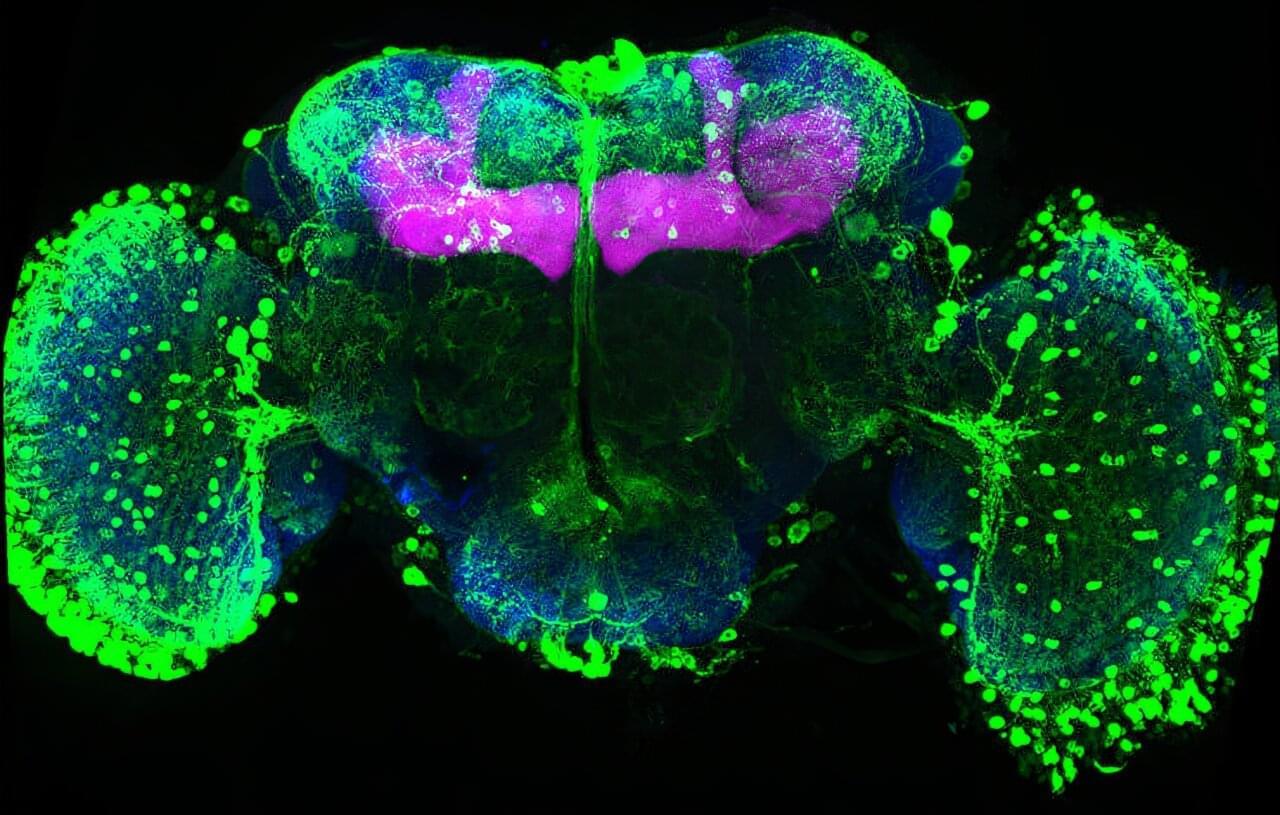
The human brain contains billions of connected neurons that collectively support different mental functions, including the processing of sensory information, the encoding of memories, attention processes, and decision-making. For a long time, neuroscientists have assumed the position of specific neurons in the brain plays a key role in the brain’s connectivity and proper functioning.

Researchers at University of Geneva, INSERM, Ecole Polytechnique Fédérale de Lausanne and other institutes recently gathered evidence that contradicts this long-standing assumption, showing misplaced neurons can still retain their “identity,” connect with other neurons and support the processing of sensory information.

Their paper, published in Nature Neuroscience, could reshape the present understanding of developmental disorders and other conditions linked to the rearrangement of neurons or cortical malformations.

/* */