Toggle light / dark theme

Get the latest international news and world events from around the world.

Log in for authorized contributors

Firefox now has a free built-in VPN with 50GB monthly data limit

Mozilla released Firefox 149 with added privacy protection through a built-in VPN tool offering up to 50GB of monthly traffic.

The feature uses a secure proxy server to route only traffic from the browser, unlike the company’s commercial Mozilla VPN, which covers system-wide traffic.

“Whether you’re using public Wi-Fi while traveling, searching for sensitive health information, or shopping for something personal, this feature gives you a simple way to stay protected,” Mozilla says.

New light trap design supercharges atom-thin semiconductors

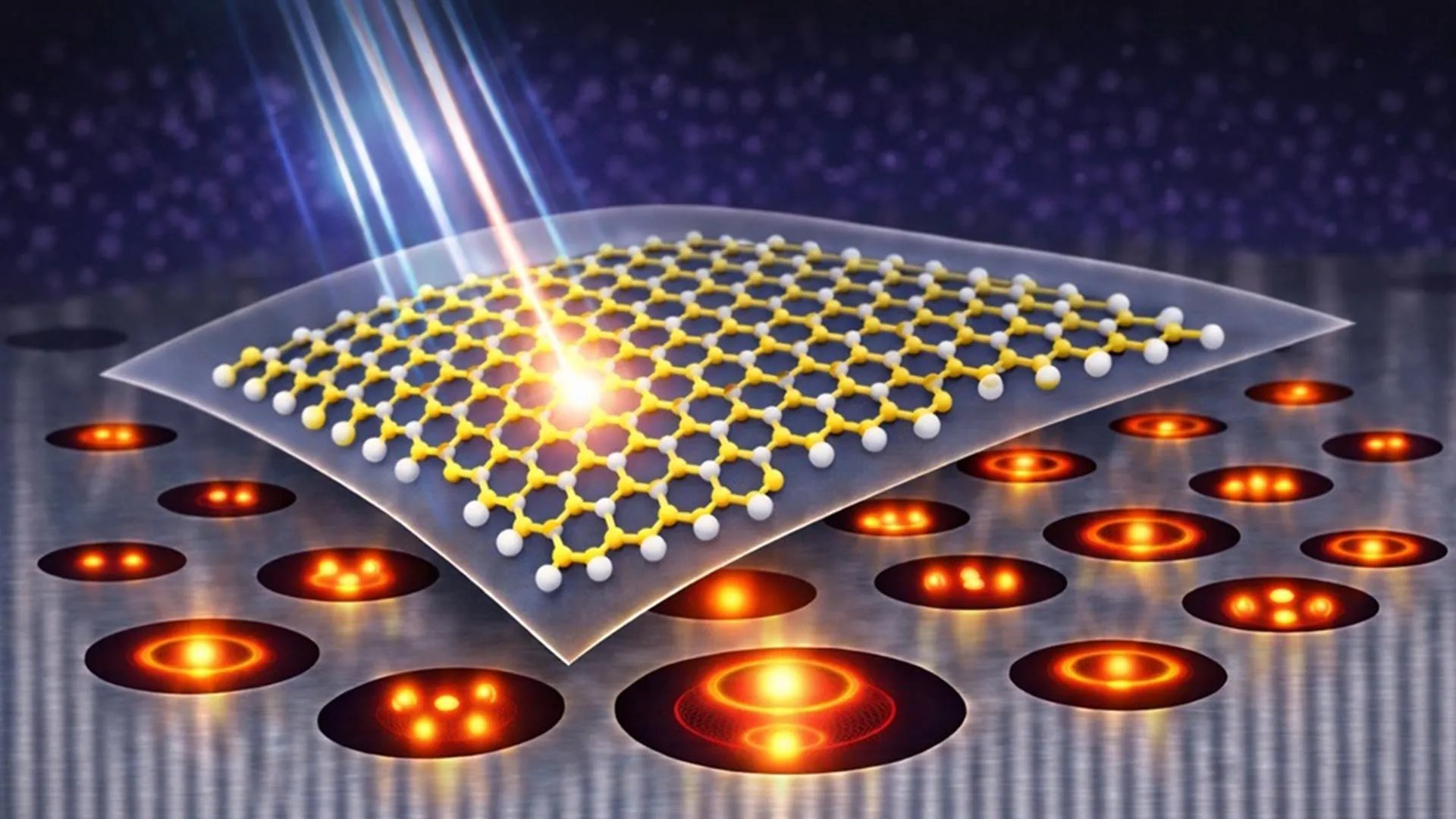
Scientists have found a clever way to supercharge ultra-thin semiconductors by reshaping the space beneath them rather than altering the material itself. By placing a single-atom-thick layer of tungsten disulfide over tiny air cavities carved into a crystal, they created miniature “light traps” that dramatically boost brightness and optical effects—up to 20 times stronger emission and 25 times stronger nonlinear signals. These hollow structures, called Mie voids, concentrate light exactly where the material sits, overcoming a major limitation of atomically thin devices.

New lipid nanoparticle design improves precision of mRNA vaccine delivery

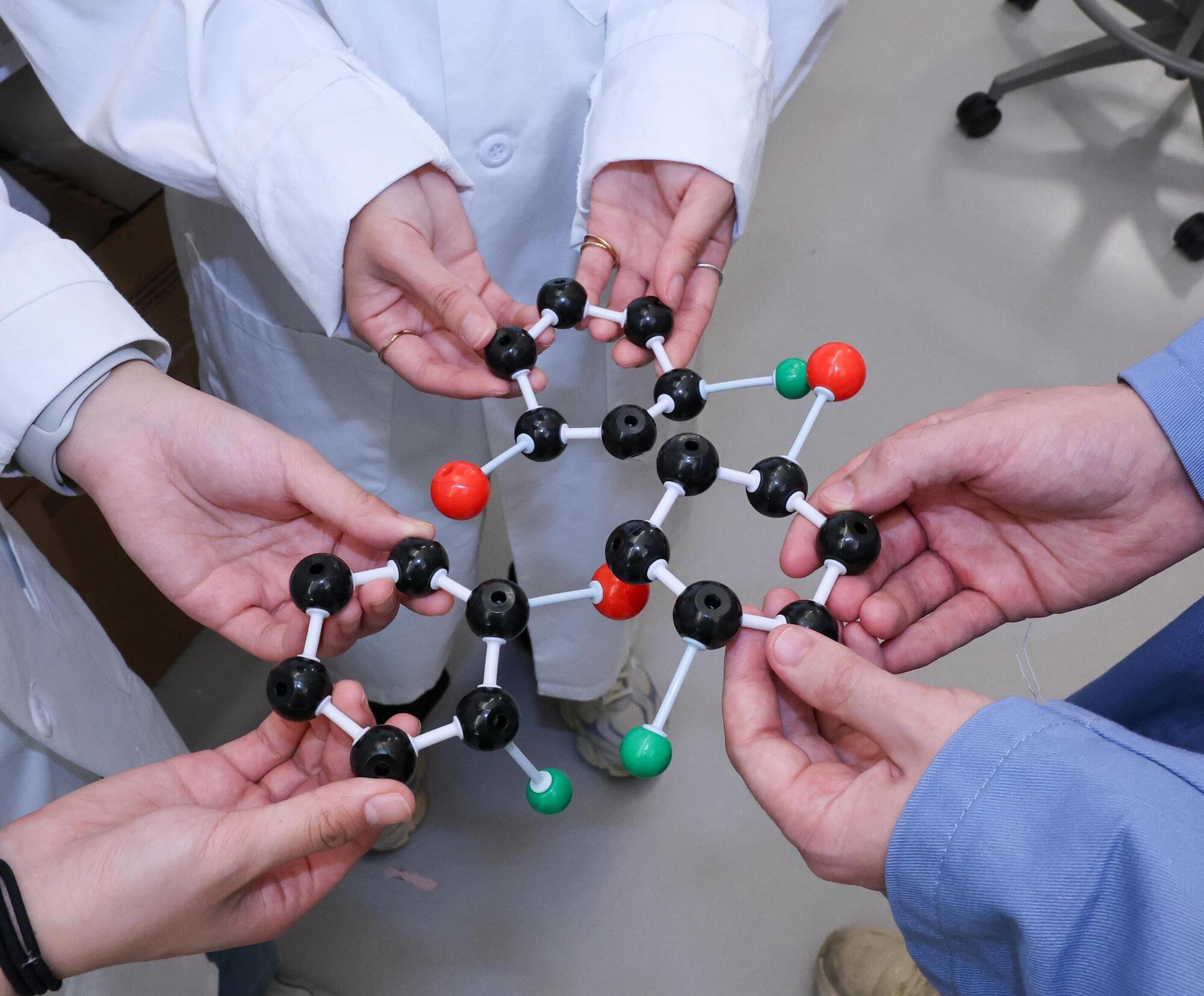
Penn Engineers have redesigned a key component of lipid nanoparticles (LNPs), the delivery vehicles behind mRNA vaccines, to steer the particles toward lymph nodes while reducing off-target delivery to the liver. The advance could make mRNA vaccines more efficient, potentially achieving strong immune protection at lower doses.

“The more particles that reach the lymph nodes, the fewer particles each dose needs,” says Michael J. Mitchell, Associate Professor in Bioengineering (BE) and senior author of a new study in Journal of the American Chemical Society that describes how the researchers modified the ionizable lipid, a key LNP ingredient that helps mRNA enter cells.

In animal models, the new “aroLNPs,” whose name refers to the addition of a chemical structure called an “aromatic ring” to the ionizable lipid, delivered at least 10-fold less mRNA to the liver compared to the LNP formulation in the Moderna COVID-19 vaccine, while maintaining similar levels of lymph-node delivery.


A spinel crystal structure exhibits unusual, pressure-induced superconductivity

Superconductors are materials that conduct electricity with an electrical resistance of zero. Superconductivity is generally observed when materials are cooled down to extremely low temperatures. In some cases, however, like in so-called high-temperature superconductors, this property emerges at higher temperatures.

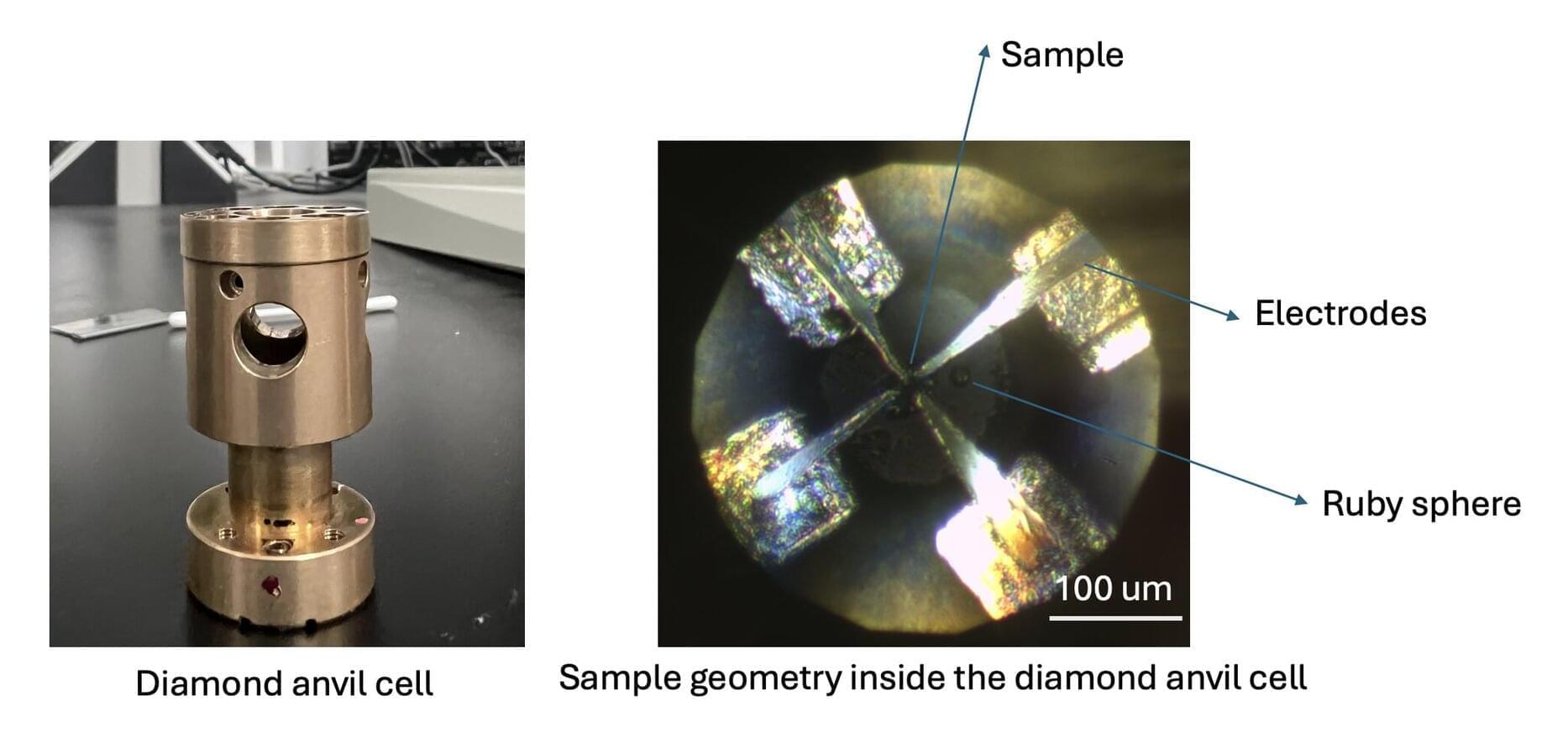
Researchers at the Center for High Pressure Science & Technology Advanced Research, Chinese Academy of Sciences and other institutes recently observed pressure-induced superconductivity in CuIr2S4, a spinel that typically becomes an insulator when cooled below about 230 K, meaning that electricity can no longer flow through it.

Their paper, published in Physical Review Letters, shows that progressively tuning this material’s crystal structure using pressure prompts the emergence of two distinct superconducting phases, dubbed SC-I and SC-II, with a maximum transition temperature of 18.2 K.

Nonsense-mediated mRNA decay orchestrates neuronal migration and cortical lamination while modulating Reelin and ciliary gene regulatory networks

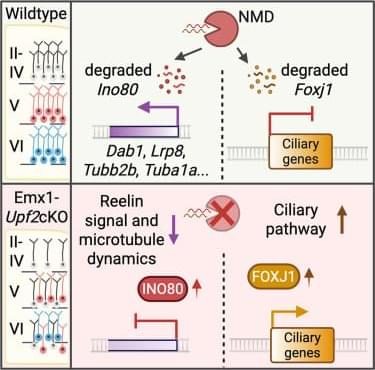
Lin et al. show that nonsense-mediated mRNA decay (NMD) is essential for neuronal migration and cortical lamination. UPF2 regulates expression of Reelin signaling and microtubule genes via Ino80 and represses ciliary gene Foxj1 to assure normal migration, revealing a key regulated RNA decay mechanism in brain development.

RCC1 depletion drives protein transport defects and rupture in micronuclei

Spotlight: Hiba Baaziz and Daniela Cimini (Virginia Tech) discuss recent work from Zych et al. (https://hubs.la/Q0485YJy0), showing that low RCC1 levels impair protein export in micronuclei, causing overgrowth and rupture. https://hubs.la/Q0485R1g0


Micronuclei (MN), a hallmark of chromosome instability, frequently rupture, leading to protumorigenic consequences. MN rupture requires nuclear lamina defects, yet their underlying causes remain unclear. Here, we demonstrate that MN lamina gaps are linked to excessive MN growth resulting from impaired protein export. This export defect arises from reduced levels of the transport protein RCC1 in MN. Overexpressing RCC1 increases protein export and protects MN from rupture. Differences in RCC1 levels linked to chromatin state also explain why high euchromatin content increases the stability of small MN. Additional RCC1 loss in euchromatic MN results in impaired protein import. For these MN, increasing RCC1, directly or through increasing histone methylation, accelerates rupture. Our findings define a new model of MN rupture, where defects in protein export drives continuous MN growth causing nuclear lamina gaps that predispose MN to membrane rupture and where chromatin-specific features can alter rupture of small MN by further impairing nuclear transport.

/* */