OpenAI announced Friday it will begin testing advertisements on ChatGPT in the coming weeks, as the wildly popular artificial intelligence chatbot seeks to increase revenue to cover its soaring costs.

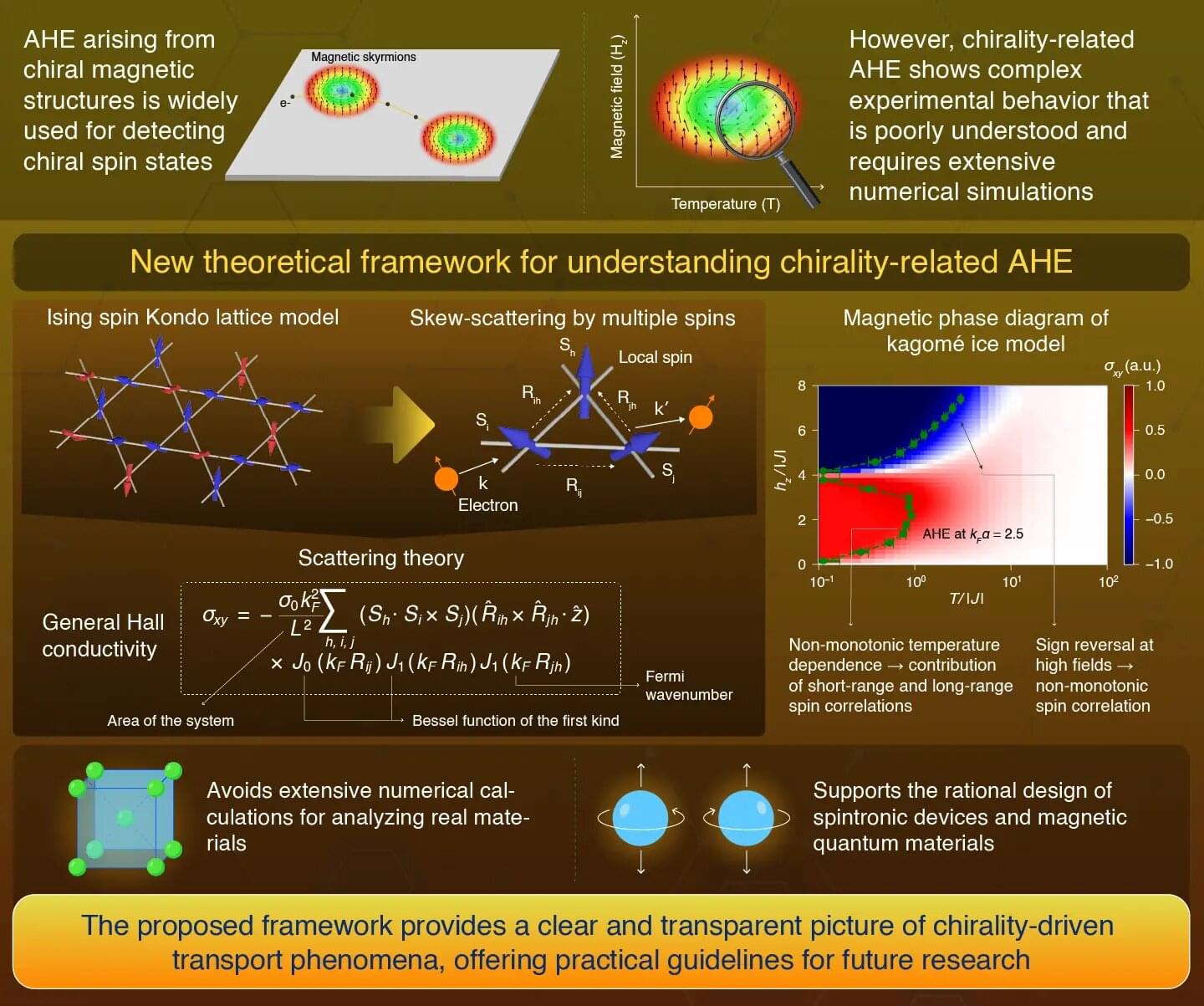
A new framework for understanding the nonmonotonic temperature dependence and sign reversal of the chirality-related anomalous Hall effect in highly conductive metals has been developed by scientists at Science Tokyo. This framework provides a clear picture of the unusual temperature dependence of chirality-driven transport phenomena, forming a foundation for the rational design of next-generation spintronic devices and magnetic quantum materials.
Magnetic materials exhibit a variety of intriguing properties during their magnetization process that reflect their magnetic states and excitations. These properties are studied by applying an external magnetic field to the material, producing the magnetization curve. Magnetic metals additionally demonstrate rich behavior in transport phenomena, referring to the flow of charge, heat, or spin under the influence of magnetic fields.
However, some of these behaviors are difficult to probe using the magnetization curve. The anomalous Hall effect (AHE) is one such effect. In the AHE, when an electric current passes through a magnetic metal, a voltage perpendicular to the current arises even in the absence of an external magnetic field. By contrast, in the traditional Hall effect, such a transverse voltage appears only when an external magnetic field is applied.
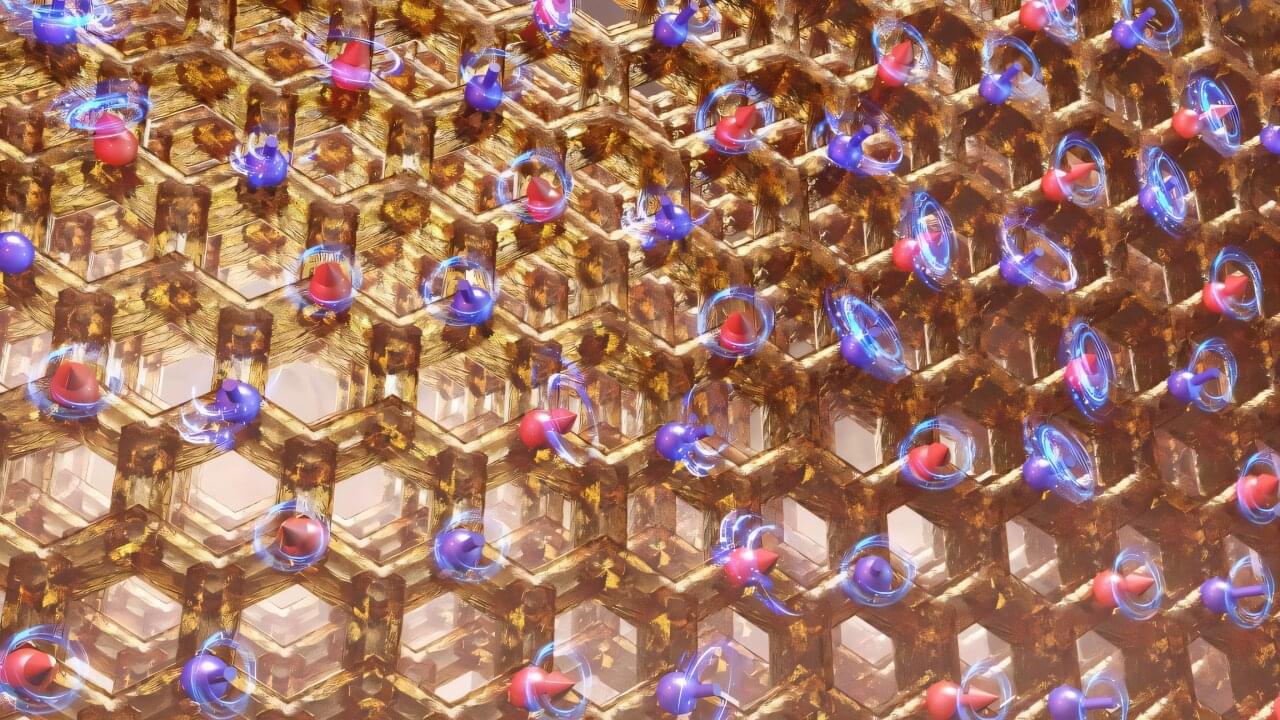
Researchers at the Department of Energy’s Oak Ridge National Laboratory are pioneering the design and synthesis of quantum materials, which are central to discovery science involving synergies with quantum computation. These innovative materials, including magnetic compounds with honeycomb-patterned lattices, have the potential to host states of matter with exotic behavior.
Using theory, experimentation and computation, scientists synthesized a magnetic honeycomb of potassium cobalt arsenate and conducted the most detailed characterization of the material to date. They discovered that its honeycomb structure is slightly distorted, causing magnetic spins of charged cobalt atoms to strongly couple and align.
Tuning these interactions, such as through chemically modifying the material or applying a large magnetic field, may enable the formation of a state of matter known as a quantum spin liquid. Unlike permanent magnets, in which spins align fixedly, quantum spins do not freeze in one magnetic state.

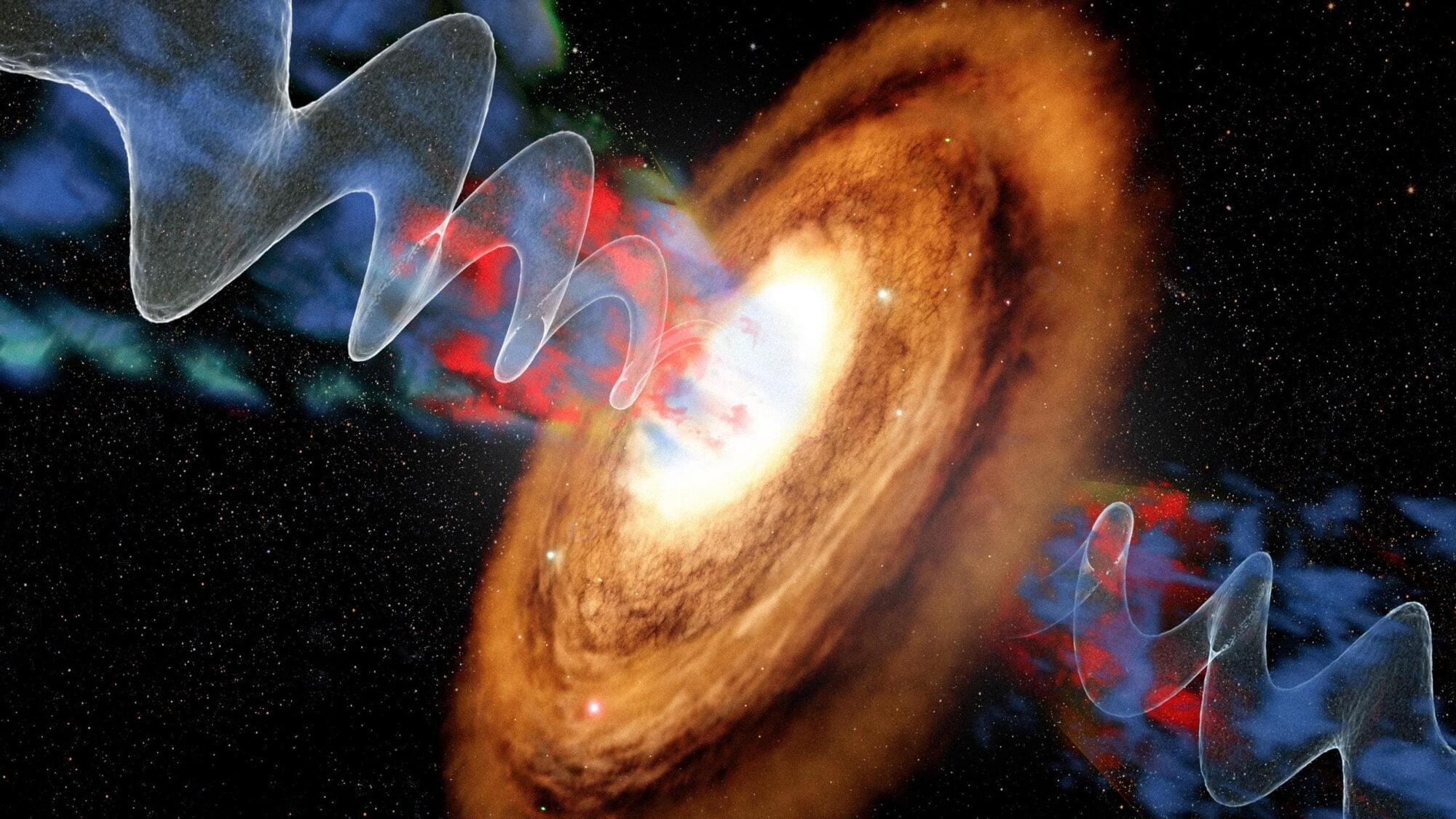
An international team of astronomers, including researchers from the Department of Physics at The University of Hong Kong (HKU), has uncovered the first decisive evidence that at least some fast radio burst (FRB) sources—brief but powerful flashes of radio waves from distant galaxies—reside in binary stellar systems. This means the FRB source is not an isolated star, as previously assumed, but part of a binary stellar system in which two stars orbit each other.
Using the Five-hundred-meter Aperture Spherical Telescope (FAST) located in Guizhou, also known as the “China Sky Eye,” the team detected a distinctive signal that reveals the presence of a nearby companion star orbiting the FRB source.
The discovery, published in Science, is based on nearly 20 months of monitoring an active repeating FRB located about 2.5 billion light-years away.
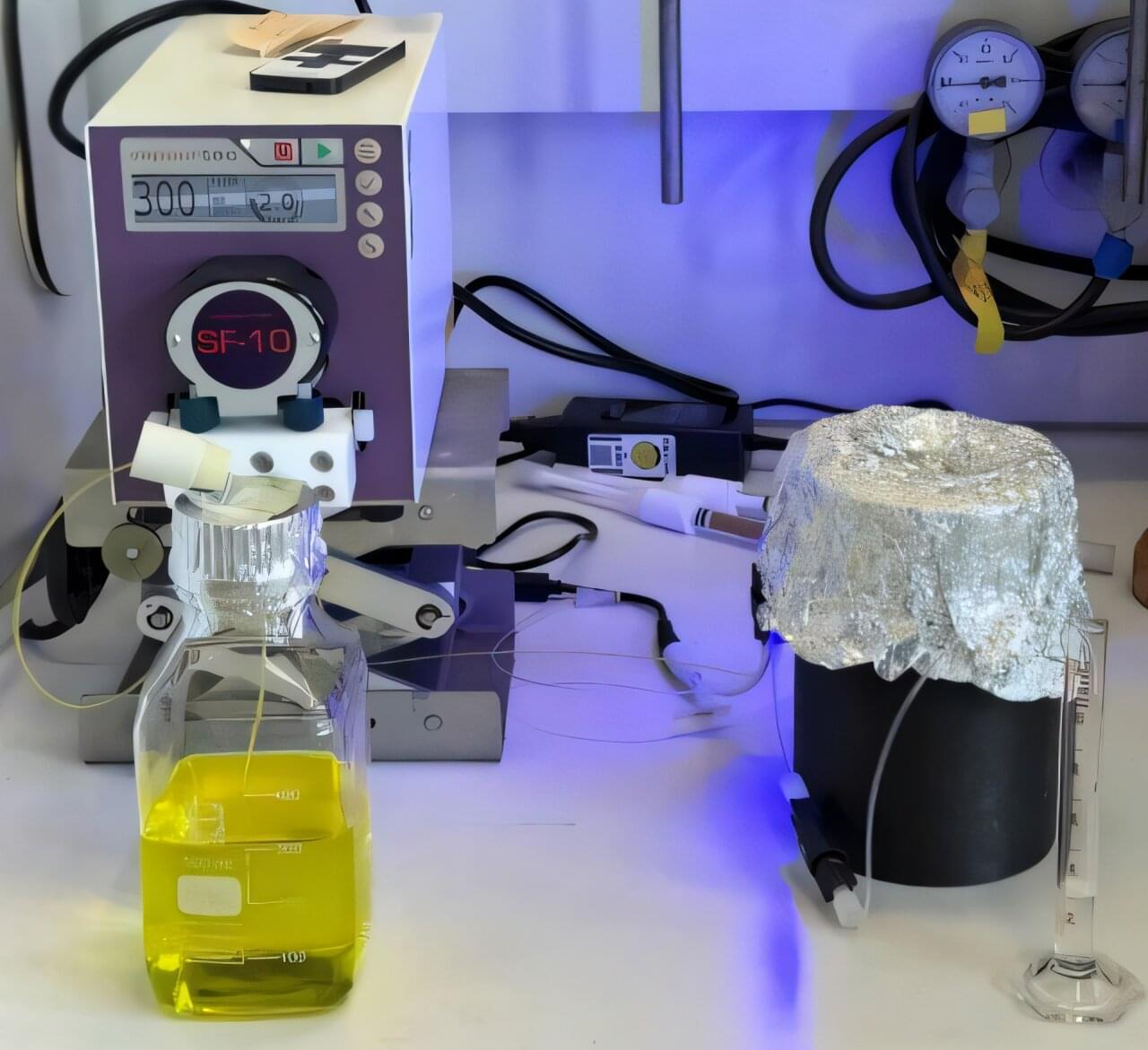
A research project conducted by the Max-Planck-Institut für Kohlenforschung shows how biomass can be used as a raw material for chemical products instead of petroleum. The scientists have published their findings in the journal Science.
The chemical industry is facing major challenges: for reasons of CO2 neutrality, circular economy, and geopolitical instability, there is a desire to move away from petroleum and other fossil materials as raw materials for the production of high-quality chemicals. But how will molecular building blocks for essential medicines, for example, be obtained in the future?

Scientists at the X-ray free-electron laser SwissFEL have realized a long-pursued experimental goal in physics: to show how electrons dance together. The technique, known as X-ray four-wave mixing, opens a new way to see how energy and information flow within atoms and molecules. In the future, it could illuminate how quantum information is stored and lost, eventually aiding the design of more error-tolerant quantum devices. The findings are reported in Nature.
Much of the behavior of matter arises not from electrons acting alone, but from the ways they influence each other. From chemical systems to advanced materials, their interactions shape how molecules rearrange, how materials conduct or insulate and how energy flows.
In many quantum technologies —not least quantum computing—information is stored in delicate patterns of these interactions, known as coherences. When these coherences are lost, information disappears—a process known as decoherence. Learning how to understand and ultimately control such fleeting states is one of the major challenges facing quantum technologies today.