Toggle light / dark theme

Get the latest international news and world events from around the world.

Log in for authorized contributors

Stabilized laser components could shrink quantum computers from room- to chip-scale

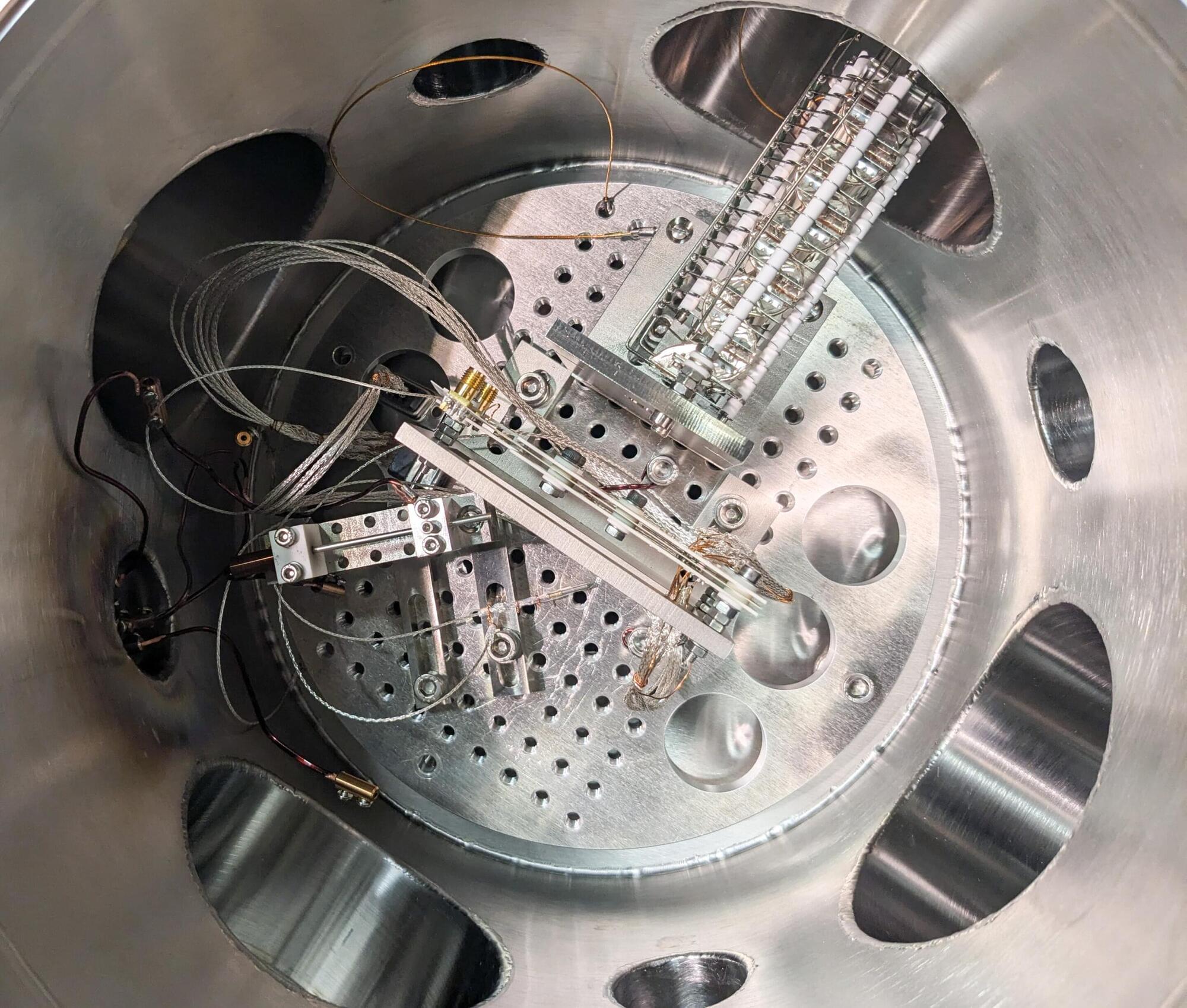
Scientists in the Riccio College of Engineering at the University of Massachusetts Amherst and the University of California Santa Barbara have demonstrated key laser and ion trap components necessary to help drastically shrink the size of quantum computers, an achievement aligned with the shrinking of integrated microprocessors in the 1970s, 80s and 90s that allowed computers to move from room-sized behemoths to today’s ultrathin smartphones.

The current state-of-the-art technology for quantum computing is too large and complex to scale and too sensitive and bulky to be portable. The largest and most sensitive components of these quantum systems are the optics, which include multiple lasers and vibration-isolated, temperature-controlled vacuum chambers that contain ultrastable optical cavities. These cavities stabilize the lasers to extremely high precision in order to control trapped ions for quantum computing and optical clocks.

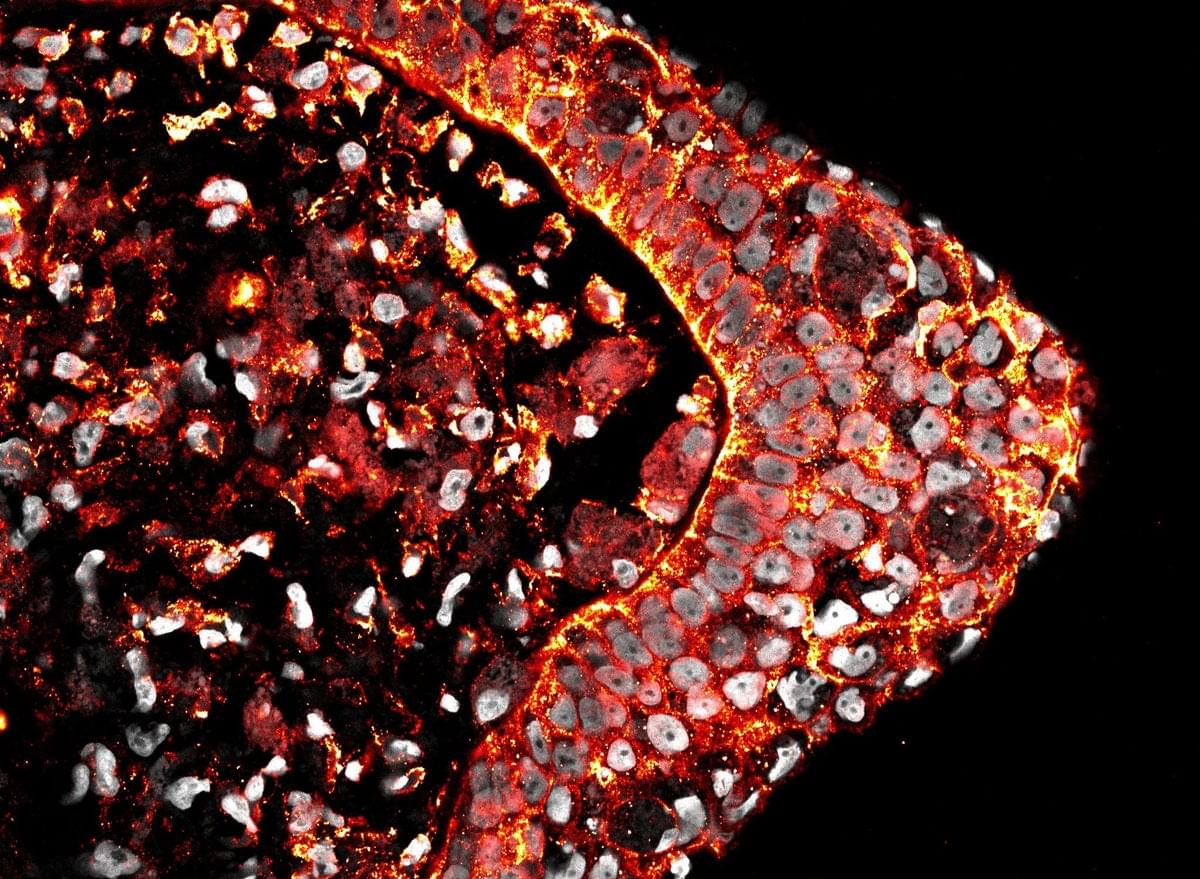
Graphene ‘leaf tattoo’ sensor tracks plant hydration in real time

Is your houseplant thirsty? Are crops getting enough water? Is a forest at high risk of wildfire? Leaf health can answer all these questions, and researchers at The University of Texas at Austin have developed new technology to measure hydration levels with greater accuracy and without hurting the plant. The researchers developed an electronic tattoo for leaves that uses the hyperflexible and sustainable material graphene to track hydration levels. It sticks on the leaves without harming them, a major improvement over current methods that work only with dead or dried-out leaves or provide indirect measurements.

“Being able to directly measure and monitor the live leaf over time, at the point of photosynthesis, gives us more information to understand the health of our plant ecosystems, whether that’s an individual plant or an entire forest,” said Jean Anne Incorvia, associate professor in the Cockrell School of Engineering’s Chandra Family Department of Electrical and Computer Engineering and one of the leaders on the new research published recently in Nano Letters.

Hygroscopic salts pull lithium from mining waste using only moisture from air

The world cannot have enough of the third element on the periodic table. From smartphones and laptops to state-of-the-art EVs, all are powered by lithium batteries. The demand for metal is only going to rise, and projected values suggest nearly a triple increase in demand by 2030. The traditional process of lithium mining is both water and energy-hungry. One such step is the dissolution of lithium salts from other competing minerals during the separation process.

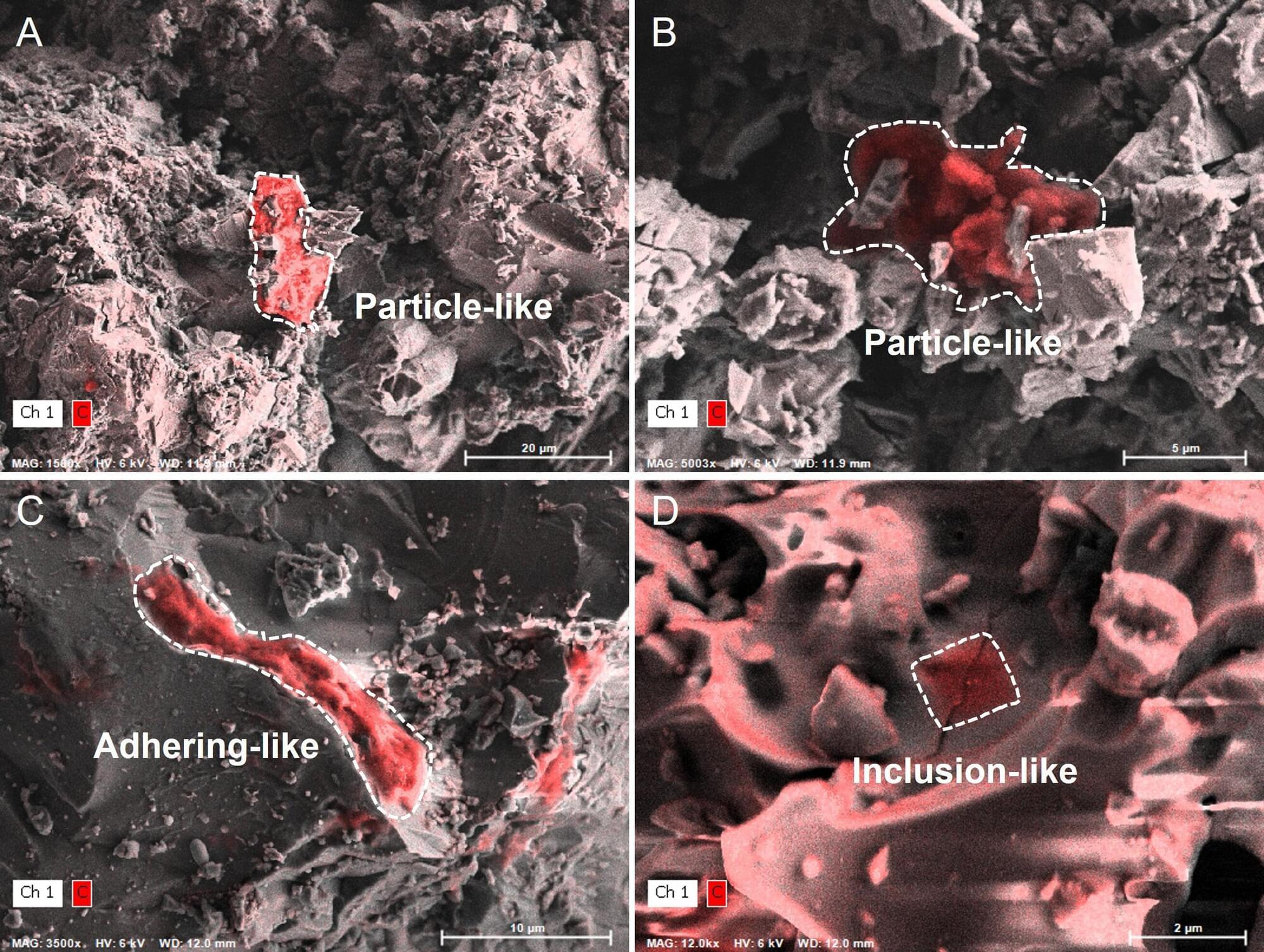
In a study published in Nature Communications, researchers present a clever way to harness the deliquescence of lithium chloride hydrate (LHT)—a unique ability to naturally pull moisture from the air to dissolve itself—to extract and concentrate lithium from mining waste while leaving behind unwanted minerals.

The method achieved up to 97% lithium recovery with an increase in the lithium purity by 1,500 times, producing a liquid concentrate with lithium levels reaching 97,000 parts per million, which was more than twice as concentrated as the standard solutions used in battery processing.

Three-in-one diode integrates sensing, memory and processing for smart cameras

Think about how easily you recognize a friend in a dimly lit room. Your eyes capture light, while your brain filters out background noise, retrieves stored visual information, and processes the image to make a match. It all happens in a fraction of a second and uses remarkably little energy. Unfortunately, artificial vision systems in smartphones, cameras, and autonomous machines operate more like an assembly line. In our recent paper published in Nature Electronics, we describe how we addressed this challenge by enabling sensing, memory, and processing within the same device, pointing to a possible route toward more efficient machine vision.

The iGaN Laboratory led by Professor Haiding Sun at the School of Microelectronics, University of Science and Technology of China (USTC), in collaboration with multiple institutions, developed the multifunctional semiconductor diode with integrated photosensing, memory, and processing capabilities.

To understand the challenge, it helps to look at the basic building block of modern digital cameras: the semiconductor p-n diode. These tiny junctions act as the light-sensing pixels in imaging systems. However, a conventional diode is usually limited to a single function. It converts light into an electrical signal, and the captured data must then be transferred to separate memory and processing units. Moving this data back and forth consumes time, power, and chip area.

Photonic chip packaging can withstand extreme environments

Researchers at the National Institute of Standards and Technology (NIST) have developed a new way to package photonic integrated circuits—tiny chips that convey information using light instead of electricity—so they can survive and operate in extreme environments, from scorchingly hot industrial settings to ultracold vacuum chambers and the depths of outer space.

“Our study marks a major step toward bringing the speed and efficiency of photonics into environments where conventional semiconductor chips powered by electric current and photonics chips packaged using traditional methods have not been able to operate,” said NIST physicist Nikolai Klimov, who led the project. The results were just published in Photonics Research.

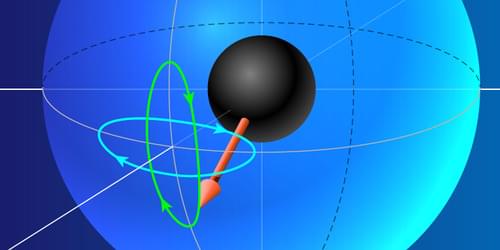
Quantum researchers engineer extremely precise phonon lasers

When lasers were invented in the 1960s, they opened new avenues for scientific discovery and everyday applications, from scanners at the grocery store to corrective eye surgery. Conventional lasers control photons—individual particles of light—but over the past 20 years, scientists have invented lasers that control other fundamental particles, including phonons—individual particles of vibration or sound. Controlling phonons could open even more possibilities with lasers, such as taking advantage of unique quantum properties like entanglement.

A new squeezed phonon laser developed by researchers at the University of Rochester and Rochester Institute of Technology provides precise control over phonons at the nanoscale level. This could give new insights into the nature of gravity, particle acceleration, and quantum physics.

In a paper in Nature Communications, the researchers describe how they coax these individual particles of mechanical motion to behave like a laser.

Finding the ‘quantum needle’ in a haystack: New filtering method can isolate photons

In quantum technologies, everything depends on the ability to detect the properties carried by a single photon. But in the real world, that photon of interest is often buried in a sea of unwanted light—a true “needle in a haystack” challenge that currently limits the deployment of many applications, including secure quantum communication, quantum sensors used in telescope networks, as well as the interconnection of quantum computers to accelerate the development of new drugs and materials.

At the Institut national de la recherche scientifique (INRS), the team of Professor José Azaña, in collaboration with Professor Roberto Morandotti’s group, has developed a surprisingly simple and energy-efficient way to overcome this obstacle. The work was carried out by Benjamin Crockett during his Ph.D. at the INRS Énergie Matériaux Télécommunications Research Centre. He recently completed his degree and is now a Banting postdoctoral fellow at the University of British Columbia (UBC).

Their method not only reduces noise but, more importantly, recovers essential quantum properties that would otherwise be lost in bright environments where current technologies fail.

Quadratic gravity theory reshapes quantum view of Big Bang

Waterloo scientists have developed a new way to understand how the universe began, and it could change what we know about the Big Bang and the earliest moments of cosmic history. Their work suggests that the universe’s rapid early expansion could have arisen naturally from a deeper, more complete theory of quantum gravity. The paper, “Ultraviolet completion of the Big Bang in quadratic gravity,” appears in Physical Review Letters.

Dr. Niayesh Afshordi, professor of physics and astronomy at the University of Waterloo and Perimeter Institute (PI), led the research team that explored a novel method of combining gravity with quantum physics, the rules that govern how the smallest particles in the universe behave. While general relativity has been successful for more than a century, it breaks down at the extreme conditions that existed at the birth of the universe. To address this problem, the team used Quadratic Quantum Gravity, which remains mathematically consistent even at extremely high energies—similar to the kind present during the Big Bang.

Most existing explanations for the Big Bang rely on Einstein’s theory of gravity, plus additional components added by hand. This new approach offers a more unified picture that connects the earliest moments of the universe to the well-tested cosmology scientists observe today.

A universal scheme can verify any quantum state

Quantum technologies, devices that can process, store, or detect information leveraging quantum mechanical effects, could outperform classical devices in some tasks or scenarios. Despite their potential, verifying that these devices work correctly and truly realize desired quantum states can be challenging, particularly when they cannot be fully examined or inspected.

One approach to verify quantum states or measurements is known as self-testing. This is a technique that allows quantum scientists to confirm the properties of a quantum system solely by analyzing its outputs, instead of examining how it operates internally.

Researchers at Université libre de Bruxelles (ULB), the University of Gdansk, and the Polish Academy of Sciences recently introduced a new universal scheme that could be used to self-test any quantum state or measurement. Their protocol, introduced in a paper published in Nature Physics, works by placing a device within a simple star-shaped quantum network and assessing the correlations between measurements obtained from different outputs that share entangled quantum states, to determine whether they are aligned with theoretical predictions.

Novel protocol reconstructs quantum states in large-scale experiments up to 96 qubits

Quantum computers, systems that process information leveraging quantum mechanical effects, could outperform classical computers on some computationally demanding tasks. Despite their potential, as the size of quantum computers increases, reliably describing and measuring the states driving their functioning becomes increasingly difficult.

One mathematical approach to simplify the description of quantum systems entails the use of matrix-product operators (MPOs). These are mathematical representations that allow researchers to break down very large systems into a long chain of connected smaller pieces.

Researchers at Université Grenoble Alpes, Technical University of Munich, Max Planck Institute of Quantum Optics, University of Innsbruck and University of Bologna recently developed a new protocol that could be used to learn the MPO representations of quantum states in real, large-scale quantum experiments. Their protocol, presented in a paper published in Physical Review Letters, has so far been found to reliably reconstruct states in quantum systems including up to 96 qubits.

/* */