We associate nests with shelter, warmth, and a safe retreat—and usually picture a bird’s nest made out of twigs, grass and feathers. Yet many other animals take advantage of such refuges, with nests being built by a diversity of species ranging from termites to great apes, which impress with their hugely varied forms and the wide array of materials used to construct them.
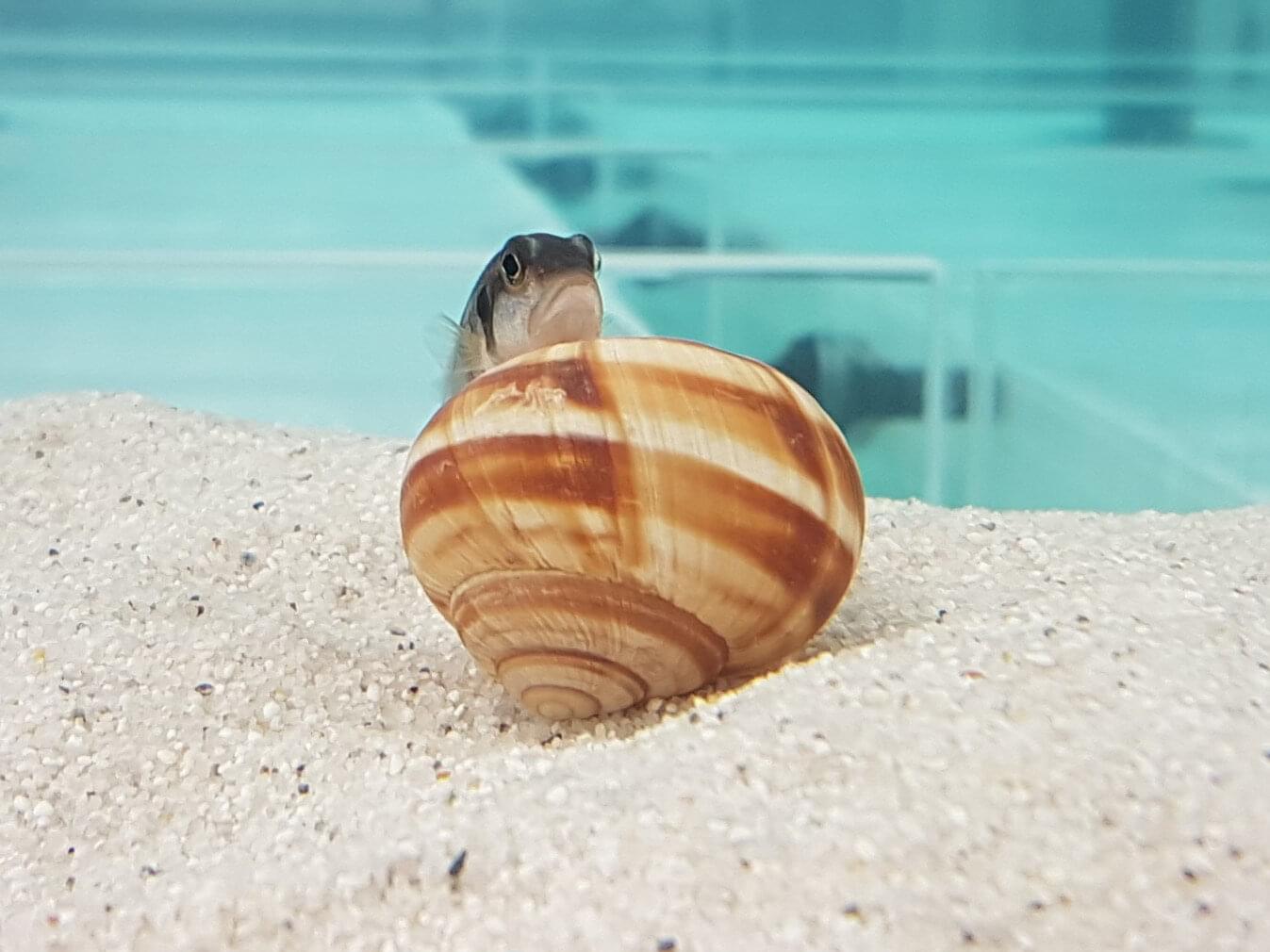
For fish, nest-building comes with an added challenge as they must put together their underwater nests equipped with “only” their fins. Yet fish too have developed a remarkable variety of nest-building innovations, burrowing into sandy lake beds, creating masses of floating bubbles on the water’s surface, or setting up camp in abandoned snail shells repurposed as nests—as is the case with the shell-dwelling cichlid Lamprologus ocellatus.
Endemic to Lake Tanganyika in Africa, these cichlids use empty snail shells for shelter and to raise their young. To do so, the snail shell is positioned and covered in sand in a very specific way, leaving just the opening exposed—only then does it become the perfect home.