This website uses a security service to protect against malicious bots. This page is displayed while the website verifies you are not a bot.
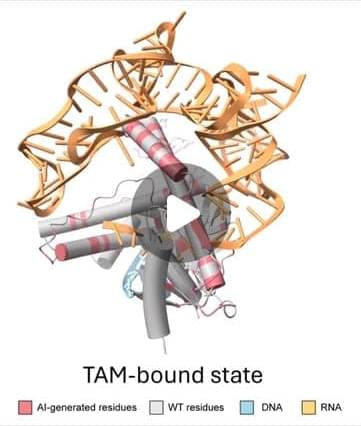
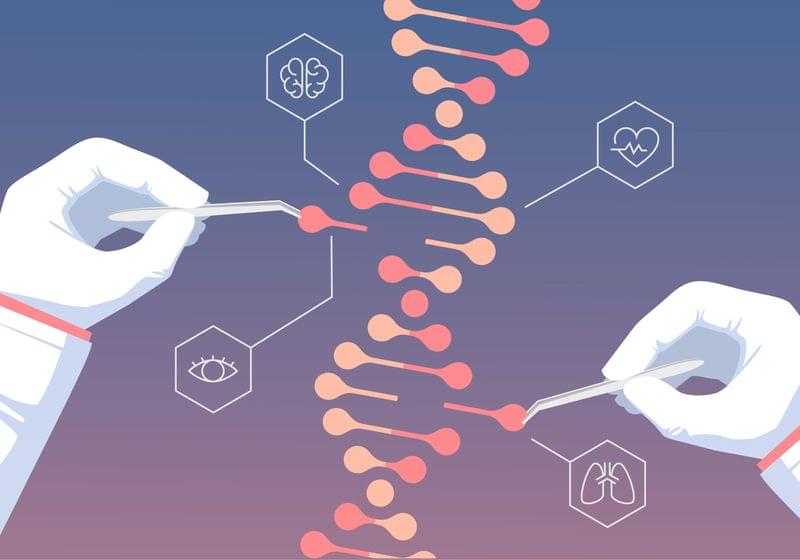
Out today in @sciencemagazine, Doudna lab researchers Petr Skopintsev, Isabel Esain Garcia, and alum Evan DeTurk describe a new #AI-assisted method for designing genome editors beyond those found in nature, with the potential for designing custom editors with specific properties. They tested close to 2,000 of the AI-generated variants in lab, with many showing similar or improved editing ability relative to conventional #CRISPR enzymes, across bacterial, plant, and human cells. 💡… #biotech #innovation #GenomeEditing @ucberkeleyofficial
The era of “growth at all costs” in AI is ending. If the market is demanding efficiency and sustainable margins, a model that delivers elite intelligence at a fraction of the price is exactly what will stabilize developer workflows. It’s no longer just about who has the biggest model—it’s about who has the best intelligence-per-dollar ratio.
Chat, compare, vote for the world’s best AI models. Join the community shaping the public leaderboard for LLMs, image, and code models through real-world evaluation.
Lila is betting that science, not the internet, is the last untapped source of training data. We went to find out what that actually looks like in a room full of robots.
Try Make using my link: https://shorturl.at/1yEOC
Timestamps:
00:00 — New Technology Explained.
07:23 — World’s Smallest Chip & How It Works.
My Podcast on Apple: https://podcasts.apple.com/at/podcast…
My Podcast on Spotify: https://open.spotify.com/show/3drr7A8… Let’s connect on LinkedIn: / anastasiintech Newsletter: https://anastasiintech.substack.com Instagram:
/ anastasi.in.tech Patreon:
/ anastasiintech X: https://twitter.com/AnastasiInTech.
Let’s connect on LinkedIn: / anastasiintech.
Newsletter: https://anastasiintech.substack.com.
Instagram: / anastasi.in.tech.
Patreon: / anastasiintech.
X: https://twitter.com/AnastasiInTech

Animal models have long been central to neuroscience, providing direct experimental access to neural processes underlying perception, action, cognition, and disease. Over the past century, work in non-human primates (NHPs), rodents, and other species has established key principles of neural organization and behavior and has supported much of translational neuroscience. However, the institutional and material conditions that sustain animal-based research are now changing in fundamental ways. Ethical and regulatory requirements have intensified, costs and approval timelines have increased, and global supply chains, particularly for NHPs, have become fragile. In parallel, advances in human neuroscience, stem-cell-derived systems, and computational approaches have matured to the point that they challenge the historical reliance on animals for many classes of questions. These forces are not eliminating animal research, but they are reshaping the conditions under which it remains feasible, competitive, and scientifically justified. In this Perspective, we examine how these converging pressures are reconfiguring animal-based neuroscience. We review long-term trends in animal use and accessibility, highlighting species-specific constraints and emerging geopolitical asymmetries. We then analyze the growing role of alternative and complementary platforms, including human brain organoids, genetically engineered rodents, small primates, and ‘human-centric’ neurophysiological and imaging approaches, emphasizing both their strengths and limitations. Finally, we discuss the implications of this diversification for research planning, training, and scientific organization. We argue that the future of neuroscience will be defined not by the disappearance of animal models, but by their integration into hybrid experimental frameworks that preserve mechanistic rigor while adapting to evolving scientific and societal constraints.
Keywords: animal models; neuroscience methodology; alternative experimental platforms; translational validity; research ethics and regulation.