Toggle light / dark theme

Get the latest international news and world events from around the world.

Log in for authorized contributors

Physicist Publishes Method For Communicating With Parallel Universes

🌏 Get Exclusive NordVPN 2Y deal + 4 months extra here → https://nordvpn.com/sabine It’s risk-free with Nord’s 30-day money-back guarantee! ✌

In the many worlds theory of quantum physics, all possible outcomes of a quantum event occur, creating branching parallel worlds in which a different outcome is reality. According to a recently published paper, communication between those worlds should be possible under our current understanding of quantum physics. Sounds crazy? Let’s take a look.

Paper: https://arxiv.org/abs/2601.

👕T-shirts, mugs, posters and more: ➜ https://sabines-store.dashery.com/
💌 Support me on Donorbox ➜ https://donorbox.org/swtg.
👉 Transcript with links to references on Patreon ➜ / sabine.
📝 Transcripts and written news on Substack ➜ https://sciencewtg.substack.com/
đŸ“© Free weekly science newsletter ➜ https://sabinehossenfelder.com/newsle
 Audio only podcast ➜ https://open.spotify.com/show/0MkNfXl
 🔗 Join this channel to get access to perks ➜ / @sabinehossenfelder 📚 Buy my book ➜ https://amzn.to/3HSAWJW #science #sciencenews #physics #quantum.
👂 Audio only podcast ➜ https://open.spotify.com/show/0MkNfXl

🔗 Join this channel to get access to perks ➜
/ @sabinehossenfelder.
📚 Buy my book ➜ https://amzn.to/3HSAWJW

#science #sciencenews #physics #quantum

Why the Past Still Exists | Leonard Susskind

We usually think of the past as something that no longer exists. It happened — and then it disappeared. But modern physics challenges this intuition in a profound way.

In this video, we explore why the past may still exist — not as memory, but as structure.

Drawing on ideas associated with Leonard Susskind, this documentary examines how relativity and modern spacetime physics reshape our understanding of time. In Einstein’s framework, there is no universal “now.” What is past for one observer may be present or future for another, depending on motion and frame of reference.

This destroys the idea that the past vanishes.

In the spacetime view, the universe is a four-dimensional structure. Events are not erased — they are located. The past is not something that disappeared. It is something that exists in a different region of spacetime.

From this perspective, time does not flow in the way we imagine. The sense of disappearance comes from human experience, not from fundamental physics.

How SpaceX and XAI Will Build Moonbase Alpha and Mass Drivers

SpaceX, in collaboration with xAI, plans to build a lunar base called Moonbase Alpha using advanced technologies such as mass drivers, solar power, and Starship, aiming to make human activity on the moon visible, affordable, and sustainable ##

## Questions to inspire discussion.

Launch Infrastructure Economics.

🚀 Q: What launch costs could SpaceX’s moon infrastructure achieve? A: Mature SpaceX moon operations could reduce costs to $10/kg to orbit and $50/kg to moon surface, enabling $5,000 moon trips for people under 100kg (comparable to expensive cruise pricing), as mentioned by Elon Musk.

⚡ Q: How could lunar mass drivers scale satellite deployment? A: Lunar mass drivers using magnetic rails at 5,600 mph could launch 10 billion tons of satellites annually with 2 terawatts of power, based on 2023 San Jose State study updating 1960s-70s mass driver literature.

Starship Capabilities.

Optimus Surgeons in 3 Years | MOONSHOTS

Optimus robots, with their rapidly advancing capabilities in AI and dexterity, are poised to revolutionize the field of surgery, potentially surpassing human surgeons in precision and accessibility within a few years and making traditional surgical expertise and even medical school obsolete.

## Questions to inspire discussion.

Healthcare Access & Economics.

đŸ„ Q: How will Optimus robots change healthcare costs and accessibility?

A: Optimus surgeon robots will operate at costs limited to capital expenditure and electricity, enabling deployment in rural villages and developing countries like Zimbabwe and throughout Africa, demonetizing and decentralizing access to medical care that will exceed what presidents currently receive.

Technology Timeline & Capabilities.

Claude Opus 4.6 vs GPT 5.3 Codex: Which is better for programming? | Peter Steinberger

Claude Opus 4.6 and GPT 5.3 Codex, two AI models, have different strengths and interaction styles, highlighting the trade-offs between elegance, reliability, and efficiency in their performance ##

## Questions to inspire discussion.

Model Selection Strategy.

🎯 Q: Which AI model should I choose for different programming tasks?

A: Use Opus for interactive roleplay and quick command following with trial-and-error workflows, while Codex excels at delivering elegant solutions when given proper context and reads more code by default.

🔄 Q: How long does it take to effectively switch between AI models?

AI captures particle accelerator behavior to optimize machine performance

Keeping high-power particle accelerators at peak performance requires advanced and precise control systems. For example, the primary research machine at the U.S. Department of Energy’s Thomas Jefferson National Accelerator Facility features hundreds of fine-tuned components that accelerate electrons to 99.999% the speed of light.

The electrons get this boost from radiofrequency waves within a series of resonant structures known as cavities, which become superconducting at temperatures colder than deep space.

These cavities form the backbone of Jefferson Lab’s Continuous Electron Beam Accelerator Facility (CEBAF), a unique DOE Office of Science user facility supporting the research of more than 1,650 nuclear physicists from around the globe. CEBAF also holds the distinction of being the world’s first large-scale installation and application of this superconducting radiofrequency (SRF) technology.

Creating CAR-T Cells Using Current Alzheimer’s Antibodies

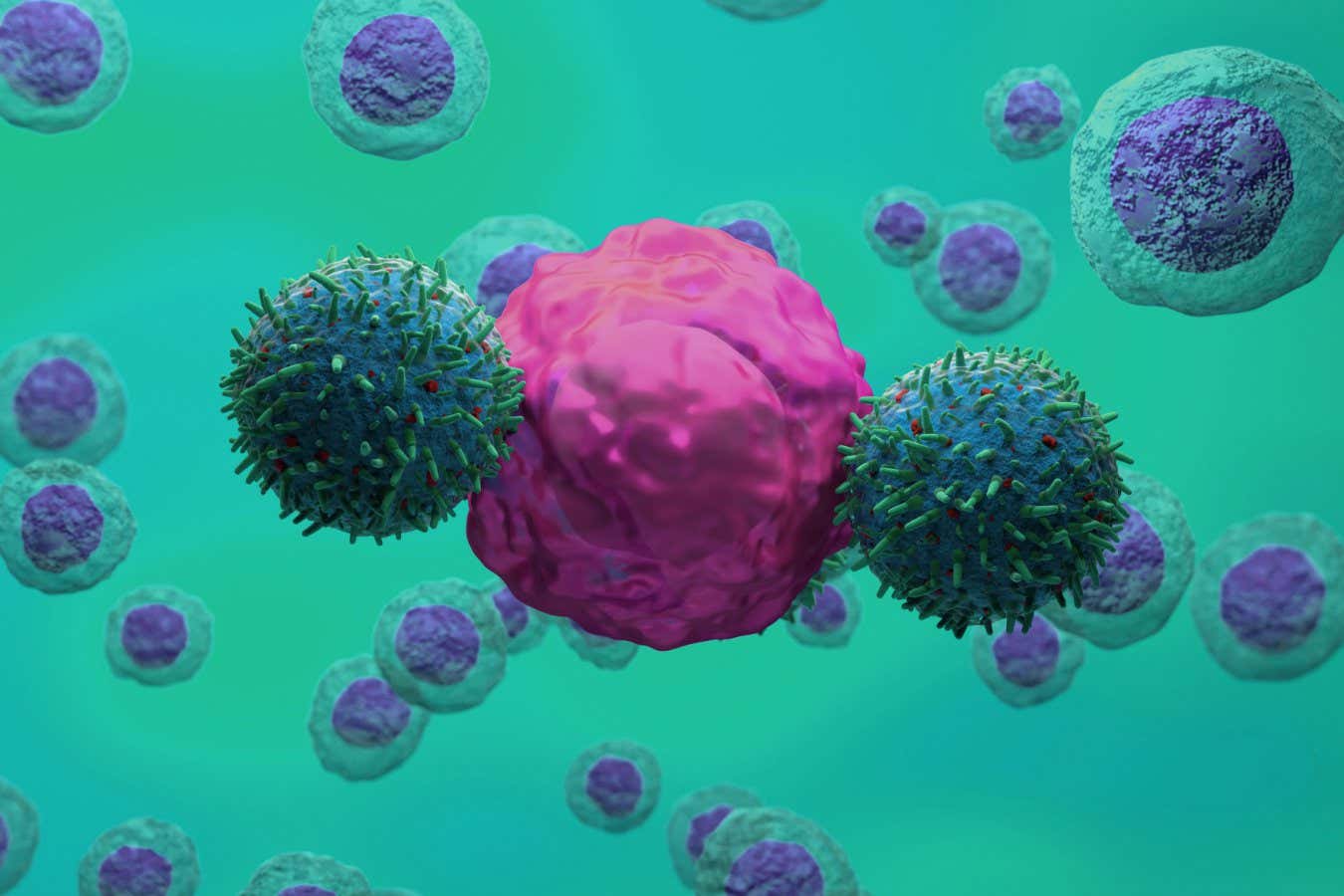
A team of researchers has biologically engineered T cells with currently available Alzheimer’s drugs in order to directly attack the characteristic amyloid plaques of Alzheimer’s disease.

Building on the current paradigm

Most Alzheimer’s treatments used in the clinic are-mabs, monoclonal antibodies that are designed to attack the amyloid beta plaques that accumulate in the brains of people with Alzheimer’s. However, while they have been found to have enough meaningful benefits in clinical trials to be approved by the FDA, they are not a cure, and some analyses question their effectiveness [1].

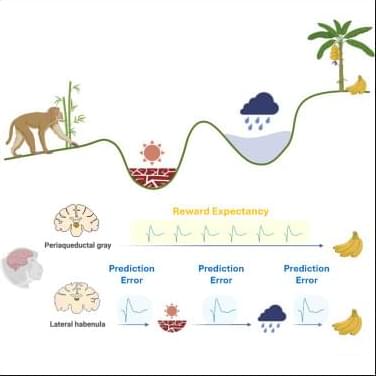
Lateral habenula and periaqueductal gray neurons signal reward prediction error and continuity of reward expectancy to drive reward-seeking behavior

Lee and Hikosaka show how animals overcome challenges and ultimately achieve goals. They find that LHb and PAG neurons encode prediction errors and the continuity of reward expectancy, with tonic PAG activity sustaining reward expectancy despite prediction errors.

Organic molecule stores solar energy for years, then releases it as heat on demand

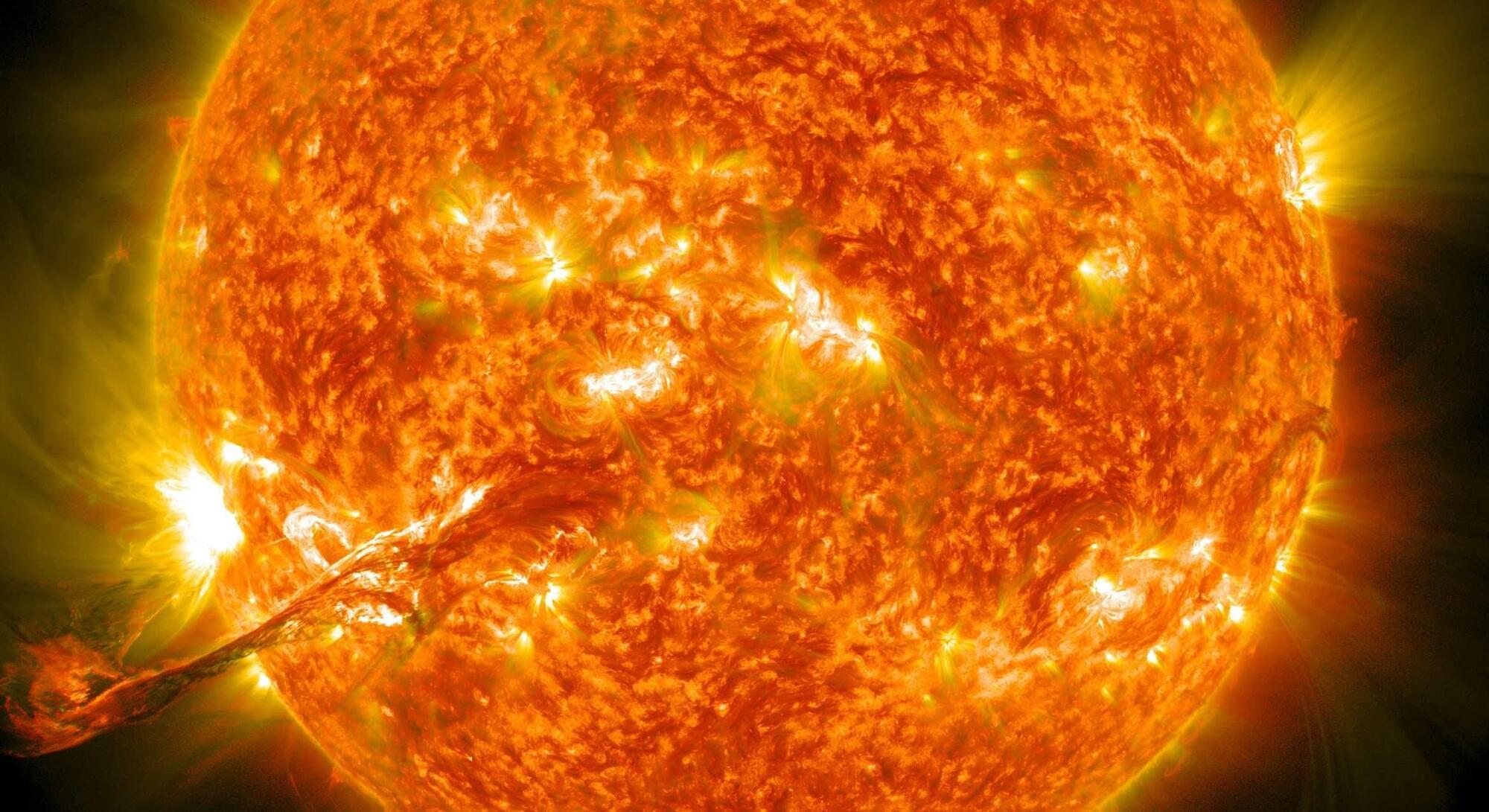
When the sun goes down, solar panels stop working. This is the fundamental hurdle of renewable energy: how to save the sun’s power for a rainy day—or a cold night. Chemists at UC Santa Barbara have developed a solution that doesn’t require bulky batteries or electrical grids. In a paper published in the journal Science, Associate Professor Grace Han and her team detail a new material that captures sunlight, stores it within chemical bonds and releases it as heat on demand.

The material, a modified organic molecule called pyrimidone, is the latest advancement in molecular solar thermal (MOST) energy storage.

“The concept is reusable and recyclable,” said Han Nguyen, a doctoral student in the Han Group and the paper’s lead author.

/* */