Quantum entanglement could revolutionize astronomical imaging, enabling telescopes to achieve sharper, higher-resolution images without the need for traditional light combining methods.

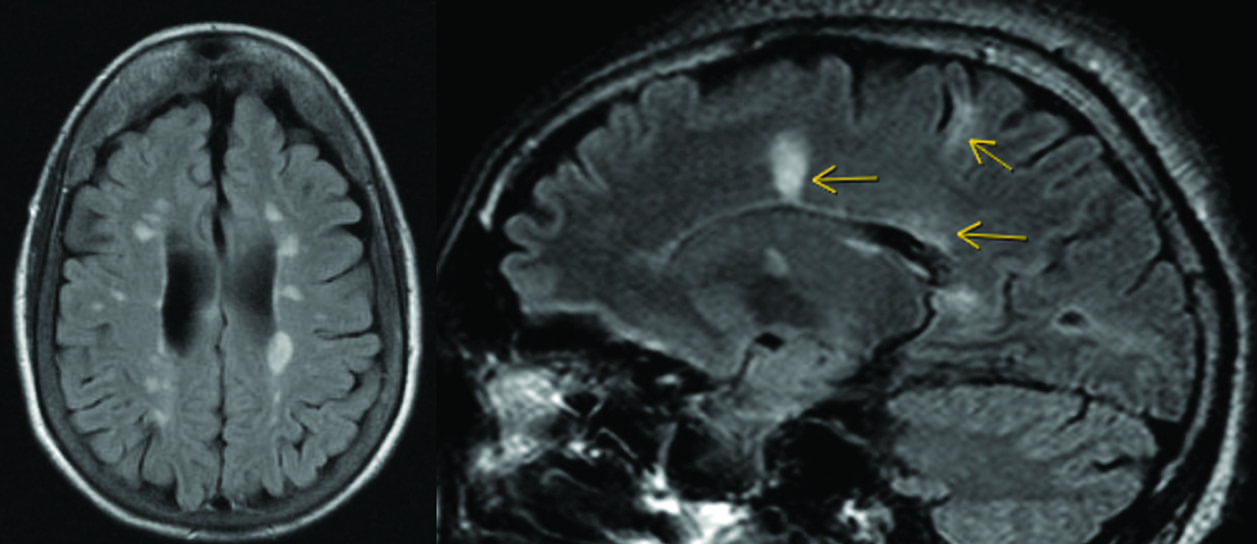
MRI is central to modern MultipleSclerosis diagnosis.
A review article by Drs. Elfasi and Fagundo highlights radiologic lbiomarkers in the 2024 McDonald criteria—including the central vein sign, paramagnetic rim lesions, cortical lesions, and optic nerve imaging.
https://ow.ly/cZrC50Yj69O National Multiple Sclerosis Society ACTRIMS American Academy of Neurology (AAN) Radiological Society of North America (RSNA) University of South Florida.
Imaging biomarkers, including cortical lesions, the central vein sign, and paramagnetic rim lesions, allow for more timely and accurate diagnosis of multiple sclerosis.
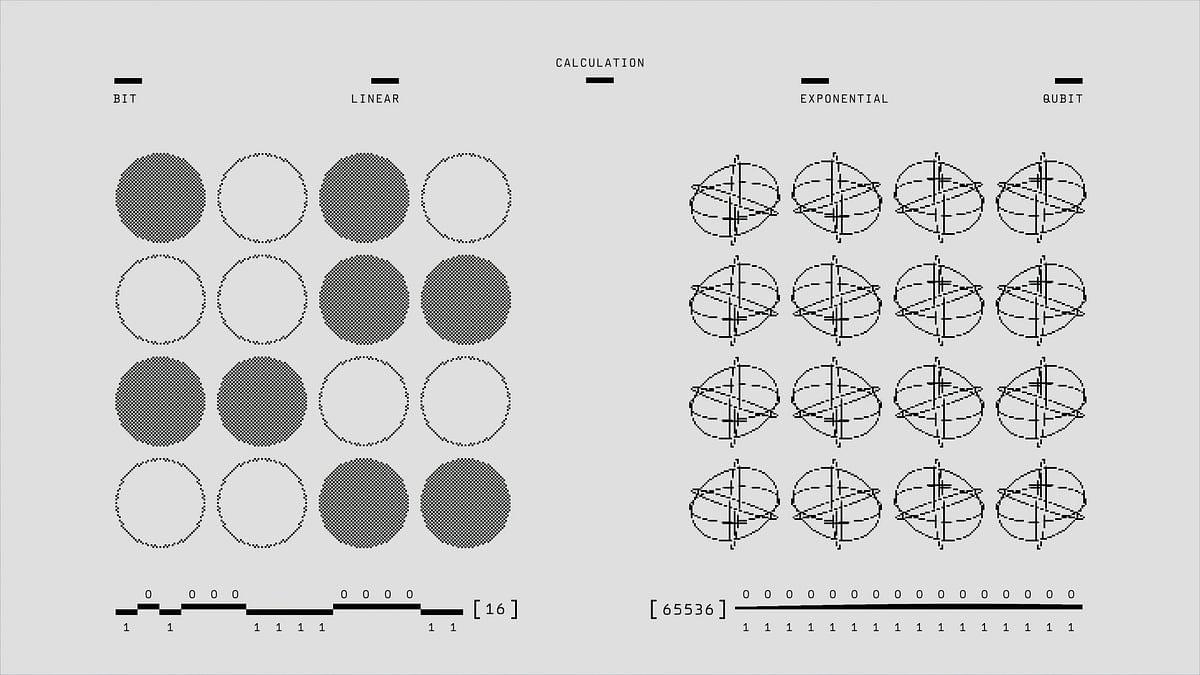
We began this inquiry by looking at the mismatch between our computers and our brains. We realized that we were trying to run biological software on the wrong hardware. That era is ending. As we refine these quantum processors, we are finally building a mirror that is accurate enough to reflect the true nature of the mind. We are not just building faster computers. We are building a vessel that can hold the physics of thought.
▀▀▀▀▀▀
Timestamps:
0:00 Quantum Computers.
1:18 The Scale Problem.
4:40 The Thermodynamic Wall.
8:11 Quantum Mechanics in Wetware.
13:58 The \
Imagine being an explorer, cracking open a 10,000-year-old tomb, uncovering a priceless ancient artifact – and getting rickrolled. Our deep descendants might just get the pleasure, thanks to a Global Music Vault due to be built in Norway, featuring Microsoft’s Project Silica, a tough new data storage medium that’s never gonna give you up.
There’s a common saying that once something is on the internet, it’s there forever, and even if you delete it, it will persist in some server somewhere. But that’s demonstrably untrue – just try to find your cringey old MySpace page. Even the most secure data center is vulnerable to the increasingly common and severe environmental disasters brought on by climate change. Many will lose their data if there’s a long-term power outage, or a large-scale electromagnetic pulse from an attack or, worse still, the Sun. Even in the best-case scenario, physical storage media like Blu-Rays, archival tape, hard drives and even solid state drives will degrade in decades.
To ensure that our history lives on for longer, Microsoft has been experimenting with storing data on glass with what it calls Project Silica. In 2019, the company demonstrated the tech in a partnership with Warner Bros by writing the 1978 movie Superman onto a slide of quartz silica glass and reading it back. The slide, measuring just 75 × 75 mm (3 × 3 in) and 2 mm (0.08 in) thick, could hold as much as 75.6 GB, and remained readable even after being scratched, baked, boiled, microwaved, flooded and demagnetized.


Immune suppression largely contributes to cancer occurrence and progression. The programmed cell death protein 1 (PD-1, also known as PDCD1 and CD279) was originally identified by Ishida et al. in apoptotic mouse T-cell tumors [1]. PD-1 is a transmembrane protein belonging to the CD28/CTLA-4 superfamily. It is widely expressed at the surface of activated T cells, B cells, monocytes, and other immune cells, and negatively regulates human immune response through binding with its two ligands, namely programmed cell death 1 ligands (PD-L1 or PD-L2). PD-L1 (B7-H1; CD274) and PD-L2 (B7-DC; CD273) belong to the B7 family of T cell co-inhibitory molecules. PD-L1 is widely expressed in antigen-presenting cells and tissues, such as heart and lung [2, 3]. The interaction of PD-1 with PD-L1 or PD-L2 provides inhibitory signals responsible for inhibiting T cell signaling, mediating the mechanisms of tolerance, and providing immune homeostasis. Therefore, PD-1 suppresses autoimmunity and prevents the occurrence of autoimmune diseases. In addition, PD-L1 or PD-L2 expressed by cancer cells binds to PD-1 on the surface of T cells, thereby inhibiting T cell activation and leading to cancer immune escape [4]. Numerous studies revealed that PD-L1 expression is very high in lung cancer, melanoma, glioma, breast cancer and other malignant tumor cells, forming an immunosuppressive tumor microenvironment [5].
PD-1 mainly consists of extracellular IgV-like domain region, hydrophobic transmembrane region and cytoplasmic region, and the tail of the cytoplasmic region has immunoreceptor tyrosine-based inhibitory motif (ITIM) and immunoreceptor tyrosine-based switch motif (ITSM) [6, 7], which is an important structural basis for PD-1 to transmit inhibitory signals and perform immunosuppressive functions. PD-L1 is structurally similar to PD-1 and is more conserved and widely expressed than PD-L2 [8], so it plays the leading effect in tumor cells immune evasion. In recent years, antagonistic antibodies against PD-1 or PD-L1 have been approved by the FDA to treat cancer, opening a new chapter in tumor immunotherapy across the era [9].
Anti-PD-1/PD-L1 inhibitors have become effective immune checkpoint inhibitors (ICIs) and are rapidly becoming the standard therapy for various cancers. Tumor immunotherapy aims to block the activity of inhibitory immune checkpoint proteins and promote T cell activation to achieve anti-tumor immune effects [10]. Owing to their safety and precision, these inhibitors hold significant promise in tumor immunotherapy. Research indicates that the PD-1/PD-L1 pathway plays a crucial role in regulating autoimmunity responses and peripheral tolerance. Notably, anti-PD-1/PD-L1 immunotherapy can effectively block the PD-1/PD-L1 signaling pathway, restore T cell activity, enhance anti-tumor immunity, and then eliminate tumor cells [11, 12]. Therefore, the discovery of multiple immunotherapies, such as PD-1 and PD-L1 inhibitors, has significant clinical implications for tumor-specific immunotherapy.

Experimental models such as heterochronic parabiosis and heterochronic plasma transfer have profoundly advanced our understanding of systemic aging, demonstrating that circulating factors can influence brain, vascular, and immune aging through cell nonautonomous mechanisms. These preclinical models have revealed that both pro-geronic and anti-geronic signals in blood can modulate neuroinflammation, neurovascular health, and cognitive resilience. However, despite their experimental promise, the clinical translation of these findings, particularly through plasma-based interventions in humans, remains fraught with uncertainty.
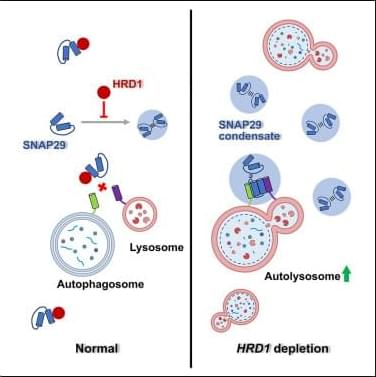
Qu et al. identify HRD1 as a key negative regulator of autophagosome-lysosome fusion. They demonstrate that HRD1 interacts with the SNARE protein SNAP29 to suppress its liquid-liquid phase separation. This work establishes the regulation of SNARE complex assembly via phase separation as a critical control mechanism for autophagy progression.