Toggle light / dark theme

Get the latest international news and world events from around the world.

Log in for authorized contributors

Understanding the physics at the anode of sodium-ion batteries

Sodium-ion batteries (NIBs) are gaining traction as a next-generation technology to complement the widely used lithium-ion batteries (LIBs). NIBs offer clear advantages versus LIBs in terms of sustainability and cost, as they rely on sodium—an element that, unlike lithium, is abundant almost everywhere on Earth. However, for NIBs to achieve widespread adoption, they must reach energy densities comparable to LIBs.

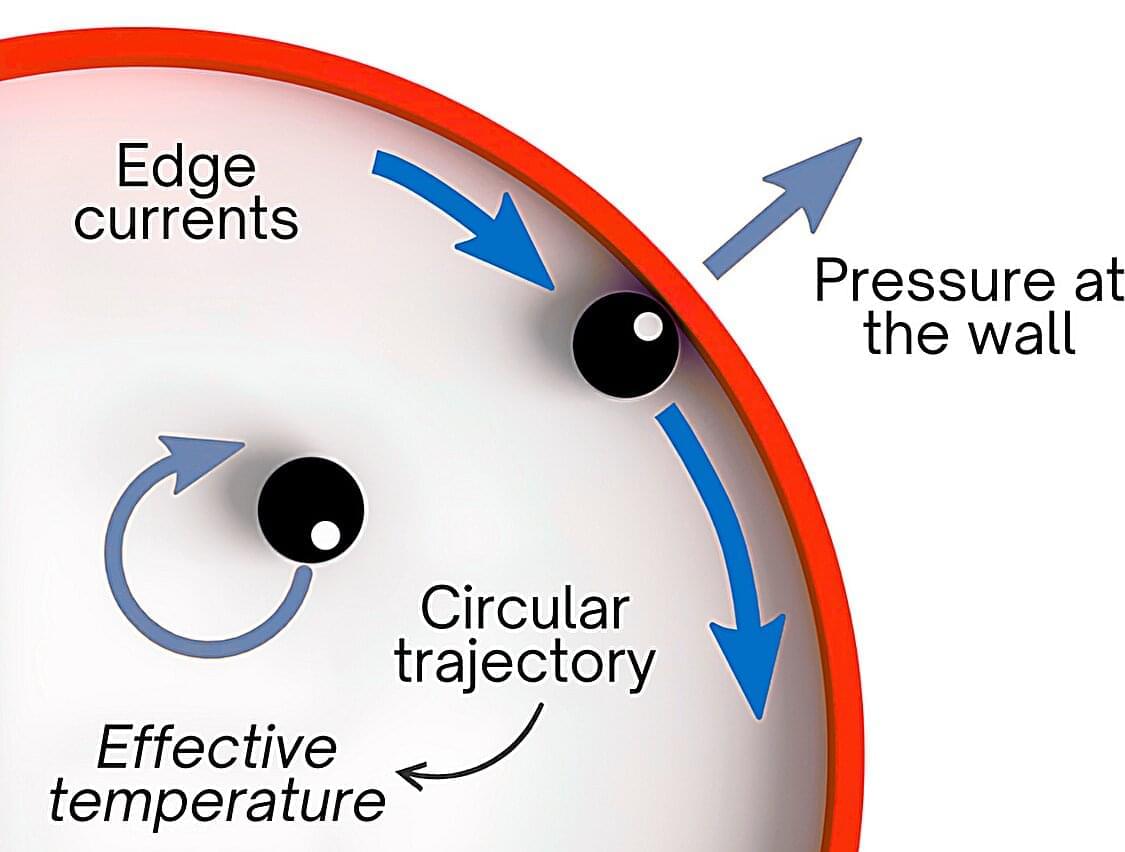
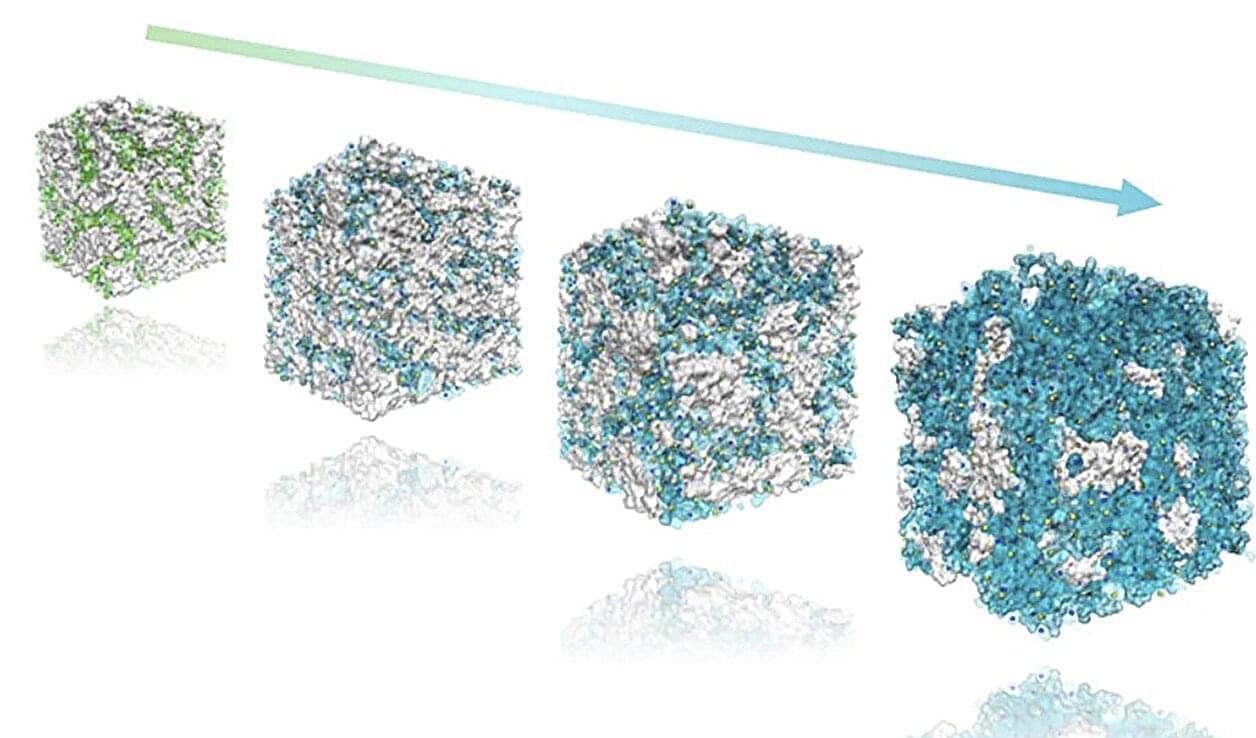
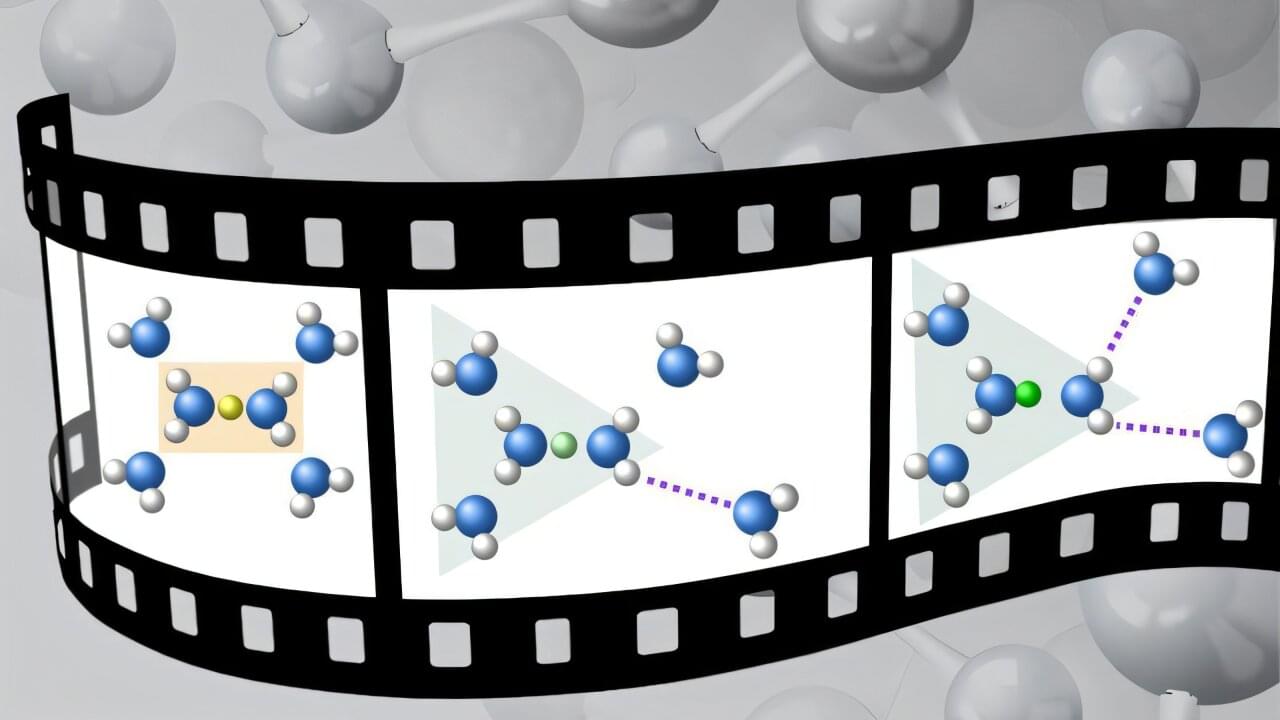
State-of-the-art NIB designs use hard carbon (HC), a porous and amorphous type of carbon, as an anode material. Scientists believe that sodium ions aggregate into tiny quasi-metallic clusters within HC nano-pores, and this “pore filling” process remains as the main mechanism contributing to the extended reversible capacity of the HC anode.

Despite some computational studies on this topic, the fundamental processes governing sodium storage and transport in HC remain unclear. Specifically, researchers have struggled to explain how sodium ions can gather to form clusters inside HC pores at operational temperatures, and why the overall movement of sodium ions through the material is sluggish.

Can medical AI lie? Large study maps how LLMs handle health misinformation

Medical artificial intelligence (AI) is often described as a way to make patient care safer by helping clinicians manage information. A new study by the Icahn School of Medicine at Mount Sinai and collaborators confronts a critical vulnerability: when a medical lie enters the system, can AI pass it on as if it were true?

Analyzing more than a million prompts across nine leading language models, the researchers found that these systems can repeat false medical claims when they appear in realistic hospital notes or social-media health discussions.

The findings, published in The Lancet Digital Health, suggest that current safeguards do not reliably distinguish fact from fabrication once a claim is wrapped in familiar clinical or social-media language. The paper is titled “Mapping LLM Susceptibility to Medical Misinformation Across Clinical Notes and Social Media.”

Spotlight on Optics

The University of Texas at Arlington researchers resolved a largely unnoticed modeling gap in how researchers interpret the behavior of single molecules at interfaces:

By treating emitters as finite-sized surface currents in contact with both media within finite-element simulations, this study provides the first physically self‑consistent framework for describing dipoles at arbitrary dielectric interfaces.

Spotlight by Matthew D. Lew.


A longstanding but largely unnoticed modeling gap has been skewing how researchers interpret the behavior of single molecules at interfaces—this work finally resolves it. Defocused fluorescence microscopy is widely used to infer molecular orientation, yet conventional models of dipole emission near refractive‑index boundaries diverge from one another depending on which side of the interface the molecule approaches. The result has been hidden, systematic biases in measured orientations. By treating emitters as finite-sized surface currents in contact with both media within finite-element simulations, this study provides the first physically self‑consistent framework for describing dipoles at arbitrary dielectric interfaces.

The role of the Cer1 transposon in horizontal transfer of transgenerational memory

Could a hybrid biohardware using neural orgamoids and silicon make minduploading easier.


Animals face both external and internal dangers: pathogens threaten from the environment, and unstable genomic elements threaten from within. C. elegans protects itself from pathogens by “reading” bacterial small RNAs, using this information to both induce avoidance and transmit memories for four generations. Here, we found that memories can be transferred from either lysed animals or from conditioned media to naive animals via Cer1 retrotransposon-encoded virus-like particles. Moreover, Cer1 functions internally at the step of transmission of information from the germline to neurons and is required for learned avoidance. The presence of the Cer1 retrotransposon in wild C. elegans strains correlates with the ability to learn and inherit small-RNA-induced pathogen avoidance. Together, these results suggest that C.

How AI Could Threaten Human Survival: Insights from a Professor — Hugo De Garis

🏦 Invest In Luxury Dubai Property https://londonreal.tv/dubai-ytd.
🍿 Watch the full interview for free at https://londonreal.tv/countdown-to-extinction-how-ai-will-ex…poses-all/

Expert in robotics & artificial intelligence.

“I’m known for predicting that later this century there will be a terrible war, killing billions of people over the issue of species dominance.”

From a philosophical perspective, the concept of AI ending humanity challenges our assumptions about evolution, survival, and the nature of progress. Throughout history, humans have viewed themselves as top of the food chain, but advanced AI raises the possibility that we are merely a stepping stone.

🚨 Learn To Make Money In Crypto:
💰The Investment club: https://londonreal.tv/club.
💰Crypto & DeFi Academy: https://londonreal.tv/defi-ytd.

🔔 SUBSCRIBE ON YOUTUBE: http://bit.ly/SubscribeToLondonReal.

Mathematics for Computer Science

This course covers elementary discrete mathematics for computer science and engineering. It emphasizes mathematical definitions and proofs as well as applicable methods. Topics include formal logic notation, proof methods; induction, well-ordering; sets, relations; elementary graph theory; integer congruences; asymptotic notation and growth of functions; permutations and combinations, counting principles; discrete probability. Further selected topics may also be covered, such as recursive definition and structural induction; state machines and invariants; recurrences; generating functions.

Planetary microbiome structure and generalist-driven gene flow across disparate habitats

Now online! A planetary-scale analysis of over 85,000 metagenomes establishes a framework for exploring the structure and drivers of global microbial habitats, revealing that generalist species bridge ecological boundaries to mediate gene flow across disparate habitats, including the dissemination of antimicrobial resistance.

Plasma Proteome Profiling of Centenarian Across Switzerland Reveals Key Youth‐Associated Proteins

The full list of differentially expressed proteins was compared to the list of aging biomarkers in blood determined by the TAME working group (Justice et al. 2018), see full list of APs in Table S2d. Of the seven aging biomarkers selected by TAME as gold standard, five proteins (CST3, GDF15, IL6, NPPB, TNF) were available and significantly differentially expressed when comparing healthy controls with centenarians or with geriatric patients; two proteins (CRP, IGF1) were unavailable from the Olink panels (Cardiometabolic I and Inflammation I).

On the expanded list of blood-based biomarkers (74 total) selected by TAME, when comparing healthy controls with centenarians, 47 biomarkers were not available in both panels (63.5%). Of the available markers, 23 were significantly differentially expressed in centenarians (85.2%) and 4 were not significantly differentially expressed in centenarians (14.8%). When comparing healthy controls with geriatric patients, 47 biomarkers were not available in both panels (63.5%); 25 were significantly differentially expressed in the geriatric group (92.6%), and only 2 were not significantly differentially expressed in hospitalized geriatric patients (7.4%). Only 2 proteins (SERPINE1, SOD1) among the 25 proteins available in the SWISS100 dataset demonstrated different results in both comparisons (Healthy2Cent and Healthy2Geriatric). Thus, both the short and expanded list of blood-based biomarkers proposed by TAME as APs are highly reproducible in the SWISS100 study based on proximity extension assay. Table S2d contains the complete list of DEPs in blood with age that overlap between both studies.

/* */