Toggle light / dark theme

Get the latest international news and world events from around the world.

Log in for authorized contributors

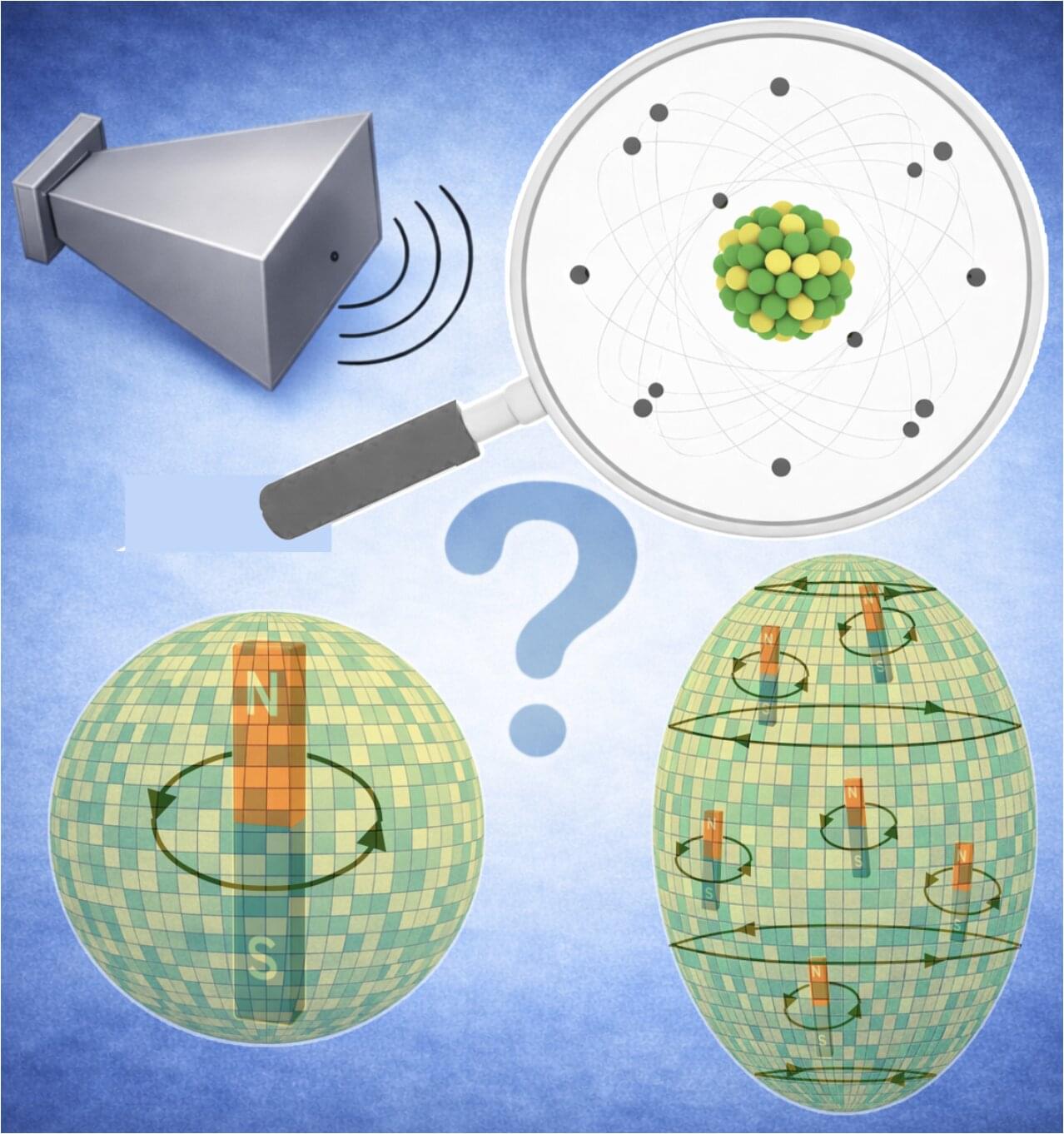
Scientists Create a New Crystal That Twists Magnetism Into Exotic Swirls

By forcing crystal structures to compete, scientists uncovered a new way to make magnetism twist. Florida State University scientists have developed a new crystalline material whose magnetic behavior differs sharply from that of conventional magnets, opening potential paths toward advances in dat

Small-Interfering RNA Olpasiran and Apolipoprotein B Particles

Small-interfering RNA olpasiran reduced lipoprotein(a)–apolipoprotein B particles by 95% with minimal rise in non–Lp(a)-apoB, lowering total apoB concentration in patients with cardiovascular disease.


This secondary analysis of the OCEAN(a)-DOSE randomized clinical trial investigates the effect of the small-interfering RNA olpasiran on atherogenic lipoproteins.

Glucagonlike Peptide-1 Receptor Agonists and Asthma Risk in Adolescents With Obesity

This retrospective cohort study reported an association between GLP1RA use and a lower risk of acute asthma exacerbations in adolescents with overweight or obesity, suggesting a potential dual benefit for this population.


This cohort study investigates the association between glucagonlike peptide-1 receptor agonist use and the risk of acute asthma exacerbations among adolescents with overweight or obesity and asthma.

Aluminium in human brain tissue from donors without neurodegenerative disease: A comparison with Alzheimer’s disease, multiple sclerosis and autism

We present the first comprehensive data set for the aluminium content of brain tissue in donors without a diagnosis of neurodegenerative disease. All donors fulfilled recently revised criteria for control brain tissues. Approximately 80% of measured tissues have an aluminium content below 1.0 μg/g dry wt. (Table 1). There are some anomalies, 6 out of 191 tissues have an aluminium content ≥3.00 μg/g dry wt., and these are worth future investigation to identify possible neuropathology. There was no statistically significant relationship between brain aluminium content and age of donor and this observation is contrary to a previous investigation of brain aluminium in a neurologically normal population. An explanation may be that herein only two out of twenty donors were below 66 years old. The data do support a conclusion that a high content of brain aluminium is not an inevitability of ageing.

When we compared the new control data set with data produced in an identical manner in donors dying with diagnoses of sporadic Alzheimer’s disease (sAD)16, familial Alzheimer’s disease (fAD)11, autism spectrum disorder (ASD)13 and multiple sclerosis (MS)12 all of these disease groups had significantly higher brain aluminium content. The differences were always highly significant regardless of the method of statistical analysis (Table 4). The largest disease group, designated as sAD, was actually composed of approximately equal numbers of donors previously described by a brain bank as controls and donors diagnosed with sAD. Unfortunately, information discriminating between control and sAD donors was not made available to us17. However, the observation that the aluminium content of brain tissue in this group as a whole was significantly higher than the similarly aged control group emphasised the likelihood that brain aluminium content is increased in sAD.

MRNA vaccines in tumor targeted therapy: mechanism, clinical application, and development trends

Malignant tumors remain a primary cause of human mortality. Among the various treatment modalities for neoplasms, tumor vaccines have consistently shown efficacy and promising potential. These vaccines offer advantages such as specificity, safety, and tolerability, with mRNA vaccines representing promising platforms. By introducing exogenous mRNAs encoding antigens into somatic cells and subsequently synthesizing antigens through gene expression systems, mRNA vaccines can effectively induce immune responses. Katalin Karikó and Drew Weissman were awarded the 2023 Nobel Prize in Physiology or Medicine for their great contributions to mRNA vaccine research. Compared with traditional tumor vaccines, mRNA vaccines have several advantages, including rapid preparation, reduced contamination, nonintegrability, and high biodegradability.

Enzyme catalysis using thiol switching!

Imagine a container of tomatoes arriving at the container terminal in Aarhus. The papers state that the tomatoes are from Spain, but in reality, we have no way of knowing if that is true.

That is, unless we take a sample and have it analyzed in a laboratory, where scientists use DNA markers to determine whether the tomato is Spanish, South American or Chinese. This is both time-consuming and expensive.

But thanks to a scientific breakthrough, we will be able to examine tomatoes a lot quicker and cheaper, using special light producing proteins and our phones camera. Not right now, but in the near future.

The results were recently published in the journal Nature Communications.

“We have figured out how to instruct the proteins to generate light when specific DNA sequences appear. This could be used, as in the example with the tomatoes, but could also be useful in the healthcare sector, agriculture, or the pharmaceutical industry to analyze samples easily and cheaply,” the senior author explains.

The authors did this via “thiol switching”, using thiolated oligonucleotides: a protein is inactivated by conjugation to an oligonucleotide via a disulfide linkage; hybridization of the thiolated complementary oligonucleotide ensues disulfide exchange, the liberation of the enzyme, and the activation of enzymatic catalysis. In doing so, the researchers couple the most specific recognition event (hybridization) to the most effective tool of signal amplification (catalysis).

“Our primary goal is to control the activity of molecules in space and time, inside and outside of the cell. Specifically we focus on enzymes that can create ATP, which is the cell’s fuel, and polymerases, which the cell uses to build RNA and DNA.”

/* */