Toggle light / dark theme

Get the latest international news and world events from around the world.

Log in for authorized contributors

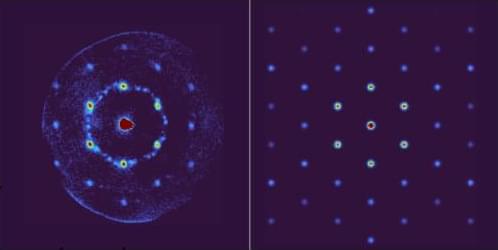
Sharp Diffraction Pattern Produced by Atoms Passing Through Graphene

Researchers have generated high-quality atom diffraction data from graphene, which could lead to new ways to measure surface interactions.

A beam of neutral atoms striking a material can produce a diffraction pattern that is sensitive to short-range interactions between the atoms and the surface. Building on recent developments, Pierre Guichard from the University of Strasbourg in France and collaborators have now used a fast hydrogen beam to probe single-layer graphene, producing the sharpest graphene diffraction patterns to date [1].

Early atom diffraction experiments predominantly looked at reflection, because atoms transmitted through a material tend to lose their wave-like coherence. Recently, however, transmitted atoms were shown to produce a diffraction pattern from single-layer graphene [2]. The trick was to use fast atoms that traverse the target quickly, minimizing coherence-destroying interactions.
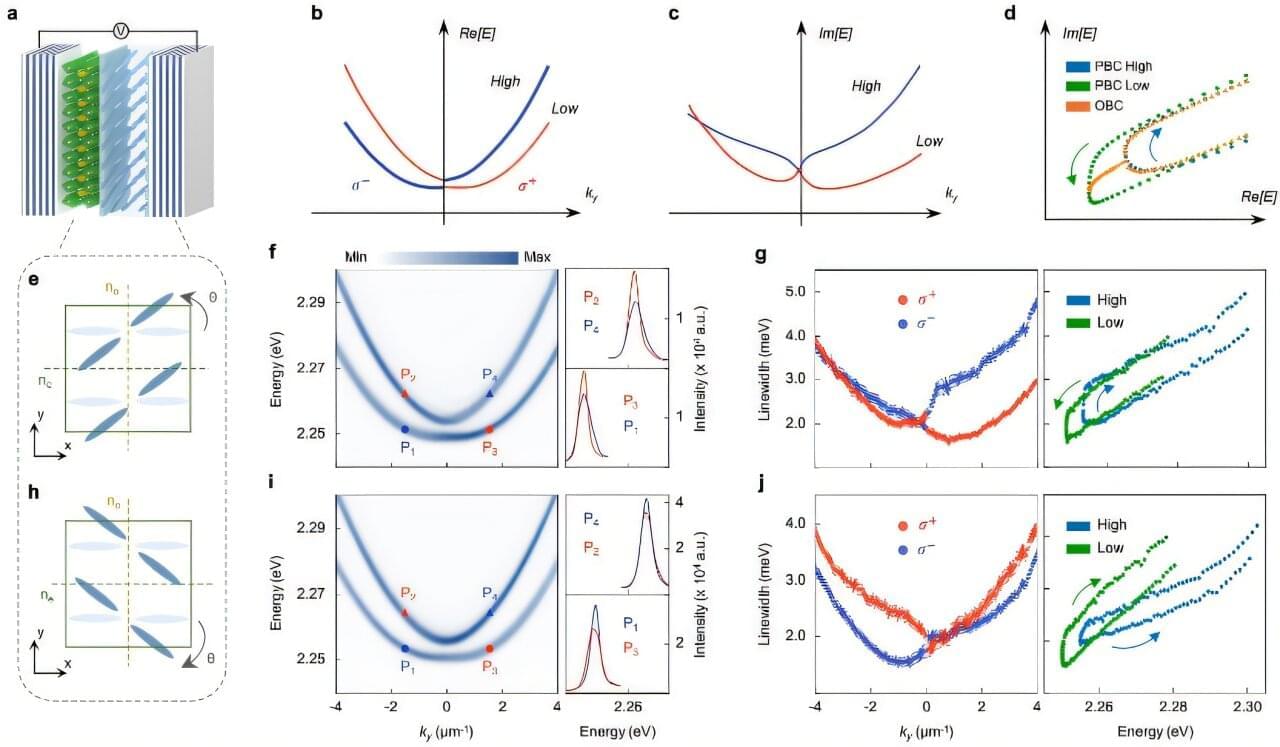
Twisted light-matter systems unlock unusual topological phenomena

Properties that remain unchanged when materials are stretched or bent, which are broadly referred to as topological properties, can contribute to the emergence of unusual physical effects in specific systems.

Over the past few years, many physicists have been investigating the physical effects emerging from the topology of non-Hermitian systems, open systems that exchange energy with their surroundings.

Researchers at Nanyang Technological University and the Australian National University set out to probe non-Hermitian topological phenomena in systems comprised of light and matter particles that strongly interact with each other.

The Star of Bethlehem might have actually been a comet described in an ancient Chinese text

Many researchers have spent decades attempting to decode biblical descriptions and link them to verifiable historical events. One such description is that of the Star of Bethlehem—a bright astronomical body that was said to lead the Magi to Jesus shortly after his birth.

Although many attempts have been made to link the Star of Bethlehem to astronomical bodies, the unique motion of the “star” did not quite fit any known object. However, a new research study, published in Journal of the British Astronomical Association, describes a likely candidate for the bright object seen above Bethlehem over 2000 years ago—a comet described in an ancient Chinese text.

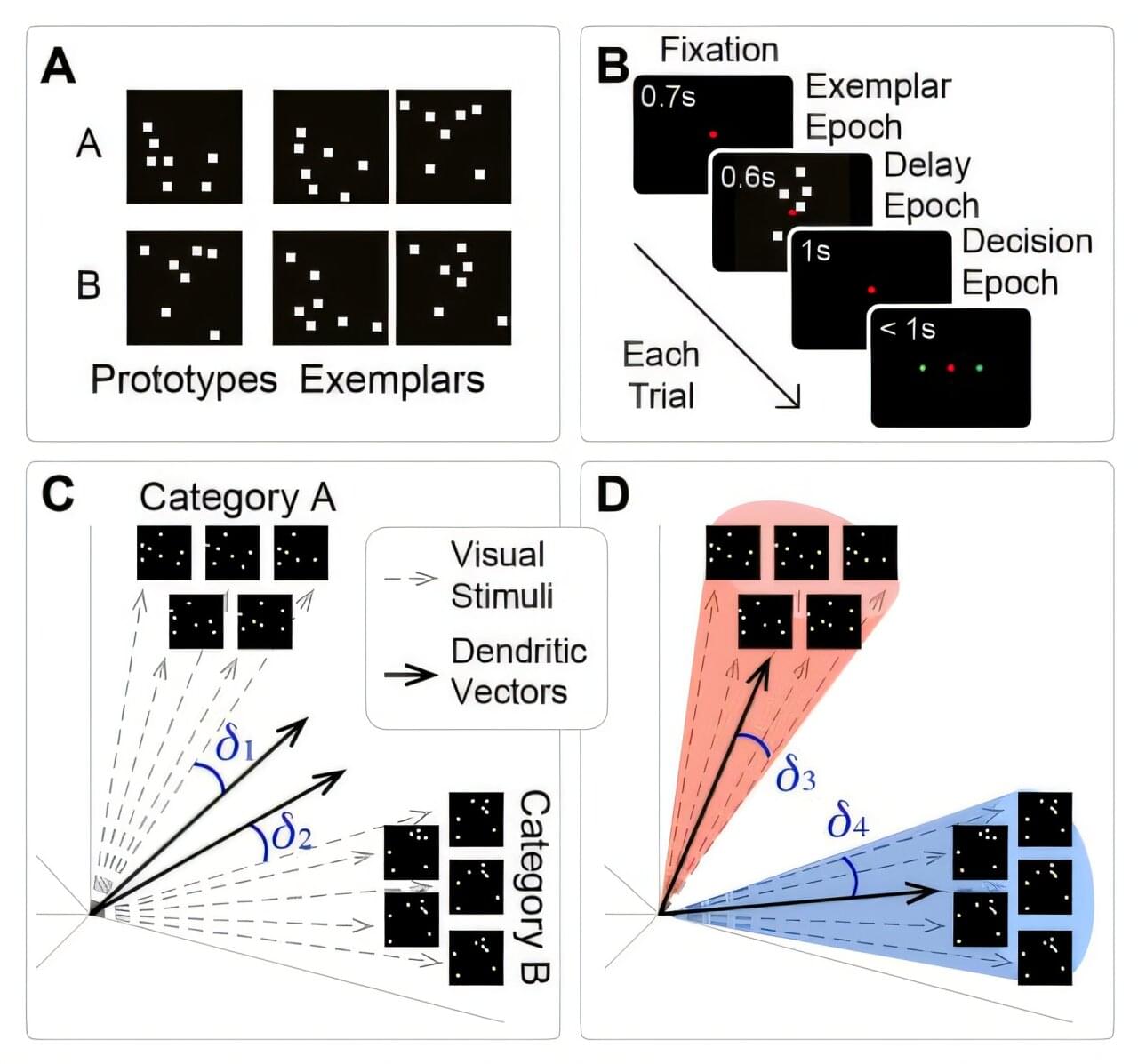
Biology-inspired brain model matches animal learning and reveals overlooked neuron activity

A new computational model of the brain based closely on its biology and physiology has not only learned a simple visual category learning task exactly as well as lab animals, but even enabled the discovery of counterintuitive activity by a group of neurons that researchers working with animals to perform the same task had not noticed in their data before, reports a team of scientists at Dartmouth College, MIT, and the State University of New York at Stony Brook.

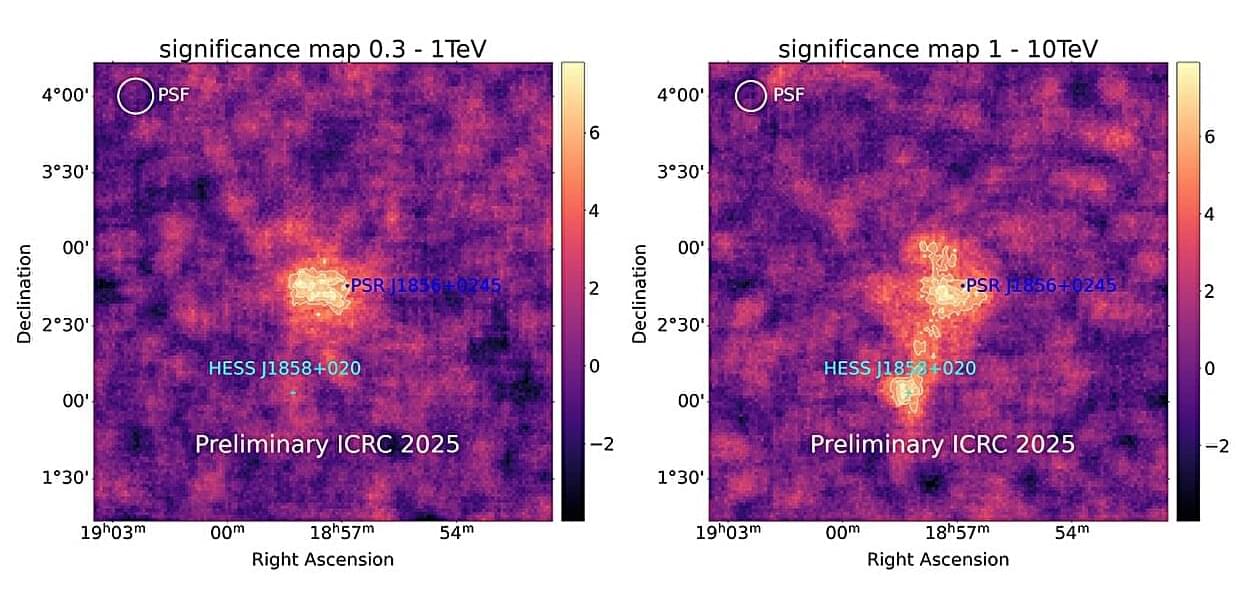
Veritas explores the nature of a mysterious gamma-ray emitter

Astronomers have employed the Very Energetic Radiation Imaging Telescope Array System (VERITAS) to observe a mysterious gamma-ray emitting source designated HESS J1857+026. Results of the observational campaign, published December 19 on the pre-print server arXiv, shed more light on the nature of this source.

How do I make clear ice at home? A food scientist shares easy tips

When you splurge on a cocktail in a bar, the drink often comes with a slab of aesthetically pleasing, perfectly clear ice. The stuff looks much fancier than the slightly cloudy ice you get from your home freezer. How do they do this?

Clear ice is actually made from regular water—what’s different is the freezing process.

With a little help from science, you can make clear ice at home, and it’s not even that tricky. However, there are quite a few hacks on the internet that won’t work. Let’s dive into the physics and chemistry involved.

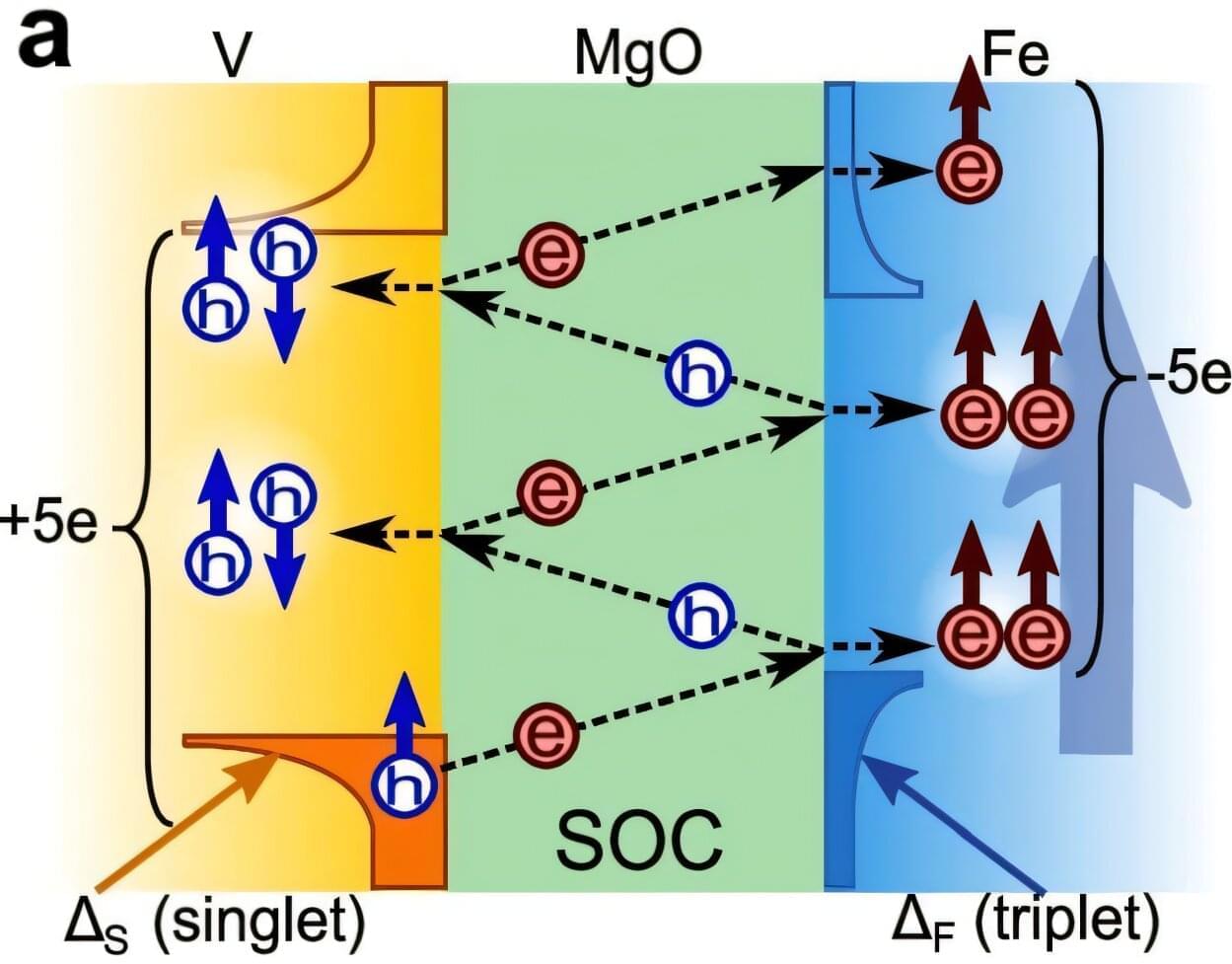
Josephson junction behavior observed with only one superconductor and iron barrier

Separate two superconductors with a thin layer of material and something strange happens.

Their superconductivity—a property driven by paired electrons that allows electricity to flow without energy loss—can leak into the barrier and link together, synchronizing their behavior despite the separation.

This device is known as a Josephson junction. It’s the foundational building block of quantum computers and advances of it won the 2025 Nobel Prize in Physics.

/* */