Alzheimer’s disease affects the brain in tragic and seemingly irreversible ways, but a new study gives hope that its neurological damage may not be entirely beyond repair.


Walter (Dated: December 22, 2025)
See… https://osf.io/preprints/psyarxiv/c5gh8_v1
Abstract: Large language models (LLMs) are widely described as artificial intelligence, yet their epistemic profile diverges sharply from human cognition. Here we show that the apparent alignment between human and machine outputs conceals a deeper structural mismatch in how judgments are produced. Tracing the historical shift from symbolic AI and information filtering systems to large-scale generative transformers, we argue that LLMs are not epistemic agents but stochastic pattern-completion systems, formally describable as walks on high-dimensional graphs of linguistic transitions rather than as systems that form beliefs or models of the world. By systematically mapping human and artificial epistemic pipelines, we identify seven epistemic fault lines, divergences in grounding, parsing, experience, motivation, causal reasoning, metacognition, and value. We call the resulting condition Epistemia: a structural situation in which linguistic plausibility substitutes for epistemic evaluation, producing the feeling of knowing without the labor of judgment. We conclude by outlining consequences for evaluation, governance, and epistemic literacy in societies increasingly organizedaround generative.
Cc: ronald cicurel ernest davis amitā kapoor darius burschka william hsu moshe vardi luis lamb jelel ezzine amit sheth bernard W. kobes.
See…

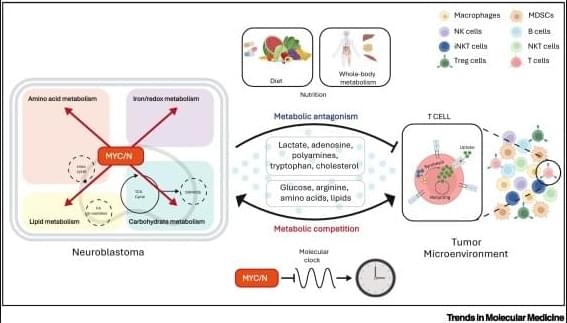
Metabolic control of antitumor Immunity in neuroblastoma👇
✅Distinct metabolic TMEs in MNA vs non-MNA tumors Neuroblastoma (NB) tumors display markedly different tumor microenvironments depending on MYCN amplification (MNA) status. MYCN acts as a key driver of metabolic remodeling, reshaping how nutrients and metabolites are distributed within the TME.
✅MYCN-amplified NB: immunosuppressive metabolism In MNA neuroblastoma, tumor cells aggressively consume shared metabolites such as glucose, glutamine, methionine, cysteine, and lipids. This metabolic competition deprives infiltrating T cells of essential nutrients, promoting T cell exhaustion and dysfunction. In parallel, MNA tumor cells release antagonistic metabolites, including lactate, adenosine, and cholesterol, which further suppress TCR signaling, proliferation, and effector functions.
✅T cell exhaustion and impaired tumor killing Within the MNA TME, T cells exhibit exhausted phenotypes characterized by impaired proliferation, altered STAT5 signaling, and reduced cytotoxic activity. This metabolic and signaling imbalance leads to ineffective immune-mediated tumor killing.
✅Non-MNA NB: permissive immune landscape In contrast, non-MNA neuroblastomas do not impose the same metabolic constraints. Nutrient availability is better preserved, allowing cytotoxic T cells to infiltrate tumors, maintain effector functions, and induce effective tumor cell death.
✅Biological and therapeutic implications These findings highlight metabolism as a central regulator of antitumor immunity in neuroblastoma. Targeting MYCN-driven metabolic pathways may help restore T cell function and improve the efficacy of immunotherapies, particularly in MYCN-amplified disease.
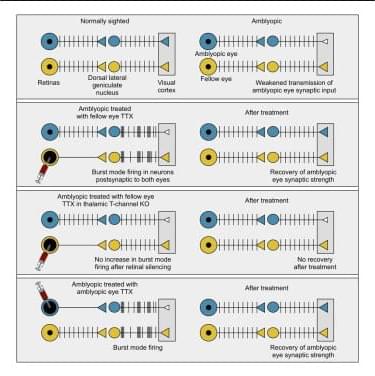
Deprivation amblyopia can be reversed by the temporary inactivation of one eye after the critical period. Here, Echevarri-Leet et al. show that this is caused by increased burst firing in the neurons that relay information from the retina to the visual cortex. Even inactivation of the amblyopic eye can drive recovery.
Enjoy the videos and music you love, upload original content, and share it all with friends, family, and the world on YouTube.