This single-patient case report provides Class IV evidence that oral tenofovir alafenamide fumarate might stabilize the clinical course in patients with progressive multifocal leukoencephalopathy.
Now online! Melanoma cells escape immune surveillance by releasing MHC-antigen-loaded large EVs, known as melanosomes, that directly engage and impair CD8+ T cell receptors.
Now online! Melanoma cells and melanosomes had distinct MHC class I ligandome profiles (Figure 4 G), but a substantial proportion of the melanosome-derived peptide repertoire overlapped with that of the parent cells (83.8%), implying derivation from the total cellular ligandome (Figure 4 G). Pathway enrichment analysis of the immunopeptidome landscape revealed a positive correlation between pathways enriched in cells and their corresponding melanosomes, with substantial overlaps in functional categories such as class I MHC-mediated antigen processing and presentation, DNA repair, and cell cycle regulation (Figures 4 H and 4I). Given the observed MHC class I-dependent, peptide-specific suppression of CD8+ T cell activity by melanosomes, we hypothesized that melanosomes present immunogenic peptides. Indeed, we have identified 25 tumor-associated antigens (TAAs) in melanosome samples (Figure 4 J) with high-confidence peptide identifications (Figure 4 K). These TAAs are predicted to bind a variety of HLA alleles with high affinity. Strikingly, the majority of these peptides were also detected in the corresponding melanoma cell samples (Figure 4 J). Notably, melanosomes exhibited a statistically significant enrichment in TAA presentation compared with melanoma cells, regardless of IFNγ treatment (Figure 4 L).
Finally, we used whole-exome sequencing to generate a custom proteomic database for proteogenomic analysis of neopeptides/neoantigens. This approach identified three mutation-derived neoantigens within the human melanosome immunopeptidome, two of which were also present in the cellular MHC class I repertoire (Figures 4 M and 4N). Importantly, we analyzed the murine B16F10 cells and secreted melanosome immunopeptidomic data, which recapitulated most of our findings in human cells (Figures S4 A–S4J). Together, these findings suggest that melanosomes, by carrying immunogenic peptides, including TAAs and neoantigens, compete with melanoma cells for CD8+ T cell recognition, thereby contributing to their immunomodulatory effects.
Over the past decades, roboticists have introduced a wide range of systems that can effectively tackle some real-world problems. Most of these robots, however, often perform poorly on tasks that they were not trained on, particularly those that entail manipulating previously unseen objects or handling objects that were encountered before in new ways.
Researchers at the Robot Learning Lab at Imperial College London recently developed a new imitation learning approach that could allow robots to successfully learn new tasks faster and without requiring substantial training data. Using this method, which was introduced in a paper published in Science Robotics, they were able to train a robotic arm to complete 1,000 different tasks in a single day.
“The research was initially inspired by our prior work on trajectory transfer, where we introduced a method that proved robust and efficient for teaching robots single tasks,” Kamil Dreczkowski and Pietro Vitiello, co-authors of the paper, told Tech Xplore.
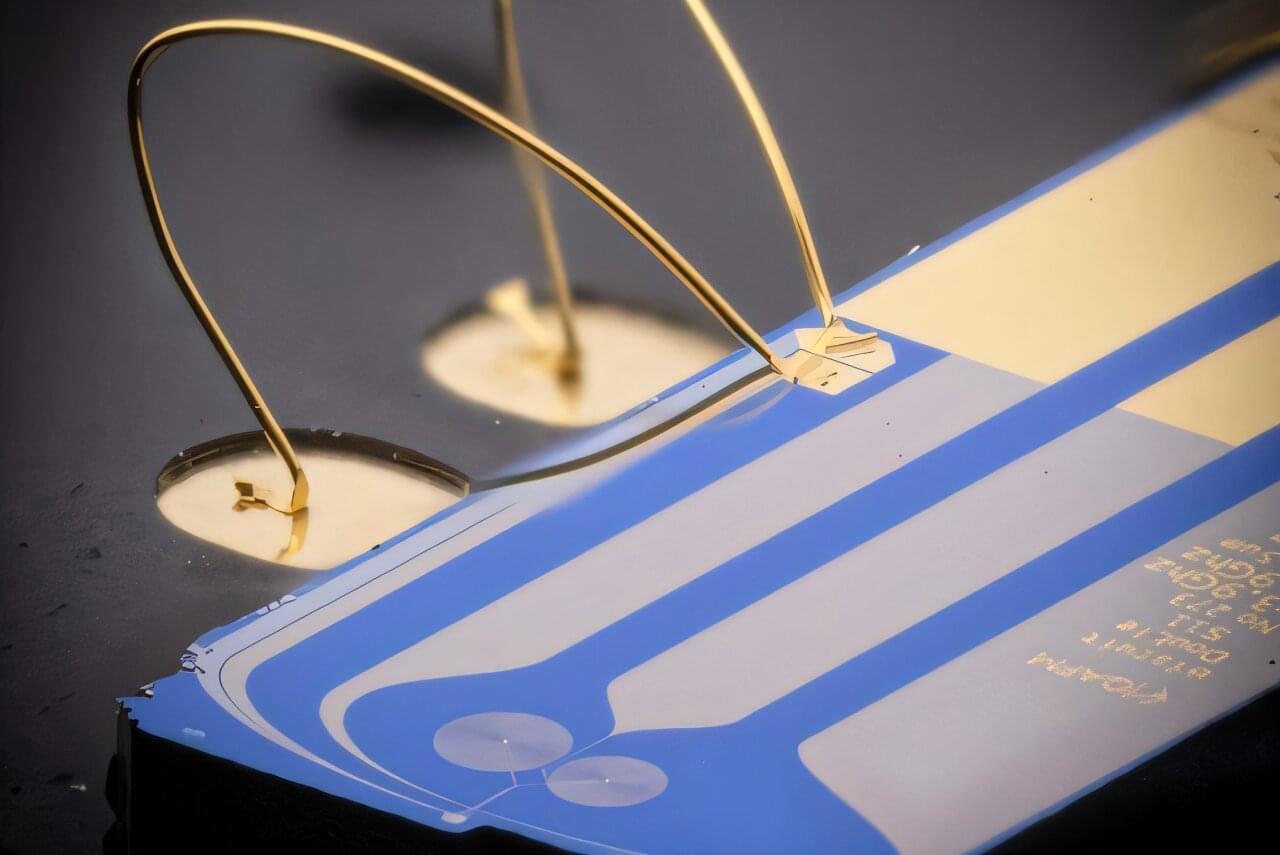
For the first time, researchers in China have demonstrated a high-temperature superconducting diode effect, which allows a supercurrent to flow in both directions. Published in Nature Physics, the team’s result could help address the noisy signals that pose a fundamental challenge in quantum computing.
A diode is a device that shows an asymmetric electrical response, allowing current to flow more easily in one direction than the other. Until recently, diode behavior had only been observed in conventional, non-superconducting electrical systems—but in 2020, a team of researchers in Japan became the first to demonstrate the diode effect in a superconductor. Ever since, this effect has gained increasing attention for its potential in practical quantum computing.
“However, most of the reported superconducting diodes work at low temperatures around 10 Kelvin, and often require an external magnetic field,” explains Ding Zhang at Tsinghua University and the Beijing Academy of Quantum Information Sciences, who led the research. “The diode efficiency is also low for many superconducting diodes.”
Materials react differently to electric and magnetic fields, and these reactions are known as electromagnetic responses. In many solid materials, unusual electromagnetic responses have been known to only emerge when specific symmetries are broken.
Researchers at Rutgers University, Pohang University of Science and Technology, National Taiwan University and University of Michigan recently observed new electromagnetic effects in ferro-rotational materials, which they reported in a paper in Nature Physics. These are solid materials in which individual crystals collectively rotate, and form ordered rotational domains, without breaking spatial inversion (I) or time-reversal (T) symmetry.
“Twisting is ubiquitous in nature, appearing in DNA structures, climbing vines, and even in quartz crystals that exhibit piezoelectricity. Such twisting is typically three-dimensional and is described by chirality, characterized by left-or right-handedness,” Sang-Wook Cheong, senior author of the paper told Phys.org.
Electrons determine everything: how chemical reactions unfold, how materials conduct electricity, how biological molecules transfer energy, and how quantum technologies operate. But electron dynamics happens on attosecond timescales—far too fast for conventional measurement tools.
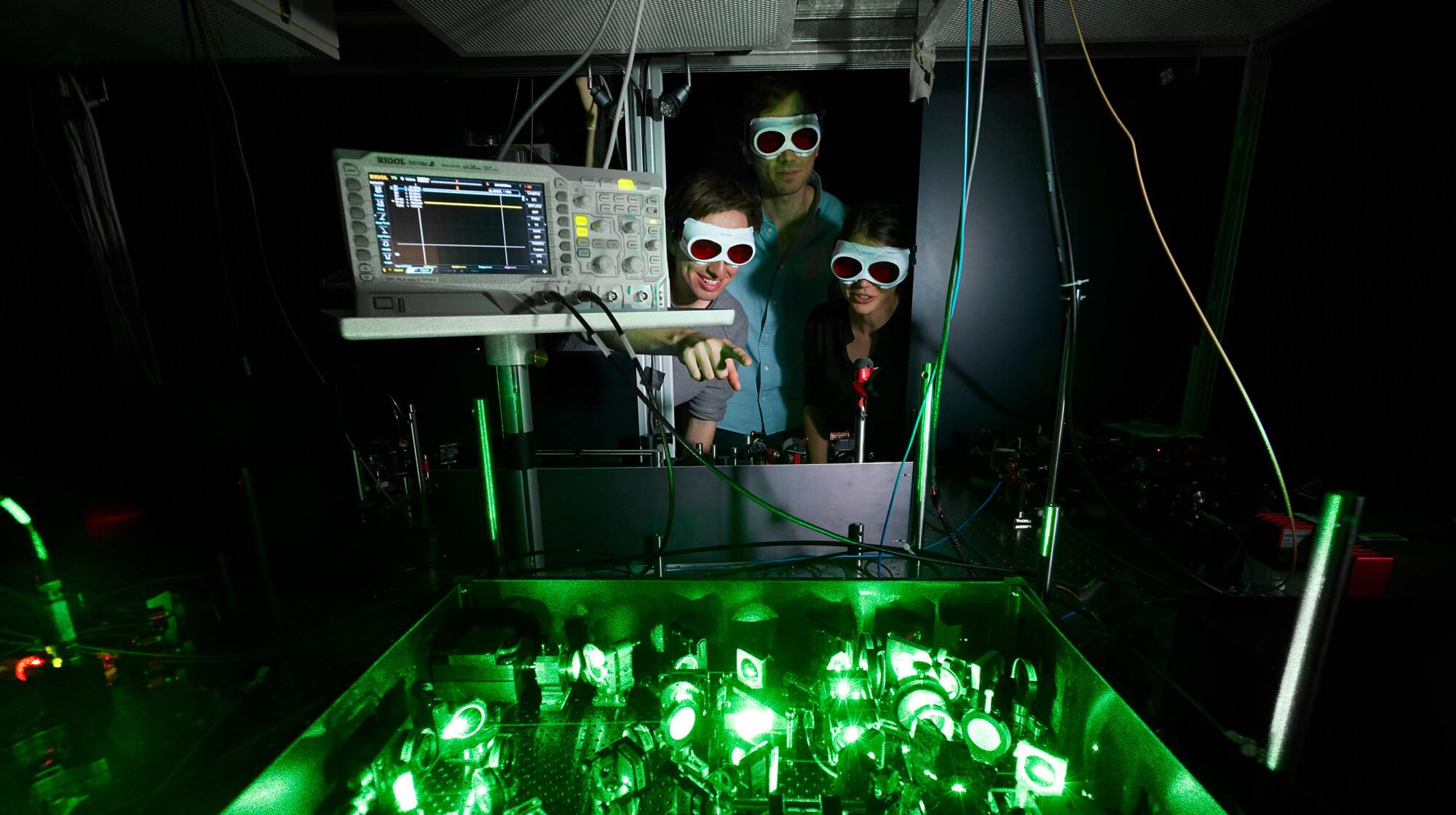
Researchers have now generated a 19.2-attosecond soft X-ray pulse, which effectively creates a camera capable of capturing these elusive dynamics in real time with unprecedented detail, enabling the observation of processes never observed before. Dr. Fernando Ardana-Lamas, Dr. Seth L. Cousin, Juliette Lignieres, and ICREA Prof. Jens Biegert, at ICFO, has published this new record in Ultrafast Science. At just 19.2 attoseconds long, it is the shortest and brightest soft X-ray pulse ever produced, giving rise to the fastest “camera” in existence.
Flashes of light in the soft X-ray spectral range provide fingerprinting identification, allowing scientists to track how electrons reorganize around specific atoms during reactions or phase transitions. Generating an isolated pulse this short, required innovations in high-harmonic generation, advanced laser engineering, and attosecond metrology. Together, these developments allow researchers to observe electron dynamics, which define material properties, at their natural timescales.
Researchers from the University of the Witwatersrand in South Africa, in collaboration with Huzhou University, discovered that the entanglement workhorse of most quantum optics laboratories can have hidden topologies, reporting the highest ever observed in any system: 48 dimensions with over 17,000 topological signatures, an enormous alphabet for encoding robust quantum information.
Most quantum optics laboratories produce entangled photons by a process of spontaneous parametric downconversion (SPDC), which naturally produces entanglement in “space,” the spatial degrees of freedom of light. Now the team have found that hidden in this space is a world of high-dimensional topologies, offering new paradigms for encoding information and making quantum information immune to noise. The topology was shown using the orbital angular momentum (OAM) of light, from two dimensional to very high dimensions.
Reporting in Nature Communications, the team showed that if one measures the OAM of two entangled photons it can be shown to have a topology: an underlying feature of the entanglement itself. Since OAM can take on an infinite number of possibilities, so too can the topology.
Describing matter under extreme conditions, such as those found inside neutron stars, remains an unsolved problem. The density of such matter is equivalent to compressing around 100,000 Eiffel Towers into a single cubic centimeter. In particular, the properties of so-called quark matter—which consists of the universe’s fundamental building blocks, the quarks, and may exist in extremely dense regions—play a central role.
Researchers from TU Darmstadt and Goethe University Frankfurt have studied this matter and its thermodynamic properties. Their findings are published in the journal Physical Review Letters.
Theoretical studies suggest that quarks at very low temperatures enter a so-called color-superconducting state, which fundamentally alters the nature of matter. This state is analogous to the transition of an electron gas into an electrical superconductor—except that, instead of electrons, quarks pair up and create an energy gap in their excitation spectrum.
Whether it’s Greek ouzo, French pastis or Turkish raki, when these spirits are diluted with water, the mixture becomes cloudy. The reason for this is that the aniseed oils contained in the spirit dissolve well in alcohol but not in water. The clear ouzo from the bottle has a high alcohol content at which the oil is fully soluble.
However, when water is added, the aniseed oils can no longer dissolve completely in the significantly reduced alcohol content. As a result, small droplets disperse finely in the drink, creating a milky appearance. Researchers at TU Darmstadt have now used this so-called ouzo effect to create oil droplets for a laboratory experiment. This led to a new discovery: such a droplet can resist a fluid flow and remain in place or even move upstream.