At the heart of every camera is a sensor, whether that sensor is a collection of light-detecting pixels or a strip of 35-millimeter film. But what happens when you want to take a picture of something so small that the sensor itself has to shrink down to sizes that cause the sensor’s performance to crater?
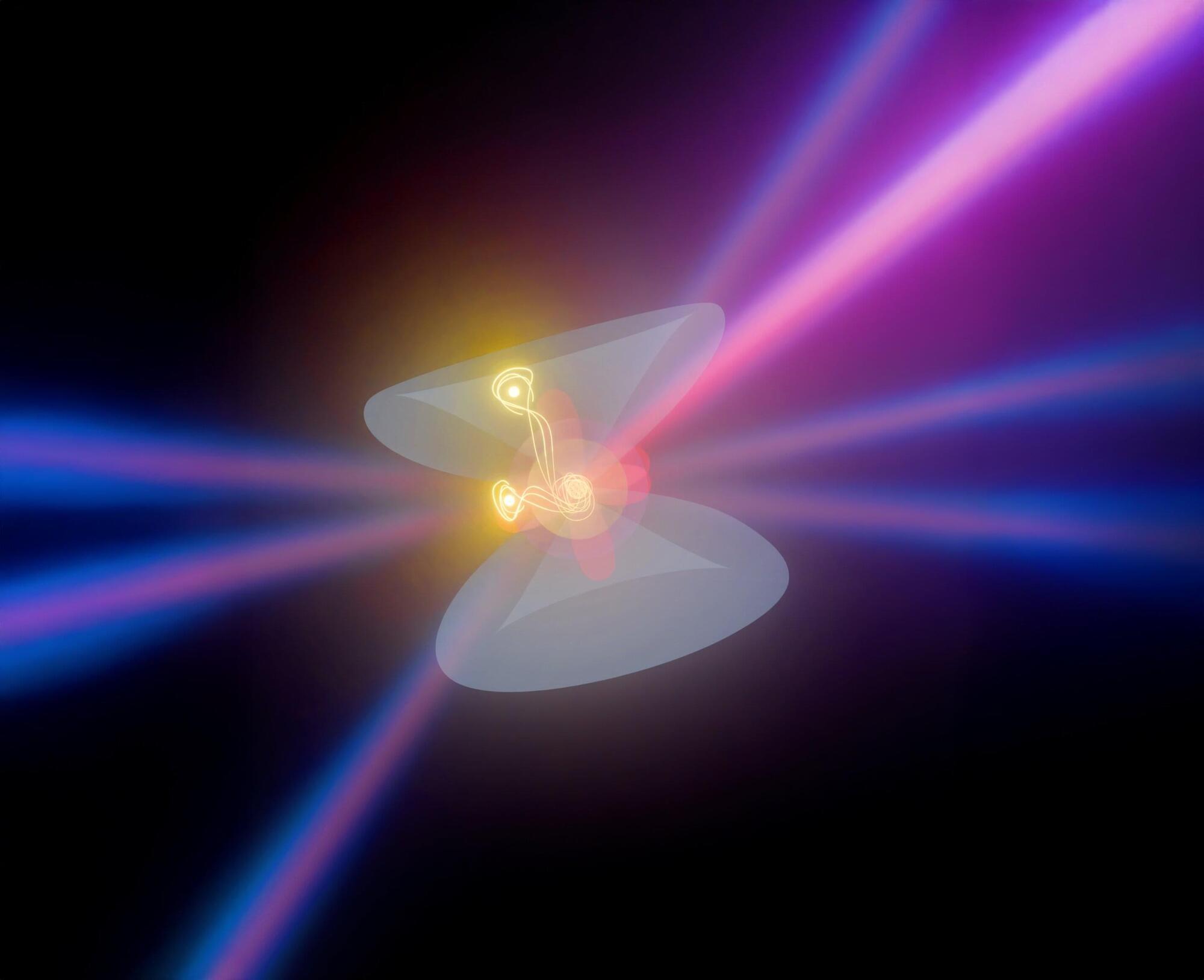
Now, Northeastern University researchers have made a breakthrough discovery in sensing technologies that allows them to detect objects as small as individual proteins or single cancer cells, without the additional need to scale down the sensor. Their breakthrough uses guided acoustic waves and specialized states of matter to achieve great precision within very small parameters.
The device, which is about the size of a belt buckle, opens up possibilities for sensing at both the nano and quantum scales, with repercussions for everything from quantum computing to precision medicine.
A new genetic mapping strategy reveals how entire networks of genes work together to cause disease, filling in the missing links left by traditional genetic studies. The technique could transform how scientists identify drug targets for complex conditions.
Isting gap in neuromorphic engineering by mimicking biological neuron dynamics and realizing effective clinical applications to promote functional recovery and quality of life enhancement in patients with brain injury. The novel neuromorphic engineering approaches leverage the dynamic behavior of brain neurons, incorporating electronic circuits that emulate neuronal dynamics. A basic configuration involves a neural model designed to mimic the dynamics of a living neuron, with the potential to replace damaged brain tissue when implanted, thus restoring signal propagation. An enhanced configuration integrates a closed-loop system, wherein the feedback signal from biological neurons synchronizes the artificial neuron with its living counterpart, allowing continuous self-adjustment of system parameters and promoting a neuro-autogenerative regime.
Explore the universe’s strangest possible life—boron creatures, sulfur beasts, crystal minds, ammonia swimmers, methane organisms, and more in this deep dive into alien chemistry.
Grab one of our new SFIA mugs and make your morning coffee a little more futuristic — available now on our Fourthwall store! https://isaac-arthur-shop.fourthwall… our Website: http://www.isaacarthur.net Join Nebula: https://go.nebula.tv/isaacarthur Support us on Patreon: / isaacarthur Support us on Subscribestar: https://www.subscribestar.com/isaac-a… Facebook Group: / 1,583,992,725,237,264 Reddit: / isaacarthur Twitter: / isaac_a_arthur on Twitter and RT our future content. SFIA Discord Server: / discord Credits: Strange Lifeforms: The Chemistry of Alien Worlds Written, Produced & Narrated by: Isaac Arthur Select imagery/video supplied by Getty Images Chapters 0:00 Intro 3:23What we’ll Explore 5:11 Boron Biochemistry 13:54 Ammonia Worlds 42:01 Sulfur Worlds 46:37 Silicon-Based Life 1:08:08 Phosphorus Life 1:17:25 Crystal Aliens 1:38:40Fluorine Life 1:45:56 Void Ecology 2:09:37 Methane Worlds 2:35:17 Closing Thoughts.
Visit our Website: http://www.isaacarthur.net. Join Nebula: https://go.nebula.tv/isaacarthur. Support us on Patreon: / isaacarthur. Support us on Subscribestar: https://www.subscribestar.com/isaac-a… Facebook Group: / 1583992725237264 Reddit: / isaacarthur. Twitter: / isaac_a_arthur on Twitter and RT our future content. SFIA Discord Server: / discord. Credits: Strange Lifeforms: The Chemistry of Alien Worlds. Written, Produced & Narrated by: Isaac Arthur. Select imagery/video supplied by Getty Images.
GUEST BIO: Chris Mason is a professor of genomics, physiology, and biophysics at Cornell, doing research on the long-term effects of space on the human body. He is the author of The Next 500 Years: Engineering Life to Reach New Worlds.
A combination of self-assembling split-Cre with a destabilizing domain system is found to be an effective way to improve the degradation efficiency of destabilized Cre in the absence of Trimethoprim (Tmp) while maintaining efficient TMP-inducible DNA recombination.