Toggle light / dark theme

Get the latest international news and world events from around the world.

Log in for authorized contributors

A new class of strange one-dimensional particles

Physicists have long categorized every elementary particle in our three-dimensional universe as being either a boson or a fermion—the former category mostly capturing force carriers like photons, the latter including the building blocks of everyday matter like electrons, protons, or neutrons. But in lower dimensions of space, the neat categorization starts to break down.

Since the ’70s, a third class capturing anything in between a fermion and a boson, dubbed anyon, has been predicted to exist—and in 2020, these odd particles were observed experimentally at the interface of supercooled, strongly magnetized, one-atom thick (that is, two-dimensional) semiconductors. And now, in two joint papers published in Physical Review A, researchers from the Okinawa Institute of Science and Technology (OIST) and the University of Oklahoma have identified a one-dimensional system where such particles can exist and explored their theoretical properties.

Thanks to the recent developments in experimental control over single particles in ultracold atomic systems, these works also set the stage for investigating the fundamental physics of tunable anyons in realistic experimental settings. “Every particle in our universe seems to fit strictly into two categories: bosonic or fermionic. Why are there no others?” asks Professor Thomas Busch of the Quantum Systems Unit at OIST.

Ozone-depleting CFCs detected in historical measurements—20 years earlier than previously known

An international research team led by the University of Bremen has detected chlorofluorocarbons (CFCs) in Earth’s atmosphere for the first time in historical measurements from 1951—20 years earlier than previously known. This surprising glimpse into the past was made possible by analyzing historical measurement data from the Jungfraujoch research station in the Swiss Alps. The study has now been published in Geophysical Research Letters.

“This discovery provides quantitative data for the concentration of a CFC for the year 1951,” explains Professor Justus Notholt from the Institute of Environmental Physics at the University of Bremen. “Without the archived measurements from the Jungfraujoch station, this unique look into the past would have been impossible.”

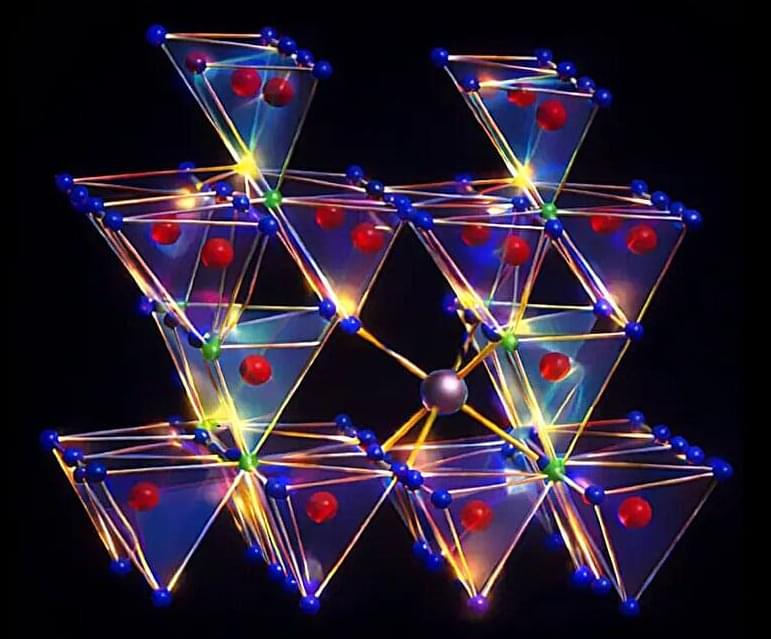
Superconductivity exposes altermagnetism by breaking symmetries, study suggests

How are superconductivity and magnetism connected? A puzzling relation between magnetism and superconductivity in a quantum material has lingered for decades—now, a study from TU Wien offers a surprising new explanation.

Some materials conduct electricity without any resistance when cooled to very low temperatures. This phenomenon, known as superconductivity, is closely linked to other important material properties. However, as new work by physicist Aline Ramires from the Institute of Solid State Physics at TU Wien now shows: in certain materials, superconductivity does not generate exotic magnetic properties, as was widely assumed. Instead, it merely makes an unusual form of magnetism experimentally observable—so-called altermagnetism.

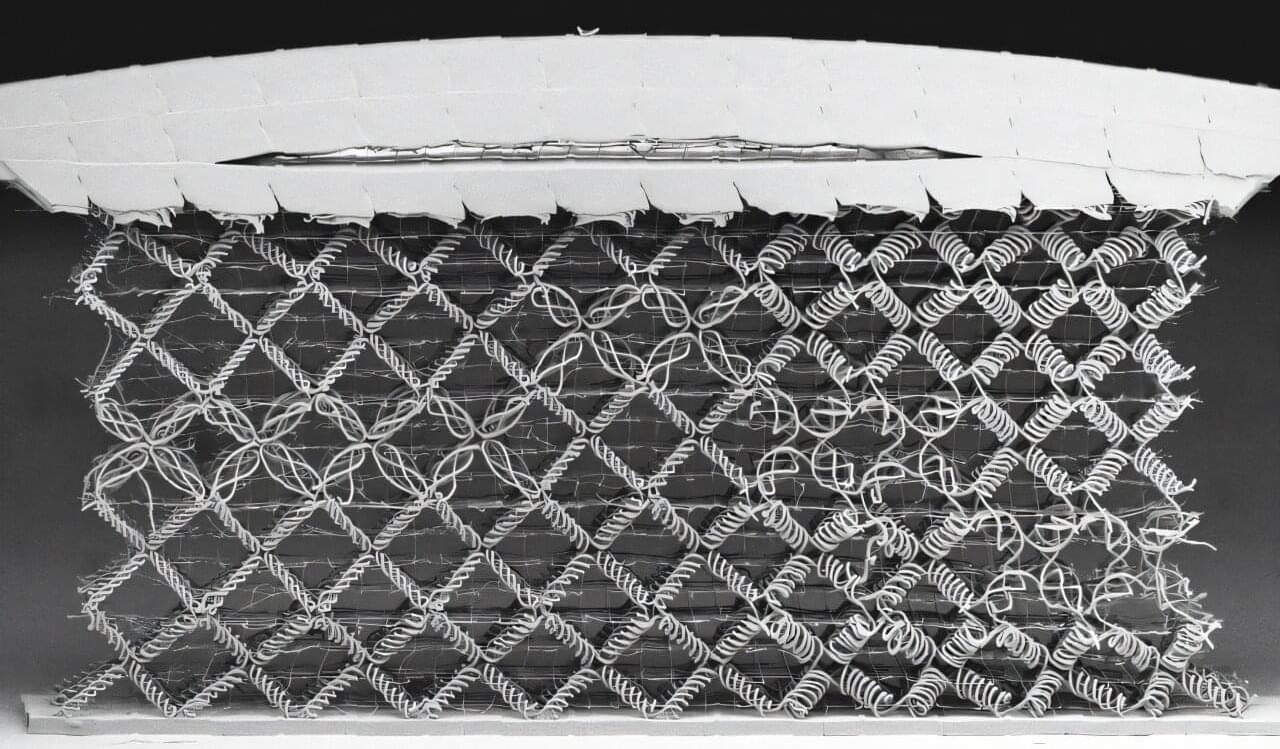
Cryogenic cooling material composed solely of abundant elements reaches 4K

In collaboration with the National Institute of Technology (KOSEN), Oshima College, the National Institute for Materials Science (NIMS) succeeded in developing a new regenerator material composed solely of abundant elements, such as copper, iron, and aluminum, that can achieve cryogenic temperatures (approx. 4K = −269°C or below) without using any rare-earth metals or liquid helium.

By utilizing a special property called “frustration” found in some magnetic materials, where the spins cannot simultaneously satisfy each other’s orientations in a triangular lattice, the team demonstrated a novel method that replaces the conventional rare-earth-dependent cryogenic cooling technology.

The developed material holds promise for responding to the lack of liquid helium as well as for stable cooling in medical magnetic resonance imaging (MRI) and quantum computers, which are expected to see further growth in demand. The results are published in Scientific Reports.

Tiny droplets navigate mazes using ‘chemical echolocation,’ without sensors or computers

A recent study by a team of researchers led by TU Darmstadt has found that tiny amounts of liquid can navigate their way through unknown environments like living cells—without sensors, computers or external control. The tiny droplets can navigate autonomously, are able to detect obstacles from a distance and move reliably through complex mazes—without cameras or electronics. The reason for this is a mechanism that the research team refers to as “chemical echolocation.”

Here’s how it works: Instead of emitting sound waves like bats in dark caves, the droplets release small amounts of chemicals into their environment as they move. These chemicals spread throughout the environment and are reflected by nearby walls and dead ends. The returning “echo” subtly pushes the droplet away from blocked paths and toward open paths, thus guiding its movement.

Niobium’s superconducting switch cuts near-field radiative heat transfer 20-fold

When cooled to its superconducting state, niobium blocks the radiative flow of heat 20 times better than when in its metallic state, according to a study led by a University of Michigan Engineering team. The experiment marks the first use of superconductivity—a quantum property characterized by zero electrical resistance—to control thermal radiation at the nanoscale.

Leveraging this effect, the researchers also experimentally demonstrated a cryogenic thermal diode that rectifies the flow of heat (i.e., the heat flow exhibits a directional preference) by as much as 70%.

“This work is exciting because it experimentally shows, for the very first time, how nanoscale heat transfer can be tuned by superconductors with potential applications for quantum computing,” said Pramod Sangi Reddy, a professor of mechanical engineering and materials science and engineering at U-M and co-corresponding author of the study published in Nature Nanotechnology.

Ultra-thin metasurface chip turns invisible infrared light into steerable visible beams

The invention of tiny devices capable of precisely controlling the direction and behavior of light is essential to the development of advanced technologies. Researchers at the Advanced Science Research Center at the CUNY Graduate Center (CUNY ASRC) have taken a significant step forward with the development of a metasurface that can turn invisible infrared light into visible light and aim it in different directions—without any moving parts. The details of their work are explained in a paper published in the journal eLight.

The novel metasurface is constructed of an ultra-thin chip patterned with tiny structures smaller than the wavelength of light. When hit with an infrared laser, the chip converts the incoming light to a higher color (or frequency) and sends the new light out as a narrow beam that can be steered simply by changing how the incoming light is polarized.

In their experiments, the team converted infrared light around 1,530 nanometers—similar to the light used in fiber-optic communications—into visible green light near 510 nanometers and steered it to chosen angles.

Using duality to construct and classify new quantum phases

A team of theoretical researchers has found duality can unveil non-invertible symmetry protected topological phases, which can lead to researchers understanding more about the properties of these phases, and uncover new quantum phases. Their study is published in Physical Review Letters.

Symmetry is one of the most fundamental concepts for understanding phases of matter in modern physics—in particular, symmetry-protected topological (SPT) phases, whose quantum mechanical properties are protected by symmetries, with possible applications in quantum computing and other fields.

Over the past few years, non-invertible symmetries, which extend the framework of conventional symmetries, have attracted significant attention in high energy physics and condensed matter physics. However, their complex mathematical structures have made it difficult to understand their corresponding phases of matter, or SPT phases.

Astronomers Reveal the Hidden Magnetic Skeleton of the Milky Way

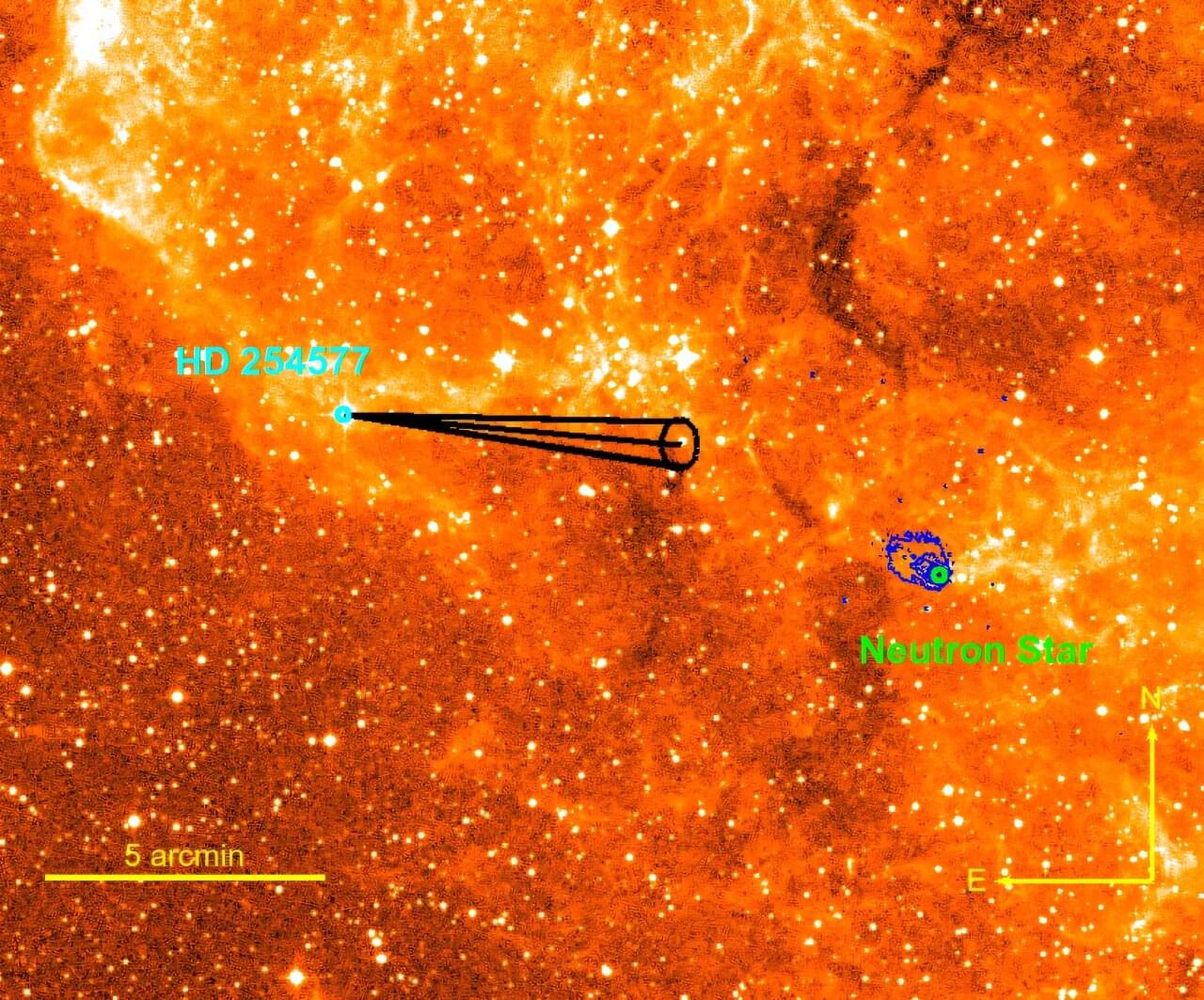
People have scanned the night sky for ages, but some of the Milky Way’s most important features cannot be seen with ordinary light. Dr. Jo-Anne Brown, PhD, is working to chart one of those hidden ingredients: the galaxy’s magnetic field, a vast structure that can influence how gas moves, where stars form, and how cosmic particles travel.

“Without a magnetic field, the galaxy would collapse in on itself due to gravity,” says Brown, a professor in the Department of Physics and Astronomy at the University of Calgary.

“We need to know what the magnetic field of the galaxy looks like now, so we can create accurate models that predict how it will evolve.”

Researchers Warn: WiFi Could Become an Invisible Mass Surveillance System

Researchers say a new technology can identify individuals even when they are not carrying a WiFi device by passively recording signals in radio networks, raising serious privacy concerns and prompting calls for stronger protections. Walking past a café with an active WiFi network could be enough

/* */