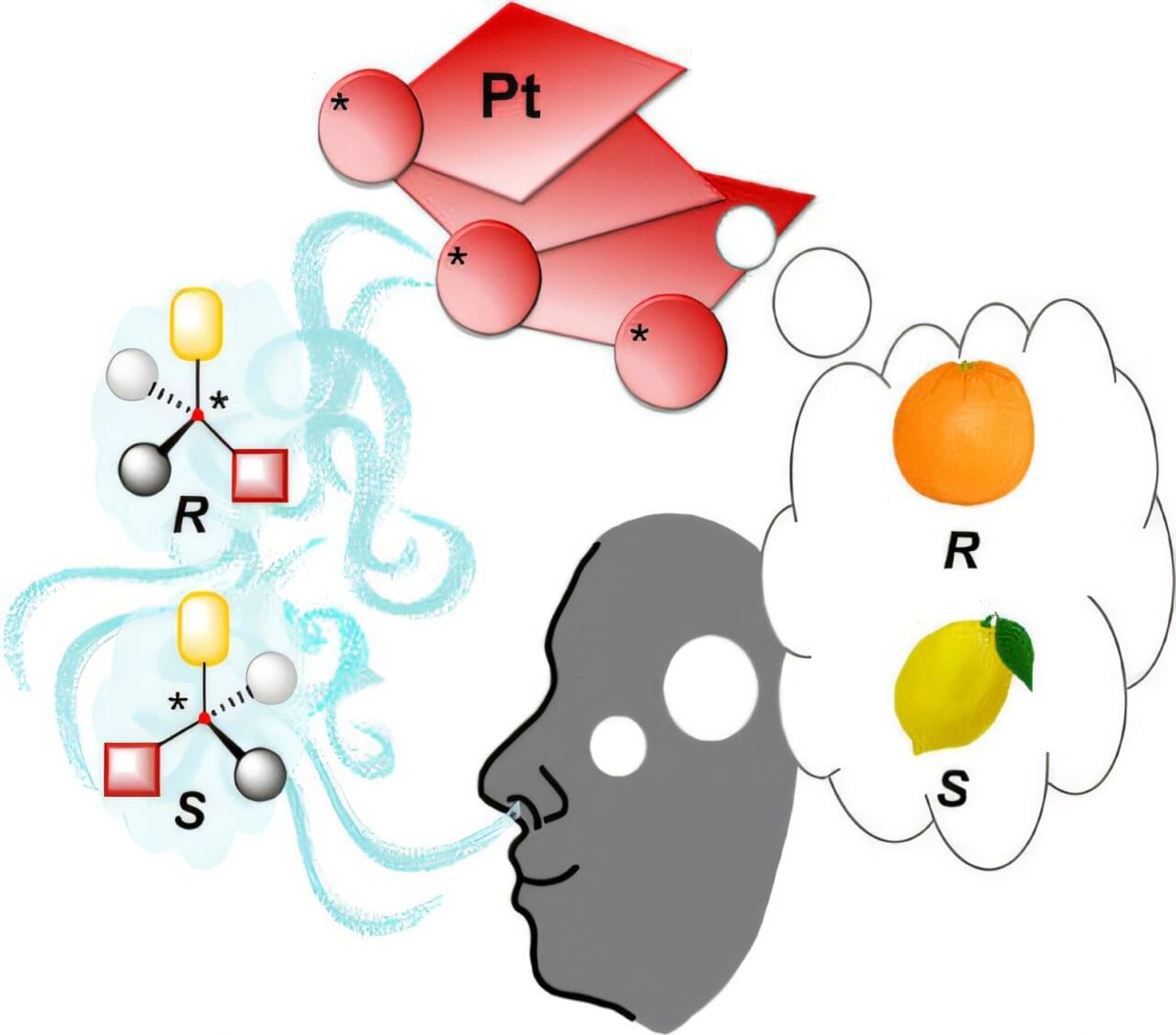
Terpenes are volatile organic compounds that are responsible for, among other things, the typical scents of plants, resins or citrus fruits. These compounds occur naturally in the environment and influence chemical processes in the atmosphere. At high concentrations, they can irritate the respiratory tract and contribute to the formation of harmful derivatives. Many terpenes exist in two mirror-image forms, known as enantiomers, which can differ significantly in terms of their effects and how they are perceived—but which are difficult to distinguish between using technical means.
Now, researchers from the Department of Chemistry at the University of Basel have presented a new approach that allows these mirror-image forms of the molecules to be detected specifically.
“Our work focused on a specially developed platinum-based molecule that works as a sensor,” explains Dr. Annika Huber, first author of the study and a former doctoral student at the Swiss Nanoscience Institute’s Ph.D. School. “This sensor molecule has a fixed, three-dimensional shape and aggregates with a large number of identical molecules to form tiny stack-like nanostructures that react differently to the two mirror-image forms of the terpenes.”