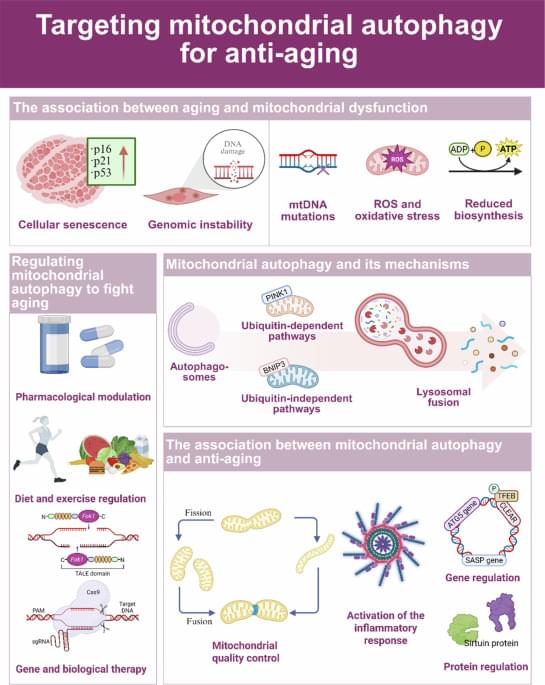
Mayo Clinic scientists used DNA aptamers to tag senescent “zombie” cells, opening new paths for anti-aging and disease therapies.
For a long time, this has been a major hurdle in optics. Light is an incredible tool for fast, efficient communication and futuristic quantum computers, but it’s notoriously hard to control at such delicate, “single-photon” levels.
Electron avalanche multiplication can enable an all-optical modulator controlled by single photons.
DDX3X acts as a selective dual switch regulator of mRNA translation in acute ER stress.
Shawky et al. show that DDX3X selectively promotes or represses mRNA translation in a stress-dependent manner. This bidirectional regulation involves position-specific binding to the mRNA 5′ UTR and early coding region, reflecting distinct mechanisms, including initiation control during 48S scanning and translational repression associated with ac4C post-transcriptional modification.
Background: Although immune checkpoint inhibitors (ICI) have revolutionized liver cancer treatment, some patients experience early tumor progression after therapy, missing the window for other potential treatments, such as neoadjuvant therapy. Therefore, identifying the predictive factors for early progression is critical for timely therapeutic adjustment and the optimization of patient outcomes. Methods: This retrospective study enrolled patients with liver cancer who received their first ICI combined with targeted therapy at the Fifth Medical Center of the PLA General Hospital between June 2022 and December 2023. Early tumor progression was defined as tumor progression within 6 months of therapy initiation.
Scientists at the Herbert Irving Comprehensive Cancer Center (HICCC) have discovered a key mechanism that makes prostate cancer cells resistant to the latest drugs used to treat them. Their findings, reported in the current issue of Nature, solve a longstanding puzzle in tumor biology and present preclinical data on a drug compound that could soon enter the clinic.
The work grew out of decades of prostate cancer research by Michael Shen, Ph.D., co-leader of the Tumor Biology and Microenvironment research program at the HICCC. Shen’s research focuses on lineage plasticity, the ability of cancer cells to reprogram themselves to impersonate other types of cells.
“Plasticity is a hallmark of cancer in general and a very important feature of advanced prostate cancer, particularly when it comes to the emergence of treatment resistance,” says Shen. Treatment with androgen receptor inhibitors, which have become the standard of care in recent years, often stimulate prostate tumor cells to adopt neuroendocrine characteristics, rendering them resistant to the drugs.