Since 1989, Valter Longo has dedicated his research to understanding the factors that contribute to overall health and longevity.

Immortality is doubtful but what might be possible?
A central question in molecular biology is how cells protect their chromosomes from damage during repeated cell division. At the heart of this protective process is an enzyme called telomerase. Now an international research team has mapped the three-dimensional structure of telomerase in the yeast Saccharomyces cerevisiae, a widely used model organism in genetics.
Using cutting-edge technology, the scientists were able to visualize the architecture of this complex enzyme in unprecedented detail, uncovering unexpected features that may explain how it functions.
This major discovery was the result of an international collaboration between Pascal Chartrand, a professor in the Department of Biochemistry and Molecular Medicine at Université de Montréal, and researchers from Université de Sherbrooke and the MRC Laboratory of Molecular Biology in the U.K. Their findings were recently published in Science.
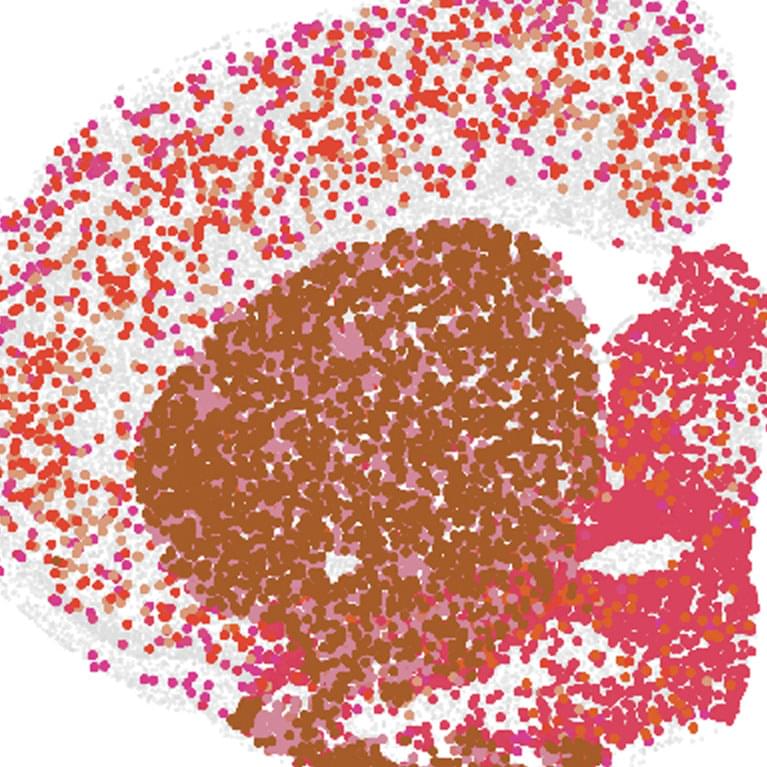
A new study from the Salk Institute maps how the aging brain changes at the epigenetic level — cell type by cell type.
The researchers created one of the most detailed single-cell atlases yet of the aging mouse brain, spanning 8 brain regions, 36 cell types, and hundreds of thousands of cells. They found major age-related changes in DNA methylation, chromatin structure, and gene activity, with some of the strongest changes appearing in non-neuronal cells.
This kind of work matters because it moves brain aging closer to mechanism — not just describing decline, but identifying the molecular regulatory shifts that may drive vulnerability to neurodegenerative disease.
Highlights Salk researchers create epigenetic atlas of cell type-specific changes in the aging mouse brain The atlas represents eight different brain regions and 36 different cell types, and shows clear epigenetic differences associated with different ages The new resource—available publicly on Amazon Web services—can be used to unravel age-related contributions to neurodegenerative diseases like Alzheimer’s, Parkinson’s, and ALS LA JOLLA—Neurodegenerative diseases affect more than 57 million people globally. The incidence of these diseases, from Alzheimer’s to Parkinson’s to ALS and beyond, is expected to double every 20 years. Though scientists know aging is a major risk factor for neurodegenerative diseases, the full mechanisms behind aging’s impact remain unclear.
You are invited to presentations by “The Immortality Thief: How Toxins Shorten Life — and How to Fight Back with Glutathione, TPE & Beyond.” Bill Faloon will also give an update on Age Reversal presentation. — March 26, 2026” Our doors open at 6:00 PM with the main event at 7:00 PM Live in Person AND in Zoom and YouTube Livestream Afterwards, enjoy a 5 star banquet and conversations with members on Health and Super Longevity.
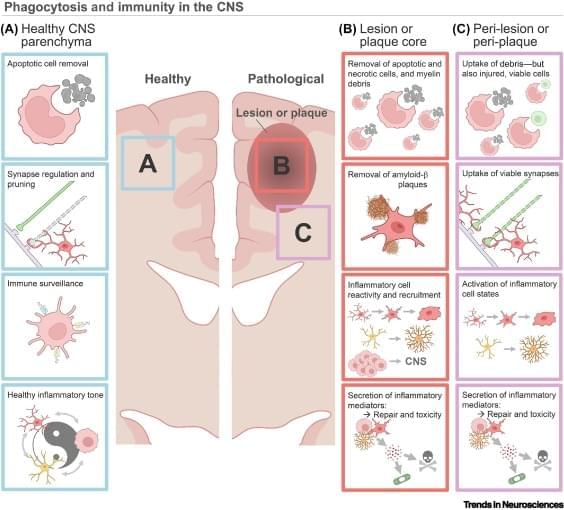
Brain phagocytosis and neuroinflammation.
Phagocytes in the central nervous system (CNS), including astrocytes, microglia, and macrophages, shape development and homeostasis by pruning synapses and removing apoptotic debris.
Phagocytosis is mediated by various ligand–receptor dyads and signaling pathways, enabling CNS phagocytes to respond to neuroimmune shifts across the lifespan and during pathology.
Phagocytosis pathways regulate recovery in various models of CNS pathology, including multiple sclerosis, CNS injury, ischemic stroke, and age-associated neurodegeneration.
Phagocytosis pathways are intimately integrated with the inflammatory cell state and remove viable cells in pathology-adjacent tissue, highlighting the complexity of targeting these systems.
To maximize benefit and minimize off target damage, new phagocytic-based approaches should optimize drug delivery timing and location, tailored to each CNS pathology. sciencenewshighlights ScienceMission https://sciencemission.com/resolution-of-inflammation
Being alive inherently damages our DNA through sunlight and cellular processes. But what if we could make this damage optional? Nature offers clues: animals with superior DNA repair and cell elimination mechanisms could hold the key to longer life.
Year 2025
Cryopreserving the adult brain is challenging due to damage from ice formation, and traditional freezing methods fail to maintain neural architecture and function. Vitrification offers a promising alternative but has not been surveyed in the brain. Here, we demonstrate near-physiological recovery of the adult murine hippocampus after vitrification of brain slices and of the whole brain in situ. Key features of the hippocampus are preserved, including structural integrity, metabolic responsiveness, neuronal excitability, and synaptic transmission and plasticity. Notably, hippocampal long-term potentiation was well preserved, indicating that the cellular machinery of learning and memory remains operational. These findings extend known biophysical limits for cerebral hypothermic shutdown by demonstrating recovery after complete cessation of molecular mobility in the vitreous state. This suggests that the brain can be arrested in time and then reactivated, opening avenues for potential clinical applications.
Significance Statement While the brain is considered exceptionally sensitive, we show that the hippocampus can resume normal electrophysiological activity after being rendered completely immobile in a cryogenic glass. The work extends known biophysical tolerance limits for the brain from the hypothermic to the cryogenic range and establishes a protocol for its long-term storage in a viable state.
The authors have declared no competing interest.

New in eNeuro from Boebinger et al: Compared to young adults, older people with and without Parkinson’s disease have larger brain responses and muscle signals that hinder their balance recovery ability.
▶️
We lack a mechanistic understanding of how cortical contributions to balance control change in aging and Parkinson’s disease (PD). Balance is governed by brainstem circuits, with higher-order centers like the cortex or basal ganglia becoming engaged as challenge increases or balance health declines. We previously showed that parallel sensorimotor feedback loops engaging brainstem and cortical circuitry contribute to muscle activity for balance control in young adults (YAs). Here, we analyze data from male and female older adults (OAs) with and without PD, decomposing perturbation-evoked tibialis anterior and medial gastrocnemius muscle activity into hierarchical components based on latencies of feedback control loops. We found that balance-correcting muscle activity followed a stereotypical waveform of long-latency responses (LLRs): LLR1 began ∼120ms and LLR2 occurred ∼210ms, respectively, consistent with subcortical and cortical feedback latencies. Both LLRs increased with balance challenge and could be explained by center of mass kinematics. Perturbation-evoked antagonist muscle activity consisted of destabilizing and stabilizing components categorized based on whether they resist the kinematic errors that drive their activation. The destabilizing component occurred at ∼180ms and was negatively correlated with clinical measures of balance ability in the OA but not PD group. Exploratory comparisons showed OA and PD groups had larger LLR2s at lower challenge levels than YAs, consistent with greater cortical engagement during balance with aging. These findings demonstrate that a neuromechanical model can decompose perturbation-evoked muscle activity into hierarchical components related to clinical balance ability and identify mechanistic changes in the neural control of balance without direct brain measurements.
Significance Statement We show that reactive balance recovery in older adults with and without Parkinson’s disease can be decomposed into distinct components that reflect hierarchical brainstem, cortical, and basal ganglia feedback loops. Using a neuromechanical model of delayed task-level feedback control, we link these components to perturbation difficulty and clinical balance ability in older adults. This framework connects specific features of agonist and antagonist muscle activity to underlying neural control processes without requiring direct brain recordings. Our findings provide a mechanistic basis for age-and disease-related changes in balance control that can inform individualized assessment and future rehabilitation strategies.