Toggle light / dark theme

Printed Artificial Neurons That Communicate with Living Brain Cells

Artificial Neurons That Talk to the Brain? A Major Breakthrough in Neurotechnology
What if machines could communicate directly with your brain?

Scientists at Northwestern University have developed *printed artificial neurons* that can interact with real brain cells—sending signals that closely mimic natural neural activity. This breakthrough could redefine how we treat neurological disorders and build the next generation of energy-efficient AI systems.

In this video, we explore how these artificial neurons work, how they were tested on real brain tissue, and why this discovery could lead to revolutionary technologies like brain-machine interfaces and neuromorphic computing.

🔬 *What you’ll learn:*

How artificial neurons mimic real brain signals
Why traditional computing struggles with energy efficiency
The role of advanced materials like graphene and MoS₂
How this technology could restore vision, hearing, or movement
What neuromorphic computing means for the future of AI

🚀 *Why this matters:*

The Age of Biohacking: Redefining Human Potential in the 21st Century

In a world where technology and biology converge at an accelerating pace, a new era of self-improvement is emerging — biohacking. This once-niche movement has transformed into a global phenomenon, attracting everyone from Silicon Valley executives to amateur enthusiasts. The promise? To optimize the human mind and body beyond natural limits using a blend of science, lifestyle adjustments, and cutting-edge technology.

But what exactly is biohacking? Is it the future of personal health and evolution, or a slippery slope into risky experimentation? In this article, we’ll delve deep into the world of biohacking — its origins, principles, popular techniques, controversies, and future potential. Whether you’re a skeptic, a curious observer, or a self-improvement junkie, the world of biohacking has something provocative for everyone.

Inside the brains of 800 incarcerated men: High psychopathy linked to expanded brain surface area

People with high levels of psychopathic tendencies are often incapable of feeling empathy for other people. From a brain science perspective, empathy isn’t a single emotion but a multi-part neural process. It involves brain systems that help us share others’ feelings, understand their perspectives, and even mentally step into their experience.

The bigger picture is, however, still blurry as we lack large-scale studies that map how different features of brain structure link to both empathy and psychopathy, especially in incarcerated populations.

A recent study published in Biological Psychiatry Global Open Science investigated how personality is reflected in the brain by turning to something measurable—the brain’s physical structure.

Risk, Resilience, And Humanity’s Expanding Technological Frontiers

“As we approach the Convergence Age, the physical, digital, biological, and even cosmic realms are merging into a hyperconnected environment. Our understanding of risk and danger is blurring. Dissolution provides fresh opportunities and problems beyond grasp. It’s not speculation. It’s inevitable due to exponential technology. It’s unlike anything humanity has ever experienced”


As we approach the Convergence Age, the physical, digital, and biological are merging into a hyperconnected environment. Our understanding of risk and danger is blurring.

Do We Have Free Will? with Robert Sapolsky & Neil deGrasse Tyson

Is there a quantum reason we could have free will? Neil deGrasse Tyson and comedian Chuck Nice explore the concept of free will and predetermination with neuroscientist, biologist, and author of Determined: The Science of Life Without Free Will, Robert Sapolsky.

A special thanks from our editors to Robert Sapolsky’s dog.

Could we put an end to the question of whether or not we have free will? Discover “The Hungry Judge Effect” and how little bits of biology affect our actions. We break down a physicist’s perspective of free will, The Big Bang, and chaos theory. Is it enough to just feel like we have free will? Why is it an issue to think you have free will if you don’t?

We discuss the difference between free will in big decisions versus everyday decisions. How do you turn out to be the type of person who chooses vanilla ice cream over strawberry? We explore how quantum physics and virtual particles factor into predetermination. Could quantum randomness change the actions of an atom? How can society best account for a lack of free will? Are people still responsible for their actions?

What would Chuck do if he could do anything he wanted? We also discuss the benefits of a society that acknowledges powers outside of our control and scientific advancements made. How is meritocracy impacted by free will? Plus, can you change if people believe in free will if they have no free will in believing so?

Thanks to our Patrons Pro Handyman, Brad K. Daniels, Starman, Stephen Somers, Nina Kane, Paul Applegate, and David Goldberg for supporting us this week.

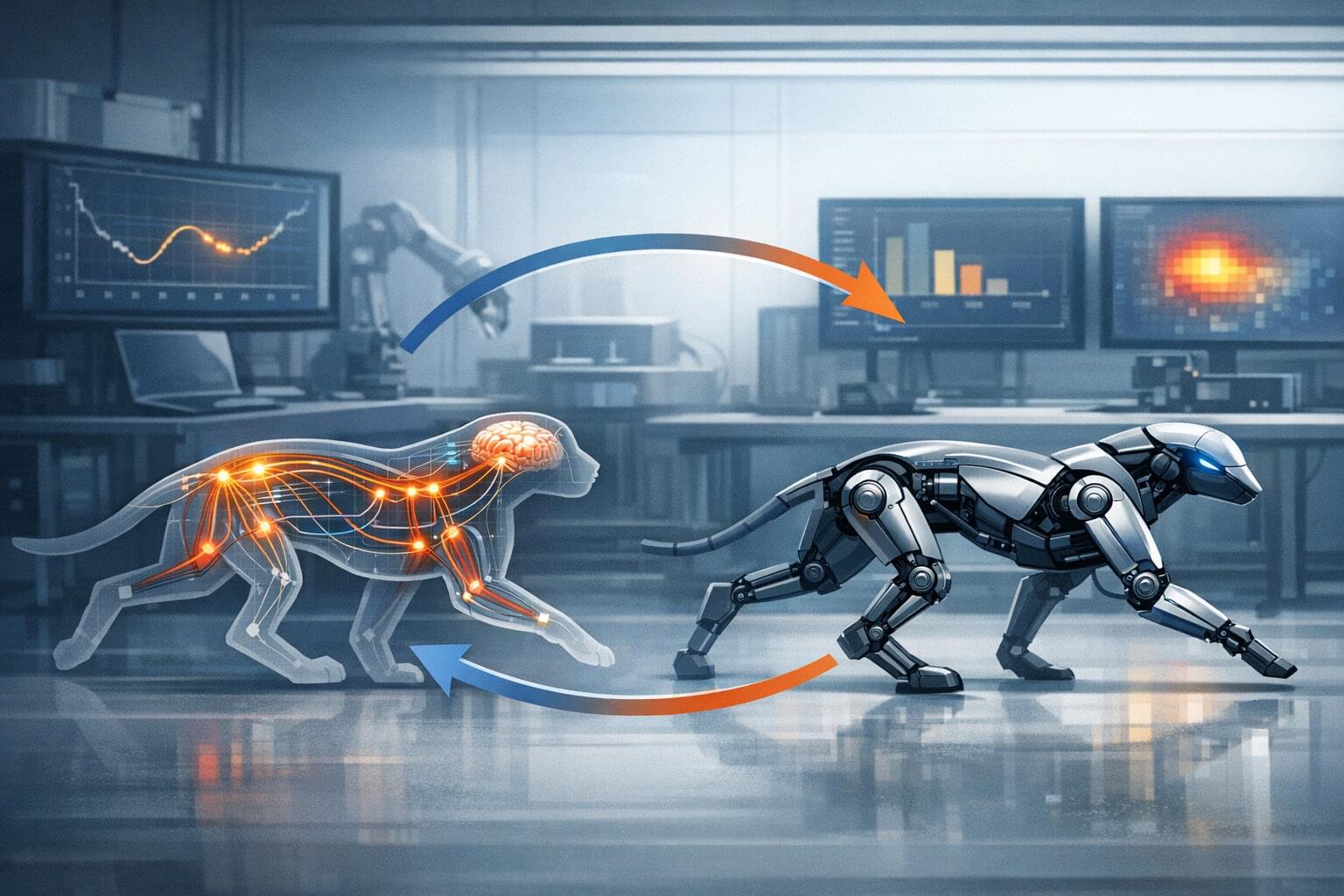
Artificial neurons successfully communicate with living brain cells

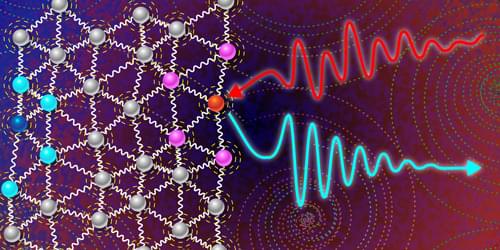
Engineers at Northwestern University have created printed artificial neurons that go beyond imitation and can directly interact with real brain cells. These flexible, low-cost devices produce electrical signals that closely resemble those generated by living neurons, allowing them to activate biological brain tissue.

In experiments using slices of mouse brain, the artificial neurons successfully triggered responses in real neurons. This result shows a new level of compatibility between electronic devices and living neural systems.

These AI-powered guide dogs don’t just lead, they talk

Guide dogs are powerful allies, leading the visually impaired safely to their destinations, but they can’t talk with their owners—until now. Using large language models, a team of researchers at Binghamton University, State University of New York has created a talking robot guide dog system that determines an ideal route and safely guides users to their destination, offering real-time feedback along the way.

The paper, “From Woofs to Words: Towards Intelligent Robotic Guide Dogs with Verbal Communication,” was presented at the 40th Annual AAAI Conference on Artificial Intelligence (AAAI 2026), held January 20–27 in Singapore. It is also available on the arXiv preprint server.

“For this work, we’re demonstrating an aspect of the robotic guide dog that is more advanced than biological guide dogs,” said Shiqi Zhang, an associate professor at the Thomas J. Watson College of Engineering and Applied Science’s School of Computing. “Real dogs can understand around 20 commands at best. But for robotic guide dogs, you can just put GPT-4 with voice commands. Then it has very strong language capabilities.”

Loss of microbiota alters the profile of cells that protect the intestinal wall, experiments reveal

A research team led by scientists from the State University of Campinas (UNICAMP) in São Paulo, Brazil, has made significant progress in understanding the relationship between gut microbiota and intestinal cells. The study, published in the journal Gut Microbes, showed how microbiota and the compounds it produces, such as butyrate, influence the functioning of cells that line the large intestine. This intestinal layer is in close contact with bacteria and produces mucus that contributes to its barrier function, helping to prevent bacteria from entering the body.

Among the findings is a description of the dual function of a cell that was previously thought to be exclusively mucus-secreting. The researchers discovered that the cell also absorbs nutrients and that its abundance in the epithelium is regulated by signals from the gut microbiota. The number of these cells increases when the gut microbiota is reduced.

The abundance of this cell is regulated by the production of butyrate—a compound resulting from the fermentation of dietary fiber—and its receptor, GPR109A. The more butyrate produced, the fewer of these cells there are.

/* */