Panellists debate about using technology to enhance human life.
‹›
Suchitra Bajpai Chaudhary, Senior Reporter.
Picture retrieved from @ADPoliceHQ/Twitter
Among the mind-boggling new targets envisioned by the Abu Dhabi Police are sending police officers to Mars on a UAE-built spaceship and setting up the first ever police centre on Mars, among the long-term goals.
Other targets include creating the first ever cadre of astronaut officers to police outer space; foresight future police who will work to prevent crimes; 3D-printed police patrol vehicles and even a police centre; robot cops that speak every language on earth; replacing 50 per cent of the police force with robots, and carrying out half of all policing and security decisions based on data mining and analysis.
“Room temperature quantum sensors can be mounted directly on the scalp of any subject. This will give us a projected four-fold increase in sensitivity for adults, but the sensitivity could potentially be up to a 15 or 20 fold increase for children or babies.”
A £1.6 million collaborative project between scientists at the University of Nottingham and University College London (UCL) is looking to improve the way we map the human brain. Focusing on the development of magnetoencephalography (MEG), researchers have 3D printed a prototype helmet that may yield quadruple the sensitivity of current MEG devices.
Reading at room temperature
In MEG, sensors capable of detecting the most sensitive magnetic fields emitted by the brain are added close to the scalp. Traditionally, these sensors would require cryogenic cooling (down to – 269 degrees) for operation. Nottingham and UCL’s MEG device uses the newly invented SERF sensors meaning that they can operate at room temperature and be placed directly on the skin.
Two researchers at the Hebrew University of Jerusalem claim to have developed food 3D printing technology capable of printing entire meals from nano-cellulose, a naturally occurring fiber that contains no calories.

3D printed food. Do you need it? No. Do you want it? Not especially. Are companies going to continue exploiting the highly novel concept in order to make money? Of course they are. And since it’s going to happen anyway, why not just get on board? From 3D printed pizza to 3D printed candy, these complex treats are here to stay. Yum!
Imagine printing off a wristband that charges your smartphone or electric car with cheap supplies from a local hardware store.
That’s the direction materials research is heading at Brunel University London where scientists have become the first to simply and affordably 3D print a flexible, wearable ‘battery’.
The technique opens the way for novel designs for super-efficient, wearable power for phones, electric cars, medical implants like pacemakers and more.
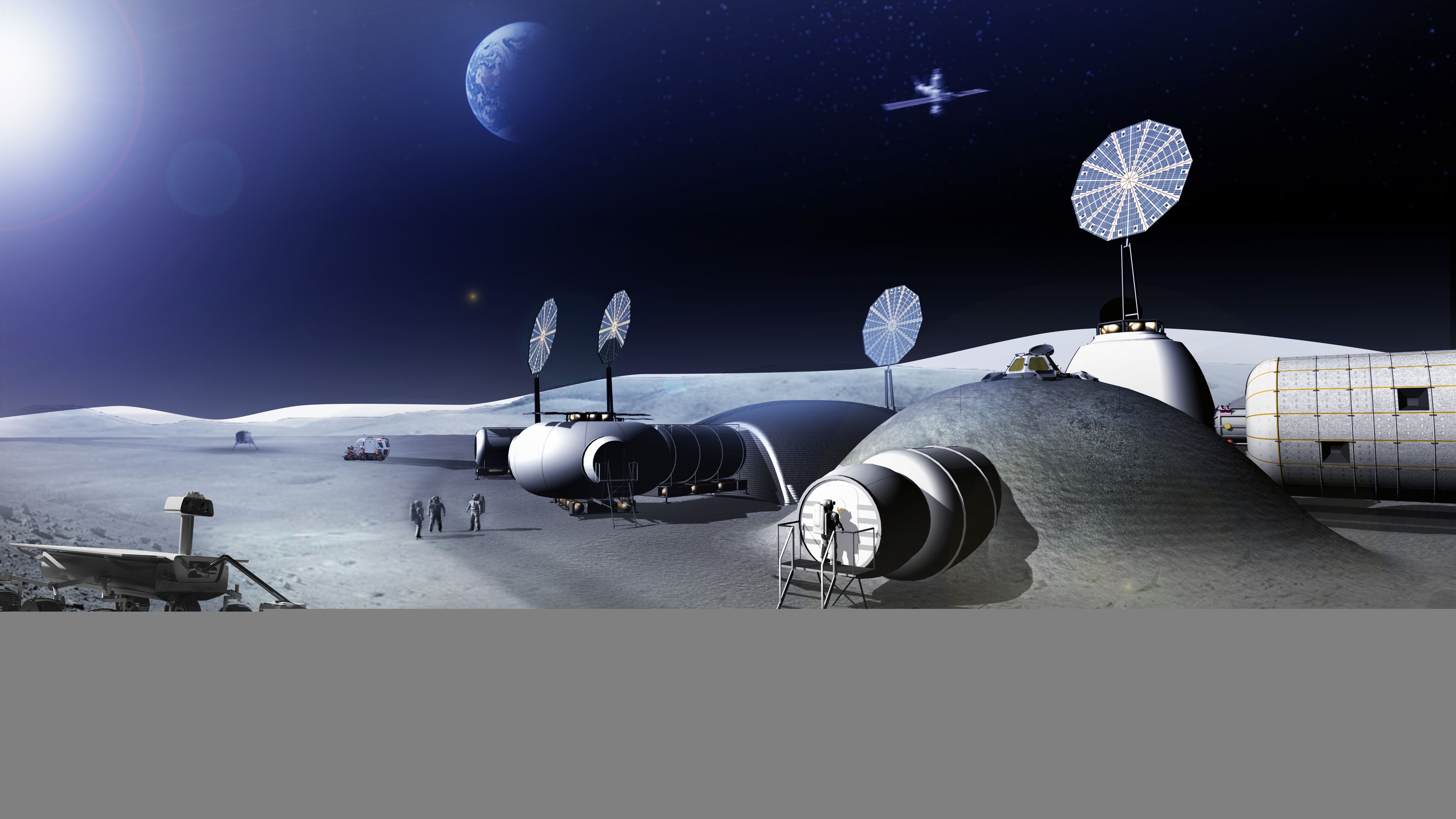
In what promises to be one small step for space travel, and one giant leap for the next generation of manufacturing, an Israeli startup is planning to land a vehicle on the moon that has crucial parts made using 3D printing technology.
SpaceIL is among five teams vying for Google’s $30 million in prize money to get a spacecraft to the moon by the end of March. One of the startup’s suppliers, Zurich-based RUAG Space, advised turning to 3D printing to manufacture the legs of its unmanned lunar lander. With financial stakes high and a tight deadline, SpaceIL engineers were at first deeply skeptical, according to RUAG executive Franck Mouriaux. They finally acquiesced after a lot of convincing.
Russia has become the first country in Europe to use a 3D printer to construct a real residential house. https://sptnkne.ws/fKYu
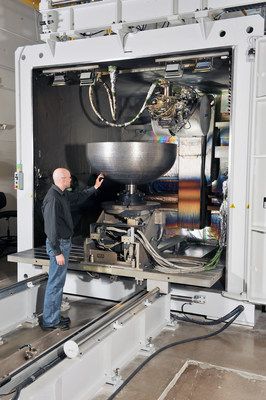
Based in Los Angeles, Relativity Space is developing a new 3D printer for, “scaling and sustaining an interplanetary society”.
Since founding in 2015, Relativity Space has received $10 million in funding – with backers including Mark Cuban and Y Combinator.
The company promises that 3D printing will allow them to go, “from raw material to flight in less than 60 days” and claims their Stargate 3D printer is, “the largest metal 3D printer in the world.”
Building a house by hand can be both time-consuming and expensive. Numerous homebuilders have chosen to automate part of the construction (i.e., by printing the home’s parts) instead.
A new Ukrainian homebuilding startup called PassivDom uses a 3D printing robot that can print parts for tiny houses. The machine can print the walls, roof, and floor of PassivDom’s 380-square-foot model in about eight hours. The windows, doors, plumbing, and electrical systems are then added by a human worker.
When complete, the homes are autonomous and mobile, meaning they don’t need to connect to external electrical and plumbing systems. Solar energy is stored in a battery connected to the houses, and water is collected and filtered from humidity in the air (or you can pour water into the system yourself). The houses also feature an independent sewage system.
This could change the way we build just about anything.