Toggle light / dark theme

Get the latest international news and world events from around the world.

Log in for authorized contributors

Sentinel Lymph Node Biopsy to Predict Nodal Metastasis in Head and Neck Carcinoma

Between 34% and 44% of MCC cases arise in the head and neck region.1,3-6 This location presents unique challenges for SLNB due to complex lymphatic drainage patterns and proximity to critical anatomical structures.7,8 Accurate nodal staging is especially important because head and neck MCCs (HN MCC) may have worse prognoses than non−HN MCC.9,10

Prior studies of SLNB and HN MCC have been limited by small sample sizes (often 10 patients) and have reported relatively high false-negative rates.8, 11-13 A multisite retrospective study14 characterizing predictors of FN SLNB in stage I/II MCC included 214 patients with HN MCC and found a 39% FN rate in the HN cohort but did not otherwise analyze this cohort separately or describe the unique considerations associated with this region. High SLNB failure rates have also been observed in HN melanoma and squamous cell carcinoma and been largely attributed to anatomic complexity.15-17

In this large cohort study of patients with clinically node-negative HN MCC who underwent SLNB, we sought to evaluate SLNB accuracy within this anatomically complex region and to identify factors associated with SLNB failure and nodal disease. Our goal was to inform staging practices and refine risk stratification strategies to improve treatment planning and outcomes for this high-risk population.

JNK Phosphorylates SIRT6 to Stimulate DNA Double-Strand Break Repair in Response to Oxidative Stress by Recruiting PARP1 to DNA Breaks

(Cell Reports 16, 2641–2650; September 6, 2016)

The original version of this article, published on August 25, 2016, included an incorrect immunoblot image. The anti-H3 loading control shown in Figure 2C was inadvertently duplicated from a separate project during manuscript preparation. This was an unintentional oversight.

Normally, the authors would replace the incorrect image with the correct one. However, because the experiments were performed more than 10 years ago, the original image/film could not be located. This is consistent with the authors’ institutional data-retention policy, which requires data to be kept for only three years after a project’s completion. After discussion, the authors and editors agreed that removing the immunoblot images from Figure 2C would prevent confusion for future readers without changing the article’s central conclusions.

Using rare sugars to address alcoholism

While investigating the FGF21-oxytocin-dopamine system, a mechanism that regulates sugar appetite, a team of researchers at Kyoto University noticed reports suggesting that the protein FGF21 may regulate alcohol ingestion.

The team’s original aim had been to address sugar appetite in lifestyle-related diseases, but since alcohol is a fermented product of sugar, they speculated that perhaps the body contains a system that recognizes both alcohol and sugar as the same entity.

Alcohol consumption and intervention challenges Excessive alcohol consumption is a major global health issue, and effective countermeasures for prevention and treatment are limited. Patients with alcohol dependence generally have a low adherence to pharmaceuticals, and many avoid drug treatment because it deprives them of the pleasure of drinking.

Blood vessels under pressure

Beige fat surrounding blood vessels actively works to keep high blood pressure in check, according to a new Science study in mice, promoting healthy vascular function even during obesity.

The findings support the notion that therapeutic activation of thermogenic fat tissue could help reduce the risk of cardiovascular disease.

Learn more in this Science vPerspective.


A protein in perivascular fat cells protects mice against hypertension.

Mandy O. J. Grootaert and Aernout Luttun Authors Info & Affiliations

Science

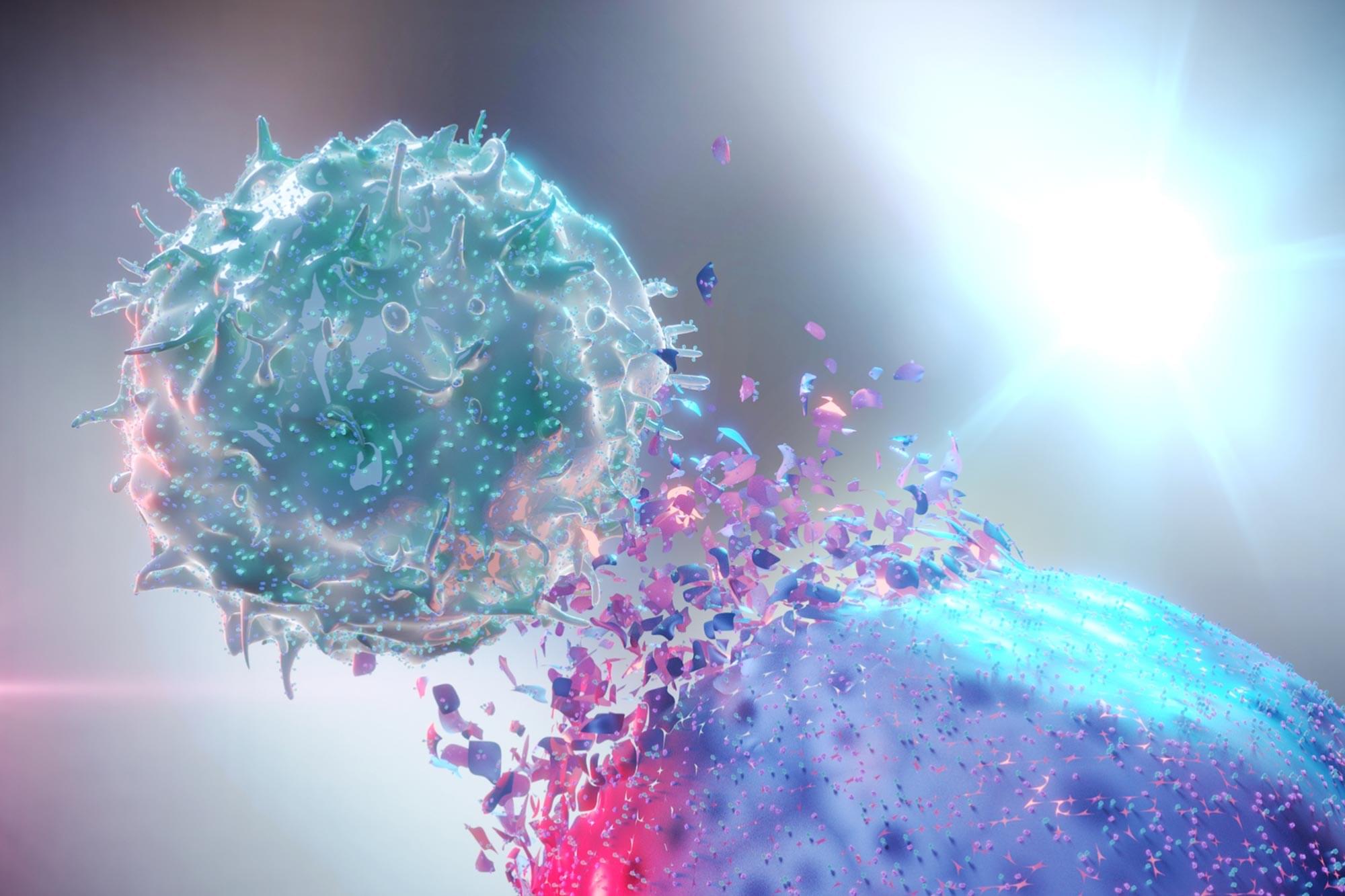
Abstract: The optimal affinity of the chimeric antigen receptor for its target antigen on cancer cells remains a matter of debate

Here, Bert Vogelstein & team report that increasing binding affinity to a p53 R175H neoantigen improves anti-cancer activity for T cell-engaging bispecific antibodies and conversely decreases function for CAR T cells.


1Ludwig Center, Sidney Kimmel Comprehensive Cancer Center, Johns Hopkins University School of Medicine, Baltimore, Maryland, USA.

2Howard Hughes Medical Institute, Chevy Chase, Maryland, USA.

3Lustgarten Pancreatic Cancer Research Laboratory and.

4Bloomberg~Kimmel Institute for Cancer Immunotherapy, Sidney Kimmel Comprehensive Cancer Center, Johns Hopkins University School of Medicine, Baltimore, Maryland, USA.

Name it to tame it: Researcher discovers technique to reduce cigarette cravings

If you name it, you can tame it. That’s a new tool for fighting cigarette cravings, according to assistant research psychologist Golnaz Tabibnia.

Her discovery, published in Neuropsychopharmacology, reveals that a technique she dubbed “cue labeling”—mentally naming the triggers that make you want to smoke—can reduce the subjective experience of craving and the brain activity associated with it.

“Name it to tame it! Putting feelings into words has long been known to calm emotions,” Tabibnia wrote on LinkedIn when announcing the publication. “Our latest paper shows that putting what we crave into words can help calm cravings.”

Forever Chemicals Linked to Multiple Sclerosis in Concerning New Study

People who are exposed to certain forever chemicals may be at greater risk of developing multiple sclerosis (MS), according to new research.

No one knows why that is, but it could help explain why, over the past 30 years, the prevalence of MS has increased by an average of 26 percent globally. In some nations, cases have more than doubled since 1990.

MS is an autoimmune disease of the central nervous system with no known singular cause and no known cure.

Archaeologists open a chamber sealed for 40,000 years, and what they find beneath the sand in Gibraltar changes what we thought we knew about Neanderthals: coastal hunters, glue makers, and Paleolithic artists

On the steep Mediterranean cliffs of Gibraltar, archaeologists have stepped into a room that no human had seen for tens of thousands of years. Hidden behind a plug of ancient sand in Vanguard Cave, part of the Gorham’s Cave Complex, a 13-meter chamber lay sealed for roughly 40,000 years, preserving rare clues to the final chapters of Neanderthal life on a changing coastline.

For scientists, this is not just a dramatic discovery. It is a time capsule that connects deep prehistory with very current questions about sea level rise, coastal ecosystems, and how humans respond when their environment transforms around them.

Gorham’s Cave Complex sits within the Gibraltar Nature Reserve and was inscribed as a UNESCO World Heritage Site in 2016, largely because it preserves some of the last known refuges of Neanderthals in Europe. Vanguard Cave and its neighbors show evidence of Neanderthal use for roughly 100,000 years, possibly until around 28,000 years ago, later than many other sites across the continent.

/* */