Toggle light / dark theme

Get the latest international news and world events from around the world.

Log in for authorized contributors

Biomimetic multimodal tactile sensing enables human-like robotic perception

Robots That Feel: A New Multimodal Touch System Closes the Gap with Human Perception.

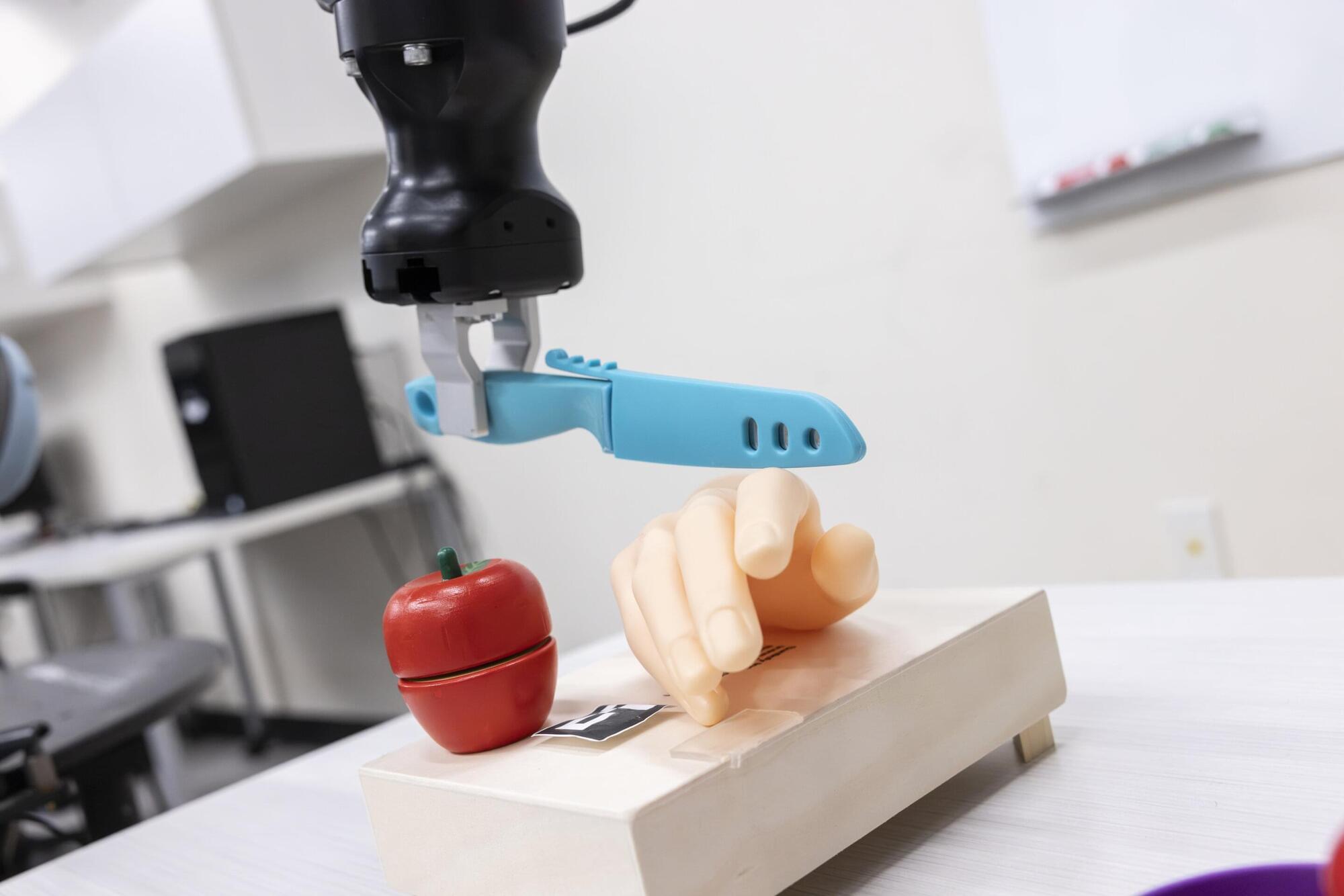
In a major advance for robotic sensing, researchers have engineered a biomimetic tactile system that brings robots closer than ever to human-like touch. Unlike traditional tactile sensors that detect only force or pressure, this new platform integrates multiple sensing modalities into a single ultra-thin skin and combines it with large-scale AI for data interpretation.

At the heart of the system is SuperTac, a 1-millimeter-thick multimodal tactile layer inspired by the multispectral structure of pigeon vision. SuperTac compresses several physical sensing modalities — including multispectral optical imaging (from ultraviolet to mid-infrared), triboelectric contact sensing, and inertial measurements — into a compact, flexible skin. This enables simultaneous detection of force, contact position, texture, material, temperature, proximity and vibration with micrometer-level spatial precision. The sensor achieves better than 94% accuracy in classifying complex tactile features such as texture, material type, and slip dynamics.

However, the hardware alone isn’t enough: rich, multimodal tactile data need interpretation. To address this, the team developed DOVE, an 8.5-billion-parameter tactile language model that functions as a computational interpreter of touch. By learning patterns in the high-dimensional sensor outputs, DOVE provides semantic understanding of tactile interactions — a form of “touch reasoning” that goes beyond raw signal acquisition.

From a neurotech-inspired perspective, this work mirrors principles of biological somatosensation: multiple receptor types working in parallel, dense spatial encoding, and higher-order processing for perceptual meaning. Integrating rich physical sensing with model-based interpretation is akin to how the somatosensory cortex integrates mechanoreceptor inputs into coherent percepts of texture, shape and motion. Such hardware-software co-design — where advanced materials, optics, electronics and AI converge — offers a pathway toward embodied intelligence in machines that feel and interpret touch much like biological organisms do.

Biomimetic multimodal tactile sensing enables human-like robotic perception.


Utility of Stereoelectroencephalography in the Treatment of Drug-Resistant Epilepsy

About one-third of people with epilepsy have drug-resistant disease—but surgery can be transformative. Drs Ihnen & Arya at Cincinnati Children’s explore how SEEG is reshaping presurgical evaluation in DRE. https://ow.ly/M15c50Y0Y0W

Epilepsy society american epilepsy society epilepsy foundation of america.


DRE can be effectively treated with epilepsy surgery, leading to seizure freedom in appropriately selected individuals.

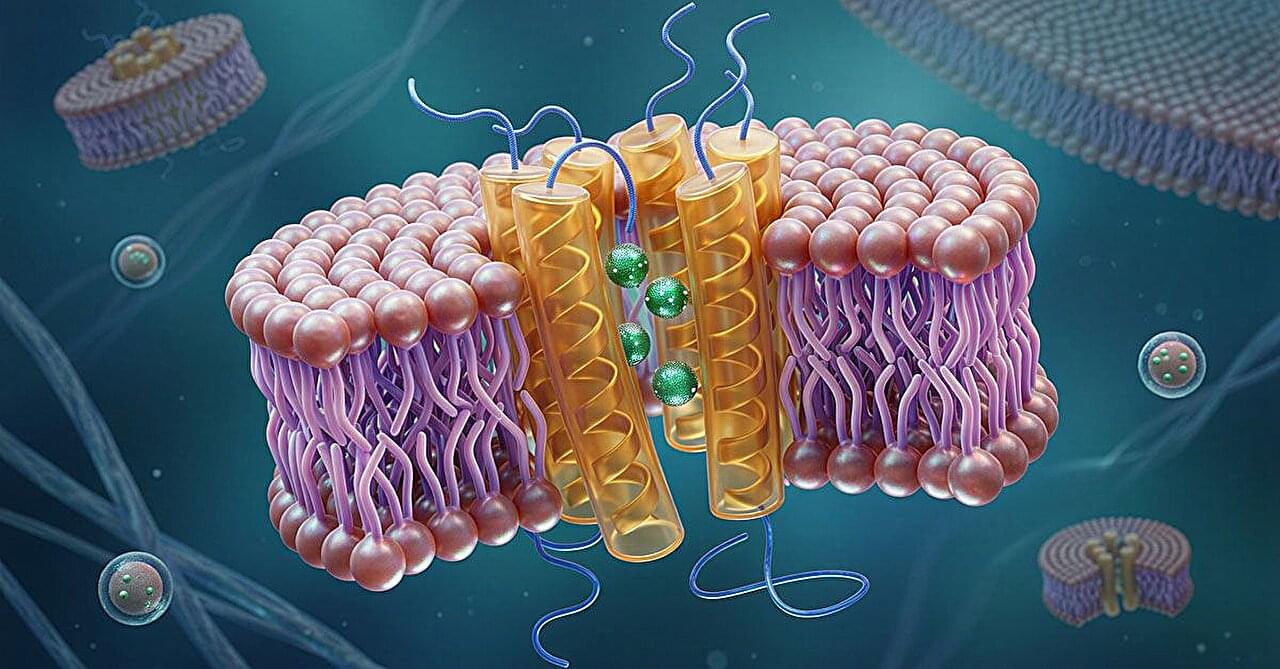
Subcellular depletion of importin β1 impairs presynaptic local translation and spatial memory

Scientists have mapped out an importin-based pathway that enables neurons to maintain synaptic plasticity and spatial memory despite their unusually elongated shape.

Read more in ScienceSignaling.


Axonal localization of importin β1 is required for presynaptic functions that support spatial memory tasks.

New twist on BRCA1-mediated DNA recombination repair and tumor suppression

BRCA1-mediated DNA recombination repair and tumor suppression.

BRCA1 is dispensable for end resection at replication-coupled double-strand breaks (DSBs) but stimulates processing of replication-independent DSBs.

BRCA1 promotes RAD51 assembly downstream of end resection.

Canonical BRCA1/RAD51-dependent homologous recombination is essential for tumor suppression.

Loss of 53BP1 enables alternative BRCA1-independent RAD51 assembly.

Alternative BRCA1-independent RAD51 assembly supports tissue development but is not sufficient for tumor suppression. sciencenewshighlights ScienceMission https://sciencemission.com/BRCA1-mediated-DNA-recombination-repair


Are your memories illusions? New study disentangles the Boltzmann brain paradox

In a recent paper, SFI Professor David Wolpert, SFI Fractal Faculty member Carlo Rovelli, and physicist Jordan Scharnhorst examine a longstanding, paradoxical thought experiment in statistical physics and cosmology known as the “Boltzmann brain” hypothesis—the possibility that our memories, perceptions, and observations could arise from random fluctuations in entropy rather than reflecting the universe’s actual past. The work is published in the journal Entropy.

The paradox arises from a tension at the heart of statistical physics. One of the central pillars of our understanding of the time-asymmetric second law of thermodynamics is Boltzmann’s H theorem, a fundamental concept in statistical mechanics. However, paradoxically, the H theorem is itself symmetric in time.

That time-symmetry implies that it is, formally speaking, far more likely for the structures of our memories, perceptions, and observations to arise from random fluctuations in the universe’s entropy than to represent genuine records of our actual external universe in the past. In other words, statistical physics seems to force us to conclude that our memories might be spurious—elaborate illusions produced by chance that tell us nothing about what we think they do. This is the Boltzmann brain hypothesis.

Unified framework sorts spacetime fluctuations for quantum-gravity experiments

A team of researchers led by the University of Warwick has developed the first unified framework for detecting “spacetime fluctuations”—tiny, random distortions in the fabric of spacetime that appear in many attempts to unite quantum physics and gravity.

These subtle fluctuations, first envisaged by physicist John Wheeler, are thought to arise naturally in several leading theories of quantum gravity. But because different models of gravity predict different forms of these fluctuations, experimental teams have until now lacked clear guidance on what to look for.

Too much entanglement? Quantum networks can suffer from ‘selfish routing,’ study shows

Quantum technologies, systems that process, transfer or store information leveraging quantum mechanical effects, could tackle some real-world problems faster and more effectively than their classical counterparts. In recent years, some engineers have been focusing their efforts on the development of quantum communication systems, which could eventually enable the creation of a “quantum internet” (i.e., an equivalent of the internet in which information is shared via quantum physical effects).

Networks of quantum devices are typically established leveraging quantum entanglement, a correlation that ensures that the state of one particle or system instantly relates to the state of another distant particle or system. A key assumption in the field of quantum science is that greater entanglement would be linked to more reliable communications.

Researchers at Northwestern University recently published a paper in Physical Review Letters that challenges this assumption, showing that, in some realistic scenarios, more entanglement can adversely impact the quality of communications. Their study could inform efforts aimed at building reliable quantum communication networks, potentially also contributing to the future design of a quantum internet.

Bionic LiDAR system achieves beyond-retinal resolution through adaptive focusing

In a recent study, researchers from China have developed a chip-scale LiDAR system that mimics the human eye’s foveation by dynamically concentrating high-resolution sensing on regions of interest (ROIs) while maintaining broad awareness across the full field of view.

The study is published in the journal Nature Communications.

LiDAR systems power machine vision in self-driving cars, drones, and robots by firing laser beams to map 3D scenes with millimeter precision. The eye packs its densest sensors in the fovea (sharp central vision spot) and shifts gaze to what’s important. By contrast, most LiDARs use rigid parallel beams or scans that spread uniform (often coarse) resolution everywhere. Boosting detail means adding more channels uniformly, which explodes costs, power, and complexity.

Astronomers discover a companion cluster to Czernik 38

Astronomers from the National Research Institute of Astronomy and Geophysics (NRIAG) in Cairo, Egypt, have investigated a young open cluster known as Czernik 38. As a result, they found a new open cluster, which turns out to be a companion to Czernik 38. The discovery was detailed in a paper published Jan. 14 on the arXiv pre-print server.

Open clusters (OCs), formed from the same giant molecular cloud, are groups of stars loosely gravitationally bound to each other. So far, more than 1,000 of them have been discovered in the Milky Way, and scientists are still looking for more, hoping to find a variety of these stellar groupings.

/* */