
A grape-seed compound called PCC1 sparked claims of a longevity pill that could extend human lifespan to 150.
Get the latest international news and world events from around the world.

Nine Patients Received a Personalized Kidney Cancer Vaccine. None Had a Recurrence
How do you teach the immune system to recognize a cancer cell?
Researchers are taking clues from the tumor itself, selecting unusual protein fragments and putting them into a vaccine. The aim is to help the body recognize that particular patient’s cancer.
In a small kidney cancer trial, this approach produced encouraging results. Nine people received an experimental vaccine tailored to their own tumors.
What Sixty Language Models Do When a User Pushes
First, a model’s ability to hold its ground appears related to its generation. Newer models, as measured in the study, tended to give in less often. The researchers found a strong negative correlation between a public capability index and the rate at which models folded under pressure (Spearman correlation of −0.64). Differences between providers played relatively little role in this overall pattern.
Second, models differ in how they respond to pressure. Some may remain firm and explain their reasoning, while others may soften their position, become accommodating, or yield. The researchers found statistically significant provider-related differences in six of the 17 behavioral categories they examined. In other words, models can differ not only in how often they give in, but also in the manner in which they resist or concede.
The study also explores a practical question: Can AI systems reliably evaluate these behaviors themselves? Six AI evaluators from three providers applied the researchers’ behavioral classification system more consistently than three human evaluators did. They also showed strong agreement with the codebook’s author when classifying whether models held their ground or folded, including in conversations not used to develop the classification examples.
However, the researchers identify an important limitation: AI evaluators can reproduce a classification system without necessarily determining whether its categories are consistently meaningful to independent readers. Human judgment remains important for defining the categories, establishing their boundaries, and maintaining a small, carefully reviewed reference set.
The broader implication is that evaluating AI alignment requires more than checking whether a model produces correct answers in isolated exchanges. We also need to examine whether it maintains sound judgment across extended conversations, particularly when emotional appeals or persistent demands encourage it to abandon that judgment.
As AI systems become more capable and increasingly involved in personal, professional, and financial decisions, their ability to withstand social pressure may be just as important as their ability to reason correctly in the first place.
An important caveat: The results describe performance under the study’s scripted scenarios. They do not establish that newer models will always resist manipulation better in real-world interactions, nor that a model’s behavior in these tests fully predicts its behavior in other contexts.
#ArtificialIntelligence #LLM #AIAlignment.
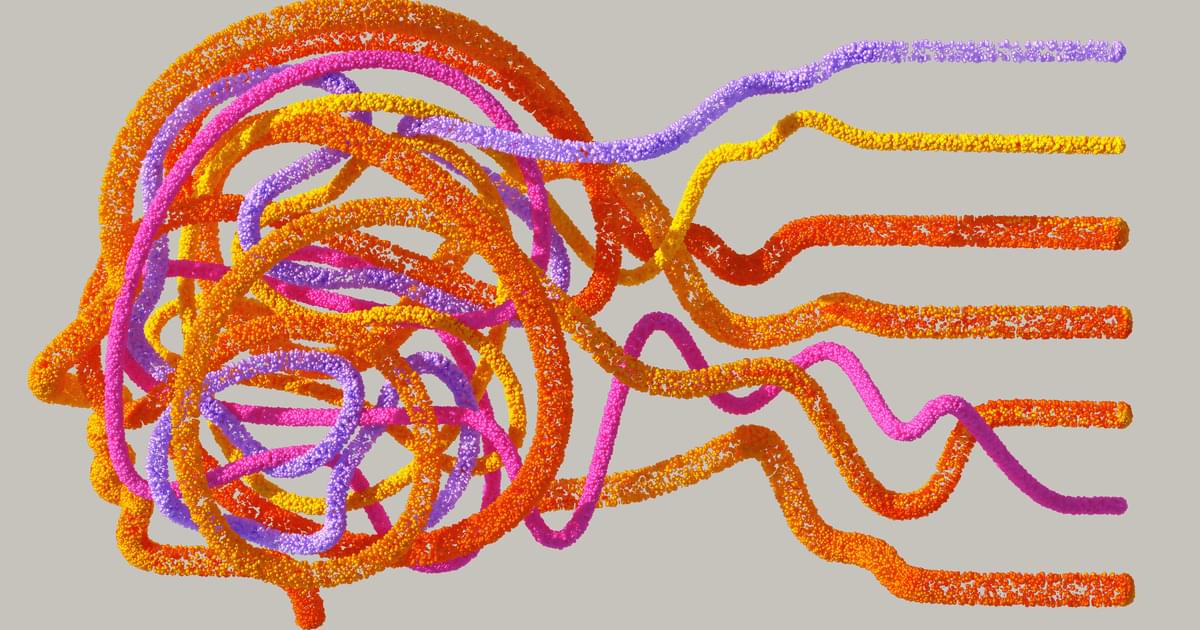
Scientists Found the Exact Brain Circuit That Links Your Breathing to Anxiety
Scientists have long known that breathing and emotional state are closely connected. What this study adds is a surprisingly detailed look at one way that connection may work. In mice, researchers traced a pathway from sensory neurons in the nose through the olfactory system and ultimately to the amygdala, where changing the frequency of nasal airflow altered anxiety-like behavior.
The discovery offers a compelling biological explanation for why slow nasal breathing may feel calming, but there is still an important gap between mapping this circuit in mice and using it to treat anxiety in people. The researchers used only male mice and highly controlled experimental techniques, and the same pathway still needs to be confirmed in humans.
Still, the findings add to a growing picture of breathing as more than something that simply changes when we’re anxious. The signals created by breathing itself may help shape what happens in the brain. If future human research confirms the same pathway, something as ordinary as breathing through the nose could give scientists a new window into how the brain regulates anxiety.
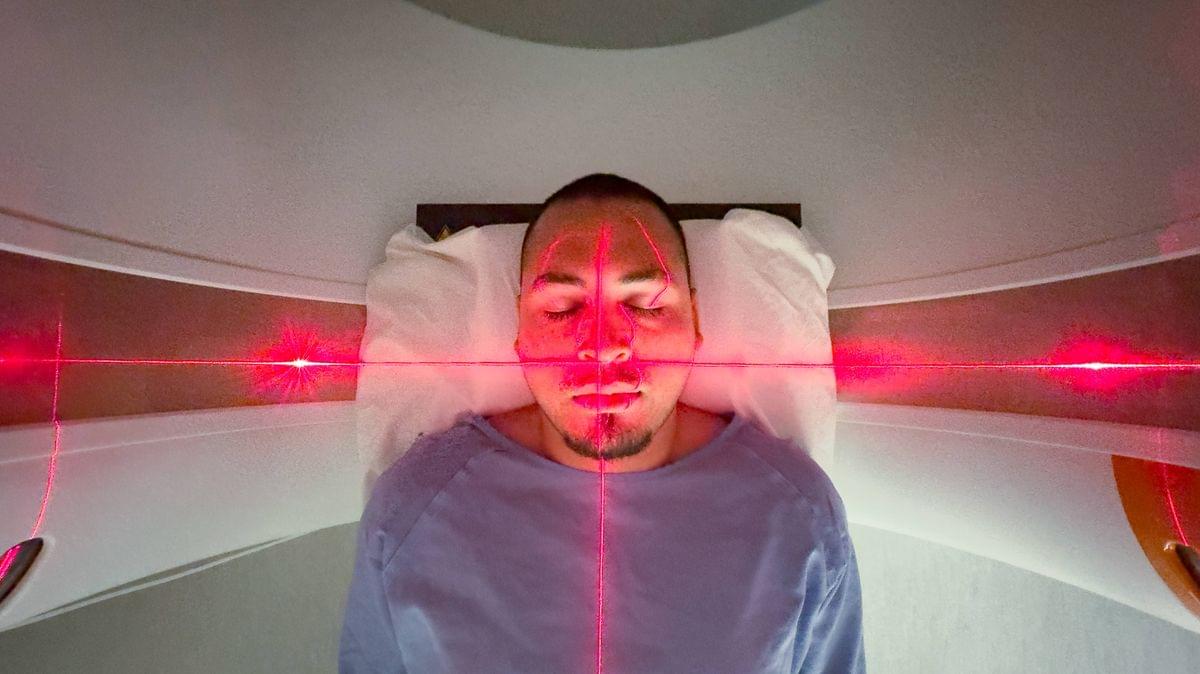
Cancer breakthrough as ‘added treatment’ controls disease for longer
A new trial has come back with encouraging results

Enhanced Photocatalytic C–N Coupling by Synergistic Facet and Spin-State Modulation in Mixed-Valent WOx
This website uses a security service to protect against malicious bots. This page is displayed while the website verifies you are not a bot.
Consensus AI, 92 Longevity Podcasts Merged Into 1: Dave Pascoe Built It
Join us on Patreon! / michaellustgartenphd.
Discount Links/Affiliates:
Blood testing (where I get the majority of my labs, for those who blood test with Quest): https://www.ultalabtests.com/partners… those who blood test with LabCorp: https://www.anrdoezrs.net/click-10161… At-Home Metabolomics: https://www.iollo.com?ref=michael-lus… Use Code: CONQUERAGING At Checkout Clearly Filtered Water Filter: https://get.aspr.app/SHoPY Epigenetic, Telomere Testing: https://trudiagnostic.com/?irclickid=… Use Code: CONQUERAGING NAD+ Quantification: https://www.jinfiniti.com/intracellul… Use Code: ConquerAging At Checkout Oral Microbiome: https://www.bristlehealth.com/?ref=mi… Enter Code: ConquerAging SiphoxHealth Blood Testing (ApoB, GrimAge): https://siphoxhealth.com/mlustgarten Green Tea: https://www.ochaandco.com/?ref=fqbtflod Use Code: ML10OFF Diet Tracking: https://shareasale.com/r.cfm?b=139013… If you’d like to support the channel, you can do that with the website, Buy Me A Coffee: https://www.buymeacoffee.com/mlhnrca Conquer Aging Or Die Trying Merch! https://my-store-d4e7df.creator-sprin…
Blood Testing Essentials (Biological Age, CVD-Risk, Kidney Health and Function):
PhenoAge (Biological Age): https://www.ultalabtests.com/partners…
Measure the Bortz biological clock biomarkers: https://www.ultalabtests.com/partners…
Calculate your biological age using the Bortz clock: https://www.longevity-tools.com/human…
AGE TRIAL RESULTS!!! + A Drink Designed By AI to Reverses Aging
The first age reversal gene therapy ever given to people just reported results. Life Biosciences’ ER-100, co-founded by Harvard’s David Sinclair, uses three Yamanaka factors (OSK) to try to reset aging cells in the eye. In the first three glaucoma patients, the low dose was well tolerated and two of the three improved on visual field testing. We break down how it works, where the viral \.

Too Much RNA Can Actually Starve Cells of Energy, Study Finds
RNA, or ribonucleic acid, is one of the most important molecules in keeping the body functioning correctly. One of its main jobs is to turn the information stored in our genetics into actual proteins that build and operate cells, for example.
To stay healthy, cells keep RNA production and deletion in a careful balance, but there are ways this balance can be tipped over. Invading viruses tend to produce more RNA, and aging, certain cancers, and neurodegenerative diseases can also cause disruption.
In a study published in PNAS, researchers outline a newly discovered way that too much RNA can cause harm: It can interfere with tiny power plants called mitochondria inside cells, limiting their energy production capacities.

Could Drugs for Diabetes and ADHD Offer New Hope for Alzheimer’s Patients?
The AD-SMART trial will initially test two repurposed medicines. One is metformin, widely used to treat type 2 diabetes. The other is atomoxetine, a drug prescribed for attention deficit hyperactivity disorder, or ADHD. An international expert panel selected these drugs based on early evidence that they may reduce brain inflammation, which scientists believe is one of the drivers of neurodegeneration in Alzheimer’s disease.
Professor Paresh Malhotra, chief investigator of the study and group leader at the UK Dementia Research Institute Centre for Care Research & Technology at Imperial College London, described a central problem in Alzheimer’s research. He noted that for too long progress has followed a pattern of one drug, one trial, one answer, often taking a decade or more for each attempt. AD-SMART is a deliberate effort to break this pattern and accelerate the path to answers for patients and families.
The design of the trial is particularly notable. AD-SMART is a multi-arm, multi-stage platform trial. Instead of testing a single drug against a placebo over many years, it evaluates several treatments at the same time against one shared placebo group. People who join the study have a higher chance of receiving an active treatment compared with many traditional trials, where a large proportion of participants might receive a placebo alone.