Toggle light / dark theme

Get the latest international news and world events from around the world.

Log in for authorized contributors

Polarized light boosts accuracy of wearable health sensors for all skin tones

Photoplethysmography (PPG) is an optical sensing technique that measures blood volume changes and underpins devices ranging from hospital-grade pulse oximeters to consumer wearables that track heart rate, sleep, and oxygenation.

Despite its widespread use, PPG accuracy can vary significantly across individuals, particularly by skin tone. Darker skin contains more melanin, which absorbs and scatters light, often leading to less reliable readings. This disparity has been linked to inaccuracies in blood-oxygen measurements among people with more melanin.

Theoretical results could lead to faster, more secure quantum technology

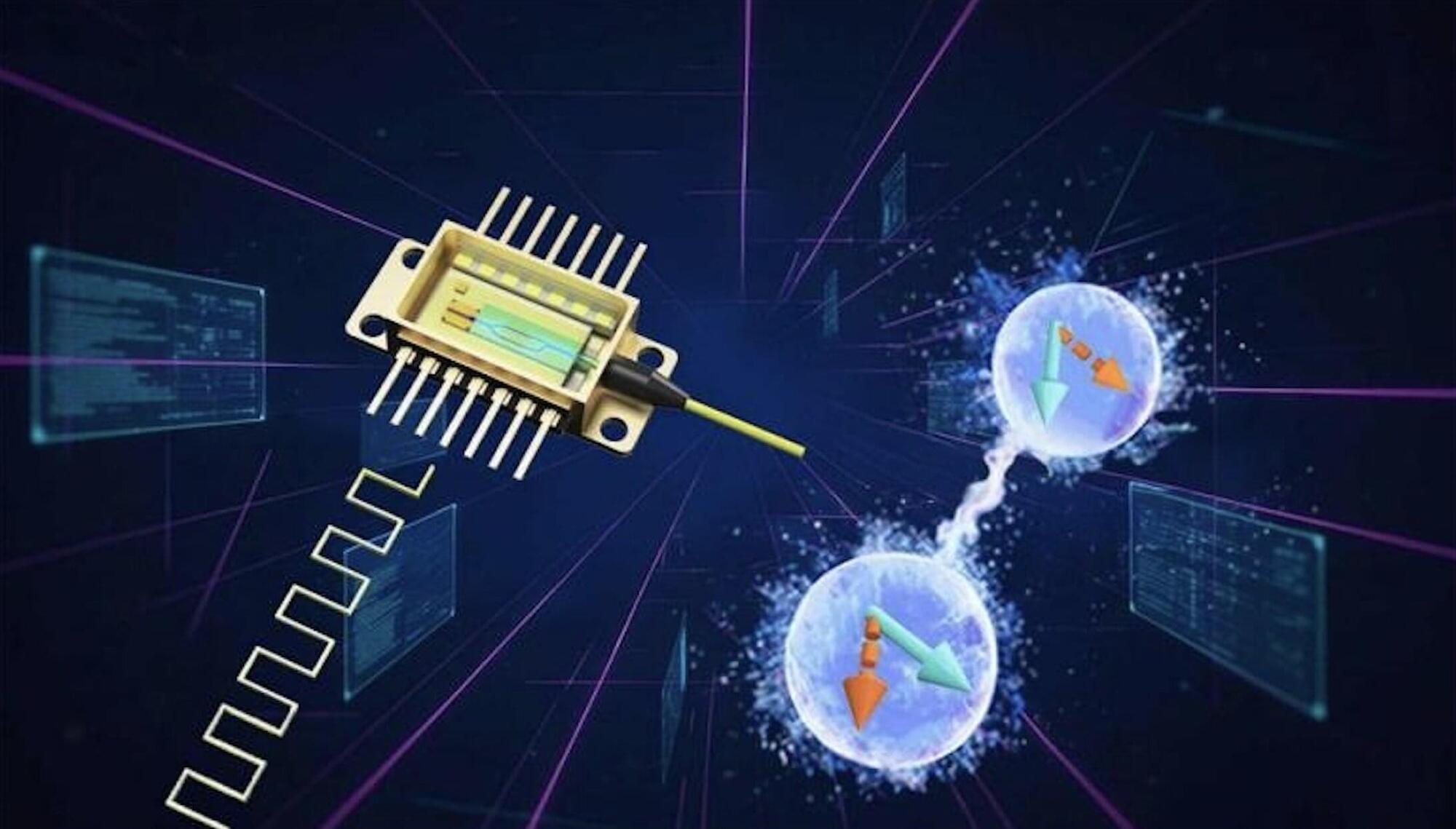
University of Iowa researchers have discovered a method to “purify” photons, an advance that could make optical quantum technologies more efficient and more secure.

The work is published in the journal Optica Quantum.

The researchers investigated two nagging challenges to creating a steady stream of single photons, the gold standard method for realizing photonic quantum computers and secure communication networks. One obstacle is called laser scatter, which occurs when a laser beam is directed at an atom, causing it to emit a photon, which is a single unit of light. While effective, the technique can yield extra, redundant photons, which hampers the optical circuit’s efficiency, much like a wayward current in an electrical circuit.

LHC delivers a record number of particle collisions in 2025

All experiments broke records in the final full operating year of the third run of the LHC.

After a few final laps around the ring, the beams of the Large Hadron Collider (LHC) were paused at 6.00 a.m. on Monday, 8 December for the usual year-end technical stop. Launched on 5 May, the LHC’s 11th year-long run of high-energy physics broke a new record for integrated luminosity by delivering 125 fb-1 to both the ATLAS and the CMS experiments. Over the full lifetime of the LHC, ATLAS and CMS have now each delivered an integrated luminosity of 500 fb-1, equating to approximately 50 million billion particle collisions.

All four LHC experiments performed extremely well throughout the 2025 proton run, detecting more collisions than in any previous year and reporting data-taking efficiencies of more than 90%. LHCb continued to benefit from the significant upgrades that were completed in 2023, further increasing its recorded luminosity to a new record of 11.8 fb-1 in 2025.

/* */