Toggle light / dark theme

Get the latest international news and world events from around the world.

Log in for authorized contributors

AI to predict the risk of cancer metastases

Metastasis remains the leading cause of death in most cancers, particularly colon, breast and lung cancer. Currently, the first detectable sign of the metastatic process is the presence of circulating tumor cells in the blood or in the lymphatic system. By then, it is already too late to prevent their spread. Furthermore, while the mutations that lead to the formation of the original tumors are well understood, no single genetic alteration can explain why, in general, some cells migrate and others do not.

“The difficulty lies in being able to determine the complete molecular identity of a cell – an analysis that destroys it – while observing its function, which requires it to remain alive,” explains the senior author. “To this end, we isolated, cloned and cultured tumor cells,” adds a co-first author of the study. “These clones were then evaluated in vitro and in a mouse model to observe their ability to migrate through a real biological filter and generate metastases.”

The analysis of the expression of several hundred genes, carried out on about thirty clones from two primary colon tumors, identified gene expression gradients closely linked to their migratory potential. In this context, accurate assessment of metastatic potential does not depend on the profile of a single cell, but on the sum of interactions between related cancer cells that form a group.

The gene expression signatures obtained were integrated into an artificial intelligence model developed by the team. “The great novelty of our tool, called ‘Mangrove Gene Signatures (MangroveGS)’, is that it exploits dozens, even hundreds, of gene signatures. This makes it particularly resistant to individual variations,” explains another co-first author of the study. After training, the model achieved an accuracy of nearly 80% in predicting the occurrence of metastases and recurrence of colon cancer, a result far superior to existing tools. In addition, signatures derived from colon cancer can also predict the metastatic potential of other cancers, such as stomach, lung and breast cancer.

After training, the model achieved an accuracy of nearly 80% in predicting the occurrence of metastases and recurrence of colon cancer, a result far superior to existing tools. In addition, signatures derived from colon cancer can also predict the metastatic potential of other cancers, such as stomach, lung and breast cancer.

Thanks to MangroveGS, tumor samples are sufficient: cells can be analysed and their RNA sequenced at the hospital, then the metastatic risk score quickly transmitted to oncologists and patients via an encrypted Mangrove portal that has analysed the anonymised data.

“This information will prevent the overtreatment of low-risk patients, thereby limiting side effects and unnecessary costs, while intensifying the monitoring and treatment of those at high risk,” adds the senior author. “It also offers the possibility of optimising the selection of participants in clinical trials, reducing the number of volunteers required, increasing the statistical power of studies, and providing therapeutic benefits to the patients who need it most.” ScienceMission sciencenewshighlights.

2D discrete time crystals realized on a quantum computer for the first time

Physical systems become inherently more complicated and difficult to produce in a lab as the number of dimensions they exist in increases—even more so in quantum systems. While discrete time crystals (DTCs) had been previously demonstrated in one dimension, two-dimensional DTCs were known to exist only theoretically. But now, a new study, published in Nature Communications, has demonstrated the existence of a DTC in a two-dimensional system using a 144-qubit quantum processor.

Like regular crystalline materials, DTCs exhibit a kind of periodicity. However, the crystalline materials most people are familiar with have a periodically repeating structure in space, while the particles in DTCs exhibit periodic motion over time. They represent a phase of matter that breaks time-translation symmetry under a periodic driving force and cannot experience an equilibrium state.

“Consequently, local observables exhibit oscillations with a period that is a multiple of the driving frequency, persisting indefinitely in perfectly isolated systems. This subharmonic response represents a spontaneous breaking of discrete time-translation symmetry, analogous to the breaking of continuous spatial symmetry in conventional solid-state crystals,” the authors of the new study explain.

MXene nanoscrolls could improve energy storage, biosensors and more

Researchers from Drexel University who discovered a versatile type of two-dimensional conductive nanomaterial called MXene nearly a decade and a half ago, have now reported on a process for producing its one-dimensional cousin: the MXene nanoscroll. The group posits that these materials, which are 100 times thinner than human hair yet more conductive than their two-dimensional counterparts, could be used to improve the performance of energy storage devices, biosensors and wearable technology.

Their finding, published in the journal Advanced Materials, offers a scalable method for producing the nanoscrolls from a MXene precursor with precise control over their shape and chemical structures.

“Two-dimensional morphology is very important in many applications. However, there are applications where 1D morphology is superior,” said Yury Gogotsi, Ph.D., Distinguished University and Bach professor in Drexel’s College of Engineering, who was a corresponding author of the paper.

Light-based nanotechnology offers potential alternative to chemotherapy and radiation

Researchers at NYU Abu Dhabi have developed a new light-based nanotechnology that could improve how certain cancers are detected and treated, offering a more precise and potentially less harmful alternative to chemotherapy, radiation, and surgery. The study advances photothermal therapy, a treatment approach that uses light to generate heat inside tumors and destroy cancer cells.

The research is published in the journal Cell Reports Physical Science.

The NYU Abu Dhabi team designed tiny, biocompatible and biodegradable nanoparticles that carry a dye activated by near-infrared light. When exposed to this light, the particles heat up, damaging tumor tissue while minimizing harm to healthy cells. Near-infrared light was chosen specifically as it penetrates the body to greater depth than visible light, thereby enabling treatment of tumors that are not close to the surface.

A new flexible AI chip for smart wearables is thinner than a human hair

The promise of smart wearables is often talked up, and while there have been some impressive innovations, we are still not seeing their full potential. Among the things holding them back is that the chips that operate them are stiff, brittle, and power-hungry. To overcome these problems, researchers from Tsinghua University and Peking University in China have developed FLEXI, a new family of flexible chips. They are thinner than a human hair, flexible enough to be folded thousands of times, and incorporate AI.

A flexible solution

In a paper published in the journal Nature, the team details the design of their chip and how it can handle complex AI tasks, such as processing data from body sensors to identify health indicators, such as irregular heartbeats, in real time.

Tiny silicon structures compute with heat, achieving 99% accurate matrix multiplication

MIT researchers have designed silicon structures that can perform calculations in an electronic device using excess heat instead of electricity. These tiny structures could someday enable more energy-efficient computation. In this computing method, input data are encoded as a set of temperatures using the waste heat already present in a device.

The flow and distribution of heat through a specially designed material forms the basis of the calculation. Then the output is represented by the power collected at the other end, which is a thermostat at a fixed temperature.

The researchers used these structures to perform matrix vector multiplication with more than 99% accuracy. Matrix multiplication is the fundamental mathematical technique machine-learning models like LLMs utilize to process information and make predictions.

New light-emitting artificial neurons could run AI systems more reliably

Over the past decades, computer scientists have developed increasingly advanced artificial intelligence (AI) systems that perform well on various tasks, including the analysis or generation of images, videos, audio recordings and texts. These systems power various highly performing software, including automated transcription apps, large language model (LLM)-powered conversational agents like ChatGPT, and various other platforms.

Mapping ‘figure 8’ Fermi surfaces to pinpoint future chiral conductors

One of the biggest problems facing modern microelectronics is that computer chips can no longer be made arbitrarily smaller and more efficient. Materials used to date, such as copper, are reaching their limits because their resistivity increases dramatically when they become too small. Chiral materials could provide a solution here. These materials behave like left and right hands: they look almost identical and are mirror images of each other, but cannot be made to match.

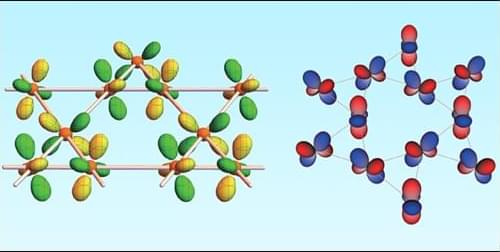
“It is assumed that the resistivity in some chiral materials remains constant or even decreases as the chiral material becomes smaller. That is why we are working on using electronic chirality to develop materials for a new generation of microchips that are faster, more energy-efficient and more robust than today’s technologies,” says Professor Niels Schröter from the Institute of Physics at MLU. Until now, however, it has been difficult to produce thin layers of these materials without the left-and right-handed areas canceling each other out in their effects.

This is precisely where the new study, in which the Max Planck Institute for Microstructure Physics in Halle was also involved, comes in. “For the first time, we have found materials that are not yet chiral themselves. However, they have the potential to be converted into electronically chiral materials with only a single-handedness through targeted distortion. These achiral materials can serve as so-called parent materials for engineering chiral conductors with reduced resistivity,” explains Schröter.

Refractive-index microscope measures a sample’s optical properties with pinpoint accuracy

In this way, and almost by chance, researchers at TU Wien developed a novel microscopy technique that allows the refractive index of biological samples to be measured at a resolution far below what conventional light microscopy theory would seem to allow. Their paper is published in the journal ACS Nano.

The trick behind resolution beyond the wavelength of light

What happens if you try to image two molecules whose separation is smaller than the wavelength of light? You will not see two distinct points, but a single blurred spot of light—the images of the two molecules overlap, no matter how precise the microscope is.

/* */