Toggle light / dark theme

Get the latest international news and world events from around the world.

Log in for authorized contributors

Mechanical Dialogues of Life and Death: How External Molecules Entry Triggers a Chromatin‐Cytoskeleton Morphogenetic Duel in Cancer Cells

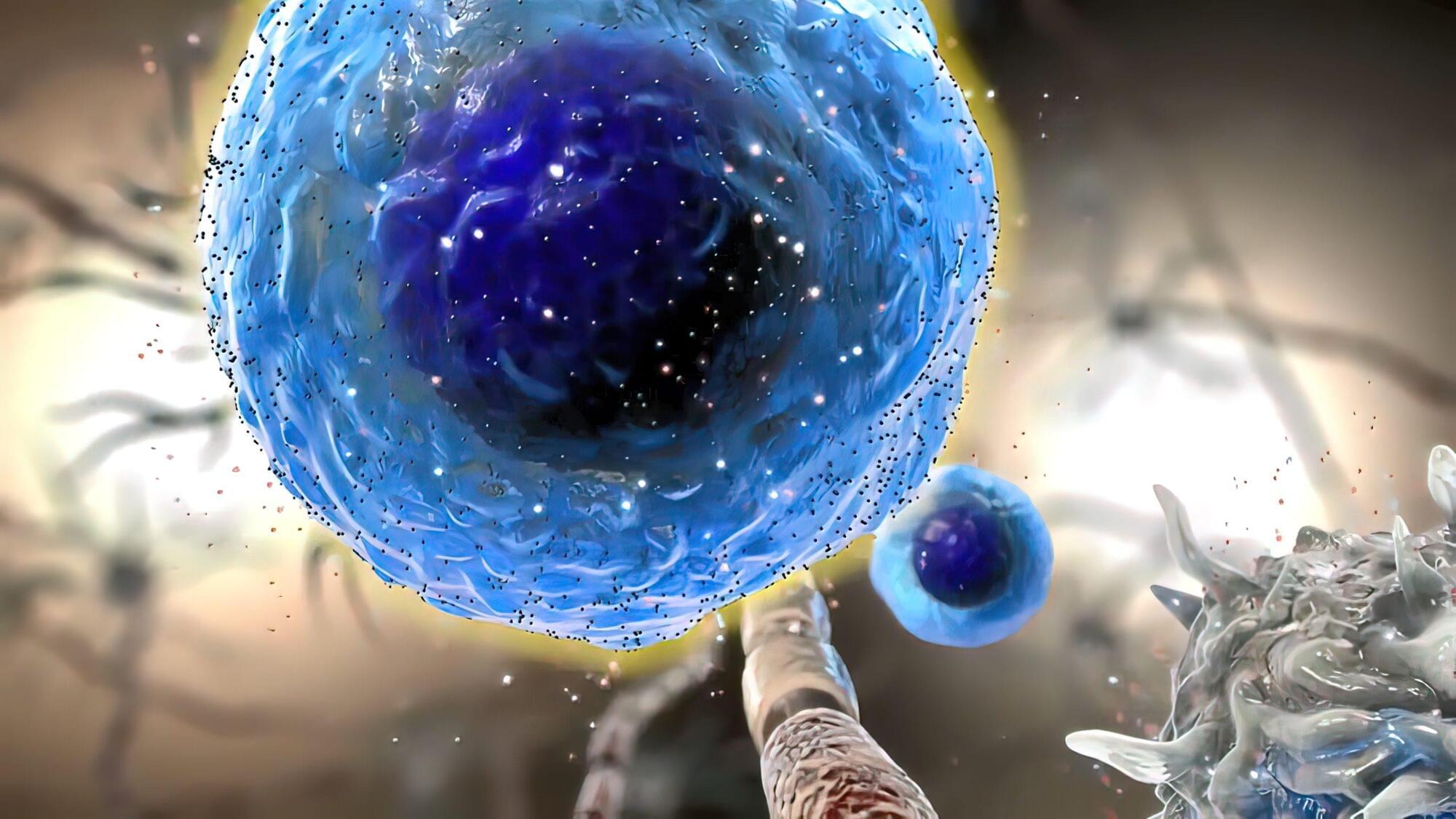
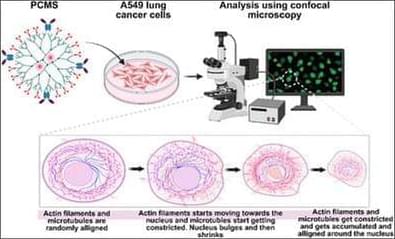
The next-generation anti-cancer therapeutics must disrupt intracellular mechanics, efficiently eradicating cancer cells, rather than simply intoxicating them. We evaluate the mechanism of action of PCMS, a PAMAM-based supramolecule that eradicates cancer cells by reorganizing their internal mechanics rather than their genes. Once internalized, PCMS self-assembles into a perinuclear ring that severs nucleus-cytoskeleton communication. We observed PCMS’s dual-intelligent mechanisms of action: Cytoskeletal rescue, where actin-microtubule filaments move towards the PCMS ring, treating it as a surrogate plasma membrane, attempting to restore vesicular trafficking; Nuclear counter-expansion, where chromatin-lamina condensates undergo stepwise viscoelastic transitions that push the nuclear envelope outward to reestablish membrane contact. These contradictory forces amplify mechanical stress, driving super-critical strain and nuclear lysis without broad transcriptional modulations. By geometry alone, PCMS collapses the actin-microtubule-nucleus continuum and turns the cell’s adaptive machinery into its own executioner. The discovery that life and death decisions can be reprogrammed through spatial conflict establishes a paradigm of mechanical deception, inaugurating a new class of cellular adaptive feedback-targeted mechanotherapeutics that overcome resistance by exploiting the cell’s own morphogenetic logic.
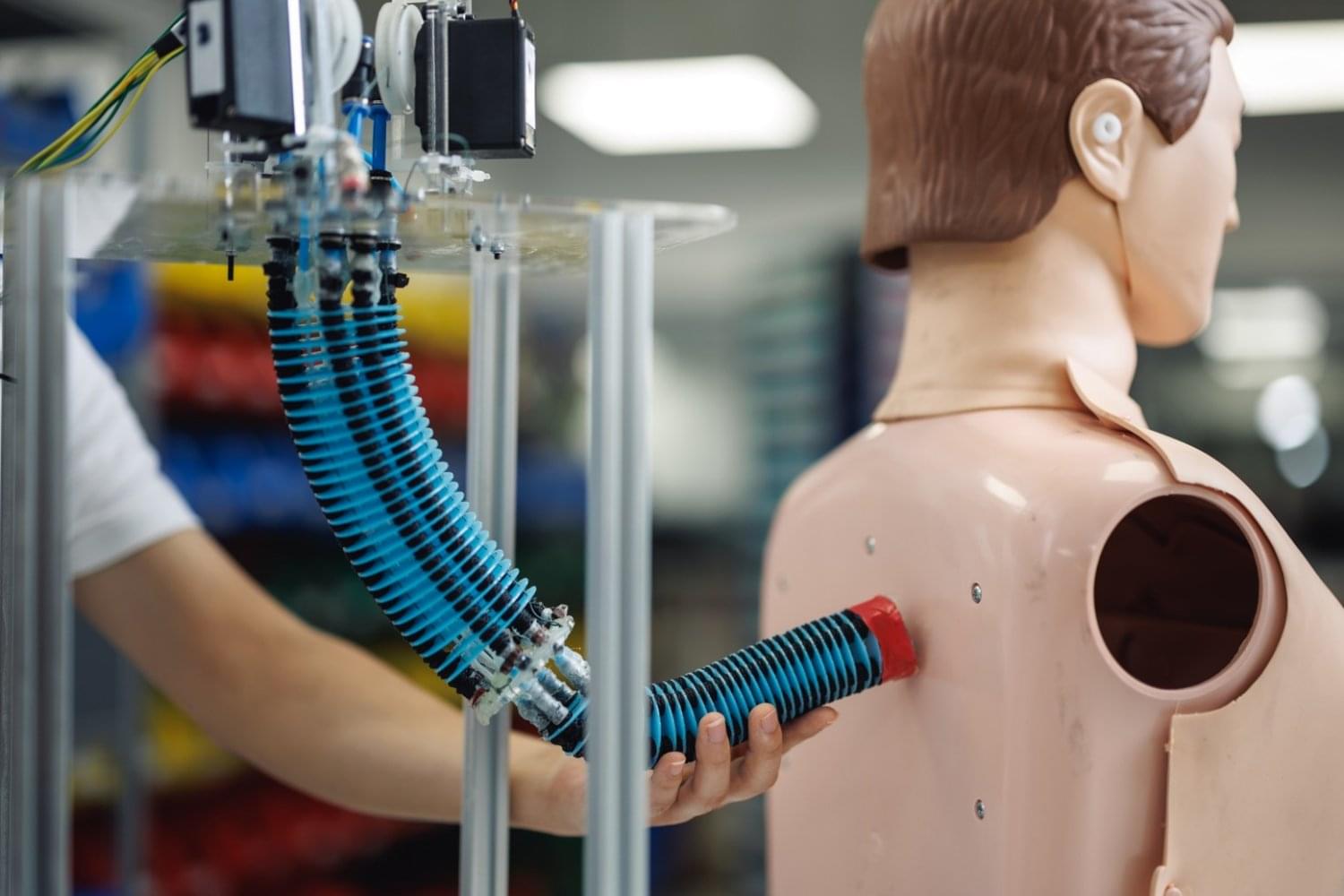
A neural blueprint for human-like intelligence in soft robots

A new AI control system enables soft robotic arms to learn a wide repertoire of motions and tasks once, then adjust to new scenarios on the fly without needing retraining or sacrificing functionality. The work was co-led by researchers at the Singapore-MIT Alliance for Research and Technology (SMART).

5 Sci-Fi Aliens — And The Likelihood They Could Actually Exist

Special Biology Blog on BigThink on 5 Types of Science Fiction Aliens and the Likelihood that they Actually Exist:

Link through my website Search for Life in the Universe: [ https://www.searchforlifeintheuniverse.com/post/5-sci-fi-ali…ally-exist](https://www.searchforlifeintheuniverse.com/post/5-sci-fi-ali…ally-exist)


While all cellular life on Earth shares the same DNA-based chemistry, planets with different environments could produce alien organisms far more diverse. From insect-like swarms to intelligent machines, many classic sci-fi alien archetypes have at least some grounding in biology, astrobiology, or emerging technology. Ultimately, truly alien life may defy our expectations altogether, and recognizing it could require rethinking not just what aliens look like, but how we define life itself.

Webb maps the mysterious upper atmosphere of Uranus

For the first time, an international team of astronomers have mapped the vertical structure of Uranus’s upper atmosphere, uncovering how temperature and charged particles vary with height across the planet. Using Webb’s NIRSpec instrument, the team observed Uranus for nearly a full rotation, detecting the faint glow from molecules high above the clouds.

These unique data provide the most detailed portrait yet of where the planet’s auroras form, how they are influenced by its unusually tilted magnetic field, and how Uranus’s atmosphere has continued to cool over the past three decades. The results, published in Geophysical Research Letters, offer a new window into how ice-giant planets distribute energy in their upper layers.

Led by Paola Tiranti of Northumbria University in the United Kingdom, the study mapped out the temperature and density of ions in the atmosphere extending up to 5,000 kilometers above Uranus’s cloud tops, a region called the ionosphere where the atmosphere becomes ionized and interacts strongly with the planet’s magnetic field. The measurements show that temperatures peak between 3,000 and 4,000 kilometers, while ion densities reach their maximum around 1,000 kilometers, revealing clear longitudinal variations linked to the complex geometry of the magnetic field.

Similar kinases play distinct roles in the brain—what this could mean for future therapies

Structurally, they look similar: MNK1 and MNK2 belong to the same enzyme family and are best known for regulating how cells make proteins. Their starring role in such a crucial cellular function has cast them into the spotlight as potential drug targets to treat nervous system disorders and chronic pain. But would it matter whether a drug targets only one of them?

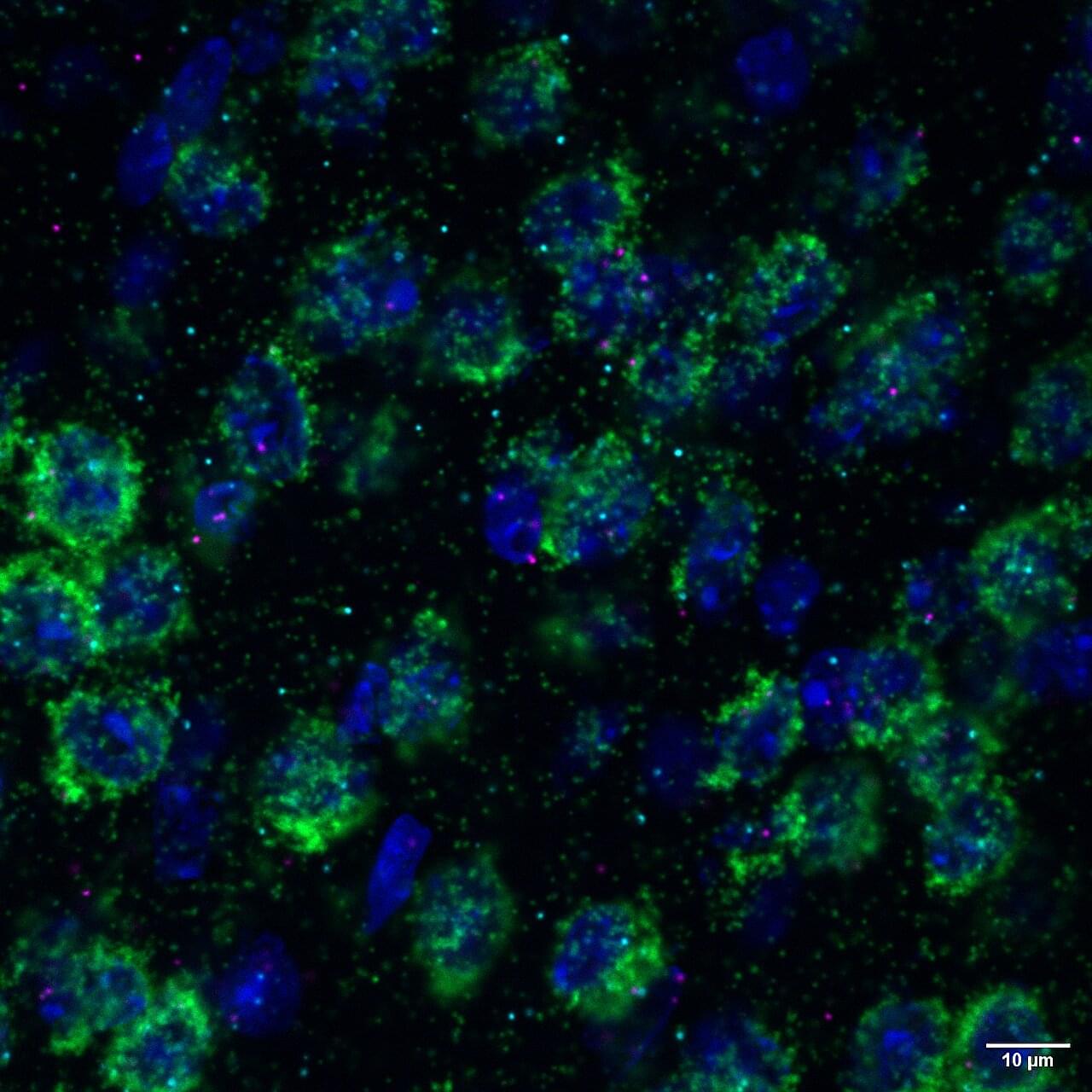
In a study published in Molecular Psychiatry, researchers led by Rosalba Olga Proce, a doctoral student in the Molecular and Cellular Basis of Behavior lab led by Dr. Hanna Hornberg at the Max Delbruck Center, set out to determine whether the two enzymes—also called kinases—perform distinct functions in the brain. The team found clear differences. Mice lacking MNK1 showed less interest in newly introduced objects than controls and impaired memory of objects. By contrast, mice without MNK2 appeared normal in object recognition tests but showed enhanced interest in social contacts.

“The behavioral differences we observed suggest that each kinase has a specialized function,” says Proce. “It might be preferable to target each kinase individually when designing drugs.”

Oral vaccine strategy used modified bacterium to combat colorectal cancer

A research team investigating the use of the bacterium Listeria monocytogenes against colorectal cancer has discovered a way to build a modified version of Listeria as an oral vaccine to prime the immune system directly within the gut, where anti-tumor cells are then generated. Details of the work, led by Stony Brook immunologist Brian Sheridan, Ph.D., are published in the Journal for the ImmunoTherapy of Cancer.

Colorectal Cancer is among the most dangerous and deadly cancers worldwide. The American Cancer Society projects there will be more than 150,000 new colorectal cancer diagnoses in the U.S. in 2026 with more than 55,000 deaths. Cancer immunotherapy represents a treatment strategy that harnesses a person’s own immune system to combat cancer. Immunotherapies are used to treat a small proportion of colorectal cancers. However, most colorectal cancers are not responsive to current immunotherapies.

Listeria is a bacterium that can cause infection, but its promise as an immunotherapy for several types of cancer including colorectal cancer has reached pre-clinical and clinical trials.

Quantum entanglement could link distant telescopes for sharper images

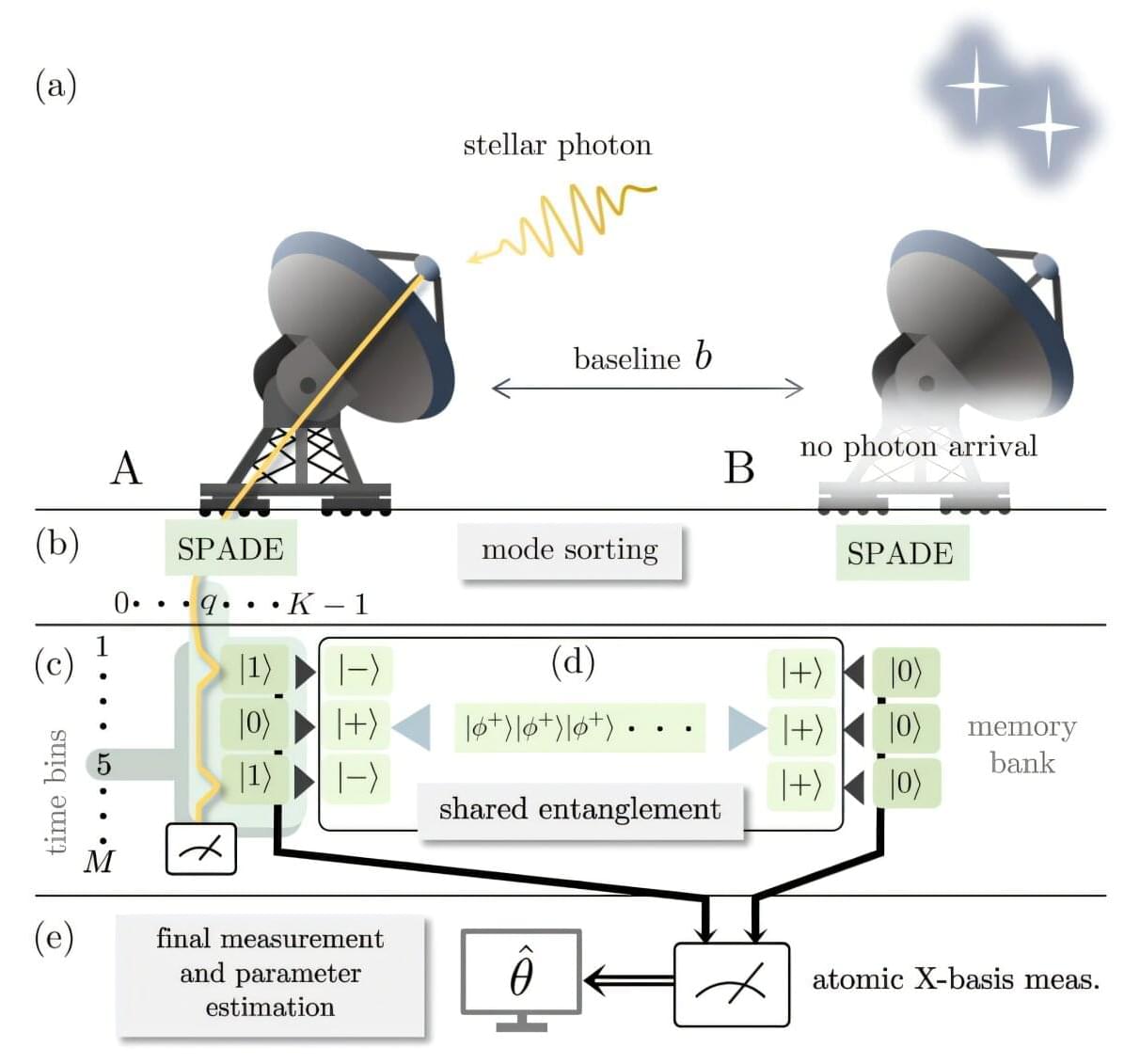
To capture higher-definition and sharper images of cosmological objects, astronomers sometimes combine the data collected by several telescopes. This approach, known as long-baseline interferometry, entails comparing the light signals originating from distant objects and picked up by different telescopes that are at different locations, then reconstructing images using computational techniques.

Conventional long-baseline interferometry methods combine the light signals collected by different telescopes using an interferometer. To do this, however, it relies on delicate optical links that bring light beams together and that are difficult to establish when telescopes are located at long distances from each other.

Researchers at University of Arizona, University of Maryland and NASA Goddard Space Flight Center recently proposed an alternative approach to achieve higher resolution telescopy images that leverages a quantum effect known as entanglement. Their proposed approach, outlined in a paper published in Physical Review Letters, allows distant entangled telescopes, which share a unified quantum state irrespective of how distant they are, to extract the same information about a given scene or cosmological image.

/* */