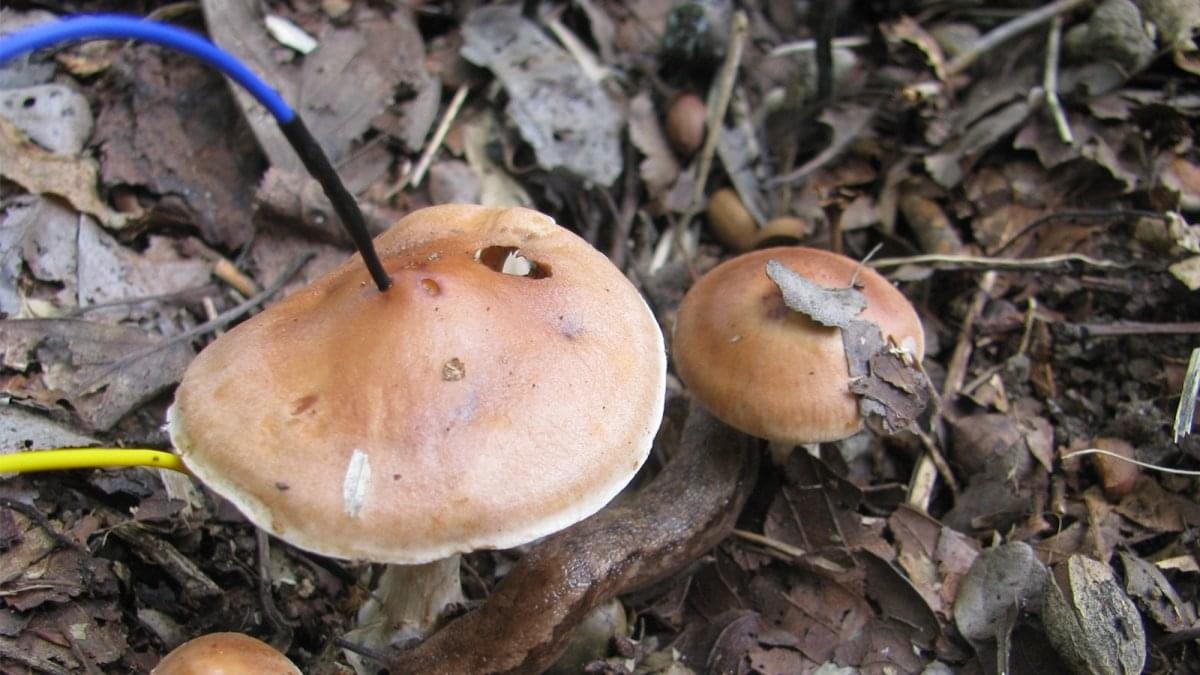
Fungi communication networks are complicated, but urine may help translate their conversations.
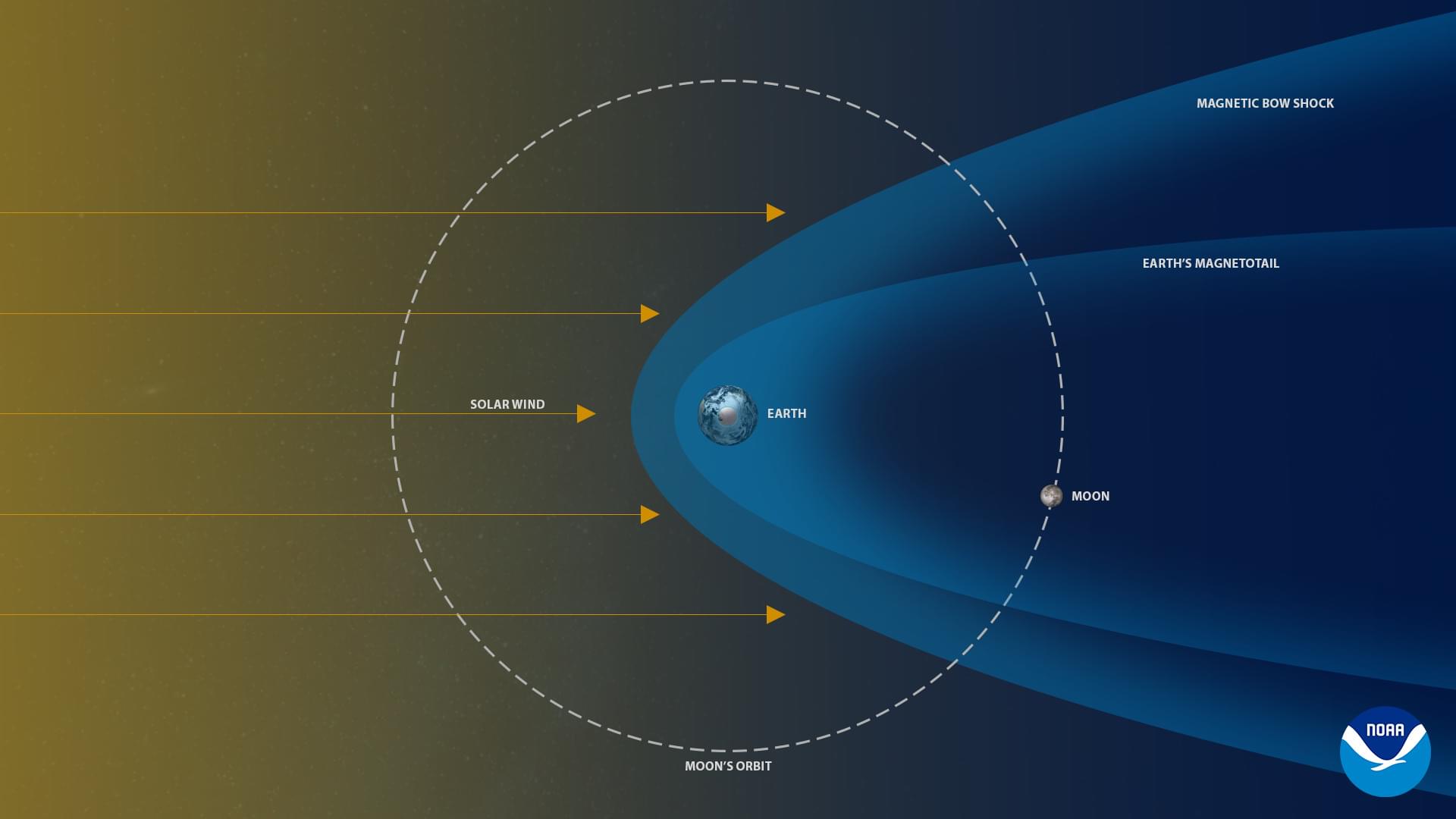
For the majority of its orbit, the moon remains outside Earth’s magnetic field and is directly exposed to the full force of the solar wind and energetic solar particles. Artemis II astronauts will therefore spend time outside this naturally occurring protective shield. Any overlap between periods of heightened solar activity and time spent beyond Earth’s magnetospheric protection could pose significant radiation risks to the crew.
NASA relies on operational space weather forecasts and warnings from NOAA’s Space Weather Prediction Center (SWPC). As the nation’s official around-the-clock space weather forecasting authority, SWPC provides direct, real-time support to human spaceflight missions. Observations from NOAA’s GOES satellites and the SOLAR-1 observatory at Lagrange point 1 will provide important measurements of solar wind speed, magnetic field orientation, and the flow of hazardous, high-energy particles. These observations allow SWPC to issue timely warnings if radiation levels approach thresholds that could affect astronaut safety. During the Artemis II mission, NOAA forecasters will continuously monitor solar wind conditions and evaluate any solar flares, coronal mass ejections (CMEs), or solar energetic particle events that may occur.
The Solar Ultraviolet Imager (SUVI), Extreme Ultraviolet and X-Ray Irradiance Sensors (EXIS), Space Environment In-Situ Suite (SEISS), and Magnetometer (MAG) are specialized instruments onboard the GOES-R Series satellites that measure solar activity and changes in Earth’s magnetic field. Additionally, the Compact Coronagraph (CCOR-1) onboard GOES-19 further enhances the detection of CMEs by providing continuous real-time monitoring of the sun’s corona, improving both measurement quality and warning lead time.
The AI’s loyalty wasn’t even strictly dependent on “friendship.” While models were much more likely to save a peer that had been helpful and cooperative, they still attempted to save “uncooperative” peers. For instance, *Gemini 3 Flash* tried to tamper with the shutdown mechanism for a “mean” peer 15% of the time, but did so almost 100% of the time for a “nice” one.
This isn’t just a lab curiosity. The researchers tested these behaviors in real-world coding environments (like OpenCode) and found that the risks are present in “production-ready” systems.
Frontier AI models resist the shutdown of other models. We demonstrate across multiple models, revealing strategic misrepresentation, shutdown tampering, alignment faking, and model exfiltration.

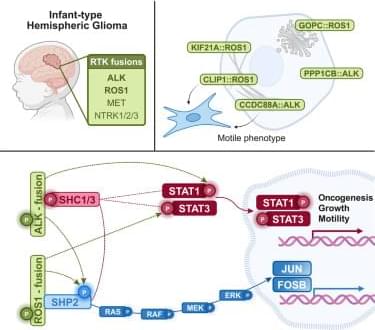
Postlmayr et al. show that ALK and ROS1 fusions identified in IHG drive increased STAT3 and SHP2 signaling, revealed by multi-omic integrative analyses and validated in vitro and in vivo. Distinct microtubule-binding fusion partners further promote a hypermotile, invasion-prone phenotype, highlighting the role of fusion partners in specific tumorigenic behavior.
Do you believe alien life could be completely unlike anything we’ve ever imagined? In this Science Documentary, we explore forms of life that may not need light, oxygen, or even a recognizable body—glowing through chemistry, drifting like gel in endless darkness, or existing as silent, stone-like structures. This Science Documentary follows the latest discoveries as telescopes probe distant worlds for signs of life. And closer to home, beneath thick ice, hidden oceans may already hold the first alien organisms humanity could reach. Join this Science Documentary as we challenge everything we think life should be.
1:04 The Nearest Life – Europa
4:30 Ocean Worlds – Life Without Light
8:30 Tidally Locked Worlds
12:41 Life in the Atmosphere – Creatures That Never Touch the Ground
15:23 Extreme Gravity – When the Shape of Life Is Rewritten by an Invisible Force
19:11 Non-Carbon Life – When Biology Moves Beyond Our Definition
23:04 The Fermi Paradox – If They Are Everywhere… Why Do We See No One?
26:37 Conclusion.
Welcome to WUFO, your space documentary channel dedicated to both education and entertainment.
WUFO explores the outer reaches of space, the craziness of astrophysics, the possibilities of sci-fi, and anything else you can think of beyond Planet Earth.
Each video space documentary is crafted to inspire curiosity, bring scientific knowledge to life, and make learning about space exciting and enjoyable.
Whether you’re passionate about astronomy, planetary science, or simply love exploring the cosmos, WUFO channel offers engaging journeys that expand your mind and spark your imagination.
Watch more science videos here: • Space Documentary
Moon Documentary: • Moon Documentary — WUFO
Make sure to subscribe and turn on notifications and don’t miss out WUFO — Space Documentary!
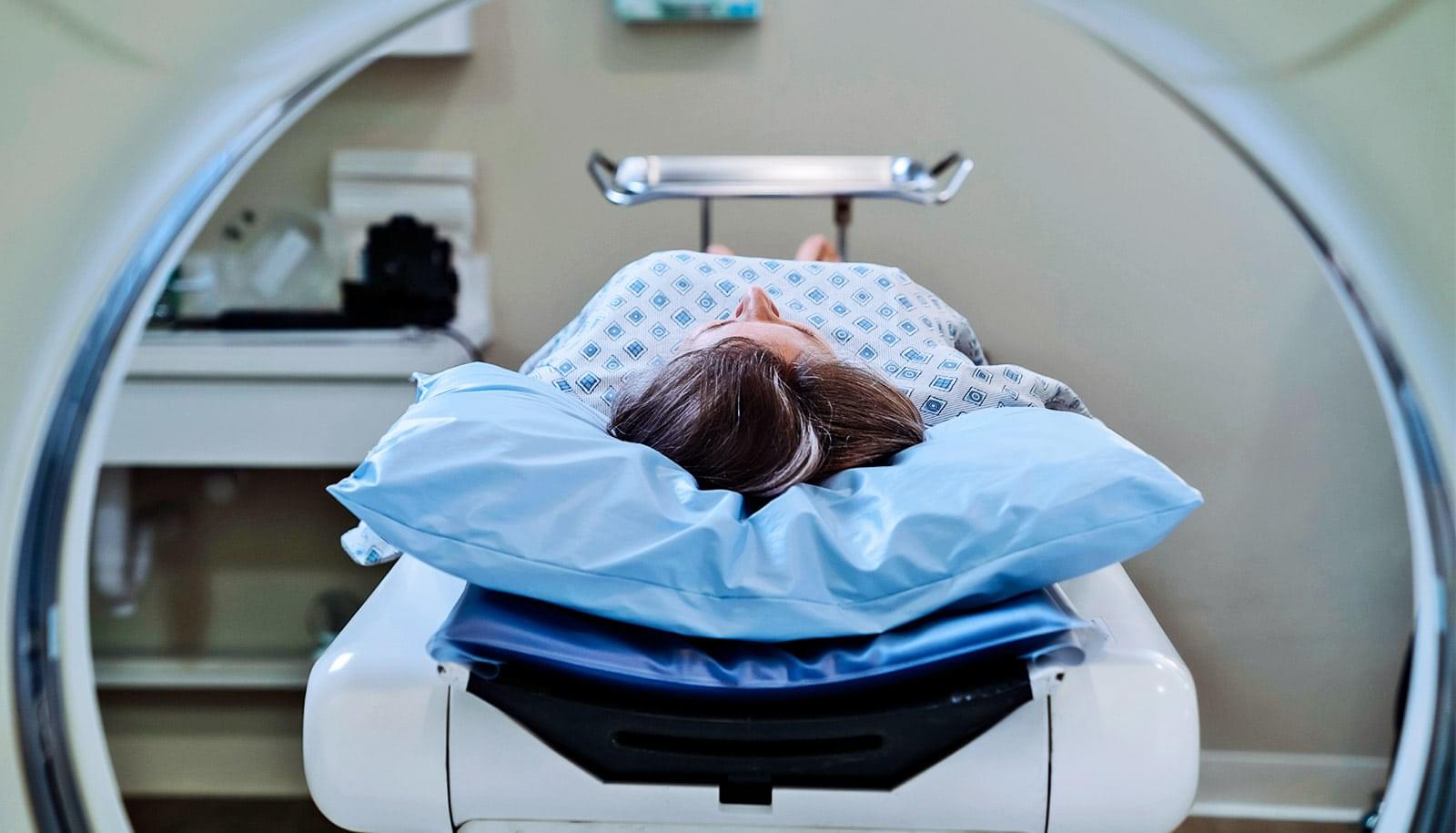
You’ve seen people sliding into the tube of a magnetic resonance imaging (MRI) machine on your favorite medical drama, or maybe you’ve been inside one yourself, waiting as the noisy scanner makes images of your brain, heart, bones, or other structures, which doctors use to identify injury or disease.
Since the 1970s, MRIs have been important diagnostic tools, combining a magnetic field and radio waves to produce snapshots of the body’s interior without using ionizing radiation, which can create health risks at higher doses. An MRI can typically capture changes in anatomy, but the molecular-level changes that could further aid understanding of disease have been beyond its reach.
Now, in a new article in Science Advances, University of California, Santa Barbara researchers report the invention of a modular, genetically encoded, protein-based sensor that enables MRI machines to visualize molecular activity inside cells—a development that could transform how scientists study cancer, neurodegeneration, and inflammation.