Deep beneath island arcs, new research suggests that gold enrichment originates from repeated, high-degree melting of a hydrous mantle rather than a single process.


Plant-infecting bacteria have a surprisingly direct way of taking over crops. Instead of slowly breaking down defenses, many of them inject proteins straight into plant cells, effectively hijacking the system from the inside.
For decades, scientists have tried to understand one particularly important group of these proteins, known as AvrE/DspE. These molecules are used by pathogens that attack a wide range of crops, including rice, tomatoes, apples, and pears. They are responsible for diseases such as bacterial speck, brown spot, and the devastating fire blight that can wipe out entire orchards.

Tattoo ink stays with you for life. Researchers are now asking how these pigments interact with the immune system and whether long-term exposure matters.
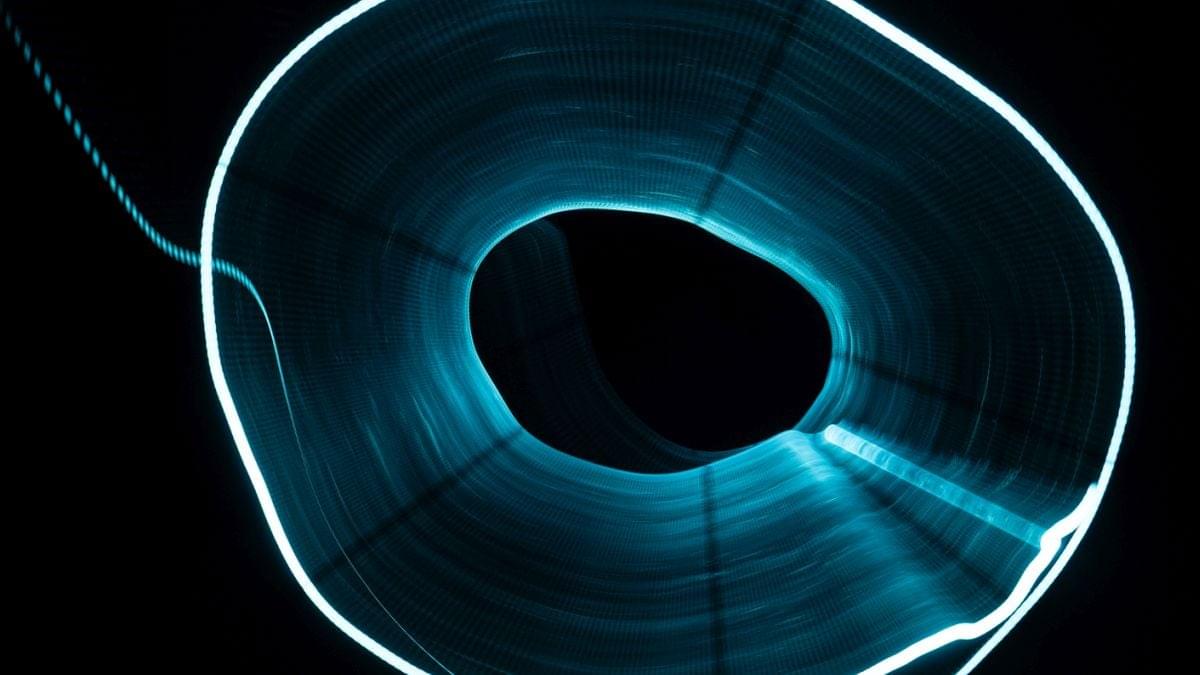
For the first time, physicists have observed that ‘holes’ in light can move faster than the light itself.
They’re known as phase singularities or optical vortices, and since the 1970s, scientists have predicted that, just as eddies in a river can move faster than the flowing water around them, so too can whirlpools in a wave of light outrun the light they’re embedded within.
This does not break relativity, which states that nothing can travel faster than the speed of light. That’s because the vortices carry no mass, energy, or information, and their motion is based on the evolving geometry of the wave pattern rather than any physical motion through space.

The ultimate plan to live forever is a brand new body.
Scientists at NSF–DOE Vera C. Rubin Observatory, jointly funded by the U.S. National Science Foundation and the U.S. Department of Energy’s Office of Science, have submitted an unprecedented set of asteroid detections to the IAU Minor Planet Center, including hundreds of distant worlds beyond Neptune and 33 previously unknown near-Earth asteroids.
Using preliminary data from NSF–DOE Vera C. Rubin Observatory, scientists have discovered over 11,000 new asteroids [1]. The data were confirmed by the International Astronomical Union’s Minor Planet Center (MPC), making this the largest single batch of asteroid discoveries submitted in the past year. The discoveries were made using data from Rubin’s early optimization surveys and offer a powerful preview of the observatory’s transformative impact on Solar System science.
Rubin Observatory is a joint program of NSF NOIRLab and DOE’s SLAC National Accelerator Laboratory, who cooperatively operate Rubin. NOIRLab is managed by the Association of Universities for Research in Astronomy (AURA).