Toggle light / dark theme

Get the latest international news and world events from around the world.

Log in for authorized contributors

Clinical impact of cardiac magnetic resonance imaging in myocardial infarction with non-obstructive coronary arteries: a prospective multicentre cohort study

Background Cardiac magnetic resonance (CMR) may radiologically identify or confirm underlying pathophysiologies in myocardial infarction with non-obstructive coronary arteries (MINOCA), however, there are scant prospective data evaluating the impact on routine clinical care.

Methods In a multicentre international cohort study of MINOCA, clinical diagnosis, diagnostic certainty and intended clinical management were prospectively determined before and again after CMR. The primary outcome was a composite of change in clinical diagnosis and/or management. Secondary outcomes were individual components of the primary outcome, change in diagnostic certainty and number-needed-to-test for deprescription of dual antiplatelet therapy (DAPT). Predictors of the primary outcome were evaluated by multivariable logistic regression analysis.

Results In 320 patients, CMR was associated with change in diagnosis and/or management in 63% (95% CI 57% to 68%, p0.001) and significantly increased diagnostic certainty (8÷10 post-CMR (5–9) vs 6/10 pre-CMR (4–7), p0.0001). Relevant predictors of the primary outcome on multivariable analysis were early CMR (≤14 days), absence of atheroma on coronary angiography and significant pre-CMR diagnostic uncertainty (≤5/10); CMR changed diagnosis and/or management in 80% of individuals with all three predictors versus 40% in those with none. In individuals where treating physicians initially chose to prescribe DAPT despite no obstructive culprit lesion, number-needed-to-test by CMR for DAPT deprescription was 3.

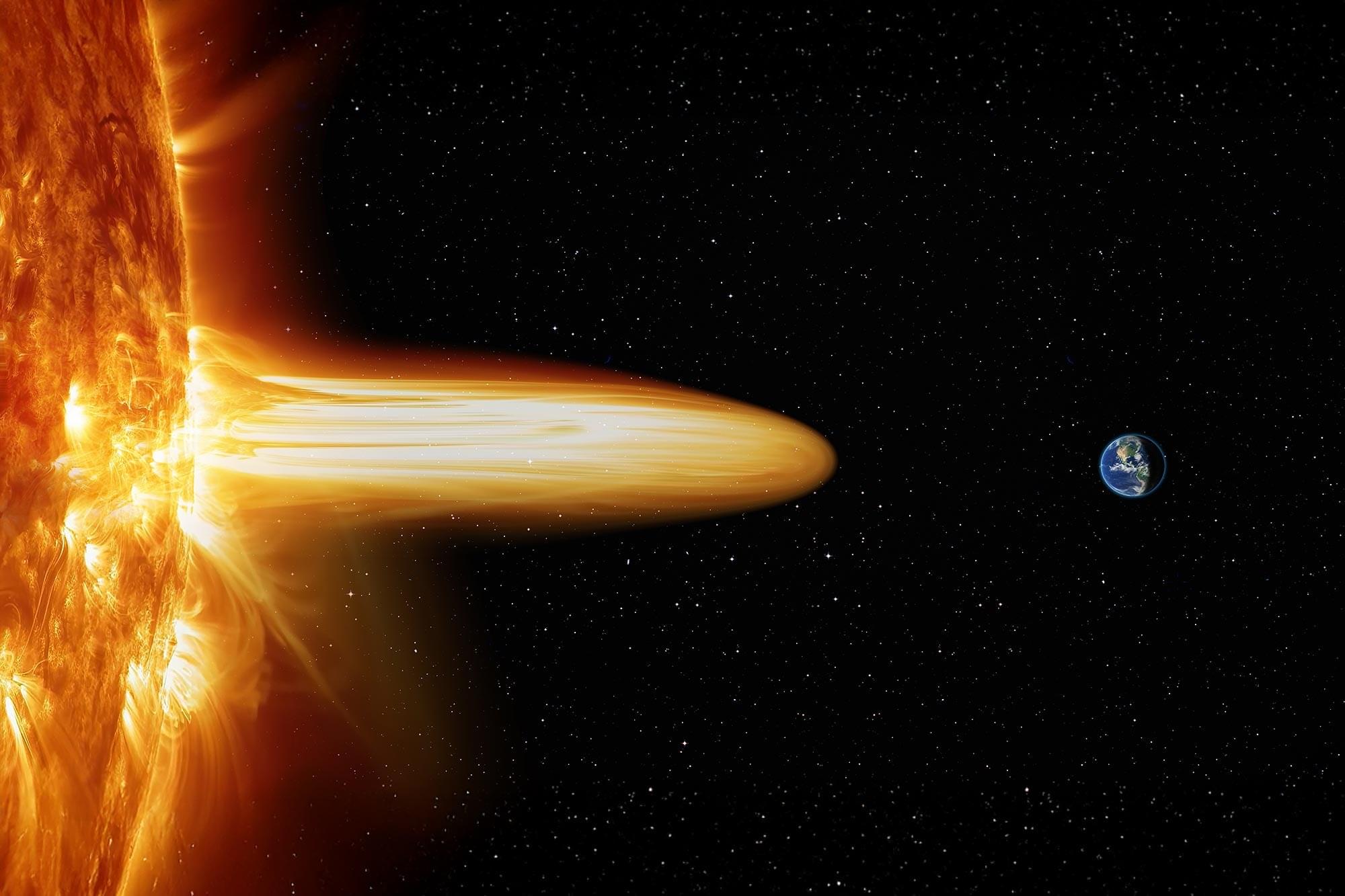
DESI-HVS1 is an old hypervelocity star ejected from the galactic center, observations suggest

Chinese astronomers report the discovery of DESI-HVS1, which may be an old metal-poor hypervelocity star of galactic center origin. The finding, based on the data from the Dark Energy Spectroscopic Instrument (DESI) and ESA’s Gaia satellite, was detailed in a research paper published April 23 on the arXiv pre-print server.

Oxford team achieves advanced quantum squeezing with trapped ion

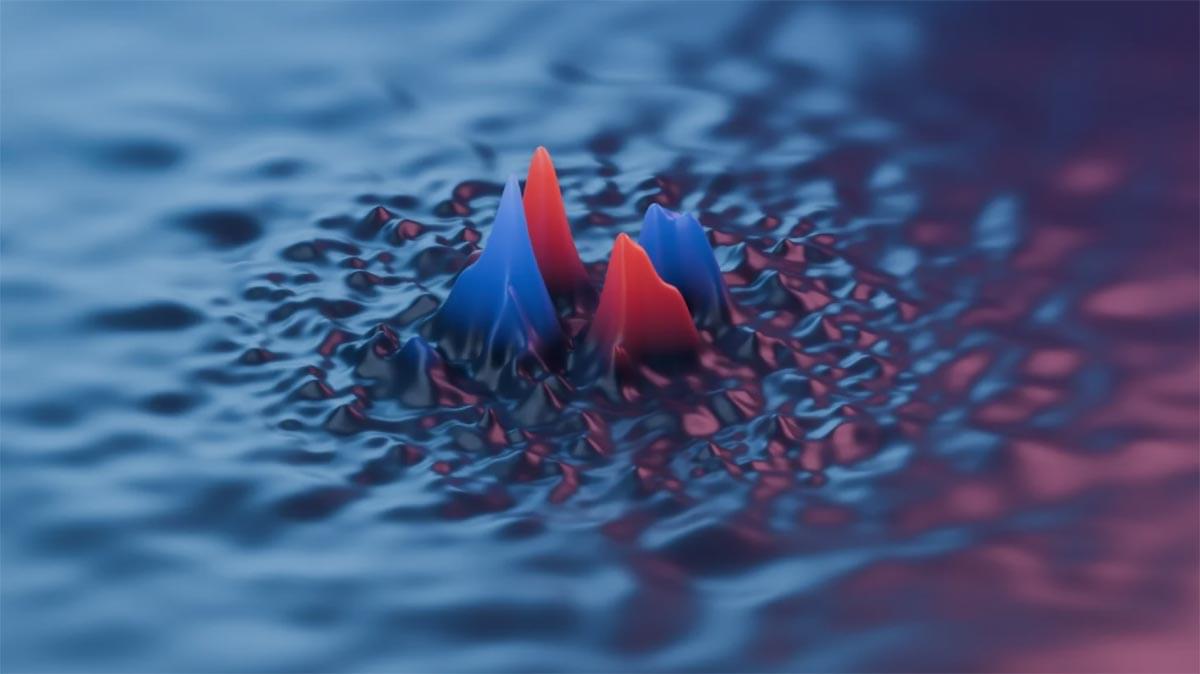
“The result is more than the creation of a new quantum state. It is a demonstration of a new method for engineering interactions that were previously out of reach,” said Dr. Oana Băzăvan, lead author from the Department of Physics, University of Oxford.

“The fourth-order quadsqueezing interaction was generated more than 100 times faster than expected using conventional approaches. This makes effects that were previously out of reach accessible in practice,” Băzăvan added.

Physicists have long used a trick called “squeezing” to sharpen the fuzzy measurements of the subatomic world. It is why gravitational-wave detectors, like LIGO, can hear black holes colliding across the universe. But for all its utility, ordinary squeezing is a relatively simple, second-order effect.

DARPA selects three companies for lunar orbiter studies

WASHINGTON — The Defense Advanced Research Projects Agency has awarded contracts to three companies to study concepts for a lunar mission to search for water ice in very low orbits.

DARPA announced last year the Lunar Assay via Small Satellite Orbiter (LASSO) program. LASSO would demonstrate the ability to operate in a very low orbit around the moon while searching for locations on the moon that contain water ice at concentrations greater than 5%.

The mission, the agency stated, would test “sustained and advanced maneuverability” needed to maintain that low orbit, with applications elsewhere in cislunar space. The scientific data from the mission would support both NASA and commercial efforts to use lunar resources.

How individual consciousness works — and makes us unique

As we go through life, our brains run different processing modes. Some – the attention and sensory systems – result in very similar experiences of the world: what colour the sky is, how warm the day feels.

But there is another, deeper side to the brain which weaves together your memories, goals, beliefs and emotions into a continuous sense of self. This allows you to experience the world not as it is, but as it matters to you personally.

This unique inner world is supported by the brain’s default mode network (DMN). This links together several areas including in the prefrontal cortex (at the very front of the brain) and the parietal lobe (at the back).

/* */