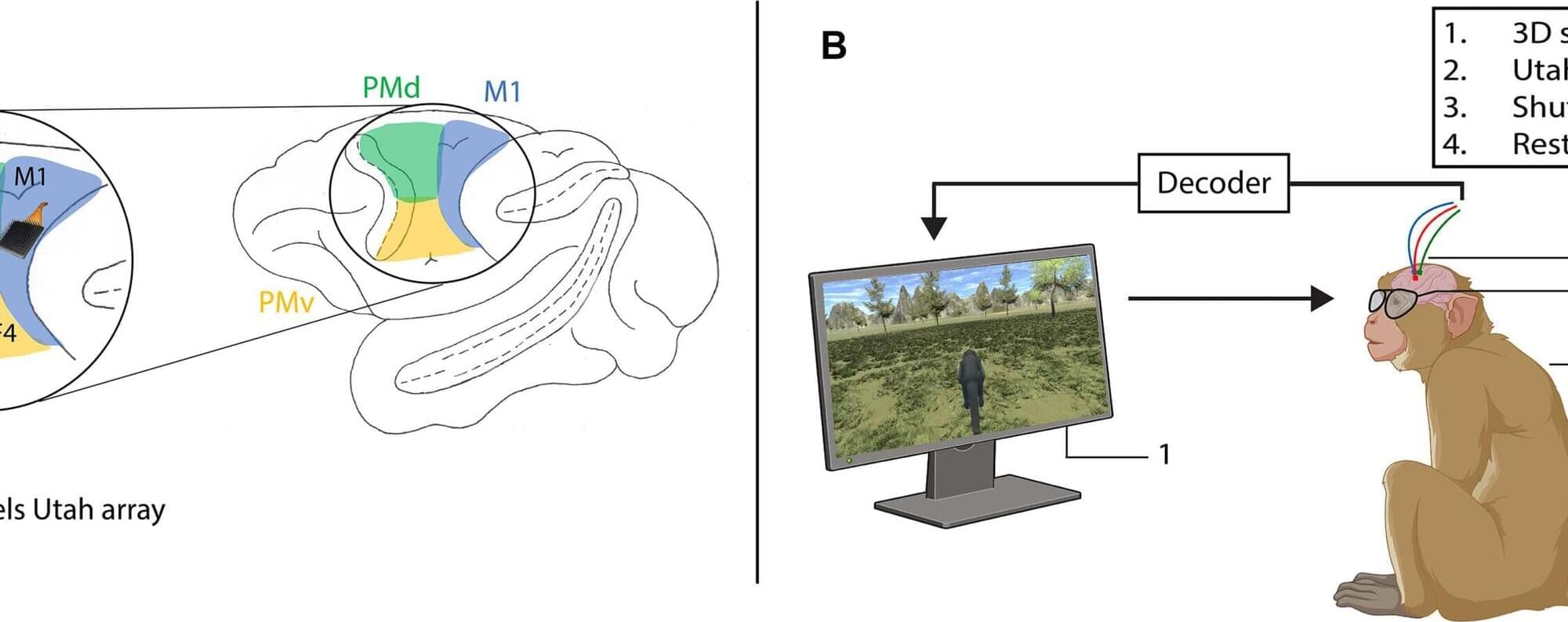
As a part of a study testing out a new type of implanted brain-computer interface (BCI), three rhesus monkeys controlled movements in a virtual reality (VR) world using only brain signals. The study, published in Science Advances, demonstrates a major step toward practical BCIs that can work outside of lab conditions.
BCIs allow direct communication between the brain and external devices, like a computer or robotic arm. This ability is thought to be extremely valuable for helping people suffering from paralysis to move objects, communicate or complete other tasks. However, there is a gap between lab-based BCI demonstrations and practical, flexible systems for real-world usage.
Previous research has explored intracortical BCIs—those implanted directly into the brain—in monkeys and humans, enabling them to control computer cursors, robotic or prosthetic arms and wheelchairs. Others have restored communication and the function of paralyzed limbs. However, real-world navigation requires adapting to unpredictable events and complex environments, which previous BCIs have struggled with, often requiring overt movement or only working in overly simple settings.