
Toggle light / dark theme

Get the latest international news and world events from around the world.
Log in for authorized contributors

Busseiron and the formation of a discipline in Japanese physics

The middle of the twentieth century was a period of significant scientific advancement, particularly in the realm of physics. Within this rapidly changing landscape, academic disciplines emerged and evolved to keep pace with scientific discoveries. The new subdiscipline of solid-state physics gained prominence in the United States, but it was later subsumed by the broader category of condensed matter physics.

In Japan, however, physics research since the 1940s has included a unique branch called Busseiron—a discipline concerning the study of matter that has no direct English equivalent but that has remained in use nonetheless.

A new article by Hiroto Kono in Isis: A Journal of the History of Science Society explores the historical formation of Busseiron and how it was shaped by its specific national context.

Consistency check casts doubt on evolving dark energy

Cosmologists have long struggled to determine whether the universe’s accelerating expansion is being driven by a simple cosmological constant, or whether dark energy’s influence is evolving over time. In a new analysis published in Physical Review D, Samsuzzaman Afroz and Suvodip Mukherjee at the Tata Institute of Fundamental Research, Mumbai, have identified a subtle impact on the inference of the nature of dark energy, due to a tiny mismatch between a fundamental cosmological distance relation and two key datasets used to measure the properties of dark energy.

The result casts fresh doubt on the robustness of the recent claims that dark energy could be evolving over time—perhaps bringing us a step closer to solving one of cosmology’s most enduring challenges.

Tritium-infused graphene could sharpen the hunt for neutrino mass

While neutrinos are some of the most abundant particles in the universe, they remain among the least understood. One of the biggest puzzles is their mass: although experiments have shown that neutrinos must have some mass, pinning down exactly how much has proven extraordinarily difficult.

Now, a team of physicists led by Valentina Tozzini of the Institute of Nanoscience in Pisa have published new theoretical calculations in Physical Review C, suggesting that tritium-infused graphene could give future experiments a decisive edge in measuring neutrino masses with unprecedented precision.

Chemists use sea sponge bacteria to create new molecules for drug discovery

Florida State University chemists have synthesized new molecules derived from bacteria found in a Pacific Ocean sea sponge, a breakthrough for the future of drug development, particularly for rare forms of cancer.

“Around 50% of approved drugs are either natural products or derivatives of natural products,” said Zackary Firestone, a fourth-year doctoral student in FSU’s Department of Chemistry and Biochemistry, and the study’s lead author. “Synthetic access to these molecules is important because it allows for easier procurement for biological testing as well as the making of new derivatives.”

The research team is the first to successfully synthesize two new marine natural products: tetradehydrohalicyclamine B and epi-tetradehydrohalicyclamine B. Both were isolated from bacteria that lives in symbiosis with Acanthostrongylophora ingens, a Pacific-dwelling sea sponge.

Migrating charges unlock hard-to-reach C-H bond edits in organic molecules

A team at the University of Vienna, led by chemist Nuno Maulide, has developed a new method for controlling chemical reactions in a more targeted and efficient manner. At the heart of this is the concept of “cation sampling”: specially selected groups (ketones), in a sense, function as molecular signposts for randomly migrating positive charges, enabling reactions to take place at sites on a molecule that were previously difficult to access. The method allows carbon-hydrogen bonds (C–H bonds) to be specifically modified. The study was published in the Journal of the American Chemical Society.

Organic molecules form the basis of almost all biological processes. They consist mainly of carbon and hydrogen—and hydrogen atoms in particular are very common in such molecules. “If you want to alter the properties of a molecule, you often have to specifically replace individual hydrogen atoms,” explains Philipp Spieß, a former Ph.D. student in the Maulide group and one of the study’s lead authors.

The precise modification of C–H bonds is therefore considered one of the key challenges of modern synthetic chemistry. It plays an important role in the development of new drugs, functional materials and more efficient chemical processes.

Visualizing sound: Scientists reveal hidden behaviors of sound waves

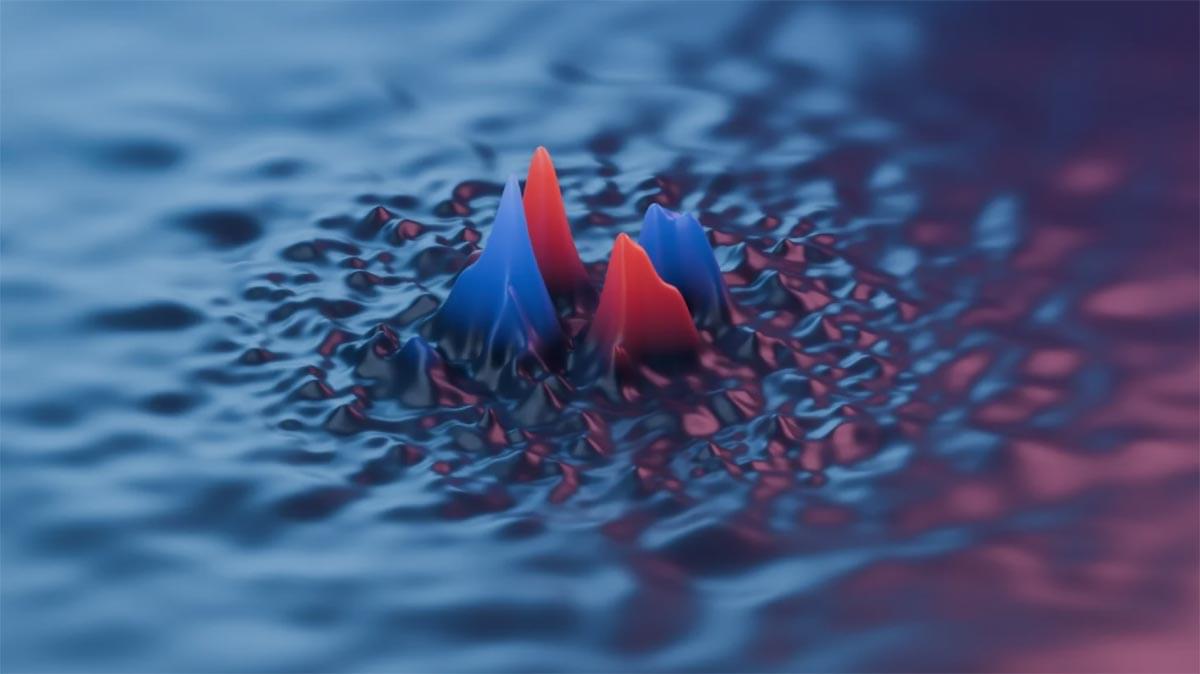
An international team of scientists has developed a new analysis of how sound waves behave, revealing surprising effects that have largely been overlooked for decades. In the new paper in Scientific Reports, which was led by researchers from City St George’s, University of London, the team explored how sound waves move through air and how those movements might be perceived visually.

Sound travels as a longitudinal wave, meaning air molecules vibrate back and forth rather than moving up and down like waves in a violin string. These vibrations are usually assumed to be smooth and regular, and as a physical phenomenon they form the basis of acoustics and some forms of seismic transmission. However, the new theoretical analysis of physical longitudinal wave motion reveals that the behavior of sound waves changes dramatically when they become stronger (i.e. above 160 dB at 10 kHz, which is similar to the noise level inside a high-pitched jet engine), and the prior assumptions are only true for moderate sounds.

Using computer simulations, the researchers—namely Professor Christopher Tyler and Professor Joshua Solomon at City St George’s and Professor Stuart M. Anstis from the University of California, San Diego—created animations where each dot represents an air molecule. Each dot moves back and forth in place, slightly out of step with its neighbors. This tiny delay between dots creates the appearance of a wave traveling through space as the dots move back and forth in place, just as sound does in real life.

New chip offers way to make use of quantum system ‘imperfections’

Quantum technologies promise powerful new kinds of computers, giving scientists new tools to mimic and explore nature at its tiniest scales. At those levels, everything in nature—from atoms and electrons to light itself—follows the strange rules of quantum mechanics. But the real world is never perfectly clean: Signals fade, energy leaks away and systems pick up noise from their surroundings.

“Understanding how quantum systems behave under this messiness is crucial if we want our experiments to say something about nature as it really is, not just idealized setups,” says Govind Krishna, Ph.D. student at KTH Royal Institute of Technology.

Open-source framework lets drones dodge obstacles in milliseconds while minimizing travel time

In the aftermath of a devastating earthquake, unpiloted aerial vehicles (UAVs) could fly through a collapsed building to map the scene, giving rescuers information they need to quickly reach survivors. But this remains an extremely challenging problem for an autonomous robot, which would need to swiftly adjust its trajectory to avoid sudden obstacles while staying on course.

Researchers from MIT and the University of Pennsylvania developed a new trajectory-planning system that tackles both challenges at once. Their technique enables a UAV to react to obstacles in milliseconds while staying on a smooth flight path that minimizes travel time.

Their system uses a new mathematical formulation that ensures the robot travels safely to its destination along a feasible path, and that is less computationally intensive than other techniques. In this way, it generates smoother trajectories faster than state-of-the-art methods.

Overlooked ‘history force’ may skew particle motion by up to 60% in shaken fluids

Physicists at the University of Bayreuth have investigated the so-called Basset–Boussinesq history force acting on particles in fluids. Due to the difficulty of calculating it, this force is often neglected—a fact that Bayreuth doctoral researcher Frederik Gareis already identified as a secondary school pupil during a student research project with his supervisor. The researchers report their new findings on the history force in Physical Review Fluids.

When particles move in liquids or air with velocities that change over time, several forces act on them, including the often overlooked history force. It arises from the formation of vortices around accelerating particles in fluids. In this way, the surrounding fluid “remembers” previous particle motions and influences their subsequent movement.

“The history force is often ignored because it is mathematically complex and makes calculations significantly more demanding. It is frequently unclear whether neglecting it leads to larger errors in modeling particle motion in fluids,” says Frederik Gareis, a doctoral researcher at the Theoretical Physics I research group at the University of Bayreuth and first author of the study.

Quantum-centric supercomputing simulates 12,635-atom protein

The scale of chemistry simulations with quantum computing has increased dramatically in just the last few months. In the latest milestone for the field, researchers from Cleveland Clinic, RIKEN, and IBM used a quantum-centric supercomputing (QCSC) framework to calculate the electronic structure of a pair of large protein-ligand complexes, reaching a scale of 12,635 atoms in the largest simulation.

The molecules were T4-Lysozyme, a protein from a family of proteins involved in the immune system degradation of peptidoglycans in bacterial membranes, and Trypsin, produced in the pancreas and used in digestion. The team simulated these proteins binding to molecules they interact with in nature and immersed in a liquid water solution, at scales of 11,608 atoms and 12,635 atoms respectively. Bringing together an international team of researchers from across the United States and Japan made it possible to develop the necessary algorithm and workflow enhancements to reach this milestone.

The researchers achieved this scale just four months after modeling the 303-atom miniprotein Trp-cage using quantum computing for the first time. Today’s new result not only demonstrates a 40-fold increase in system size compared to the Trp-cage result, it represents a 210-times improvement in accuracy from previous state-of-the-art QCSC approaches in a specific step of the workflow.

/* */