Toggle light / dark theme

Get the latest international news and world events from around the world.

Log in for authorized contributors

Artificial photosynthesis catalyst converts carbon dioxide into fuel using sunlight

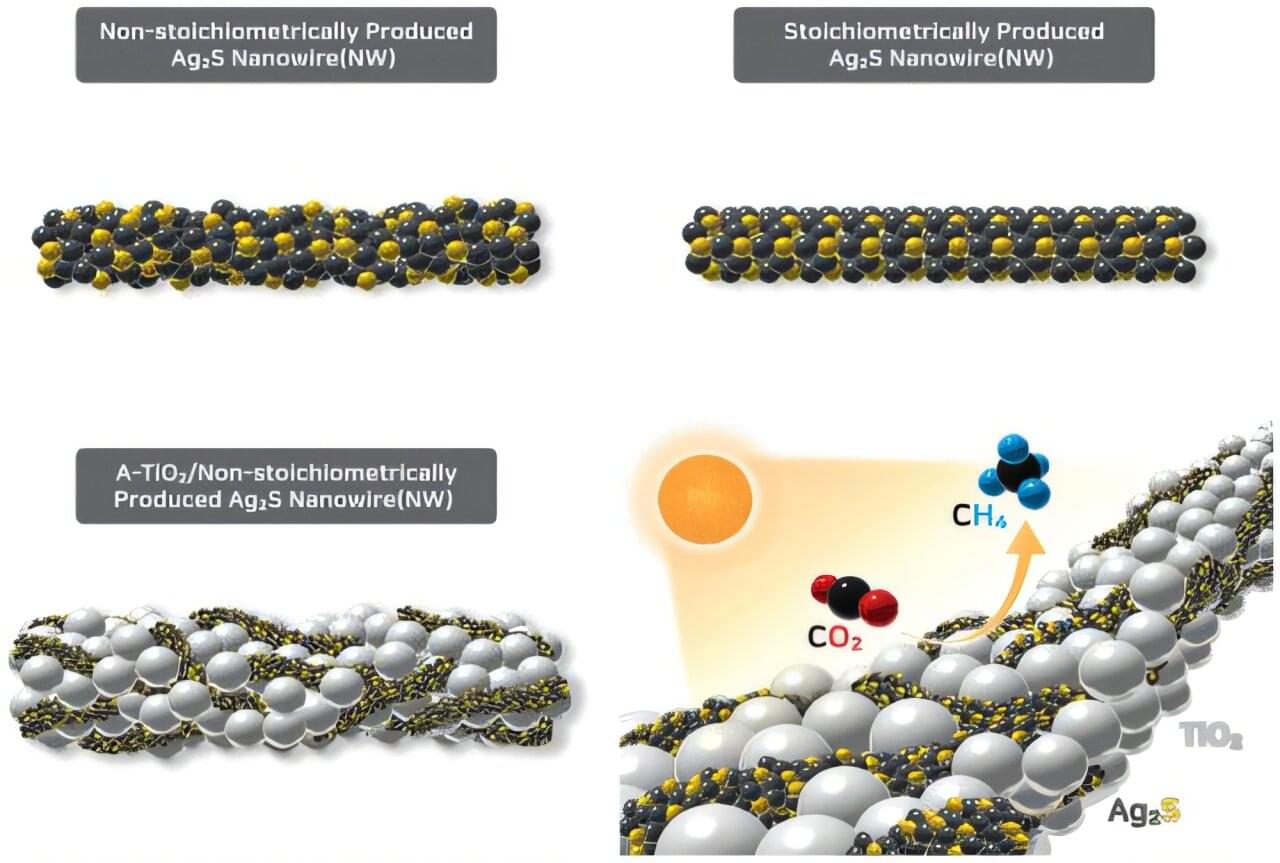
A joint research team has developed a highly efficient photocatalyst that can convert carbon dioxide into the high-value-added fuel, methane, using sunlight, while explaining its operating principles. The work is published in the journal ACS Catalysis.

Carbon dioxide is a typical greenhouse gas, considered a major cause of climate change, and developing technologies to effectively reduce it is an important challenge worldwide.

The photocatalyst technology that caught the interest of the research team is a type of artificial photosynthesis technology that uses solar energy to convert carbon dioxide into fuel. It has garnered significant attention for its potential to contribute to carbon neutrality and eco-friendly energy production.
Alkaline-loving microbes could help safeguard nuclear waste buried deep underground for thousands of years

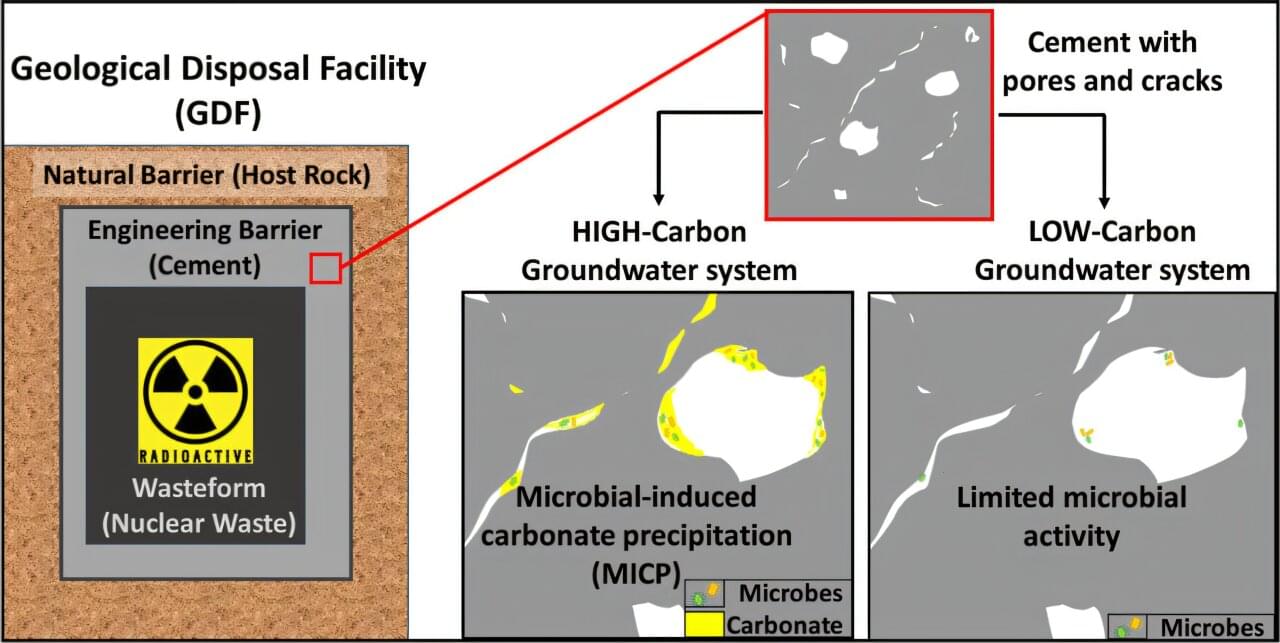
Billions of alkaline-loving microbes could offer a new way to protect nuclear waste buried deep underground. This approach overcomes the limitations of current cement barriers, which can crack or break down over time.

One of the best ways to keep nuclear waste out of harm’s way is to bury it in geological disposal facilities. These are purpose-built containers in tunnels and vaults hundreds of meters underground. Cement is used to provide structural support, seal gaps and encapsulate waste containers. While cement is a strong material, groundwater eventually reacts with it, forming microscopic cracks and pores through which radiation could escape.

This problem is made worse because traditional cement is extremely alkaline (pH greater than 12) and corrosive, which can weaken nearby protective layers such as clay barriers, potentially compromising a facility.

Gubernatorial Candidate Promises ROBOTS To Every Californian… Is Cenk Buying it?

Here’s my full 30-min interview from yesterday with Cenk Uygur on TYT! We cover a lot of things: superintelligence, Basic Income, my Automated Abundance Economy, and my California Governor run.


Cenk Uygur and Zoltan Istvan discuss the future of AI and California on The Young Turks. Do you agree with TYT’s take? Tell us what you think in the comments below. SUBSCRIBE today: ☞ https://go.tyt.com/ytsubscribe.

Get paid to use your phone less! Switch to Noble Mobile today: https://go.tyt.com/mobile.

CHAPTERS:
0:00 Zoltan Istvan on running as a Democrat.
0:45 Transhumanist party.
2:30 Zoltan on AI & technology.
9:50 No corporate or Israel lobby money.
10:20 Zoltan’s policy priorities.
11:40 Robots for every Californian?!
14:00 Universal basic income.
23:00 Taxing robots?!
25:50 Reaching across the aisle.
28:00 AI revolution.

🔥 Tired of corporate media? Get honest news and bold commentary with TYT.

Iron-based magnetic material achieves major reduction in core loss

A research team from NIMS, Tohoku University and AIST has developed a new technique for controlling the nanostructures and magnetic domain structures of iron-based soft amorphous ribbons, achieving more than a 50% reduction in core loss compared with the initial amorphous material.

The developed material exhibits particularly high performance in the high-frequency range of several tens of kilohertz—required for next-generation, high-frequency transformers and EV drive power supply circuits. This breakthrough is expected to contribute to the advancement of these technologies, development of more energy-efficient electric machines and progress toward carbon neutrality.

The research is published in Nature Communications.

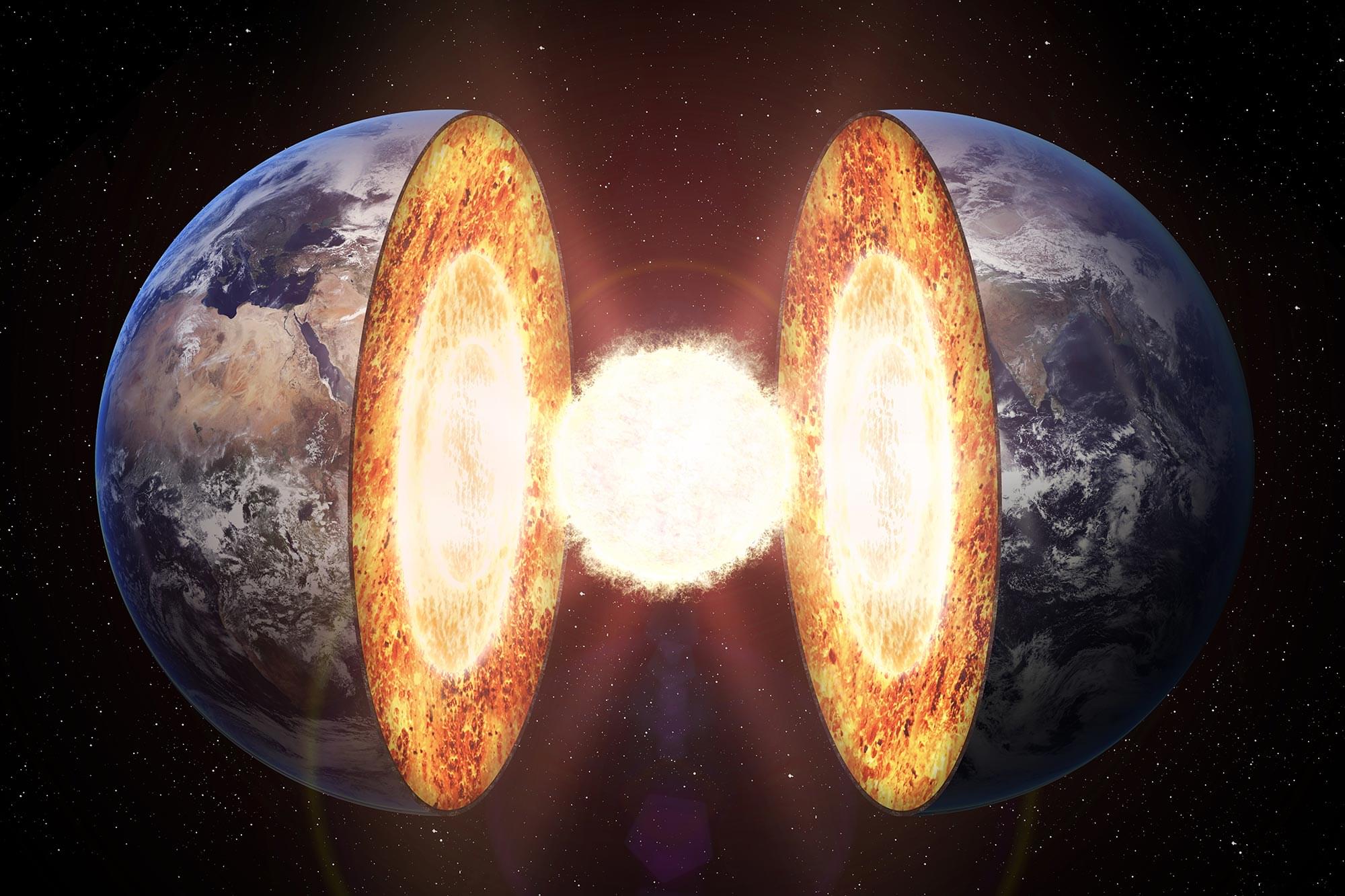
Seismic Mystery Solved: Scientists Find a New State of Matter at Earth’s Center

Chinese researchers have discovered that interstitial carbon in iron-carbon alloys behaves in a superionic, liquid-like state under Earth’s core pressure and temperature conditions. Beneath Earth’s molten outer core lies a solid central region, the inner core, a compact sphere made of an iron lig

3D-printable concrete alternative hardens in three days, not four weeks

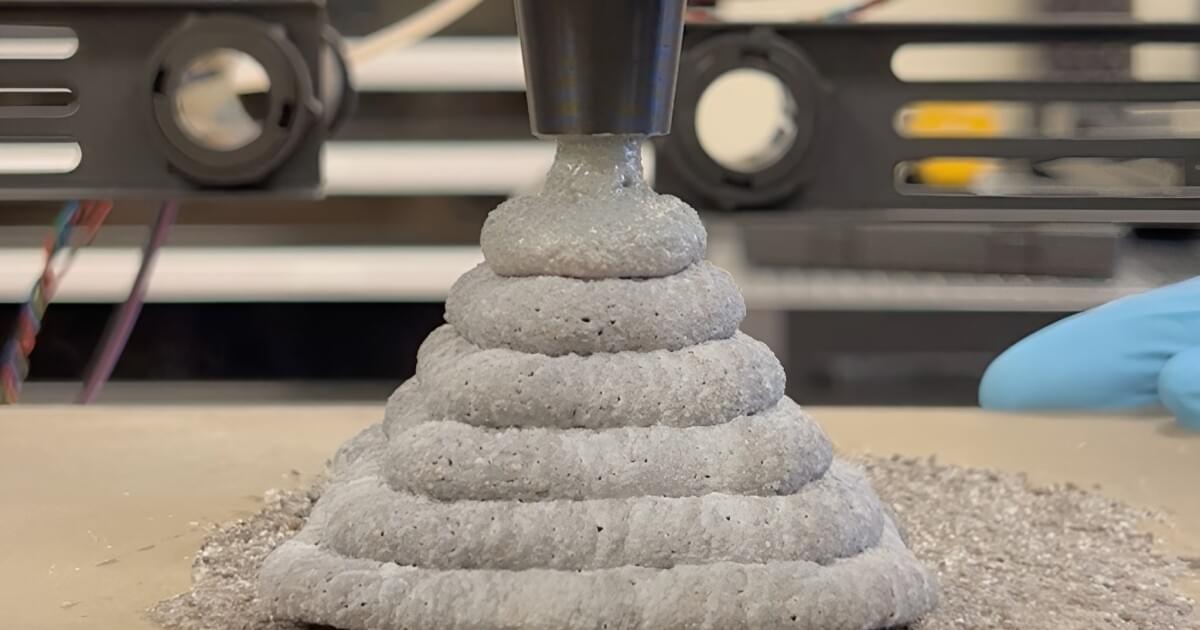
Although we’ve heard a lot about how 3D-printing concrete homes speeds up the construction process, you still have to wait up to 28 days for the concrete to sufficiently cure. A new printable substitute, however, is ready to go in just three days.

Concrete consists of three parts: water, an aggregate such as sand or gravel, and a cement which binds everything together. The cement is the part that typically takes about a month to cure after being poured. And a slow curing time isn’t cement’s only problem.

Traditional Portland-style cement is made by grinding up limestone and other raw materials, then heating the resulting powder to temperatures of up to 1,450 ºC (2,642 ºF). Unfortunately, the processes by which that heat is generated produce a lot of carbon dioxide.

Trump’s Genesis Mission aims to build a centralized AI platform to power scientific breakthroughs

President Donald Trump has issued a new Executive Order that launches the “Genesis Mission,” an AI-focused initiative that aims to make the “most complex and powerful scientific instrument ever built.”

Quantum calculations expose hidden chemistry of ice

When ultraviolet light hits ice—whether in Earth’s polar regions or on distant planets—it triggers a cascade of chemical reactions that have puzzled scientists for decades.

Now, researchers at the University of Chicago Pritzker School of Molecular Engineering (UChicago PME) and collaborators at the Abdus Salam International Center for Theoretical Physics (ICTP) have used quantum mechanical simulations to reveal how tiny imperfections in ice’s crystal structure dramatically alter how ice absorbs and emits light. The findings, published in Proceedings of the National Academy of Sciences, pave the way for scientists to better understand what happens at a sub-atomic scale when ice melts, which has implications including improving predictions of the release of greenhouse gases from thawing permafrost.

“No one has been able to model what happens when UV light hits ice with this level of accuracy before,” said Giulia Galli, Liew Family Professor of Molecular Engineering and one of the senior authors of the new work. “Our paper provides an important starting point to understand the interaction of light with ice.”

/* */