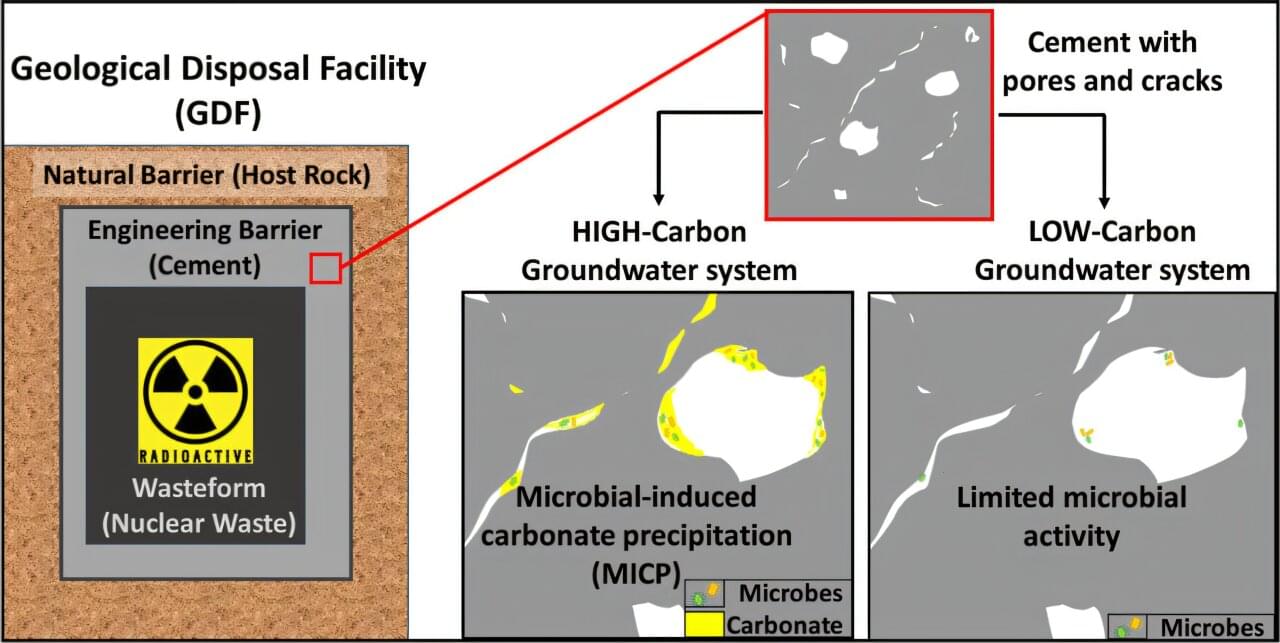
Billions of alkaline-loving microbes could offer a new way to protect nuclear waste buried deep underground. This approach overcomes the limitations of current cement barriers, which can crack or break down over time.
One of the best ways to keep nuclear waste out of harm’s way is to bury it in geological disposal facilities. These are purpose-built containers in tunnels and vaults hundreds of meters underground. Cement is used to provide structural support, seal gaps and encapsulate waste containers. While cement is a strong material, groundwater eventually reacts with it, forming microscopic cracks and pores through which radiation could escape.
This problem is made worse because traditional cement is extremely alkaline (pH greater than 12) and corrosive, which can weaken nearby protective layers such as clay barriers, potentially compromising a facility.