Toggle light / dark theme

Get the latest international news and world events from around the world.

Log in for authorized contributors

Replication efforts suggest ‘smoking gun’ evidence isn’t enough to prove quantum computing claims

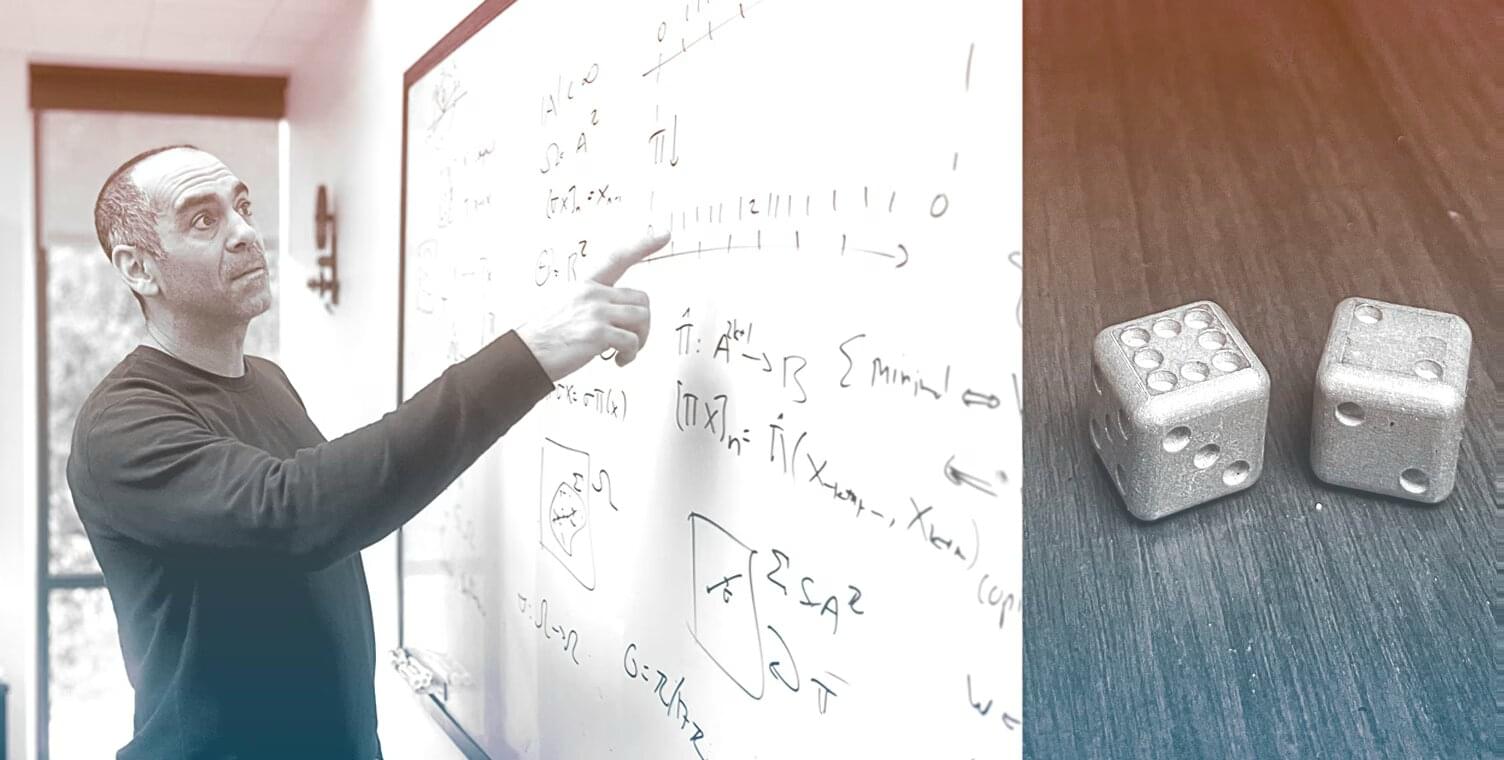
A group of scientists, including Sergey Frolov, professor of physics at the University of Pittsburgh, and co-authors from Minnesota and Grenoble have undertaken several replication studies centered around topological effects in nanoscale superconducting or semiconducting devices. This field is important because it can bring about topological quantum computing, a hypothetical way of storing and manipulating quantum information while protecting it against errors.

In all cases, they found alternative explanations of similar data. While the original papers claimed advances for quantum computing and made their way into top scientific journals, the individual follow-ups could not make it past the editors at those same journals.

Reasons given for its rejection included that, being a replication, it was not novel; that, after a couple of years, the field had moved on. But replications take time and effort and the experiments are resource-intensive and cannot happen overnight. And important science does not become irrelevant on the scale of years.

Sensor lights up to reveal scopolamine, a common substance used for sexual assault

A team from the Universitat Politècnica de València (UPV) has led the development of a new sensor capable of quickly and easily detecting scopolamine, one of the substances most commonly used in crimes of chemical submission, especially in sexual assaults. The sensor detects the presence of this drug in less than five minutes with high sensitivity. The research is published in the journal Angewandte Chemie International Edition.

“Scopolamine is a substance that is difficult to detect using conventional methods, especially when found in drinks. For this reason, our group from the IDM Institute at the UPV set out to develop new, simple tools that can immediately alert us to its presence,” says Vicente Martí Centelles, a researcher at the Interuniversity Research Institute for Molecular Recognition and Technological Development (IDM) at the UPV.

Simultaneous packing structures in superionic water may explain ice giant magnetic fields

Superionic water—the hot, black and strangely conductive form of ice that exists in the center of distant planets—was predicted in the 1980s and first recreated in a laboratory in 2018. With each closer look, it continues to surprise researchers.

In a recent study published in Nature Communications, a team including researchers at the Department of Energy’s SLAC National Accelerator Laboratory has made a surprising discovery: Multiple atomic packing structures can coexist under identical conditions in superionic water.

Quantum phenomenon enables a nanoscale mirror that can be switched on and off

Controlling light is an important technological challenge—not just at the large scale of optics in microscopes and telescopes, but also at the nanometer scale. Recently, physicists at the University of Amsterdam published a clever quantum trick that allows them to make a nanoscale mirror that can be turned on and off at will.

The work is published in the journal Light: Science & Applications.

Scientists Made a Flash of Light Disappear Inside a Liquid

Liquids and solutions may look simple, but on the molecular scale they are constantly shifting and reorganizing. When sugar dissolves in water, each sugar molecule quickly becomes surrounded by fast moving water molecules. Inside living cells, the situation is even more intricate. Tiny liquid drople

/* */