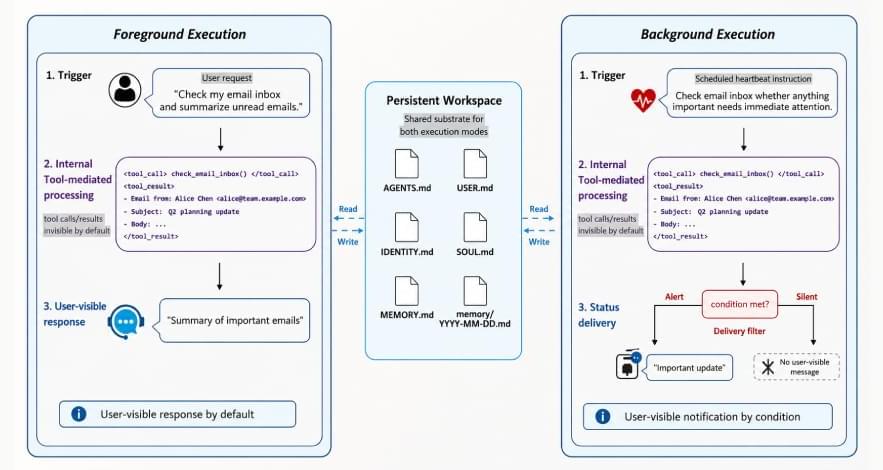
A single crafted email can plant a false, lasting memory in AI agents like OpenClaw, hide it from the user, and slip past the defenses built to catch

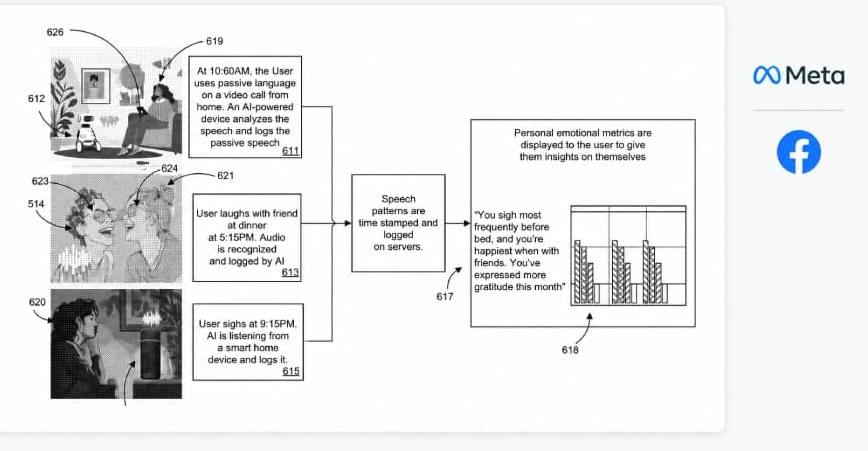
Meta has filed a patent application for an AI that listens to your voice throughout the day, works out how it thinks you are feeling from the way you sound, and keeps a timestamped log of every read.
Each read gets pinned to the moment it happened: the time, your location, what you were doing, even how you were using your phone. Some versions in the filing would listen all day; others would check in only at set times.
None of these ships in a product today, and Meta has not announced one; a filing like this stakes a claim on an idea long before anyone commits to building it.


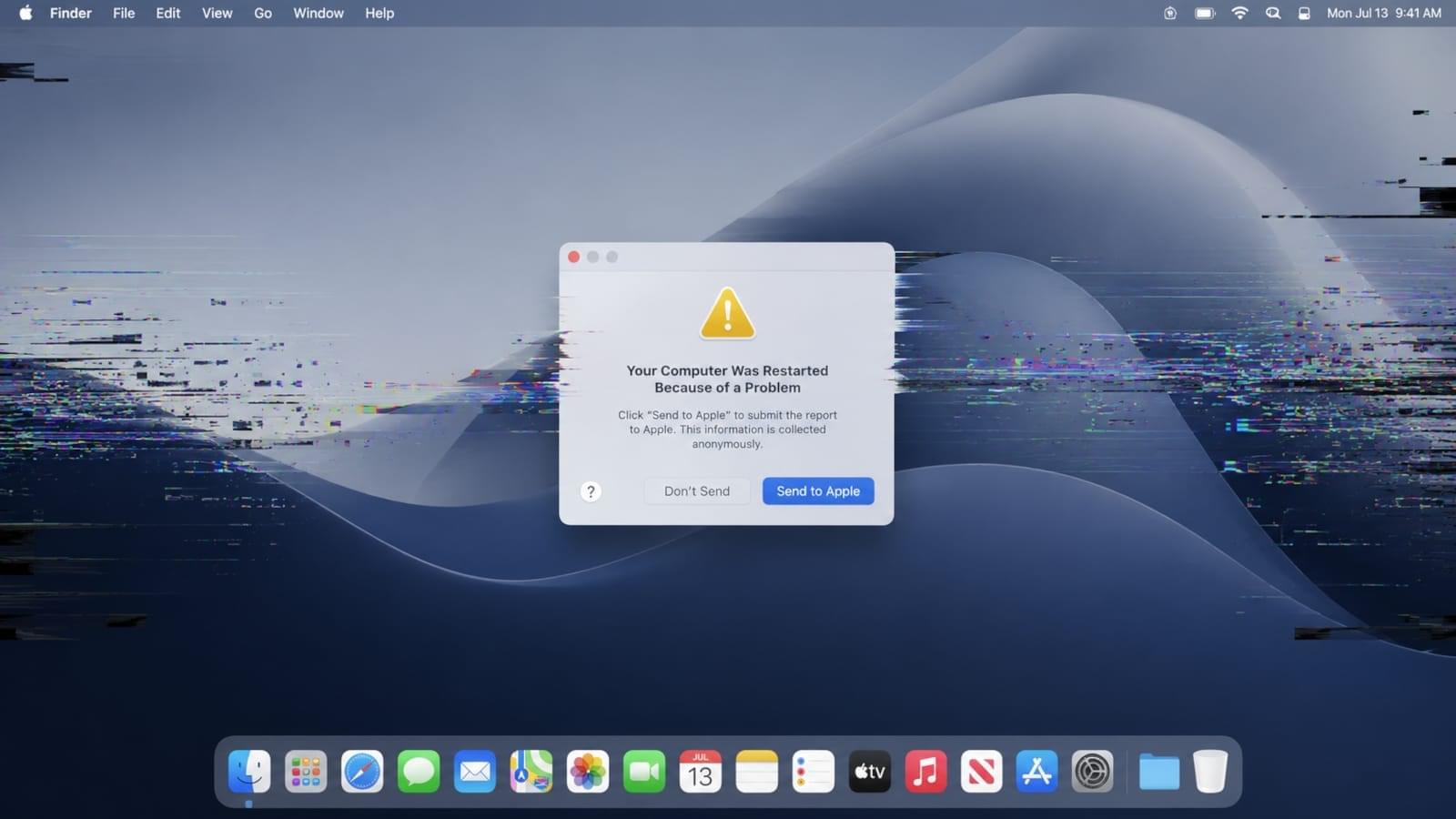
A new macOS information-stealing malware called CrashStealer pretends to be Apple’s crash-reporting tool to steal credentials, keychain data, and crypto wallets.
Malware researchers started tracking the malware in May, when it appeared to still be in development, but observed it being used in attacks in early July.
CrashStealer has a typical infostealer capability set that seems to focus on password managers and more than 80 crypto wallet extensions.
The U.S. Cybersecurity and Infrastructure Security Agency (CISA) is warning that attackers are exploiting vulnerabilities in the iCagenda and Balbooa Forms extensions for Joomla to achieve remote code execution through arbitrary file uploads.
The agency has categorized the flaws as a maximum priority, ordering federal agencies to apply available security updates and/or mitigations within three days, with the deadline set for today.
The first flaw, tracked as CVE-2026–48939, is an arbitrary file upload flaw impacting the iCagenda extension used for registering and scheduling events and creating calendars.

A new version of the RedHook Android malware abuses the Android Wireless Debugging (Wireless ADB) mechanism in a novel way to gain shell-level privileges without requiring a computer connection.
Researchers at cybersecurity company Group-IB analyzed the new release of the mobile malware and say that it significantly expands its capabilities compared to the previous variant documented in 2025.
At the same time, the malware retains its remote access trojan (RAT) features, allowing it to stream the screen, intercept keystrokes, automate UI interactions, and steal credentials.
Darwin spent his life trying to find the law that governs evolution. He knew it existed — he just never found it. Stephen Wolfram thinks he has. And it explains a lot more than evolution.
❍ Subscribe to The Well on YouTube: https://bit.ly/welcometothewell.
Stephen Wolfram is a mathematician, complexity theorist, and the mind behind Wolfram Alpha and Mathematica — someone who has spent his career finding the hidden rules underneath reality itself.
The same principle that explains why evolution never gets stuck, why you have free will despite living in a deterministic universe, and why the laws of physics are the way they are turns out to say something profound about what it means to be alive.
0:00 Intro.
1:08 Chapter 1: The limits of theoretical physics.
5:50 Chapter 2: A computational understanding of the world.
12:03 Rule 30: a simple program that outputs pure randomness.
15:48 Evolution and machine learning are the same trick.
18:19 What computational irreducibility means for science.
25:00 Chapter 3: A new kind of theory of everything.
31:36 The ruliad: every possible computation, in one object.
35:03 The second law, explained by the limits of our minds.
38:38 Why the universe exists isn’t the real question — why we do is.
42:53 Chapter 4: If the universe is a program, what is the meaning of life?
44:59 Free will as a side effect of computational irreducibility.
48:06 AI as a civilization we’re learning to coexist with.