Toggle light / dark theme

Get the latest international news and world events from around the world.

Log in for authorized contributors

Could electronic beams in the ionosphere remove space junk?

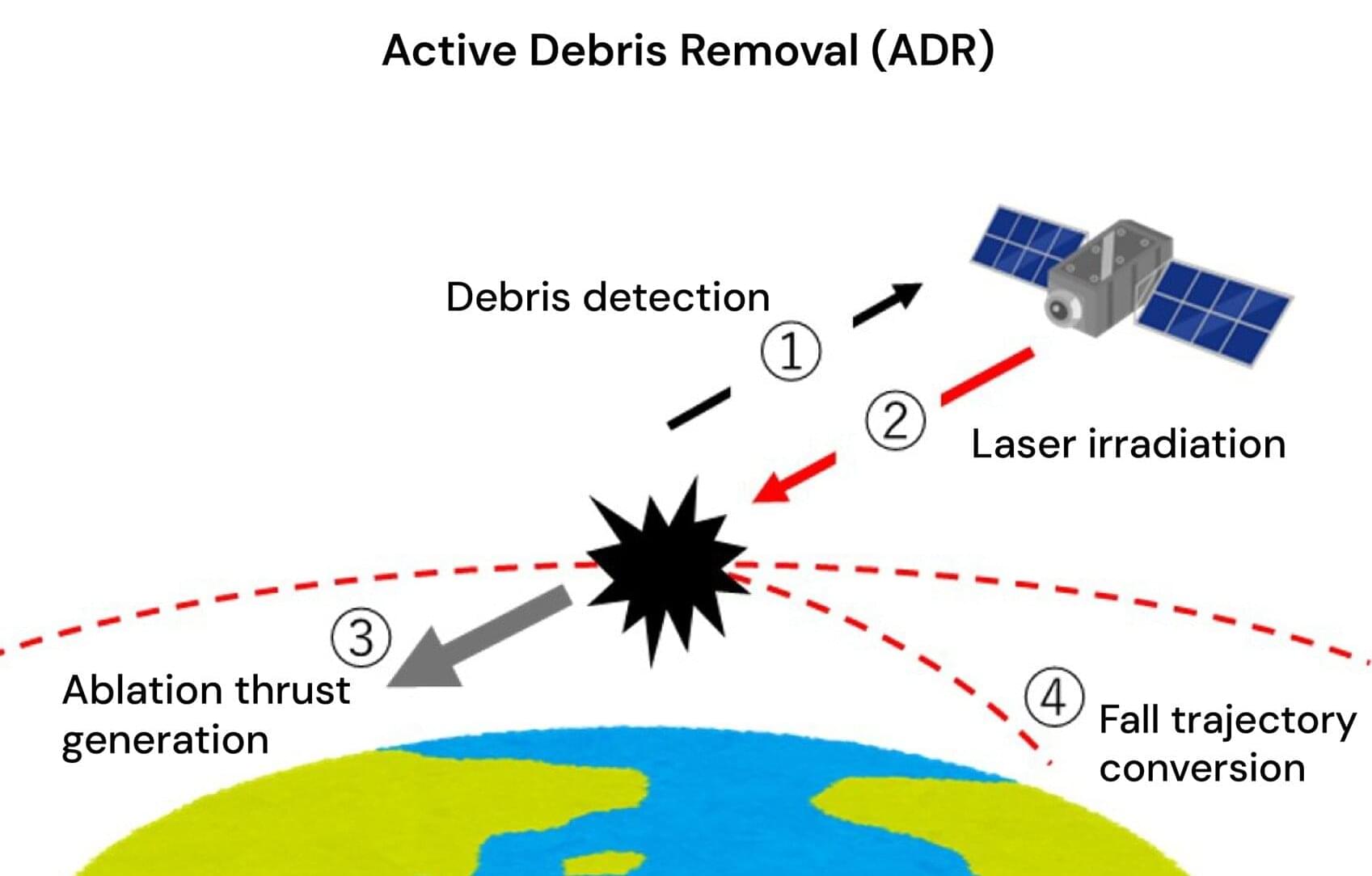
A possible alternative to active debris removal (ADR) by laser is ablative propulsion by a remotely transmitted electron beam (e-beam). The e-beam ablation has been widely used in industries, and it might provide higher overall energy efficiency of an ADR system and a higher momentum-coupling coefficient than laser ablation. However, transmitting an e-beam efficiently through the ionosphere plasma over a long distance (10 m–100 km) and focusing it to enhance its intensity above the ablation threshold of debris materials are new technical challenges that require novel methods of external actions to support the beam transmission.

Therefore, Osaka Metropolitan University researchers conducted a preliminary study of the relevant challenges, divergence, and instabilities of an e-beam in an ionospheric atmosphere, and identified them quantitatively through numerical simulations. Particle-in-cell simulations were performed systematically to clarify the divergence and the instability of an e-beam in an ionospheric plasma.

The major phenomena, divergence and instability, depended on the densities of the e-beam and the atmosphere. The e-beam density was set slightly different from the density of ionospheric plasma in the range from 1010 to 1012 m−3. The e-beam velocity was changed from 106 to 108 m/s, in a nonrelativistic range.
Seeing the whole from a part: Revealing hidden turbulent structures from limited observations and equations

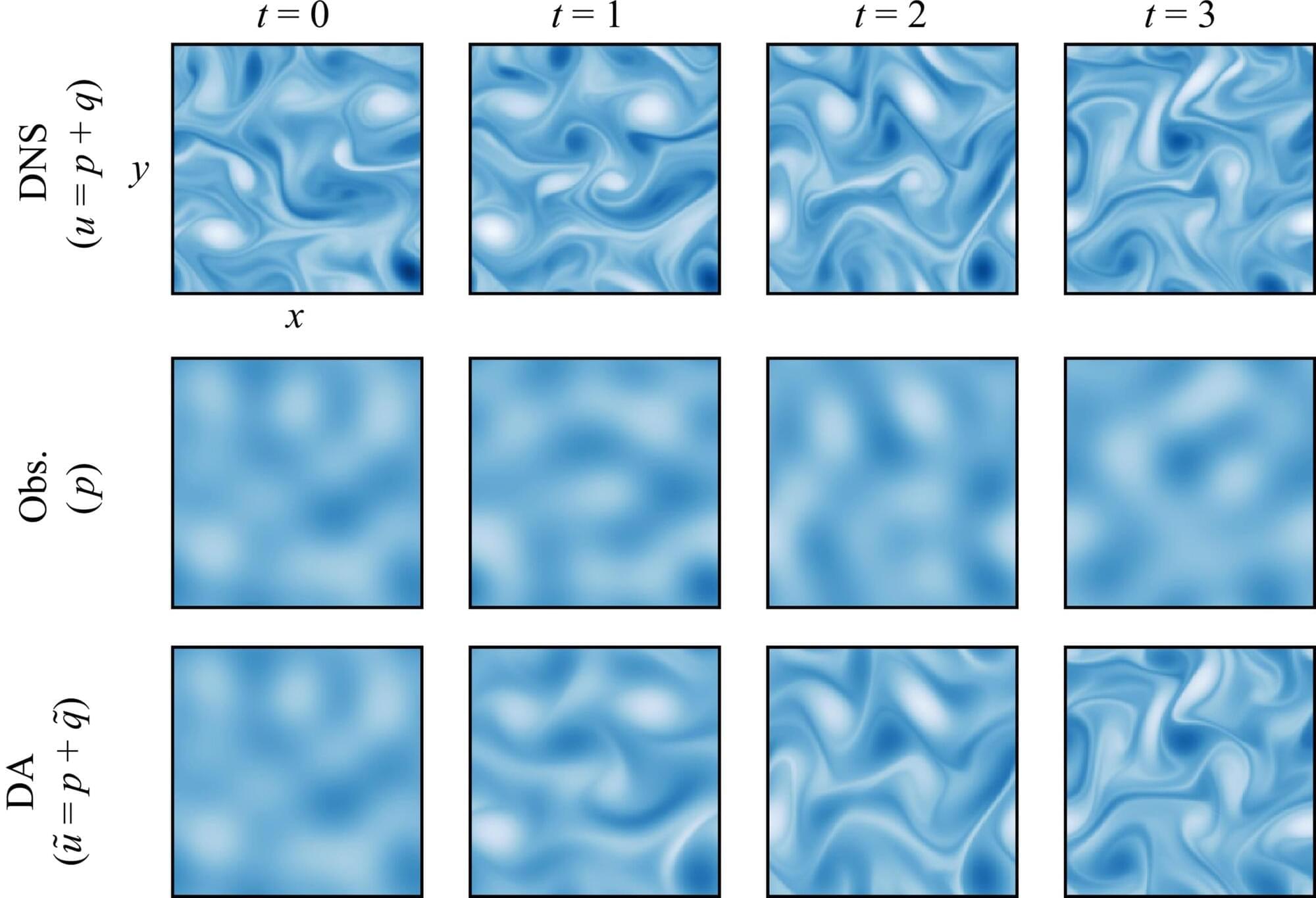
The irregular, swirling motion of fluids we call turbulence can be found everywhere, from stirring in a teacup to currents in the planetary atmosphere. This phenomenon is governed by the Navier-Stokes equations—a set of mathematical equations that describe how fluids move.

Despite being known for nearly two centuries, these equations still pose major challenges when it comes to making predictions. Turbulent flows are inherently chaotic, and tiny uncertainties can grow quickly over time.

In real-world situations, scientists can only observe part of a turbulent flow, usually its largest and slowest moving features. Thus, a long-standing question in fluid physics has been whether these partial observations are enough to reconstruct the full motion of the fluid.

Physicists clarify key mechanism behind energy release in molybdenum-93

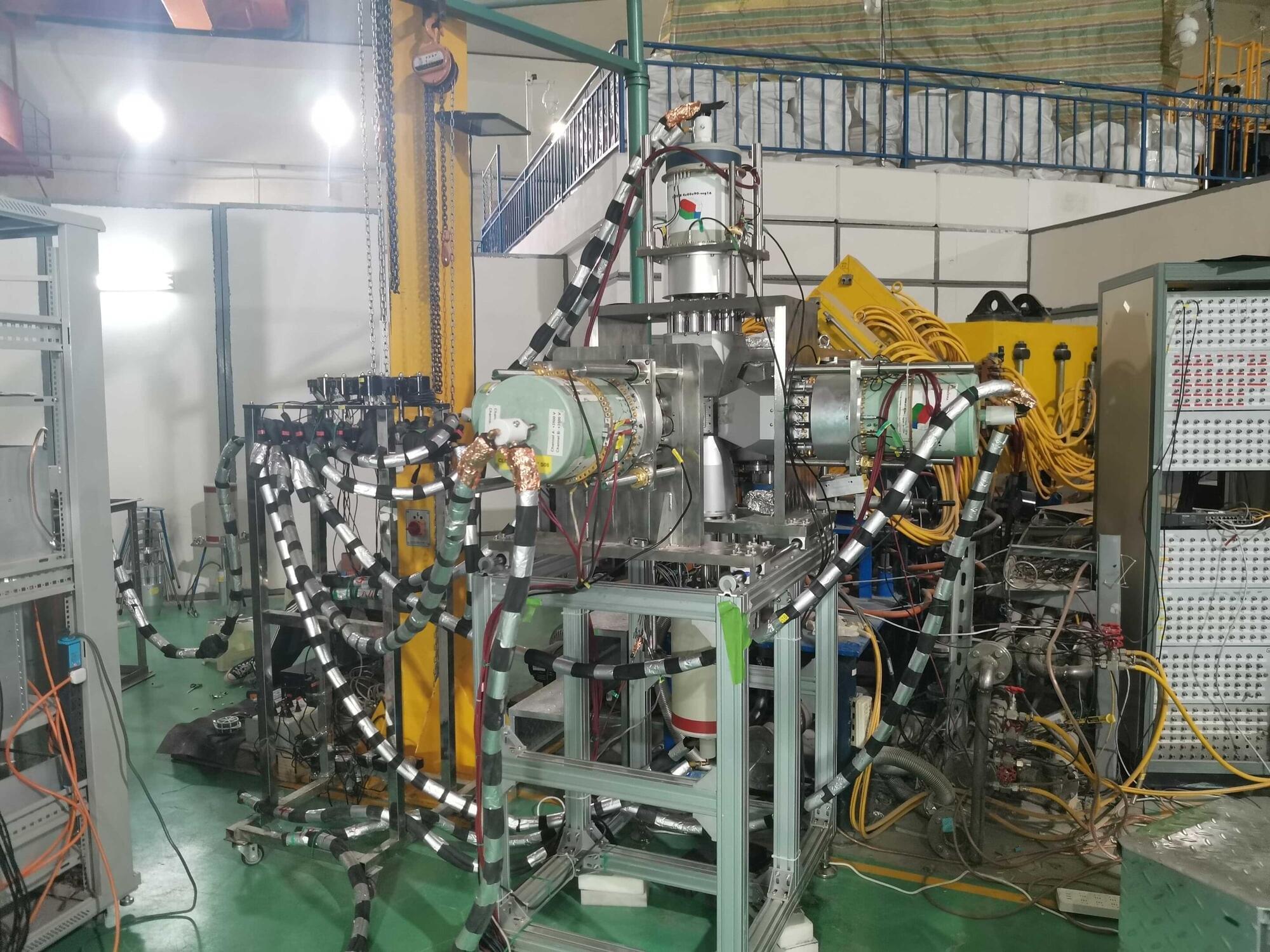
A team of physicists from the Institute of Modern Physics (IMP) of the Chinese Academy of Sciences, together with collaborators, has identified the dominant physical mechanism responsible for energy release in the nuclear isomer molybdenum-93m (Mo-93m). Using high-precision experiments, the researchers showed that inelastic nuclear scattering—rather than the long-hypothesized nuclear excitation by electron capture (NEEC)—is the primary driver of isomer depletion under their experimental conditions.

The findings, published in Physical Review Letters on February 6, provide crucial experimental evidence concerning a long-debated process and shed new light on the controlled release of nuclear energy.

Quantum dots reveal entropy production, a key measure of nanoscale energy dissipation

In order to build the computers and devices of tomorrow, we have to understand how they use energy today. That’s harder than it sounds. Memory storage, information processing, and energy use in these technologies involve constant energy flow—systems never settle into thermodynamic balance. To complicate things further, one of the most precise ways to study these processes starts at the smallest scale: the quantum domain.

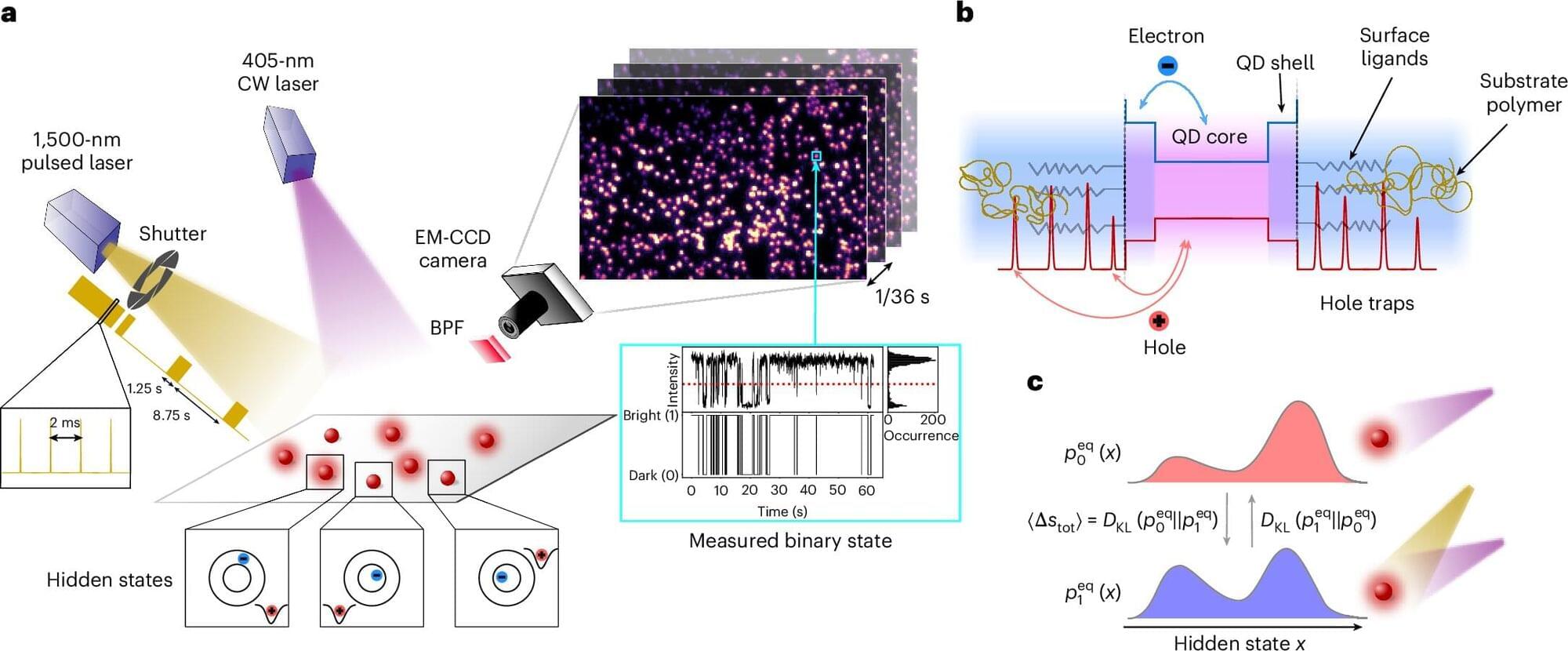
New Stanford research published in Nature Physics combines theory, experimentation, and machine learning to quantify energy costs during a non-equilibrium process with ultrahigh sensitivity. Researchers used extremely small nanocrystals called quantum dots, which have unique light-emitting properties that arise from quantum effects at the nanoscale.

They measured the entropy production of quantum dots—a quantity that describes how reversible a microscopic process is, and encodes information about memory, information loss, and energy costs. Such measurements can determine the ultimate speed limits for a device or how efficient it can be.

How fast can a microlaser switch ‘modes?’ A simple rule reveals a power-law time scaling

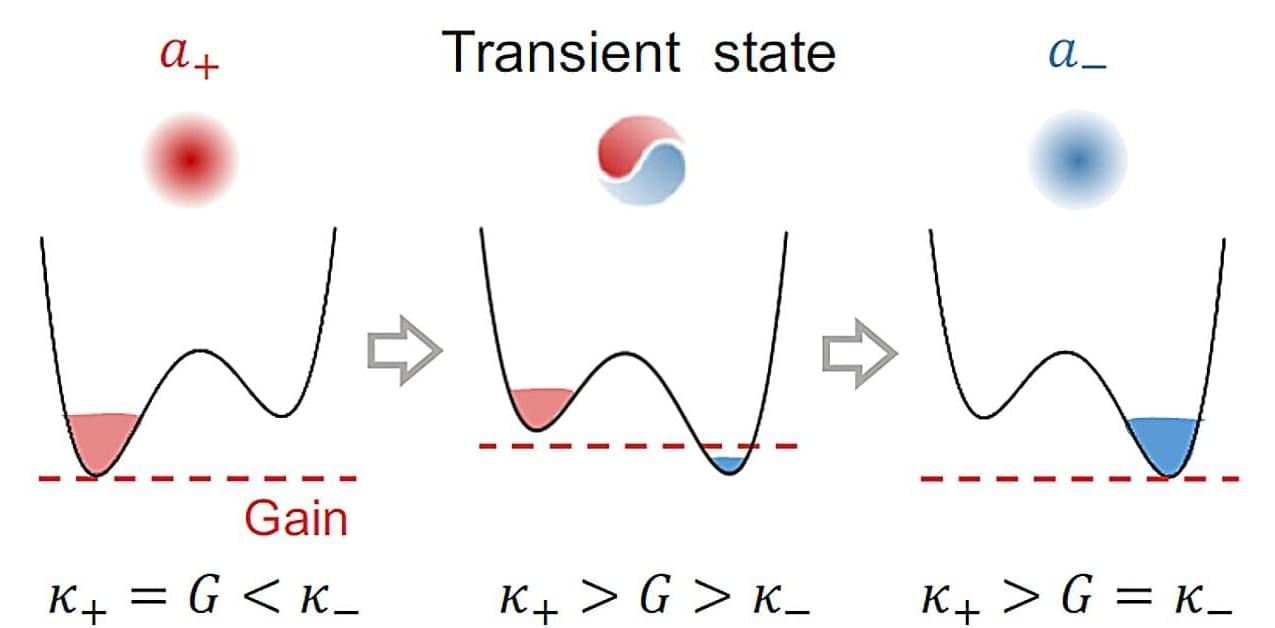
Modern technologies increasingly rely on light sources that can be reconfigured on demand. Think of microlasers that can quickly switch between different operating states—much like a car shifting gears—so that an optical chip can route signals, perform computations, or adapt to changing conditions in real time. The microlaser switching is not a smooth, leisurely process, but can be sudden and fast. Generally, nearly identical “candidate” lasing states compete with each other in a microcavity, and the laser may abruptly jump from one state to another when external conditions are tuned.

This raises a practical question: How fast can such a switch be, in principle? For physicists, it raises a deeper one: Does the switching follow a universal rule, like other phase transitions in nature?

A team at Peking University has now provided a clear picture of an ultrahigh-quality microcavity laser—the time the laser needs to complete a state switch follows a remarkably simple power-law rule. When the control knob is swept faster, the switch becomes faster—but not arbitrarily so. Instead, the switching time decreases with the square root of the sweep speed, corresponding to a robust exponent close to half. This result effectively sets a speed limit for how quickly such microlasers can “change gears.” The findings are published in Physical Review Letters.

Stable high-energy pulses achieved with low-stress electro-optic switch

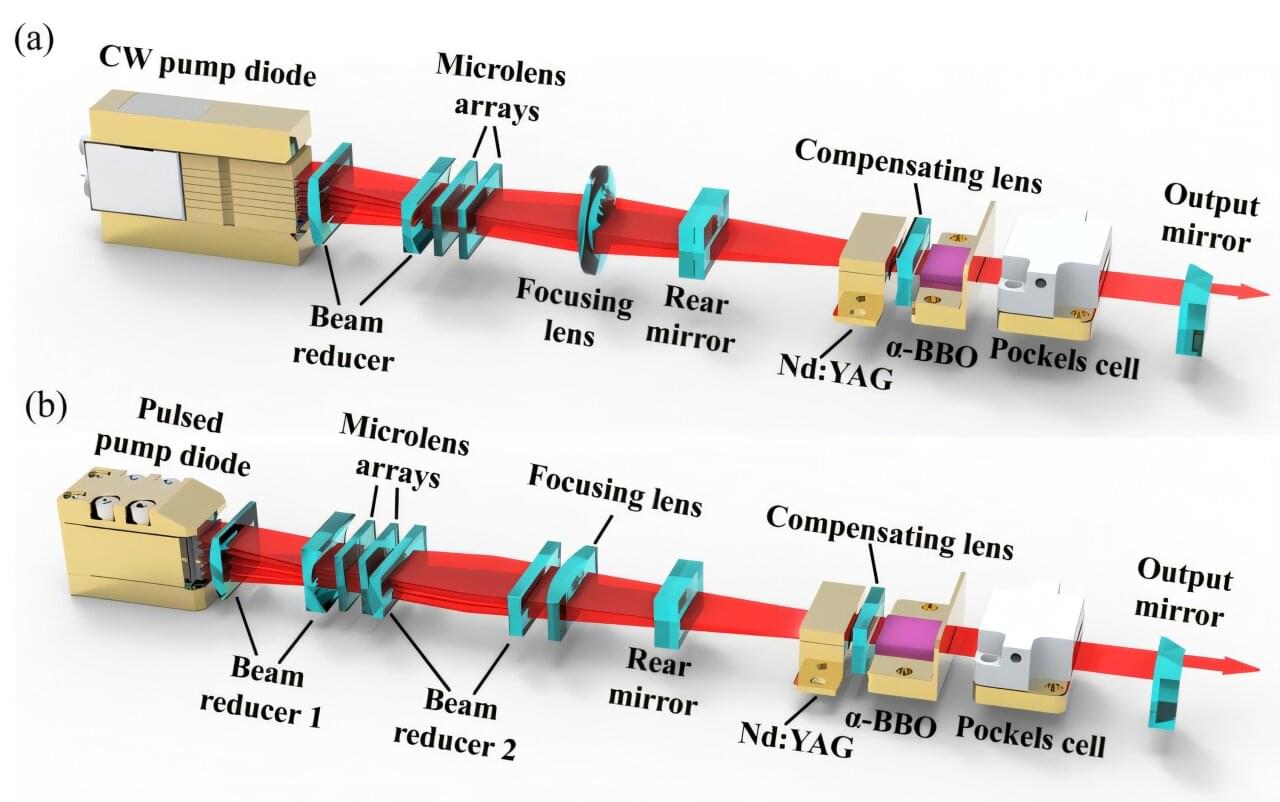
A research team led by Prof. Zhang Tianshu from the Hefei Institutes of Physical Science of the Chinese Academy of Sciences has developed a low-stress electro-optic switch based on large-aperture β-barium borate (BBO) slab crystals and integrated it into an Nd:YAG hybrid-cavity Innoslab laser system. Their study, published in Optics Express on January 13, addresses long-standing challenges in high-energy laser systems, particularly those related to switching modulation consistency and operational stability.

Topological antenna could pave the way for 6G networks

Using ideas borrowed from topological photonics, researchers in Singapore, France and the US have designed a compact antenna capable of handling information-rich terahertz (THz) signals. Reporting their results in Nature Photonics, the team, led by Ranjan Singh at the University of Notre Dame, say that with further refinements, the design could help underpin future sixth-generation (6G) wireless networks, allowing data to be shared at unprecedented speeds.

In the not-too-distant future, 6G networks are expected to enable data rates of around one terabit per second—the same as transferring roughly half the storage of a mid-range smartphone in a single second. Achieving such speeds will require wireless systems to operate at terahertz frequencies, far higher than those used by today’s 5G networks.

However, before THz frequencies can be used reliably, major improvements are needed in the antennas that transmit and receive these signals.

Ordered ‘supercrystal’ could make lasers faster, smaller and more efficient

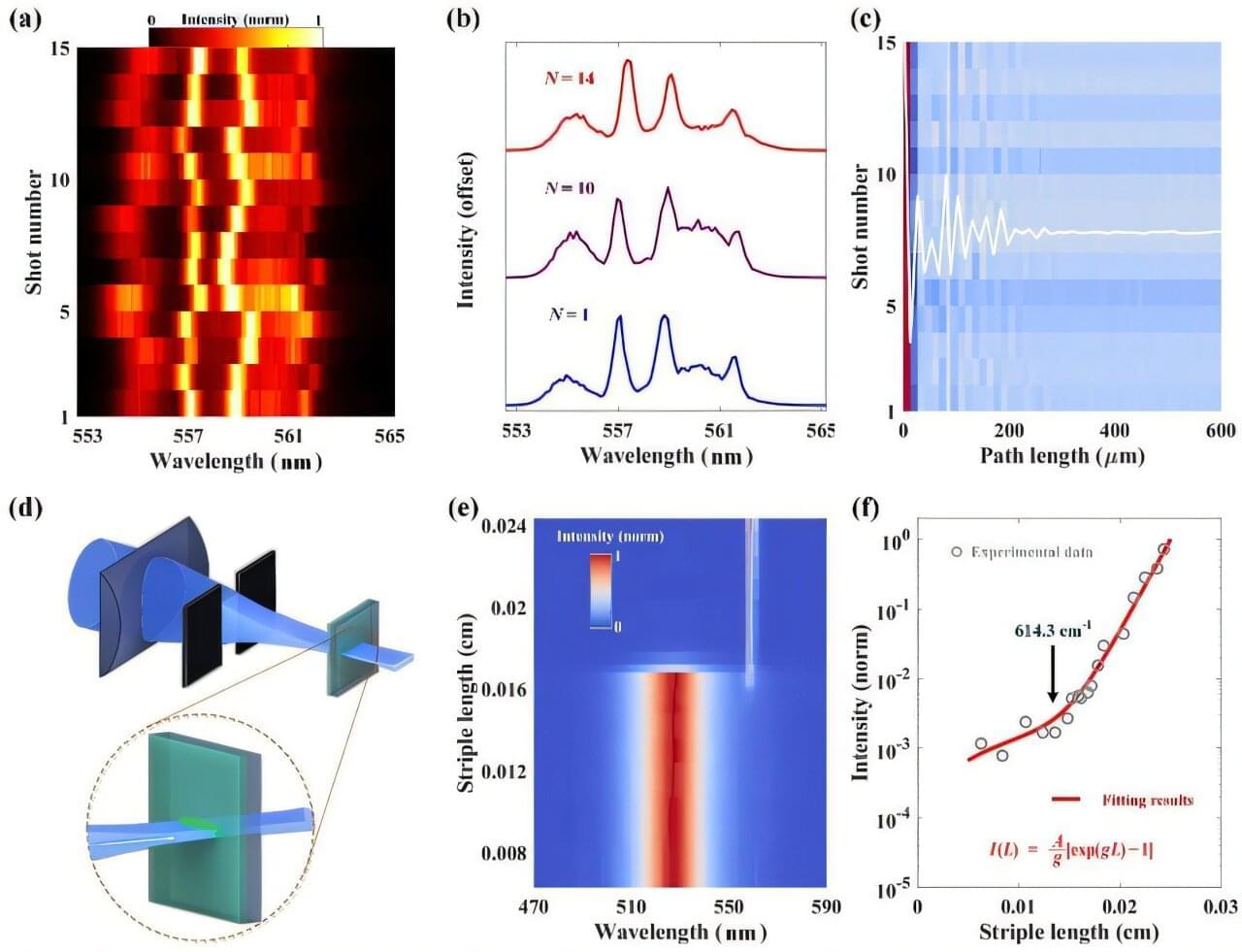
An advance from Monash University could pave the way for faster, smaller, and more energy-efficient lasers and other light-based technologies. Engineers have developed a new type of perovskite material arranged into an ordered “supercrystal.” In this structure, tiny packets of energy called excitons work together rather than individually, allowing the material to amplify light far more efficiently. The findings, published in Laser & Photonics Reviews, could have applications in communications, sensors, and computing, improving the performance of devices that rely on light, such as sensors in autonomous vehicles, medical imaging, or electronics.

Corresponding author Professor Jacek Jasieniak at Monash Materials Science and Engineering highlighted the potential for faster, more energy-efficient optical devices. “What’s exciting here is that we’re not changing the material itself, but how it’s organized. By assembling nanocrystals into an ordered supercrystal, the excitations created by light can cooperate rather than compete, which allows light to be amplified much more efficiently,” Professor Jasieniak said.

Dr. Manoj Sharma, who led the experimental work at Monash, said their approach revealed new possibilities in nanocrystal assemblies. “By assembling nanocrystals into a highly ordered supercrystal, we show that optical gain is no longer limited by single-particle biexcitons, which are inefficient and prone to energy losses, but instead arises from collective excitonic interactions across the whole structure,” Dr. Sharma said.

A Simple Chemical Tweak Unlocks One of Quantum Computing’s Holy Grails

Even supercomputers can stall out on problems where nature refuses to play by everyday rules. Predicting how complex molecules behave or testing the strength of modern encryption can demand calculations that grow too quickly for classical hardware to keep up. Quantum computers are designed to tackle that kind of complexity, but only if engineers can build systems that run with extremely low error rates.

One of the most promising routes to that reliability involves a rare class of materials called topological superconductors. In plain terms, these are superconductors that also have built-in “protected” quantum behavior, which researchers hope could help shield delicate quantum information from noise. The catch is that making materials with these properties is famously difficult.

/* */