The findings from this study highlight the importance of conducting comprehensive and regular assessments of sleep in both children and adults with AHC.


Researchers from Kyushu University discovered a previously unrecognized synaptic “hotspot” that forms during adolescence, challenging the long-held view that adolescent brain development was dominated by synaptic pruning. This hotspot fails to form in mice carrying a schizophrenia-associated gene, pointing to a potential link between adolescent synaptic formation and psychiatric disorders, including schizophrenia.
Adolescence marks an important transition not just socially and physically, but neurologically. During this period, higher cognitive functions such as planning, problem-solving, and decision-making gradually mature. Yet, the underlying mechanisms of neural circuit development remain poorly understood.
Key to this process are synapses—the functional connections between neurons allow information to flow through the brain. Previously, it has long been hypothesized that synapse numbers increase during childhood and then decrease during adolescence. It has also been proposed that excessive “synaptic pruning,” a process that refines neural circuits by eliminating unused or weak connections, may lead to neuropsychiatric disorders. One example is schizophrenia, a condition characterized by hallucinations, delusions, or disorganized thinking.
The idea never died, progress is still being made.
Nanotechnology was once imagined as the next great technological revolution—atom-by-atom manufacturing, machines as small as cells, and materials we can only dream of today. Instead, it stalled. While AI, robotics, and nuclear surged ahead, nanotech faded into the background, reduced to buzzwords and sci-fi aesthetics.
But the idea never died.
We can manipulate matter at the atomic scale. We can design perfect materials. We can build molecular machines. What’s been missing isn’t physics—it’s ambition, investment, and the will to push beyond today’s tools.
In this interview with futurist J. Storrs Hall, we explore what nanotechnology really is, why it drifted off course, and why its future may finally be on the horizon. If AI was a “blue-sky fantasy” until suddenly it wasn’t, what happens when someone decides nanotech deserves the same surge of talent, money, and imagination?

Cortical chandelier cells (ChCs) are one of the most distinct and uniform IN subtypes (Howard et al., 2005; Woodruff et al., 2010). ChC axons exhibit a characteristic geometry with many prominent vertical branches, whose terminals are specialized into strings of synaptic varicosities (cartridges) directly apposed to AISs of PNs (Jones, 1975; Szentagothai, 1975; Somogyi, 1977). Because the AIS is the site of action potential initiation, ChCs can have decisive control over spike generation in a PN ensemble, thereby regulating synchrony and oscillation of network activity (Klausberger et al., 2003; Szabadics et al., 2006; Glickfeld et al., 2009). The striking stereotypy and specificity of this axonal and synaptic organization make ChCs an ideal system to study basic cellular events of IN wiring, such as axonal branching and subcellular synapse targeting. Another advantage is that individual AISs, which can be labeled with AIS-specific markers such as anti-AnkyrinG (AnkG) antibodies, can be unambiguously identified because they are spatially separable from neighboring AISs (Jenkins and Bennett, 2001; Taniguchi et al., 2013).
Study:
Basically, the study is carried out carefully and provides novel insights in the development of neocortical chandelier cells. While the manuscript is well written; both reviewers suggest that authors get help with linguistic editing.
The reviewers also agree that the interpretation that the non-synaptic varicosities may represent early stage branch points is somewhat surprising, considering their abundance at an age at which very little branching occurs. The reviewers ask the authors to expand their discussion considering the following arguments/ideas.
In Fig. 3E, it is shown that on P 28, i.e. close to adulthood and after pruning and remodeling, there are still around 40% off-target varicosities, which, if the single example in Fig. 5B is true and representative, would mean that 40% of all varicosities are non-functional! While it is possible that such varicosities could be the origins of branch points to remodel the axon, it is hard to imagine that ChC remodel 40% of their axon at any given time in adulthood. Please illustrate in a revised manuscript better resolved and uncolored original EM data to really show that these large varicosities do not form any synapses. Furthermore, it would be somewhat surprising that their numbers do not decrease after p21 when most axonal growth is expected to end. What about the possibility that these varicosities are in fact very early stage synaptic boutons that fail to mature/stabilize because the appropriate postsynaptic target is missing? Considering that inhibitory boutons (formed by other interneuron subsets) continue to be formed and lost into adulthood seem to make this option also quite likely.
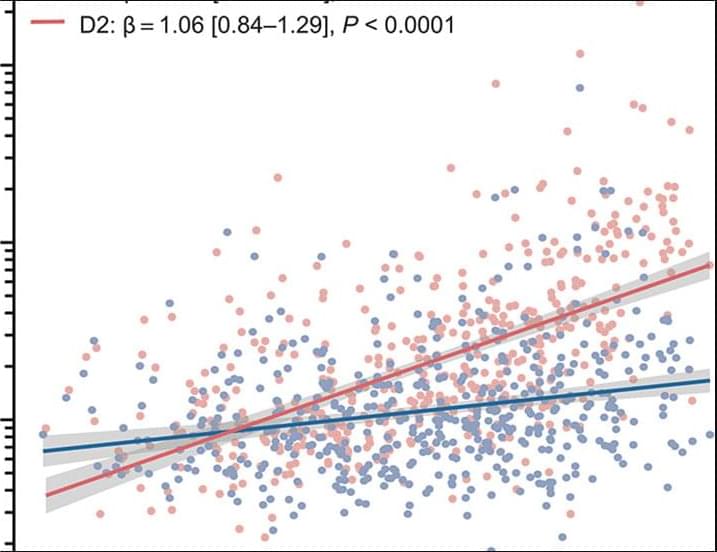
Monitoring markers of tau protein in the blood can predict functional outcomes in patients recovering from ischemic stroke better than MRI, according to a comprehensive study of more than 1,200 patients in ScienceTranslationalMedicine.
📄
Sci. Transl. Med. 18, eadz1280 (2026). DOI:10.1126/scitranslmed.adz1280
Select the format you want to export the citation of this publication.

Controlling myelin sheath geometry!
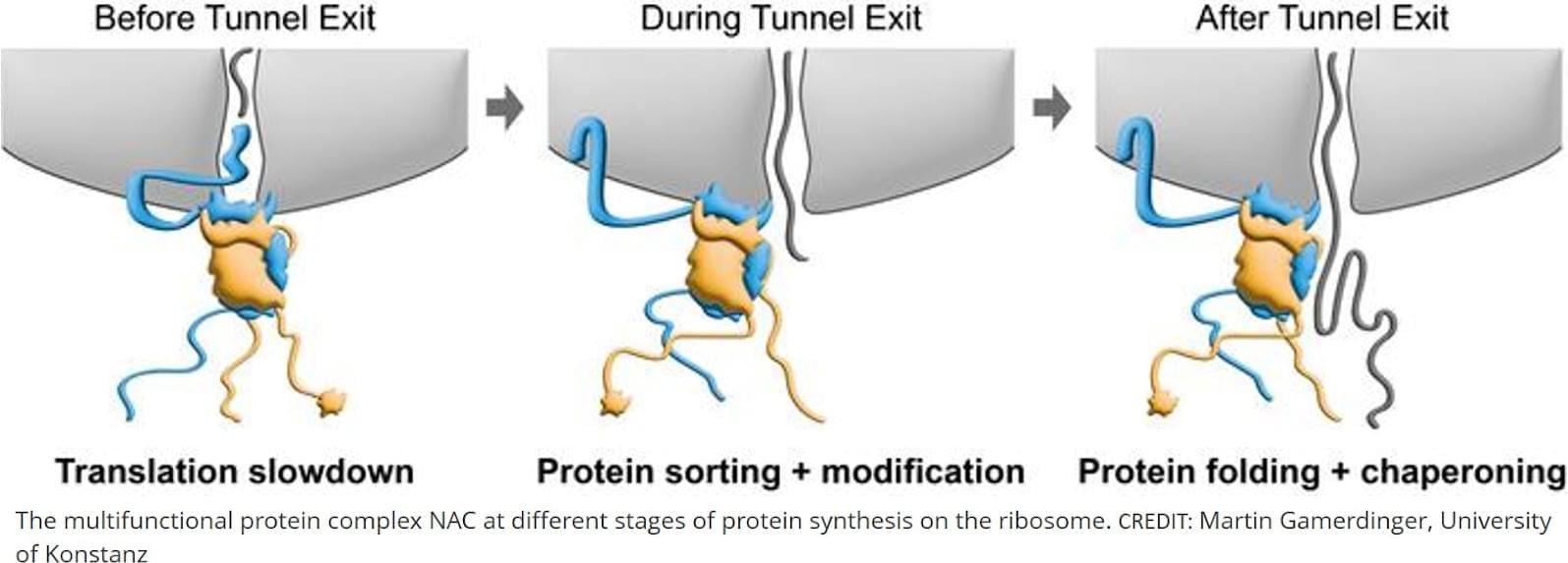
Mechanics of how oligodendrocytes, the myelinating cells of the brain, insulates the axons for proper signal transduction across the neurons is not well understood.
The researchers in this study show that oligodendrocytes use mechanical cues to measure axon size.
Loss of TMEM63A causes mis-sizing of myelin sheaths and hypomyelination linked to transient infantile leukodystrophy. https://sciencemission.com/TMEM63A-regulates-myelin-sheath
Dereddi, Djannatian, and colleagues show that oligodendrocytes use mechanical cues to measure axon size. The stretch-activated channel TMEM63A converts membrane tension into calcium signals, which calibrate myelin sheath growth via MYO5A-dependent Mbp mRNA transport. Loss of TMEM63A causes mis-sizing of myelin sheaths and hypomyelination linked to transient infantile leukodystrophy.

Earth’s oceans reached their highest heat levels on record in 2025, absorbing vast amounts of excess energy from the atmosphere. This steady buildup has accelerated since the 1990s and is now driving stronger storms, heavier rainfall, and rising sea levels. While surface temperatures fluctuate year to year, the ocean’s long-term warming trend shows no sign of slowing.
SpaceX is well-positioned to dominate the future of space AI due to its innovative technologies, scalable satellite production, and strategic partnerships, which will enable it to efficiently deploy and operate a massive network of satellites with advanced computing capabilities ## ## Questions to inspire discussion.
Launch Economics & Infrastructure.
🚀 Q: Why is Starship essential for space AI data centers? A: Starship enables 100-1000x more satellites than Falcon 9, making orbital AI economically viable through massive scaling and lower launch costs, while Falcon 9 remains too expensive for commercial viability at scale.
🛰️ Q: What is SpaceX’s deployment plan for AI satellites? A: SpaceX plans Starlink version 3 satellites with 100 Nvidia chips each, deploying 5,000 satellites via 100 Starship launches at 50 satellites per flight to create a gigawatt-scale AI constellation by early 2030s.
📈 Q: What launch cadence gives SpaceX its advantage? A: SpaceX plans 10,000 annual launches and produces satellites at 10-100x the level of competitors, creating a monopoly on launch and manufacturing that positions them as the gatekeeper to space AI success.
Energy & Power Systems.