This video breaks down exactly how China went from launching a national smart hospital initiative back in 2014 to deploying AI inside over three hundred hospitals by 2025, and eventually opening the world’s first fully integrated AI hospital in March 2026. You’ll see how AI triage systems, robotic pharmacies, and real-time diagnostic assistants are changing what a hospital visit actually looks like, and how this compares to healthcare systems elsewhere that are still struggling with weeks-long appointment waits and fax machines. Whether you find this exciting or concerning, this is a story about where healthcare technology is headed next, and it’s already happening.
Get the latest international news and world events from around the world.
Autonomous microdrone achieves first airtoair insect kill on the way ‘towards completely eradicating mosquitoes’ uses car parking sensors, can eliminate insects at up to 26 feet
A micro-drone designed to locate and eradicate mosquitoes has passed an important milestone. Tornyol Systems shared a video where the eponymous autonomous drone chalked up its first live air-to-air kill. For some reason (perhaps demonstration visibility), the 40g (1.4 ounce) drone’s first confirmed kill on video features a moth. Tornyol boldly claims that the demo shows a significant stride has been made “towards completely eradicating mosquitoes.”
Tornyol Systems co-founder Alex Toussaint shared the above Tweet, congratulating the engineering team that has worked alongside him on the project. On the company website, there is a mosquito-hostile manifesto laid out, which provides insight into the company’s primary drone development goal.

George Dvorsky: Specialization is for Insects
Fourteen years ago, I sat down with George Dvorsky for almost 1 hour and 40 minutes. We argued about everything: transhumanism and the paleo diet, animal uplift and non-human person rights, mass extinction, SETI, and whether alien intelligence would be friendly or hostile.
One quote from that conversation has stayed with me ever since. Robert A. Heinlein:
“A human being should be able to change a diaper, plan an invasion, butcher a hog, conn a ship, design a building, write a sonnet, balance accounts, build a wall, set a bone, comfort the dying, take orders, give orders, cooperate, act alone, solve equations, analyze a new problem, pitch manure, program a computer, cook a tasty meal, fight efficiently, die gallantly. Specialization is for insects.”
In 2012, that sounded like a provocation. In 2026, in the age of AI, it sounds like a survival strategy. When machines out-specialize us at everything, what is left for humans? Perhaps precisely this: to be generalists. To be whole.
Was George right then? Is Heinlein right now?
Watch the full interview and judge for yourself: [ https://snglrty.co/4pU2ZtQ](https://snglrty.co/4pU2ZtQ)
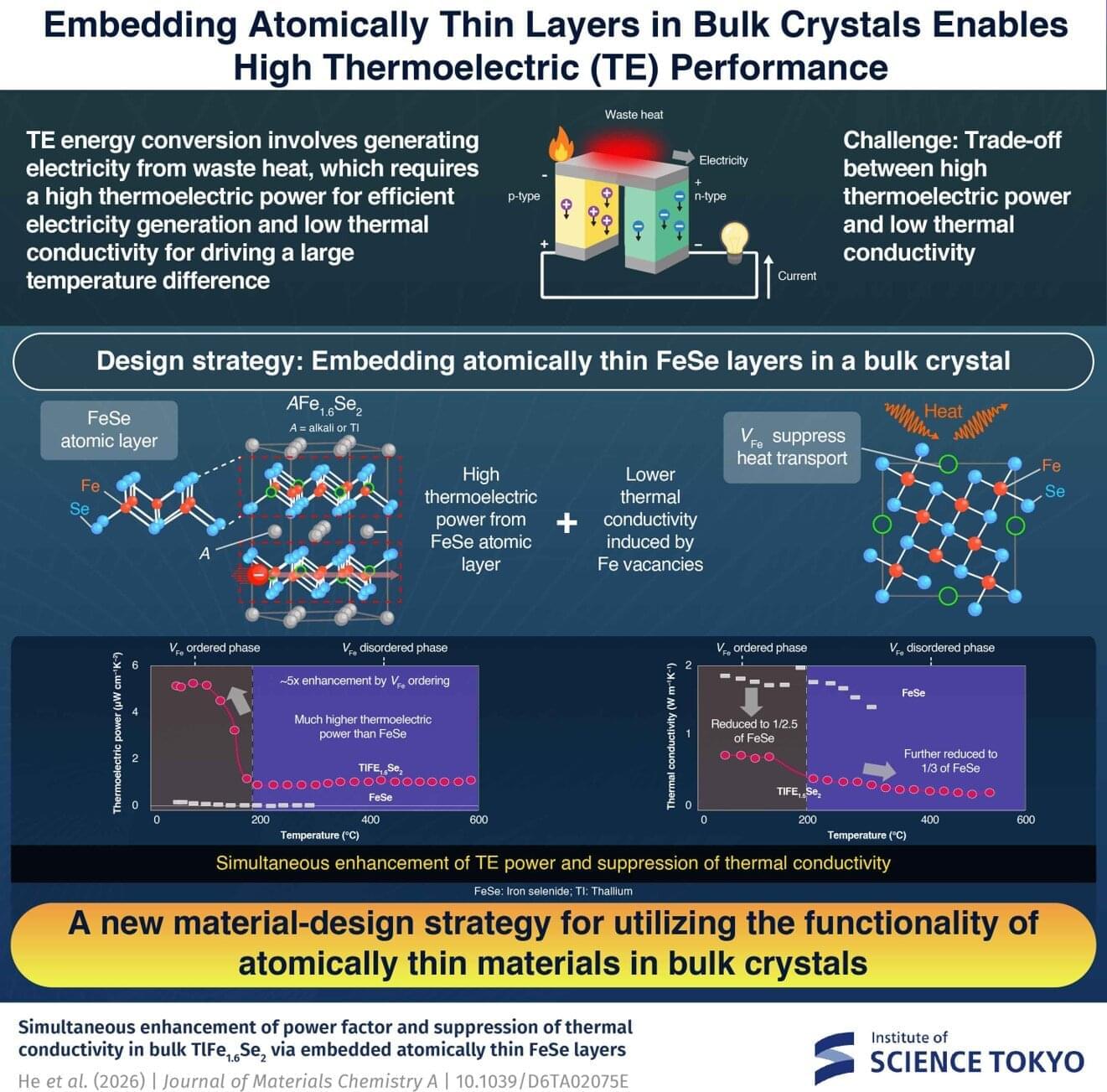
Layered crystal embeds atom-thin iron selenide can improve waste heat conversion
Developing thermoelectric materials that efficiently convert waste heat into electricity remains challenging because high electrical performance and low thermal conductivity are difficult to achieve simultaneously. Researchers at Science Tokyo developed a layered crystal, TlFe1.6 Se2, that embeds atomically thin iron selenide (FeSe) layers within a bulk material. The crystal combines a high thermoelectric power factor with exceptionally low thermal conductivity, demonstrating a promising strategy for designing next-generation materials for waste heat energy recovery.
Thermoelectric technology, which converts waste heat from factories, automobiles and power plants into electricity, is expected to play an important role in building a carbon-neutral society. In thermoelectric power generation, electricity is produced using a temperature difference across a material.
To achieve high power generation performance, materials must efficiently convert heat into electrical power while maintaining the temperature difference that drives power generation. However, these two requirements are generally difficult to satisfy simultaneously. Establishing new material design strategies that combine high thermoelectric performance with low thermal conductivity has therefore been a major challenge.

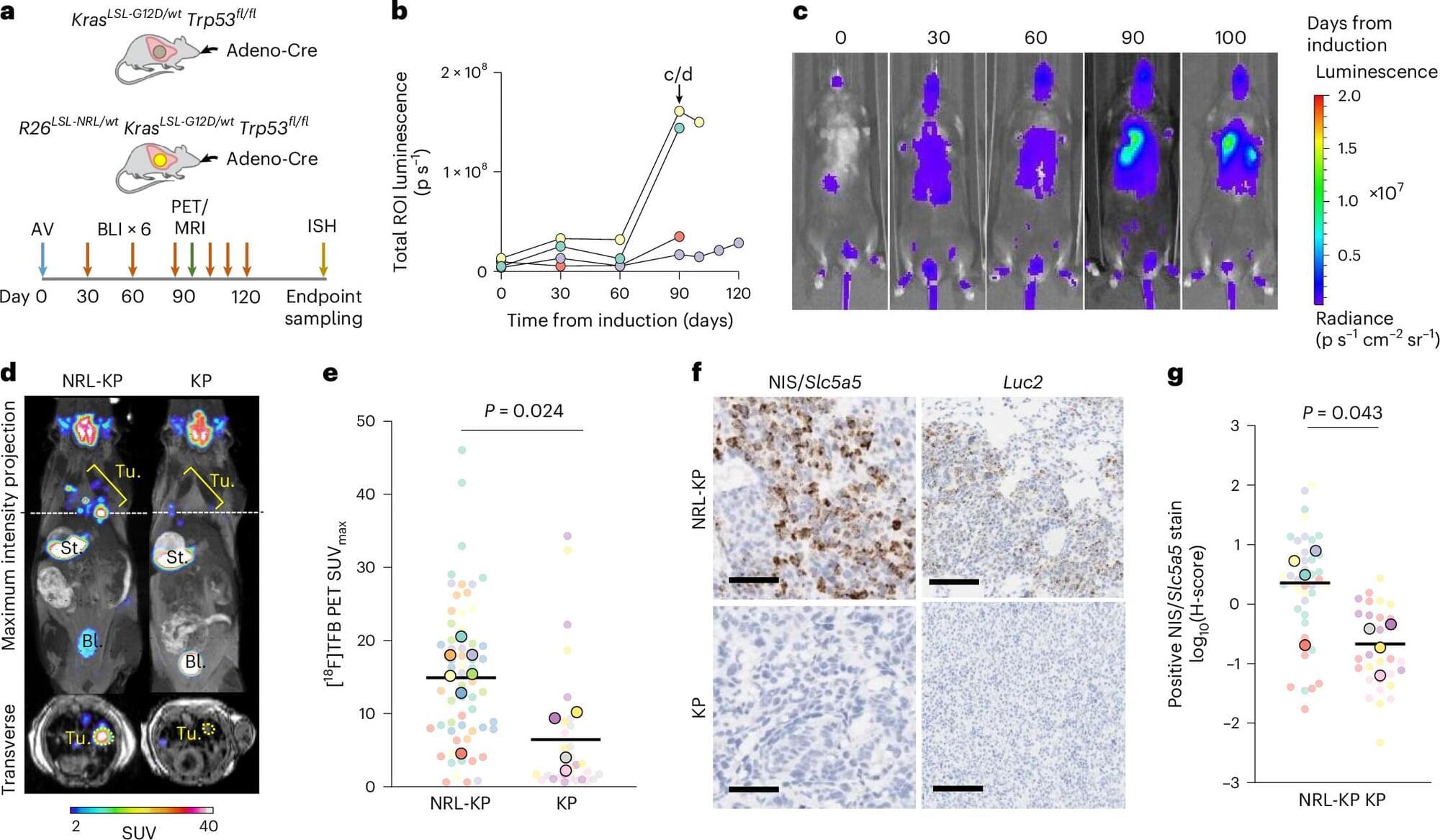
New imaging method tracks cancer from whole body to individual cells
One of the biggest challenges in cancer research has been linking the “big picture” seen in medical scans with the microscopic biology that drives tumor growth and dictates how patients respond to treatment. Now, by combining multiple imaging techniques (PET scans, bioluminescence and fluorescence), scientists can detect tumors across the whole body simultaneously, pinpoint key targets and then examine those tumors in detail, including the surrounding cells and tissue.
Study lead Professor David Lewis of the Cancer Research UK Scotland Institute and University of Glasgow said, This exciting technology allows us to build a clearer map of how cancer behaves at both a holistic and microscopic level.
It allows researchers to follow tumors in the body, identify the lesions that matter and then zoom in to study those cancer cells and their environment, giving us new information about cancer that we can take forward into better and more precise treatments.
Physical activity in infancy is associated with body composition at age three
The prevalence of obesity in the pediatric population is increasing, driven by a multifactorial etiology that includes genetic predisposition as well as both prenatal and postnatal influences. We aimed to explore associations between child physical activity (PA) at ages one and three years and body composition at age three. Furthermore, we investigated associations between maternal PA during pregnancy and child body composition at age three.
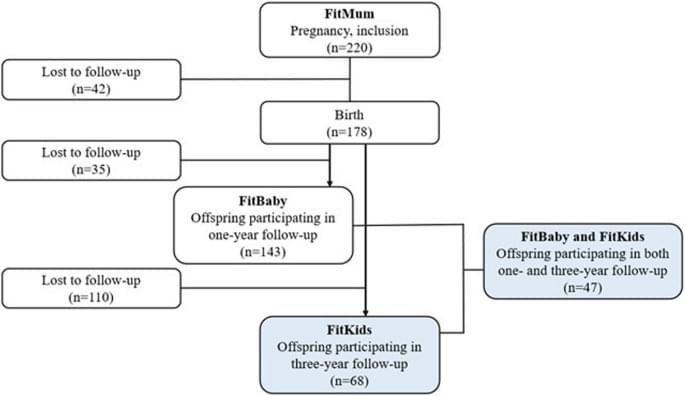
Mother-child pairs (n = 68) from a pregnancy PA intervention study were included. Children’s PA was assessed at one-and three-year follow-ups using 7-day accelerometry and categorized into 24-hour PA and daytime PA (6 a.m. – 8 p.m.). Child body composition was measured by Dual-energy X-ray absorptiometry and expressed as fat-free mass (FFM) and body fat percentage (BF%). Maternal moderate-to-vigorous intensity PA (MVPA) was measured using a commercial activity tracker. Associations between maternal and child PA and child body composition were examined using linear regression. Variables used for model adjustment included maternal pre-pregnancy body mass index, gestational weight gain, maternal educational level at baseline, parity, maternal age at baseline, child walking status at age one, child sex, and child age at the three-year follow-up.
We found a positive association between daytime PA at age one and child FFM at age three. Daytime PA at age three was positively associated with FFM, and 24-hour PA at age three was negatively associated with BF% and positively associated with FFM. A 10% increase in 24-hour PA was associated with approximately 400 g higher FFM. Maternal MVPA during pregnancy showed no association with child body composition at age three.
A nucleolar view of neuromuscular disease
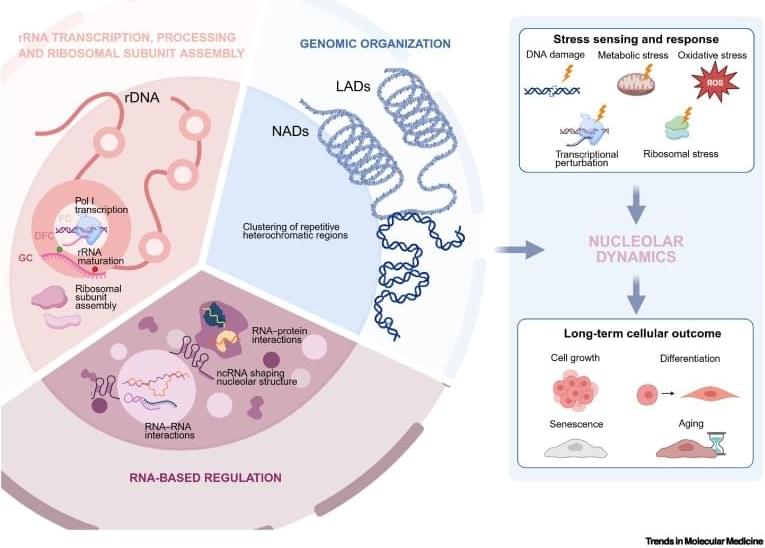
The nucleolus is a master regulator of ribosome biogenesis and cellular homeostasis, as well as an increasingly key determinant of neuromuscular diseases. Across these conditions, diverse genetic and molecular lesions converge on alterations in nucleolar organization and function. These changes impact ribosomal RNA synthesis and reshape translational output, linking nuclear events to cytoplasmic protein homeostasis in disease-relevant contexts. In this review, we propose a comprehensive framework in which the nucleolus integrates RNA dysfunction, genome organization, and translational control across neuromuscular disorders. This perspective provides a conceptual basis for interpreting disease heterogeneity and highlights nucleolar pathways as potential, underexploited targets for therapeutic intervention.