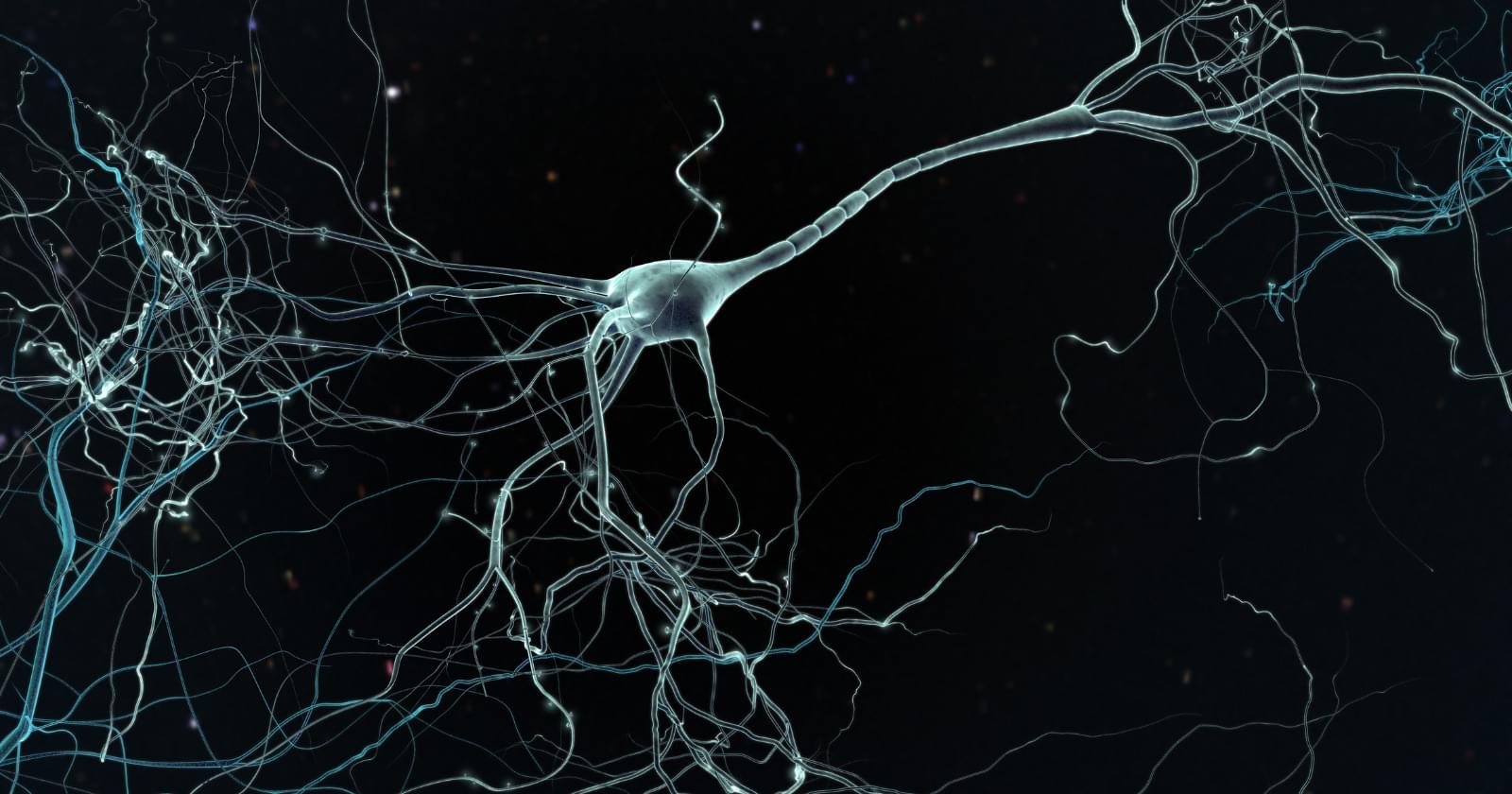
The human brain contains roughly 86 billion neurons. That number appears in almost every popular account of memory and intelligence, and it tends to carry an implicit argument: that the scale of human cognition follows from the scale of this cell count. What is less often mentioned is that the brain contains a roughly comparable number of a different cell type entirely, one that researchers have treated, for most of the history of neuroscience, as little more than biological scaffolding.
A paper published on 23 May in the Proceedings of the National Academy of Sciences puts forward a new hypothesis about what those cells, called astrocytes, might actually be doing. The work comes from a team at MIT: lead author Leo Kozachkov, Jean-Jacques Slotine, a professor of mechanical engineering and brain and cognitive sciences, and Dmitry Krotov of the MIT-IBM Watson AI Lab, who is the paper’s senior author. Their claim is not that astrocytes have been misunderstood in any dramatic sense; it is the more careful suggestion that they may be doing computational work that neurons, on their own, cannot account for.
This is a hypothesis supported by a mathematical model. The experimental work needed to test it has not yet been done.