Toggle light / dark theme

Get the latest international news and world events from around the world.

Log in for authorized contributors

Achiral crystal reveals Raman optical activity through ferroaxial order

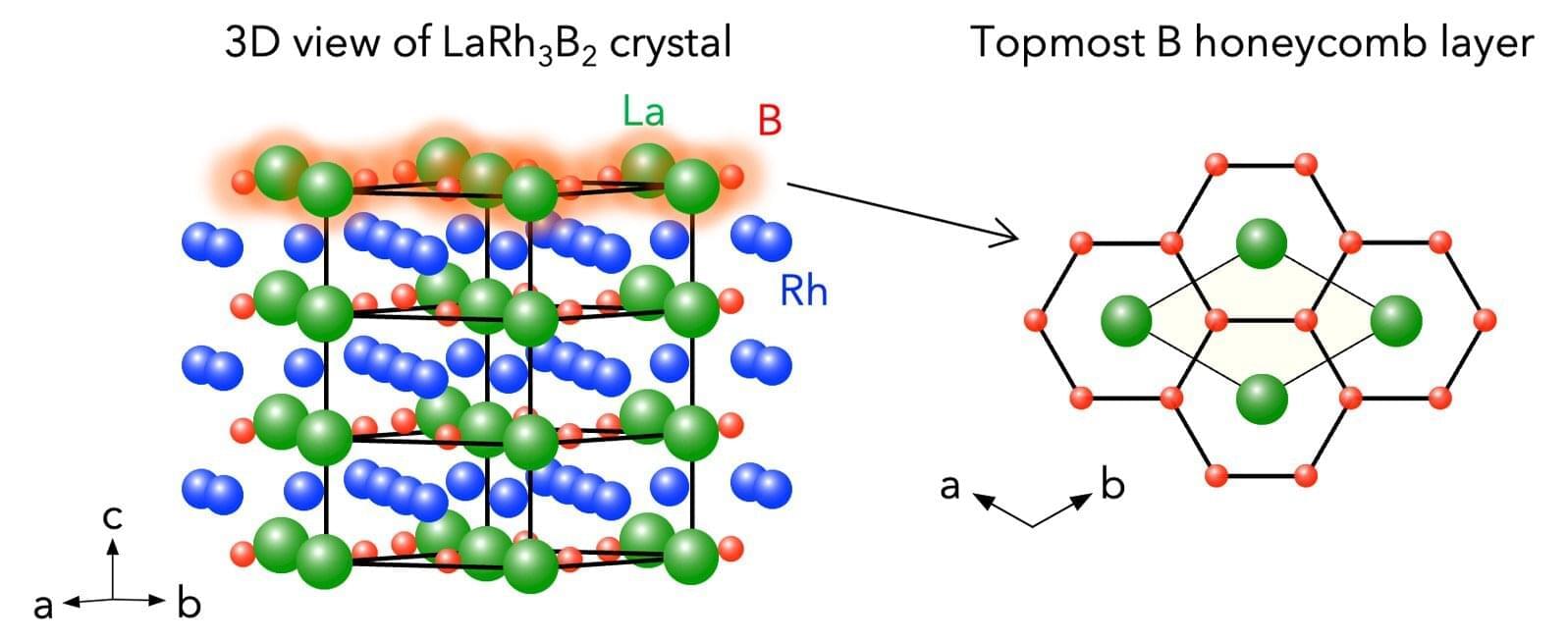
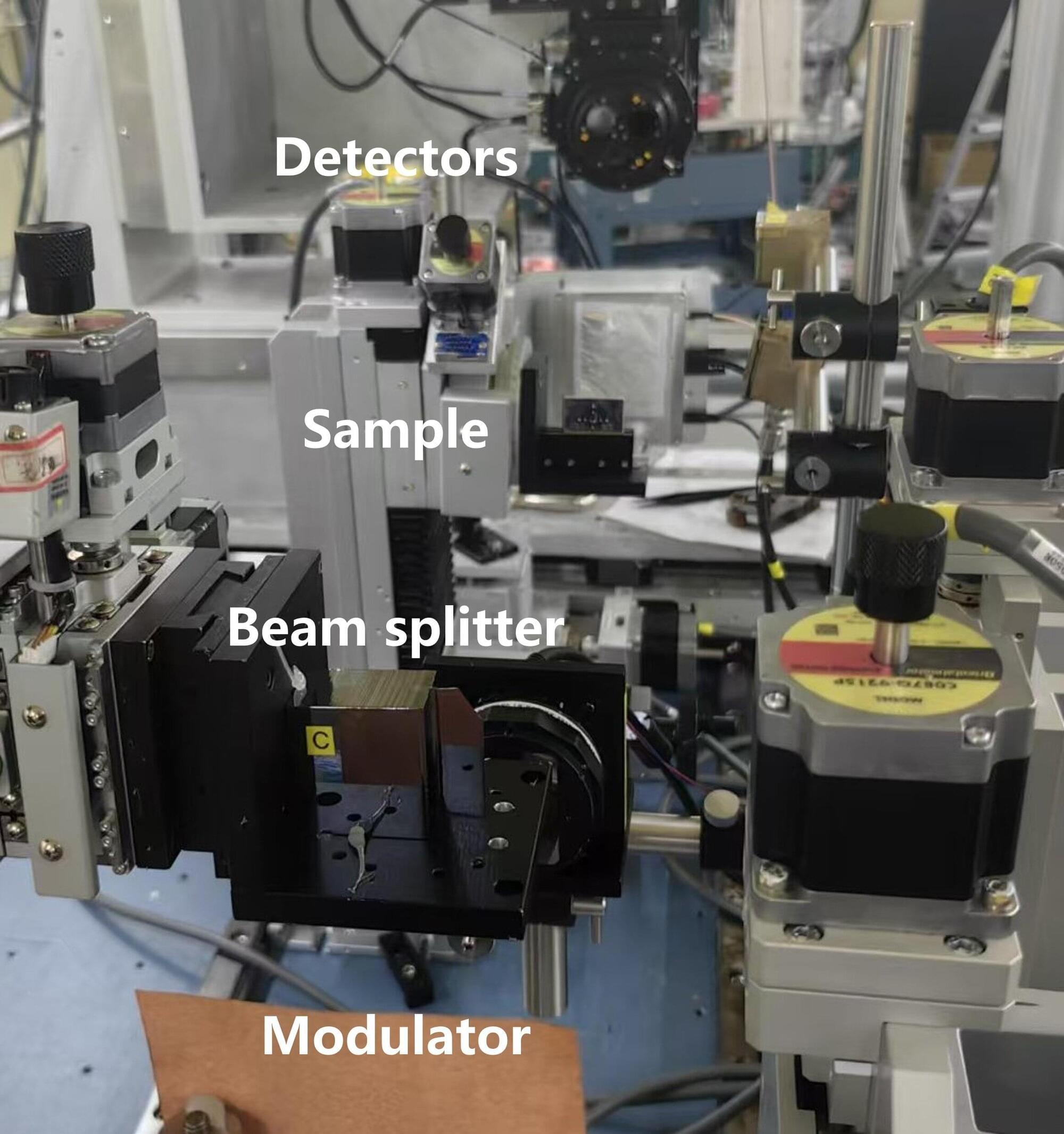
Raman optical activity, long thought to require chiral molecules or magnetic order, has been demonstrated in an achiral, nonmagnetic crystal by researchers at the Institute of Science Tokyo. The effect arises through ferroaxial order, a coordinated rotation of atoms within the lattice, and is detected using circularly polarized Raman spectroscopy. The findings show that optically inactive materials can also display chirality-like optical responses and expand the scope of optical techniques for discovering new materials.

In nature, molecules can be divided into two categories based on their symmetry: chiral and achiral. Chiral molecules are not identical to their mirror images, much like left and right hands. Achiral molecules, by contrast, are identical to their mirror images and therefore do not possess a definite handedness.

Light offers a way to distinguish between these two types. When light interacts with a chiral molecule, the response depends on its handedness. For example, chiral molecules absorb left-and right-circularly polarized light to different extents, a phenomenon known as circular dichroism. They also scatter these two types of light with different intensities, an effect called Raman optical activity (ROA), which is widely used to identify chirality. ROA has long been associated only with chiral molecules or with materials that have magnetic order, where inversion or time-reversal symmetry is broken.

Quantum circuits help AI overcome memory limitations with minimal new parameters

For millions of people, chatbots powered by large language models (LLMs) are now a key feature of everyday life. These AI systems are growing at a rapid pace, but scaling them up is becoming increasingly costly and resource-intensive.

Through a new preprint on the arXiv server, a team led by Borja Aizpurua at Multiverse Computing in San Sebastián, Spain, has found a way to improve the performance of LLMs using quantum computing. Their approach could offer a smarter alternative, rather than simply throwing more hardware at the problem.

Predictive surrogates could cut quantum computing measurement overhead by more than 99.97%

Quantum computers, systems that process information leveraging quantum mechanical effects, have the potential of outperforming classical computers on some tasks. Despite their potential, the use of these systems remains very limited, due to their high cost and other challenges that have so far prevented their large-scale fabrication.

Researchers at the Henan Key Laboratory of Quantum Information and Cryptography and Nanyang Technological University have developed predictive surrogates, new computational models that can learn and reproduce the outputs of quantum processors.

These models, introduced in a paper published in Nature Communications, could be used to extract useful information from quantum computers and perform computations more efficiently with provable guarantees, even if users do not have direct access to advanced and expensive quantum computing hardware.

NASA’s New Technology Lets Spacecraft Switch Between Networks

NASA just demonstrated a technology that lets spacecraft communicate across multiple networks, paving the way for a more flexible and reliable space internet. NASA’s experimental Polylingual Experimental Terminal (PExT) has successfully completed its primary technology demonstration, marking an i

Magnetic Fields May Solve a Longstanding Binary Star Mystery

Magnetic fields may be the hidden force bringing both newborn stars and giant black holes together. New computer simulations suggest that magnetic fields play a crucial role in helping pairs of young stars form. The findings could explain why binary star systems are so common throughout the Milky

One-Character Linux Kernel Flaw Enables Local Root Access, Exploits Now Public

FuzzingLabs reproduced the bug on RHEL 10 ahead of Pwn2Own Berlin 2026, building its own root exploit by a different route. The timeline is tight: the fix shipped February 5, FuzzingLabs published April 16, and Exodus’s detailed write-up landed June 8.

The technique is now documented across Debian, Ubuntu, and Red Hat. Because the bug is in the mainline, any distribution that shipped a vulnerable kernel with both features enabled is exposed, unless a distribution’s hardening or namespace restrictions block the path.

CVE-2026–23111 lands in the middle of a heavy run of Linux local-root disclosures. Recent weeks have brought Copy Fail, the Dirty Frag chain, its Fragnesia variant, DirtyDecrypt, and a nine-year-old ptrace flaw that reads /etc/shadow and runs commands as root.

/* */