Toggle light / dark theme

Get the latest international news and world events from around the world.

Log in for authorized contributors

Two paths to scalable quantum computing: Optical links between fridges and higher-temperature qubits

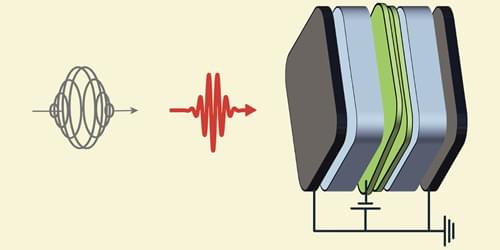
Superconducting qubits—bits of quantum information—have been widely considered a promising technology for moving quantum computing forward. But there’s still much work to be done before they can be brought out of a near absolute zero temperature environment. The lab of Professor Hong Tang has recently published two studies that advance the technology.

To solve practical problems, quantum processors need a lot of qubits—up to thousands to millions. Such a large number of qubits requires significantly complex wiring and a way to store them at a temperature colder than deep space. This is complicated by the physical size of the cryogenic devices, known as dilution refrigerators, that maintain qubits at a temperature just above absolute zero. In a study published in Nature Photonics, Tang’s research team has found a way around this obstacle.

A flexible and cost-effective solution is to build a quantum network by connecting qubits inside separate refrigerators. Connecting qubits with standard coaxial cables, however, wouldn’t work if those cables were kept in a room temperature environment. And storing them all in one very cold room would be near impossible. Even under an optimistic assumption of 1,000 qubits per refrigerator, scaling to 1 million qubits would require linking 1,000 refrigerators—an arrangement that is physically impractical within a single room.

Could the mathematical ‘shape’ of the universe solve the cosmological constant problem?

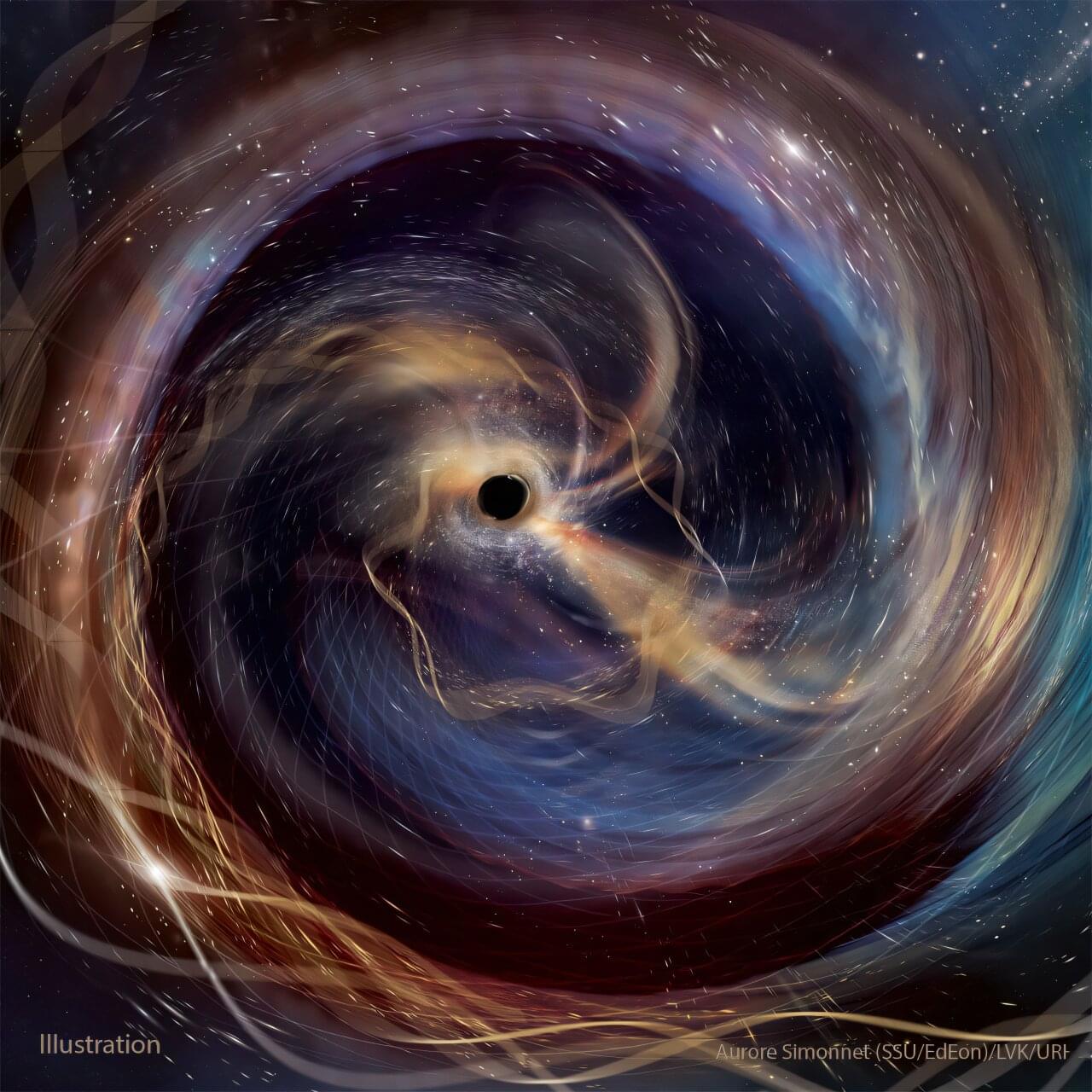
The cosmological constant is the mathematical description of the energy that drives the ever-accelerating expansion of the cosmos. It’s also the source of one of the most enduring and confounding problems in modern physics.

The constant’s observed value is fundamentally at odds with quantum field theory (QFT), the leading theory describing the elementary particles and forces that make up the universe. QFT predicts that quantum fluctuations in the vacuum of space should make the value of the constant enormous—practically infinite. But its observed value is a tiny fraction of that prediction.

Researchers at Brown University have proposed a provocative new answer for why that is.

Why ultrashort laser pulses could make low-power electron sources far more practical

A new theoretical study finds shorter laser pulses achieve higher quantum efficiency for photoemission from a solid surface without increasing power or intensity. Using light to knock electrons loose from a surface—known as photoemission—may soon be achievable more easily in smaller labs with smaller lasers. Shortening the length of a laser pulse can increase the emitted electrons by several orders of magnitude without increasing the laser intensity or power, according to a University of Michigan Engineering study.

The study is published in Physical Review Research.

Efficient, low-power photoemission could make particle acceleration and high-resolution imaging techniques to visualize cells and atoms more accessible. It could also help researchers develop lightwave electronics, which use light to move charge carriers, for ultrafast computing.

Millimeter-scale resolution in fiber-optic sensing: Single-ended technique advances infrastructure monitoring

Distributed fiber-optic sensors are widely used to monitor temperature and strain in infrastructure, but their spatial resolution has long been limited. In a new study, researchers from Shibaura Institute of Technology and Yokohama National University, Japan, have demonstrated that operating near a previously avoided frequency regime and suppressing signal distortions allows reflection-based sensing to achieve a world-record spatial resolution of 6 mm among single-end-access configurations. This enables precise monitoring of temperature and strain in infrastructure.

Distributed fiber-optic sensing technologies play a crucial role in monitoring temperature and strain across large structures such as bridges, tunnels, pipelines, and buildings. Unlike conventional point sensors, distributed fiber-optic sensors provide continuous measurements along their entire length, allowing early detection of damage or abnormal conditions. However, one persistent challenge has been spatial resolution—the ability to pinpoint exactly where a change occurs. Improving resolution without complicating system design has remained a central goal in fiber-optic sensing research.

One promising technique, known as Brillouin optical correlation-domain reflectometry (BOCDR), enables distributed sensing using light injected from only one end of the fiber. This reflection-based configuration simplifies installation and allows measurements even if the fiber is damaged. BOCDR also offers higher spatial resolution than many other Brillouin-based methods. Yet, its performance has been constrained by a widely accepted assumption: operating near or beyond the Brillouin bandwidth, a frequency range intrinsic to the fiber, was believed to cause unstable signals and unreliable measurements. As a result, this operating regime has largely been avoided, limiting achievable resolution.

Sprinkling nanoparticles on spintronics

Today, I want to walk you through a deceptively simple innovation from the lab at Loughborough University (PI: Prof Marco Peccianti): what happens when we decorate a spintronic heterostructure with a sparse layer of plasmonic nanoparticles? This isn’t just a lab curiosity—it’s a step toward making terahertz sources more efficient, compact, and practical for real-world applications like high-speed communications, noninvasive imaging, and advanced spectroscopy.

Spintronic terahertz emitters rely on a thin, multilayer stack—typically heavy metal like tungsten (W), a ferromagnetic layer such as iron (Fe), and a platinum (Pt) cap. A femtosecond laser pulse strikes the structure, rapidly heating electrons and generating a pure spin current through spin-orbit torque effects.

This spin current converts into broadband terahertz radiation at the interfaces, bypassing the need for cumbersome phase-matching crystals used in traditional optical rectification. It’s elegant and scalable, but most laser light reflects off or transmits through without effectively coupling to the magnetic layer, limiting spin injection and THz output power.

Water simulation of famous quantum effect reveals unexpected wave patterns

In the quirky quantum world, particles can be affected by forces that they never directly encounter. A classic example is the Aharonov–Bohm (AB) effect, where electrons are affected by a magnetic field, despite not passing through it. Although predicted in 1959, it took more than two decades to confirm this effect experimentally, as the specific changes to the electrons’ wave properties could only be inferred indirectly, and with great difficulty. Now, physicists from the Okinawa Institute of Science and Technology (OIST), in collaboration with the University of Oslo and Universidad Adolfo Ibáñez, have used a classical fluid analog that mimics and extends the AB effect using a simple platform: a water tank.

In work published in Communications Physics, researchers have revealed that when water waves are sent towards a swirling vortex from opposite directions, it causes a striking pattern, with one or more lines of momentarily still water radiating outward and rotating in an almost hypnotic way.

“This was something new and unexpected,” says Aditya Singh, a Ph.D. student in the Nonlinear and Non-equilibrium Physics Unit and co-first author of the study. “That’s what makes this fluid analog system so valuable. It reveals topological effects—wave behaviors that occur across the whole system—that can’t be seen in quantum experiments.”

A hidden property of light could power future nanomachines

Light does more than illuminate the world—it can also push and twist matter. It was back in the 1870s that James Clerk Maxwell first predicted that light carries momentum and can exert pressure on objects. Nearly a century later, in the 1970s, Arthur Ashkin asked why not use this property of light to hold and push around tiny particles. He developed optical tweezers that use focused laser beams to trap and move nanoscale objects.

While scientists have long known that light can exert small forces, detecting them has been extremely difficult. Objects at this scale are constantly jostled by random thermal motion, making the subtle influence of light hard to measure.

How maze-like magnetic patterns form and evolve in materials

The rapid increase in electric vehicle adoption in recent years has highlighted a crucial issue: the energy conversion efficiency of electric motors. In electric motors, iron loss or magnetic hysteresis loss is a primary source of energy dissipation, arising from the repeated reversal of magnetic fields within the motor core, made of soft magnetic materials. Moreover, electric motors typically operate in high-temperature environments, where thermal effects can lead to partial demagnetization, further complicating energy-loss mechanisms.

The structure of magnetic domains (tiny magnetic regions) of soft magnetic materials strongly influences their magnetic properties, including response to high temperatures and hysteresis loss.

Magnetic domains exhibit a variety of fine structures. In some soft magnetic materials, they form intricate zig-zag patterns known as maze domains. These maze domains show complex and abrupt temperature-dependent behavior that can significantly affect energy loss.

I’ve fired one of America’s most powerful lasers—here’s what a shot day looks like

If you walk across the open yard in front of the Physics, Math and Astronomy building at the University of Texas at Austin, you’ll see a 17-story tower and a huge L-shaped building. What you won’t see is what’s underneath you. Two floors below ground, behind heavy double doors stamped with a logo that most students have never noticed, sits one of the most powerful lasers in the United States.

I was the lead laser scientist on the Texas Petawatt, or TPW as we called it, from 2020 to 2024. Texas Petawatt, which is currently closed due to funding cuts, was a government-funded research center where scientists from across the country applied for time to use specialized equipment. It was part of LaserNetUS, a Department of Energy network of high-power laser labs.

This type of laser takes a tiny pulse of light, stretches it out so it doesn’t blast optics to pieces, and amplifies it until, for a brief instant, it carries more power than the entire U.S. electrical grid. Then it compresses the pulse back to a trillionth of a second to create a star in a vacuum chamber.

How tiny voids could make fusion targets more stable under powerful shockwaves

Picture two materials sandwiched together. The boundary between them may appear flat, but, in reality, it is full of tiny bumps and dents. Suddenly, the materials are hit with a shockwave. If that wave hits a bump in the material interface, it slows down. If it hits a dent, it accelerates forward. This imbalance creates fast, narrow jets of material—called the Richtmyer-Meshkov (RM) instability.

In a recent paper, published in Physical Review Letters, researchers from Lawrence Livermore National Laboratory (LLNL), Imperial College London and their collaborators used AI to optimize and 3D printing to create a target that effectively negates the RM instability.

“Our target reshapes the shockwave, in both space and time, as it travels through the material,” said first author Jergus Strucka, now at the European XFEL. “Instead of a single shock hitting the surface, we introduce voids to break it up into a sequence of smaller pressure pulses that arrive at slightly different times.”

/* */