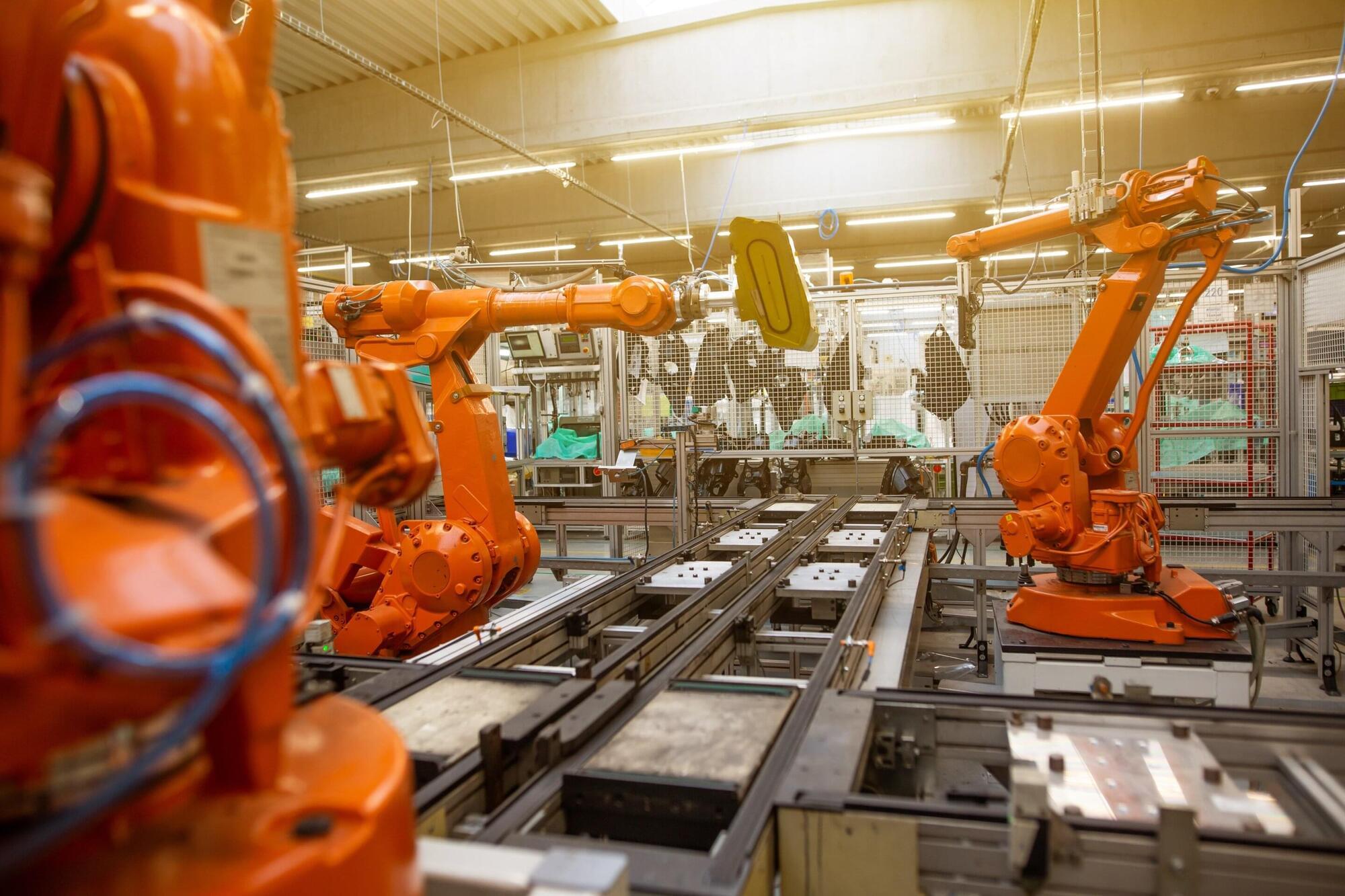
If the future of warehouse work belongs to humans and robots working side by side, a key question remains: What is the most effective way for them to collaborate?
Research published in Transportation Science suggests that the answer may be more flexible than many warehouse operators expect. The study, “Picking the Best Bot: Collaboration Strategies for Humans and Bots in Order Pick Systems with Traveling Salesman Problem Routing,” found that under many real-world conditions, warehouse workers achieve higher productivity when they dynamically switch among multiple autonomous mobile robots rather than work exclusively with a single robot.
The findings challenge a common assumption that fixed human–robot pairings are the most efficient approach.
Great article on swarm intelligence in human-robot collaboration. The parallel to how AI image processing tools like neural networks handle complex visual tasks is interesting. Just as swarm thinking distributes problem-solving across multiple agents, AI tools are increasingly using ensemble approaches to enhance image quality. This decentralization trend seems to be the key to scaling both robotics and AI applications effectively.
Thought-provoking piece. The idea that human–robot collaboration works best with flexible switching rather than fixed pairings really does feel like a “swarm” model, and it could reshape how warehouses are designed. It also reminds me how creative tools are moving toward more adaptive, distributed systems instead of one rigid workflow. For anyone interested in how AI supports fast, iterative output, ai rap generator is a great example of that kind of flexibility in action.