Toggle light / dark theme

Get the latest international news and world events from around the world.

Log in for authorized contributors

Tim Maudlin | Bell’s Theorem and Beyond: Nobody Understands Quantum Mechanics | The Cartesian Cafe

Tim Maudlin is a philosopher of science specializing in the foundations of physics, metaphysics, and logic. He is a professor at New York University, a member of the Foundational Questions Institute, and the founder and director of the John Bell Institute for the Foundations of Physics.

#quantum #physics #philosophy #determinism.

Patreon (bonus materials + video chat):
/ timothynguyen.

In this very in-depth discussion, Tim and I probe the foundations of science through the avenues of locality and determinism as arising from the Einstein-Poldosky-Rosen (EPR) paradox and Bell’s Theorem. These issues are so intricate that even the Nobel Prize committee incorrectly described the significance of Bell’s work in their press release for the 2022 prize in physics. Viewers motivated enough to think deeply about these ideas will be rewarded with a conceptually proper understanding of the nonlocal nature of physics and its manifestation in quantum theory.

I. Introduction.
00:25 : Biography.
05:26 : Interdisciplinary work.
11:45 : Physicists working on the wrong things.
16:47 : Bell’s Theorem soft overview.
24:14: Common misunderstanding of \.

A hidden DNA region helps drive frailty, exposing brain and immune links that reshape aging risk

Researchers at McMaster University have identified, for the first time, a novel region of DNA and two associated genes connected to frailty, offering neurological and immune-related insights that might help explain why some older adults are more likely to be frail than others.

The McMaster team’s findings, published in the journal npj Aging, fill an important gap by revealing genetic factors that contribute to the development of frailty. The discovery provides a biological connection to the condition and points toward new avenues for early detection and targeted intervention.

Cellular and molecular landscapes of human tendons across the lifespan revealed by spatial and single-cell transcriptomics

Kurjan et al. map human tendon architecture from embryo to adult using spatial and single-cell transcriptomics. They show embryonic progenitors generate fibrillar, connective, and chondrogenic tendon lineages. Fibroblasts reprogram with age, whereas immune, vascular, and neural cells remain stable. Ruptured adult tendons partially reactivate fetal programs without full regeneration.

The evolution of high-order genome architecture revealed from 1,000 species

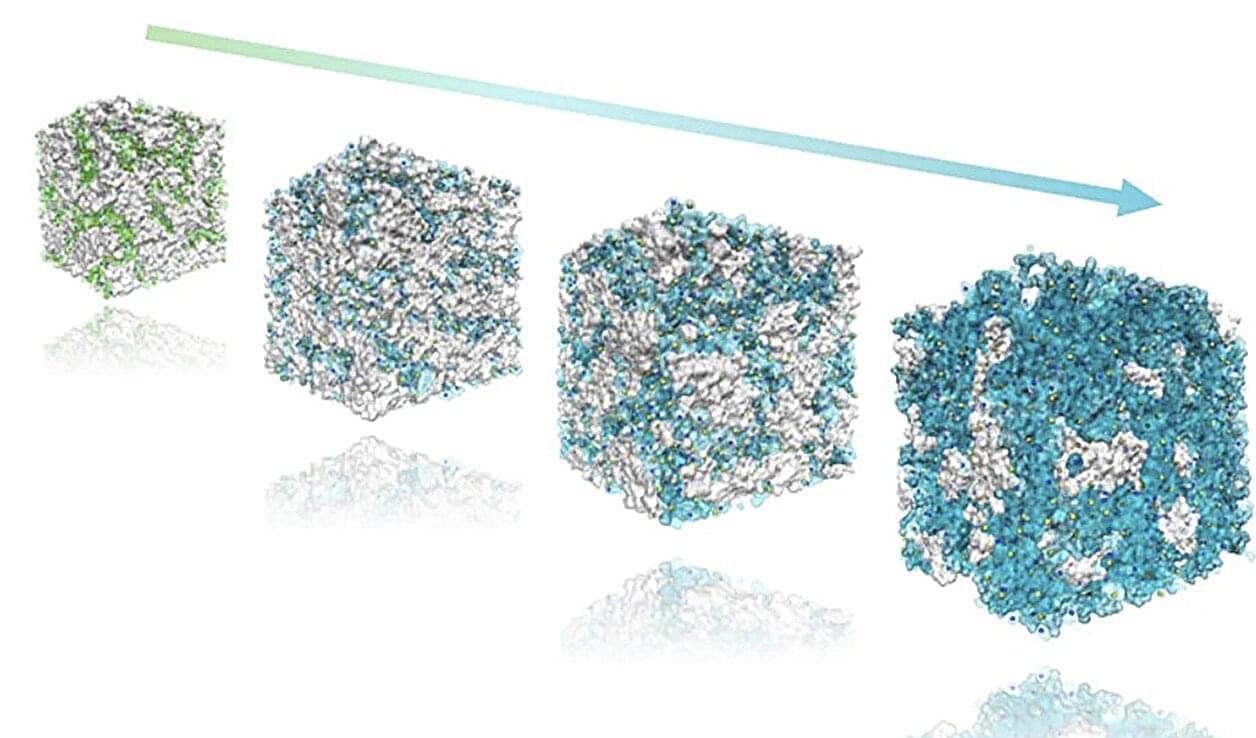
Now online! Comparative Hi-C analysis across 1,025 species reveals that genome architecture has evolved along distinct trajectories, with plants favoring global folding and animals developing checkerboard compartmentalization, yet both converge on spatial organization as a conserved strategy for gene regulation.

Hypertension With High-Risk Features in Cryptogenic Stroke: An Exploratory Analysis of the ARCADIA Randomized Clinical Trial

In an exploratory analysis of the ARCADIA randomized clinical trial, hypertension with high‑risk features was associated with modification of antithrombotic treatment effects after cryptogenic stroke. Among patients without high‑risk hypertension features, apixaban was associated with a lower risk of recurrent ischemic stroke or systemic embolism compared with aspirin.


This secondary analysis of a randomized clinical trial evaluates the association between hypertension with high-risk features and treatment effect.

Microfluidic chip reveals how living glioblastoma slices resist chemotherapy

Combining microchip engineering techniques with cutting-edge gene profiling, scientists at Columbia University have developed a new way to study drug responses in living slices of human brain tumor cells. The system, using a type of chip called a microfluidic device, has already revealed new details about how these aggressive tumors resist chemotherapy drugs and could help researchers develop more effective treatments.

The work grew from earlier efforts to study glioblastoma tumors removed from patients during surgery. “These samples that we’re getting from our colleagues who resect these tumors clinically, they’re alive, and we can actually do experiments directly on those surgical samples,” says Peter Sims, Ph.D., associate professor of systems biology at Columbia and senior author on the new study, which appears in the journal Lab on a Chip.

Long COVID is associated with increased risk of cardiovascular disease

People with long COVID are at increased risk of developing cardiovascular disease, according to a new study from Karolinska Institutet published in eClinicalMedicine. The results show that the risk of conditions such as cardiac arrhythmias and coronary artery disease is higher even among those who were not hospitalized during the acute infection.

Long COVID has become an increasingly significant health problem worldwide, and a growing number of studies suggest that the condition can lead to secondary cardiovascular diseases. To date, research has mainly focused on people who were hospitalized, while the risks for those who stayed at home or were treated at a GP are less well known. In the current study, the researchers investigated how often major cardiovascular events occur in these individuals compared with those without the diagnosis.

Of the just over 1.2 million people aged between 18 and 65 included in the study, around 9,000 had been diagnosed with long COVID, corresponding to 0.7%. Two-thirds of them were women. People who had previously had cardiovascular disease or been hospitalized for COVID-19 were excluded from this group.

/* */